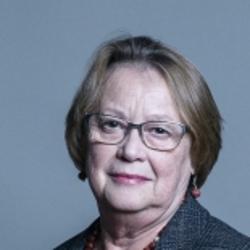
Baroness Bakewell of Hardington Mandeville
Liberal Democrat - Life peer
Became Member: 9th September 2013
3 APPG Officer Positions (as of 12 Jan 2026)
Bosnia and Herzegovina, Packaging in the Circular Economy, Zoos and Aquariums5 APPG Memberships
Christians in Parliament, Dark Skies, Environment, Central South, Sustainable Plastics7 Former APPG Officer Positions
County, Dark Skies, District Councils, Game and Wildlife Conservation, Gypsies, Travellers and Roma, Housing and Planning, Packaging Manufacturing IndustryDivision Voting information
Baroness Bakewell of Hardington Mandeville voted No - against a party majority and against the House
One of 2 Liberal Democrat No votes vs 48 Liberal Democrat Aye votes
Tally: Ayes - 253 Noes - 150
Debates during the 2024 Parliament
Speeches made during Parliamentary debates are recorded in Hansard. For ease of browsing we have grouped debates into individual, departmental and legislative categories.
Sparring Partners
Parliamentary Under-Secretary (Department for Environment, Food and Rural Affairs)
(27 debate interactions)
Shadow Minister (Environment, Food and Rural Affairs)
(7 debate interactions)
Baroness in Waiting (HM Household) (Whip)
(4 debate interactions)
Department Debates
(38 debate contributions)
(7 debate contributions)
(5 debate contributions)
(3 debate contributions)
Legislation Debates
(4,490 words contributed)
(2,313 words contributed)
(1,098 words contributed)
(1,079 words contributed)
Lords initiatives
These initiatives were driven by Baroness Bakewell of Hardington Mandeville, and are more likely to reflect personal policy preferences.
Baroness Bakewell of Hardington Mandeville has not introduced any legislation before Parliament
Baroness Bakewell of Hardington Mandeville has not co-sponsored any Bills in the current parliamentary sitting
Latest 6 Written Questions
(View all written questions)5 Department for Digital, Culture, Media & Sport Questions
(View all Baroness Bakewell of Hardington Mandeville's DCMS questions)The Government is committed to strengthening protections to protect young people from gambling-related harm. We are clear that wherever gambling advertising and sponsorship appears, it must be socially responsible. All major sports have published their gambling sponsorship Codes of Conduct which sets minimum standards for gambling sponsorships to ensure these arrangements are socially responsible. Additionally, the Premier League’s decision to ban front-of-shirt sponsorship by gambling firms will start at the beginning of the 2026/27 season.
We are working closely with sports bodies to review the implementation and impact of the Codes of Conduct to ensure they have meaningful impact and to inform the most appropriate next steps for gambling sponsorship.
Baroness in Waiting (HM Household) (Whip)
The Government is committed to ensuring games are enjoyed safely and responsibly by everyone, including children.
Prizes that can be won via loot boxes do not have a monetary value, cannot be cashed-out, and are of value only within the context of the game. They are therefore not legally classified as gambling. However, where products do amount to unlicensed gambling, such as unlicensed skin betting, the Gambling Commission has shown that it will take swift enforcement action. There are currently no licensed gambling operators which offer skin betting.
In July 2023 the video game industry published new loot box principles to improve protections for players. Following a 12-month implementation period, the government commissioned independent academic research to assess the effectiveness of this guidance. We have engaged relevant government departments and regulators to consider the research. We will publish the report and set out our next steps in the near future..
Baroness in Waiting (HM Household) (Whip)
All gambling operators offering gambling services to people in Great Britain must have a licence from the Gambling Commission. Licensed online gambling operators must have robust policies and procedures to prevent underage gambling. These measures are highly effective, with very few children able to open an online gambling account with either real or invented identities. There are also currently no licensed operators which allow payment using virtual currencies.
The government will also provide an additional £26 million of funding to the Gambling Commission over the next three years to increase investment, resources and capacity to tackle the illegal market.
Baroness in Waiting (HM Household) (Whip)
DCMS has not made its own estimate of the amount spent on gambling advertising. However, we monitor a wide range of evidence to aid our assessment of the impact of gambling advertising at a national level, including spend data provided by industry and independent sources.
Baroness in Waiting (HM Household) (Whip)
All gambling operators who advertise in the UK must comply with advertising codes, which are enforced by the Advertising Standards Authority (ASA) independently of Government. These codes apply across all advertising platforms, and include a wide range of provisions designed to protect children from harm. In addition to rules on content and audience, operators must ensure that gambling advertising is not targeted at children. Earlier this year the Department for Education announced new statutory guidance for relationships and sex education (RSE) and health education, which includes more in depth education about the risks of gambling related harms. We will continue to monitor this area closely and take action where there is evidence to do so.
Baroness in Waiting (HM Household) (Whip)
1 Ministry of Housing, Communities and Local Government Questions
(View all Baroness Bakewell of Hardington Mandeville's MHCLG questions)Requirements relating to planning for traveller sites are set out in the Planning Policy for Traveller Sites, revised in 2023. This asks local planning authorities to produce their own assessment of needs for traveller sites in their area and use this evidence to set pitch targets in the Local Plan for Gypsies and Travellers and plot targets for travelling show people. In producing the Local Plan for their area, local planning authorities should identify and update annually a supply of deliverable sites to provide 5 years’ worth of sites against local targets.
Work is underway on the Planning and Infrastructure Bill. More information on what the bill will do is provided here in published (attached) background briefing: FINAL - 17/07/24 King's Speech 2024 background briefing final GOV.uk.docx (publishing.service.gov.uk)
Baroness in Waiting (HM Household) (Whip)