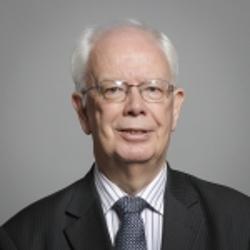
Lord Wallace of Tankerness
Liberal Democrat - Life peer
Became Member: 17th October 2007
Left House: 29th January 2026 (Death)
3 APPG Memberships
Australia and New Zealand (ANZAC) and the Pacific Islands, Modern Conflict, Wood Panel Industry2 Former APPG Officer Positions
Drones, Wood Panel IndustryDivision Voting information
All Debates
Speeches made during Parliamentary debates are recorded in Hansard. For ease of browsing we have grouped debates into individual, departmental and legislative categories.
Sparring Partners
(145 debate interactions)
(124 debate interactions)
(103 debate interactions)
Department Debates
(1095 debate contributions)
(601 debate contributions)
(126 debate contributions)
(86 debate contributions)
Legislation Debates
(16,386 words contributed)
(5,104 words contributed)
(4,155 words contributed)
(3,515 words contributed)
Lords initiatives
These initiatives were driven by Lord Wallace of Tankerness, and are more likely to reflect personal policy preferences.
2 Bills introduced by Lord Wallace of Tankerness
This Bill received Royal Assent on 15th September 2011 and was enacted into law.
Following agreement by both Houses on the text of the Bill it received Royal Assent on 25 April. The Bill is now an Act of Parliament (law). To make succession to the Crown not depend on gender; to make provision about Royal Marriages; and for connected purposes.
This Bill received Royal Assent on 25th April 2013 and was enacted into law.
Lord Wallace of Tankerness has not co-sponsored any Bills in the current parliamentary sitting
Latest 27 Written Questions
(View all written questions)The Foreign Policy and Security Council is no longer operational. Instead, as set out in its Terms of Reference, the National Security Council, will consider matters relating to trade strategy, amongst other issues including national security and foreign policy. The National Security Council (Europe) will consider matters of trade in relation to Europe.
The Cabinet Secretariat continues to support the Prime Minister and the chairs of Cabinet Committees in the conduct of government business, including international trade.
The full list of Cabinet Committees is available at:
https://www.gov.uk/government/publications/the-cabinet-committees-system-and-list-of-cabinet-committees
Shadow Minister (Treasury)
The Government has made a commitment, in the manifesto and the Queen's Speech, to take forward work to repeal the Fixed Term Parliaments Act. Announcements about the statutory review Committee will be made in due course.
Shadow Leader of the House of Lords
Lord Dunlop reported to the Prime Minister in the Autumn and the UK Government is carefully considering its recommendations.
Shadow Leader of the House of Lords
UK Government Ministers and officials have held regular discussion with Scottish Government Ministers and officials on the progress of citizens' rights negotiations, which includes the right to stand and vote in municipal elections. There have been official level conversations after each round of negotiations with the EU and Ministerial conversations after the majority of the rounds, including most recently at the British-Irish Council on 10 November.
The UK Government position is that we want EU citizens with settled status, or who are on the pathway to settled status, to retain the right to vote and stand in any UK election which uses the local government register (which includes Scottish Parliamentary elections), so long as the rights of British citizens living in the EU are similarly protected.
The Joint Ministerial Committee on EU Negotiations [JMC(EN)] met in 2017 on 19 January and 8 February.
On 19 January 2017, the following ministers attended:
a. On behalf of the UK Government: The Secretary of State for Northern Ireland, Rt Hon James Brokenshire; The Secretary of State for Scotland, Rt Hon David Mundell MP; The Secretary of State for Wales, Rt Hon Alun Cairns MP; The Chief Secretary to the Treasury, Rt Hon David Gauke; Minister of State for Europe and the Americas in the Foreign and Commonwealth Office, Rt Hon Alan Duncan MP; Minister for Cabinet Office, Rt Hon Ben Gummer MP; and Minister of State for the Department for Exiting the EU, Rt Hon David Jones MP.
b. On behalf of the devolved administrations: from the Scottish Government, The Minister for UK Negotiations on Scotland’s Place in Europe, Mike Russell MSP; from the Welsh Government, Cabinet Secretary for Finance and Local Government, Mark Drakeford AM; and from the Northern Ireland Executive, Minister for Infrastructure, Chris Hazzard MLA and Junior Minister, The Executive Office, Alastair Ross MLA.
On 8 February 2017, the following ministers attended:
a. On behalf of the UK Government: The Secretary of State for the Department for Exiting the European Union, Rt Hon David Davis MP; The Secretary of State for Northern Ireland, Rt Hon James Brokenshire; The Secretary of State for Scotland, Rt Hon David Mundell MP; The Secretary of State for Wales, Rt Hon Alun Cairns MP; Minister of State for Europe and the Americas in the Foreign and Commonwealth Office, Rt Hon Alan Duncan MP; Minister for Cabinet Office, Rt Hon Ben Gummer MP; Minister of State for the Department for Exiting the EU, Rt Hon David Jones MP; Chancellor of the Exchequer, Rt Hon Philip Hammond MP.
b. On behalf of the devolved administrations: from the Scottish Government, The Minister for UK Negotiations on Scotland’s Place in Europe, Mike Russell MSP; from the Welsh Government, Cabinet Secretary for Finance and Local Government, Mark Drakeford AM; and from the Northern Ireland Executive, Minister for Finance, Máirtín Ó Muilleoir MLA and Junior Minister, The Executive Office, Alastair Ross MLA.
10 Department for Business, Energy and Industrial Strategy Questions
(View all Lord Wallace of Tankerness's BEIS questions)My rt. hon. Friend the Secretary of State for Business, Energy and Industrial Strategy has stated his intention to publish the energy white paper. We will provide more details in due course.
Where it is necessary and appropriate to do so, we will consult over detailed policy proposals alongside the white paper or following its publication.
In our response to the Feed-in Tariffs (FIT) consultation published on 18 December 2018 we indicated our intention to consult on detailed proposals to allow existing FIT generators to replace any element of their plant and retain their current generation tariff. This will be subject to developing cost control measures which would need to be effective and proportionate from an administrative perspective.
The amount of budget committed to each wind band can be calculated using publicly available data.
Total capacity deployed for each technology over the period 2016 – 2018 is published under the Feed-in Tariff Deployment Caps Monthly Reports.
Total generation can be calculated by applying the load factors (published in the impact assessment that accompanied the 2015 Feed-in Tariffs review) to the total capacity.
In order to calculate the value of the generation tariff payments made to each band, the total amount of generation per quarter is multiplied by the corresponding tariff rates available on Ofgem’s website.
Following the review of the Feed-in Tariffs (FIT) scheme in 2015 a maximum overall budget of £100m from January 2016 to 31 March 2019 was introduced which is enforced through quarterly deployment caps. Deployment is tracked by Ofgem based on the total installed capacity of new installations registered on the Microgeneration Certification Scheme (MCS) database and their records of applications for ROO-FIT accreditation.
The amount of budget committed to each technology (biomass is not supported under the FIT scheme) can be calculated using publicly available data using the following methodology. Total capacity deployed for each technology over the period 2016 – 2018 is published under the Feed-in Tariff Deployment Caps Monthly Reports. Available on Ofgem’s website. Total generation can be calculated by applying the load factors (published in the impact assessment that accompanied the 2015 Feed-in Tariffs review) to the total capacity.
Finally, to calculate the value of the generation tariff payments made to each technology band, the total amount of generation per quarter is multiplied by the corresponding tariff rates available on Ofgem’s website.
The Clean Growth Strategy sets out our ambition to enable business consumers to reduce their energy usage by improving energy efficiency by at least 20% by 2030, potentially reducing carbon emissions by 22MtCO2e over the fifth Carbon Budget. We are developing a package of measures to support businesses to deliver this level of ambition and will respond to a Call for Evidence published last year, ‘Helping businesses improve the way they use energy’ by the summer.
Regarding deploying private sustainable energy supplies the Government has been supporting the installation of low carbon and renewable heating for businesses, charities and public bodies through the Non-domestic Renewable Heat Incentive (RHI) since 2011. The scheme aims to bridge the gap between the cost of fossil fuel and low carbon heating technologies by offering a financial incentive and has over 19,100 participants as of December 2018.
In addition, the Government’s sustained support for clean energy has helped produce dramatic falls in the costs of renewable technology. For example, the cost of solar cells has fallen by 80 per cent since 2008. Support for solar comes directly from people's bills, so when costs come down, so should support. We have therefore taken steps to control the costs of support schemes, and subsidy-free deployment of solar PV may be a viable option for businesses. Our Industrial Strategy sets out how we want to make sure that the UK continues to reap the benefits from the transition to a low carbon economy.
My Rt Hon Friend the Secretary of State for Business, Energy & Industrial Strategy, set out his strategic approach to the GB electricity system last November, in his address ‘After the trilemma – 4 principles for the power sector’. He will set out more details in a White Paper in the summer.
The Contracts for Difference Scheme is our main mechanism for supporting new large scale renewable energy generation projects. The next competitive allocation round for less established technologies such as offshore wind will open by May 2019, with subsequent auctions around every two years. Up to £557 million of further support was announced as part of the 2017 Budget.
The Feed-in Tariffs (FIT) scheme will close to new applications after 31 March 2019 subject to a number of time-limited extensions and a grace period.
Following the review of the Feed-in Tariffs (FIT) scheme in 2015 a maximum overall budget of £100m from January 2016 to 31 March 2019 was introduced which is enforced through quarterly deployment caps. Deployment is tracked by Ofgem based on the total installed capacity of new installations registered on the Microgeneration Certification Scheme (MCS) database and their records of applications for ROO-FIT accreditation.
The amount of budget committed to each wind band can be calculated using publicly available data using the following methodology. Total capacity deployed for each technology over the period 2016 – 2018 is published under the Feed-in Tariff Deployment Caps Monthly Reports. Total generation can be calculated by applying the load factors (published in the impact assessment that accompanied the 2015 Feed-in Tariffs review) to the total capacity.
Finally, to calculate the value of the generation tariff payments made to each band, the total amount of generation per quarter is multiplied by the corresponding tariff rates available on Ofgem’s website.
Her Majesty’s Government has not made any assessment as fuel poverty is a devolved matter for the Scottish Government.
We are aware of the reports published on 24th October and will consider their findings and recommendations with interest.
Shadow Minister (Treasury)
2 Department for Environment, Food and Rural Affairs Questions
(View all Lord Wallace of Tankerness's Defra questions)The brown marmorated stink bug, Halyomorpha halys, is an insect from eastern Asia (China, Japan, Korea and Taiwan). It has no established populations in the UK. We are aware that it has spread into the USA and to mainland Europe. For example, it was first reported in Germany in 2001. Subsequent reports have come from Switzerland (2004), Greece (2011), France (2012), Italy (2012) and Hungary (2013). The insect has been intercepted in the UK on several occasions in recent years.
We have carried out a risk assessment on the potential for this organism to arrive in the UK and cause damage. Given its establishment in Europe and other parts of the world and its potential to spread by hitchhiking, on vehicles and through human movements, as well as via trade, our assessment has shown that it has the potential to reach the UK. It may be able to survive in our climate, but is unlikely to reach more than one generation per year, preventing it from reaching harmful levels. The insect is not therefore a significant threat to UK horticultural crops but as with all pests and diseases, the UK continues to closely monitor any threats.
A Defra fact sheet on the insect has been published on the Plant Health Portal.
The Government will bring forward legislation in the next session that, when enacted, will repeal the European Communities Act 1972 and ensure a functioning statute book on the day we leave the EU. This ‘Great Repeal Bill’ will end the authority of EU law and return power to the UK. The Bill will convert existing European Union law into domestic law, wherever practical and in that context all relevant legislation is currently being identified and assessed.
The Government will set out the content of the Bill and its implications in due course.
3 Department for International Trade Questions
(View all Lord Wallace of Tankerness's DIT questions)The government believes that secure and growing trading relationships can enable open conversations with partners on a range of issues, including human rights and labour rights. At the same time, the Government is committed to working with international partners and businesses to ensure global supply chains are free from the use of modern slavery and other human rights abuses.
Countries - including Pakistan - that will benefit from the Developing Countries Trading Scheme may have preferences suspended if they have engaged in serious and systematic violations of human rights and labour rights contained in 16 international conventions.
The tools to monitor compliance may include reports from international convention bodies, reports produced by international organisations and reporting from the Government’s diplomatic network.
The criteria the Government may consider include the nature, scale, impact, frequency and pattern of violations.
Shadow Minister (Work and Pensions)
The Department for International Trade (DIT) has regular engagement with the devolved administrations (DAs) on all trade continuity agreements (TAC), including on the UK-Faroe Islands Free Trade Agreement (FTA). Engagement takes place on a regular basis both at Ministerial and official level, sharing progress and inviting the DAs to highlight particular agreements of importance or concern. We also already share the full treaty text; supporting Explanatory Memorandum and Parliamentary Report and welcome their view as progress is made.
DIT has agreed with DAs that further engagement would be appropriate. We have reflected on the process for agreeing continuity agreements and can confirm that it is our intention to share treaty texts with the DAs prior to them being signed. This complements our existing engagement.
The Department for International Trade (DIT) has regular engagement with the devolved administrations (DAs) on all trade continuity agreements (TAC), including on the UK-Faroe Islands Free Trade Agreement (FTA). Engagement takes place on a regular basis both at Ministerial and official level, sharing progress and inviting the DAs to highlight particular agreements of importance or concern. We also already share the full treaty text; supporting Explanatory Memorandum and Parliamentary Report and welcome their view as progress is made.
DIT has agreed with DAs that further engagement would be appropriate. We have reflected on the process for agreeing continuity agreements and can confirm that it is our intention to share treaty texts with the DAs prior to them being signed. This complements our existing engagement.
4 Foreign, Commonwealth & Development Office Questions
(View all Lord Wallace of Tankerness's FCDO questions)During the Prime Minister's visit to India in October 2025, the UK delegation included representatives from the following universities:
- University of Southampton
- University of Liverpool
- University of York
- University of Aberdeen
- University of Bristol
- Queen's University Belfast
- Coventry University
- Lancaster University
- University of Surrey
These institutions were part of a broader initiative to expand UK higher education presence in India, with several receiving approval to establish campuses in cities such as Mumbai, Bengaluru, and GIFT City. The delegation aimed to strengthen academic collaboration, promote research partnerships, and support India's growing demand for higher education.
Minister of State (Development)
The UK Government recognises the significant work done by the Council of Europe in this area and is committed to the core principles outlined in the Convention. The Freedom of Information Act enables individuals to freely access official information from a wide range of public authorities. As it stands, in this government's view, the Convention would not allow for the appropriate protection of sensitive information and of journalistic independence, as Parliament intended when the Act passed. The Government proactively discloses information beyond our obligations under the Act and will continue to do so.
Minister of State (Development)
We welcome the expert review on progress of implementing the Bishop of Truro's recommendations and, in line with the findings, accept their assessment for the need to continue to work to promote and strengthen freedom of religion or belief as a fundamental human right for all.
Our work on this important human rights issue will never be complete, and we will continue to champion global efforts on FoRB. We will continue to ensure that the changes we have made are embedded and to look for opportunities to make FoRB central to the FCDO's wider human rights work.
The Transport Community Treaty was signed by Bosnia and Herzegovina (BiH) on 19 September 2017. The Government actively supported EU-led efforts to encourage Bosnia and Herzegovina (BiH) to sign up to the Treaty. The Treaty is an important step to improve infrastructure and transport links in BiH and the Western Balkan region.
The Independent Inquiry into Child Sexual Abuse publishes financial statements on a quarterly basis on its website https://www.iicsa.org.uk/. The most recent financial statement, covering the Inquiry’s 2019/20 spend as at 31 March 2020, can be found here: https://www.iicsa.org.uk/key-documents/18739/view/inquiry-financial-report-q4-2019-20-ending-31-march-2020.pdf.
The Inquiry expects its public hearings to conclude by the end of 2020. The Inquiry will then turn to writing its final report. Providing the complete information requested would exceed the word limit for responses to written parliamentary questions. However, the information requested is available through the links provided.
Shadow Chief Whip (Lords)
1 Ministry of Justice Questions
(View all Lord Wallace of Tankerness's ministry-of-justice questions)Following Ministerial attendance at the recent Committee of Ministers meeting, member states agreed to postpone consideration of the UK's position on prisoner voting until December 2015. The UK's ban on prisoner voting stays in place and, as consistently stated, remains a matter for Parliament to determine.