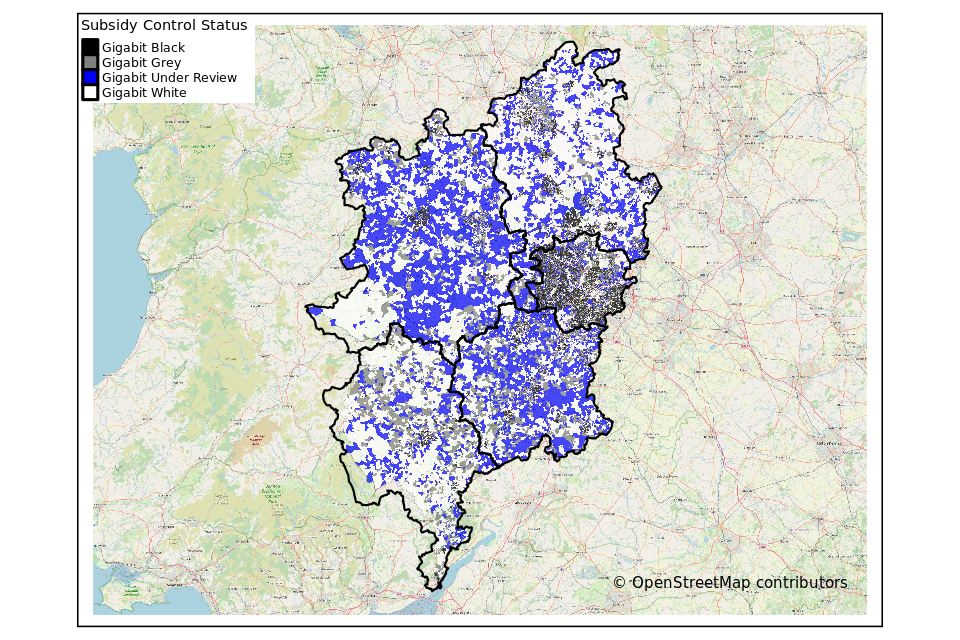
UKAP is updating the guidance for HCWs living with HIV. The proposed changes are outlined in the consultation document and will replace the sections on management of HCWs living with HIV in the UKAP integrated guidance. Therefore, the consultation document should be read in conjunction with the UKAP integrated guidance for context.
UKAP is seeking responses to the proposed changes, specifically:
any comments on the draft wording, especially its clarity, appropriateness, and feasibility
any gaps in the draft guidance
the potential impact of the draft guidance update on people with protected characteristics and health inequalities
If respondents have gathered input from people with lived or living experience, please make this clear in the consultation response.
UKAP also encourages organisations to share the consultation with other organisations in their network who may be interested in this guidance update.
Complete the online form to provide feedback or email [email protected]
Department for Environment, Food and Rural Affairs
·
Published 7 October 2026
·
Added 29 September 2026
Consultation description
We are consulting on draft legal provisions to implement the alternative transitional registration model (ATRm) for UK REACH. The draft provisions would introduce new requirements for transitional registrations and powers for the regulator to request further information where needed.
We want to know whether the provisions clearly and accurately reflect the intended policy approach. We particularly welcome comments on any drafting issues, omissions, ambiguities or unintended consequences.
Maritime and Coastguard Agency
·
Published 13 October 2026
·
Added 13 October 2026
Consultation description
This draft MGN provides information on the methodology that can be used to assess the marine navigational safety and emergency response risks that may be posed to waterway users from Aquaculture sites. It does not introduce new requirements to those already in place but is intended to direct the reader to the current relevant guidance and information as published by the relevant marine regulator.
Contact email and/or postal address – this should be in the consultation document: (This is also contained in the consultation document).
Marine Safety and PNT Services
Maritime and Coastguard Agency
Bay 2/24
Spring Place
105 Commercial Road
Southampton
SO15 1EG
Home Office
·
Published 19 August 2026
·
Added 19 August 2026
Consultation description
This consultation seeks views on a proposal to tighten controls on the substances Gamma-Butyrolactone (GBL) and 1,4-Butanediol (1,4-BD), which are controlled drugs that also have wide-ranging uses in industry as solvents.
Department of Health (Northern Ireland)
·
Published 19 August 2026
·
Added 19 August 2026
Consultation description
This consultation seeks views on a proposal to tighten controls on the substances Gamma-Butyrolactone (GBL) and 1,4-Butanediol (1,4-BD), which are controlled drugs that also have wide-ranging uses in industry as solvents.
The proposed decision sets out the CMA’s provisional assessment that Microsoft meets the statutory conditions for SMS designation in respect of its Business Software Ecosystem.
We invite comments on the proposed decision and accompanying documents by 13 November. Submit responses through the consultation portal or by email to [email protected] by 5pm on 13 November 2026. The CMA will take a final decision by 13 February 2027.
Where responses include confidential information, this should be clearly marked. A non-confidential version should also be provided that can be published on the CMA’s website.
Any non-disclosure agreement a party may have in place with Microsoft should not prevent them from responding to this consultation. Microsoft has confirmed that it will not use any confidentiality provision with a party to prevent them from responding to this consultation.
To the extent that a response contains information that is confidential to Microsoft or a third party, the responding party should inform the CMA of the confidential nature of the information, and provide a non-confidential version that can be published on the CMA’s website.
The UK Government is currently negotiating a Sanitary and Phytosanitary (SPS) Agreement with the European Union (EU). Under the proposed Agreement, the UK would align with all EU legislation within the scope of the Agreement, including market authorisations (subject to any exceptions being agreed during the negotiations with the EU). Once the Agreement enters into force, rules applying in Great Britain (GB) would be updated in line with EU rules as they changed over time.
Products already authorised by the EU, and the conditions attached to those authorisations, would also apply in Great Britain (GB) once the Agreement enters into force. Existing GB authorisations would cease to apply. For further information Regulated products application guidance - GOV.UK
Please note, we have completed our risk assessment of the products that are the subject of this consultation for use in the food categories for which applicants sought authorisation for in Great Britain (GB). Our risk management proposals, as detailed in the proposed terms of authorisation for each application reflect this, and may differ from those currently authorised in the European Union (EU). If there is an agreement to dynamically align with EU authorisations, those ingredients will not be permitted in the food categories that are not included in the EU authorisation. Furthermore, where the authorised food categories are the same in GB and the EU, the EU authorisation conditions - including any maximum use levels and other risk management measures - would apply in place of the corresponding GB authorisation conditions.
This consultation will be of most interest to
All England, Wales, and Northern Ireland food businesses, local and port health authorities, district councils, and other stakeholders with an interest in food safety.
This consultation seeks stakeholders’ views, comments, and feedback in relation to the regulated product applications considered in this document, which have been submitted for:
2’-Fucosyllactose (2’-FL) (produced by a derivative strain of Escherichia coli K-12 (DH1)) (modification of use of authorised novel food)
2’-Fucosyllactose/Difucosyllactose (2’-FL/DFL) mixture (produced by a derivative strain of Escherichia coli K-12 (DH1)) (modification of use of authorised novel food)
2’-Fucosyllactose (2’-FL) (produced by a derivative strain of Corynebacterium glutamicum (ATCC 13032)) as a novel food for use in food and food supplements (new authorisation of novel food)
2’-Fucosyllactose(2’-FL) (produced by a derivative strain of Escherichia coli BL21(DE3)) (modification of use of authorised novel food)
2’-Fucosyllactose (2’-FL) (produced by a derivative strain of Escherichia Coli BL21 (DE3)) (modification of specification of authorised novel food)
3′-Sialyllactose (3′-SL) sodium salt (produced by a derivative strain of Escherichia coli K-12 (DH1)) (modification of use of authorised novel food)
3’-Sialyllactose (3’-SL) sodium salt (produced by derivative strains of Escherichia coli BL21 (DE3)) as a novel food for use in food and food supplements (new authorisation of novel food)
3-Fucosyllactose (3-FL) (produced by a derivative strain of Escherichia coli K-12) (MG1655)) as a novel food for use in food and food supplements (new authorisation of novel food)
3-Fucosyllactose (3-FL) (produced by a derivative strain of Escherichia coli BL21 (DE3)) as a novel food for use in food and food supplements (new authorisation of novel food)
6’-Sialyllactose (6’-SL) sodium salt (produced by derivative strains of Escherichia coli BL21 (DE3)) as a novel food for use in food and food supplements (new authorisation of novel food)
6′-Sialyllactose (6′-SL) sodium salt (produced by a derivative strain of Escherichia coli K-12 (DH1)) (modification of specification of use of authorised novel food)
Lacto-N-tetraose (LNT) (produced by a derivative strain of Escherichia coli K-12(DH1)) (modification of use of authorised novel food)
Lacto-N-tetraose (LNT) (produced by derivative strains of Escherichia coli BL21 (DE3)) as a novel food for use in food and food supplements (new authorisation of novel food)
Lacto-N-neotetraose (LNnT) (produced by a derivative strain of Escherichia coli K‑12) (modification of use of authorised novel food)
Astaxanthin-rich oleoresin from Haematococcus pluvialis algae used as a Novel Food (Modification of specification and conditions of use)
Schizochytrium sp. Oil Rich in DHA and EPA (modification of specification of authorised novel food)
Purpose of the consultation
The Food Standards Agency (FSA) is seeking views from stakeholders on the applications for authorisation referenced above, its risk management advice in respect of them, and the terms on which each one is proposed to be authorised. Stakeholders are invited to comment on the proposals, including in relation to labelling requirements or any other legitimate factors (i.e. social, environmental, economic etc) which may be relevant. Stakeholders are invited to use this opportunity to comment on these factors or highlight any additional factors that should be brought to the attention of ministers to inform their decision making.
Consultation pack
This consultation pack provides the background information, details and questions to which you are invited to respond. It provides links to the risk management recommendations and the safety assessments. The full consultation document is also accessible via the attachments further down this page.
How to respond
Responses to this consultation should be submitted via the online survey (Opens in a new window). If this is not possible you can email a response to:
Division/Branch: Market Authorisations of Regulated Products
If responding by email, please state in your response whether you are responding as a private individual or on behalf of an organisation/company (including details of any stakeholders your organisation represents) and provide the nation in which you are based.
Publication of response summary
We aim to publish a summary of responses received around 3 months after the consultation ends and provide a link to it from this page. You can find information on how we handle data provided in response to consultations in our Consultations privacy notice.
Further information
If you require a more accessible format of this document, please send details to [email protected] and your request will be considered.
This consultation has been prepared in accordance with HM Government Consultation Principles. The potential impacts in respect of our proposals are addressed in the consultation document. If no Impact Assessment has been provided, the reason will be given in the consultation document.
Thank you on behalf of the FSA for participating in this public consultation.
Maritime and Coastguard Agency
·
Published 21 October 2026
·
Added 21 October 2026
Consultation description
This is a Consultation on a proposed new Merchant Shipping (Domestic Safety Management (DSM) Code) to revoke and replace the Merchant Shipping (Domestic Passenger Ships) (Safety Management Code) Regulations 2001. The proposal is to update and modernise the safety management standards for domestic passenger ships and remove reliance on obsolete vires in repealed legislation.
Competition and Markets Authority
·
Published 20 October 2026
·
Added 20 October 2026
Consultation description
The CMA is consulting on a proposed NFC access conduct requirement for Apple’s mobile platform to enable developers to access NFC technology on iOS devices on fair, reasonable, transparent and non-discriminatory terms.
Any non-disclosure agreement a party may have in place with Apple should not prevent them from responding to this consultation. Apple has also confirmed that it will not use any other confidentiality provision with a party to prevent them from responding to this consultation.
Department for Work and Pensions
·
Published 15 September 2026
·
Added 15 September 2026
Consultation description
This consultation sets out proposals for the implementation of automatic consolidation of deferred small pots through the establishment of consolidator schemes, helping to tackle the increasing number of deferred small pension pots across the pensions system. This Consultation asks a number of questions around these proposals and seeks the views of interested stakeholders.
HM Treasury
·
Published 28 October 2026
·
Added 28 October 2026
Consultation description
This consultation sets out the government’s approach to simplifying the Corporate Tax system to support business investment, growth and competitiveness. It identifies areas where stakeholders have raised concerns about complexity, uncertainty and administrative burdens, and explores opportunities for targeted reform. Over the next year, the government will work with stakeholders to develop, prioritise and deliver impactful simplification, refining and testing options before developing detailed proposals for the highest-priority areas.
Maritime and Coastguard Agency
·
Published 30 October 2026
·
Added 30 October 2026
Consultation description
This is a Consultation on the proposed Merchant Shipping and Fishing Vessels (Medical Stores) (Amendment) and Light Dues (Amendment) Regulations 2027 which update the both the Merchant Shipping and Fishing Vessels (Medical Stores) Regulations 1995 (“the 1995 Regulations”) and the Merchant Shipping (Light Dues) Regulations 2025 (“the 2025 Regulations”).
The proposed Regulations will update the 1995 Regulations by adding an exemption clause for tailored application of Regulations, accommodating unique circumstances or challenges faced by certain ships or operators.
The proposed Regulations also make an unrelated amendment to the 2025 Regulations to include the Civil Partnership Act 2004 (Amendments to Subordinate Legislation) Order 2005 (“the 2005 Regulations”) as a necessary enabling power. It should be noted that the government is not consulting on the amendments to the Light Dues Regulations, this has been included for information only.
HM Treasury
·
Published 28 October 2026
·
Added 28 October 2026
Consultation description
At Budget 2026, the government announced Founders’ Relief, a new Capital Gains Tax (CGT) relief for founders of and significant early investors in high-growth, innovative UK companies.
The relief will apply a 10% rate of CGT to qualifying disposals of shares, up to a lifetime limit of £10 million of gains per individual. This will incentivise those whose records, creativity and resilience in building successful businesses mean they have the potential to deliver even more UK jobs, growth and wider economic benefits in future.
This consultation seeks views on how the proposed individual, company and growth and innovation conditions will work in practice. It also covers administrative and compliance considerations.
The government will use responses to finalise the design, with legislation to be introduced in Finance Bill 2026/27. The relief will apply to qualifying disposals made on or after 6 April 2027.
Department for Business, Innovation, Science and Trade
·
Published 7 September 2026
·
Added 7 September 2026
Consultation description
This consultation sets out the government’s proposals to modernise the UK’s corporate reporting framework, with the objective of supporting economic growth and strengthening the UK’s international competitiveness.
The consultation explores how reporting obligations could be simplified and made more proportionate by:
clarifying the purpose of corporate reporting
rationalising thresholds and exemptions
reducing unnecessary or duplicative requirements
Proposals include changes to:
the corporate reporting framework
financial reporting
non‑financial reporting
corporate governance
remuneration reporting
It also includes reforms to support greater use of digital reporting and communications.
This consultation forms part of a wider programme to reduce administrative burdens on business. It invites views on how to deliver a simpler, more coherent and future‑focused reporting framework that is fit for businesses of all sizes. It is open to:
Offshore Petroleum Regulator for Environment and Decommissioning
·
Published 12 October 2026
·
Added 12 October 2026
Consultation description
The government is re-consulting on revised draft supplementary guidance on the methodology for considering derogations under OSPAR Decision 98/3. These revisions are in response to public feedback received following our previous consultation in 2025.
This new consultation invites stakeholders’ further comments on the changes and additions to the draft guidance.
The Offshore Petroleum Regulator for Environment and Decommissioning (OPRED) has:
clarified the scope of the guidance (for example, the derogation categories)
separated out what the operator is responsible for (preparing the full removal case), versus OPRED (assessing the full removal case)
added more detail on what should be included in an operator’s full removal case
added a substantial new annex containing the assessment criteria OPRED will use when reviewing the full removal case; our decision-making framework for assessing whether full removal is reasonably achievable; and a clearer definition of what we mean by ‘reasonably achievable’
We are not consulting on the overall step methodology of requiring an upfront case of full removal (as it is in line with OSPAR Agreement 2024-04), nor are we are re-consulting on the policy questions previously asked, as these are now closed.
Department for Energy Security & Net Zero
·
Published 28 October 2026
·
Added 28 October 2026
Consultation description
This consultation seeks views on the proposed design of a Wholesale Contracts for Difference (WCfD) scheme for existing low carbon electricity generators in Great Britain. It covers the case for intervention, scheme eligibility, allocation and auction design, commercial arrangements, potential electricity market impacts, and required legislative changes.
It also seeks views on a possible hybrid model for generators accredited under the Renewables Obligation. Responses are welcomed from electricity generators, suppliers, industry bodies, consumer groups, investors, regulators and any other interested stakeholders.
Ofqual
·
Published 29 October 2026
·
Added 29 October 2026
Consultation description
Proposals at a glance
This consultation asks for views on proposed changes to the regulatory framework for Technical Qualifications (TQs), which are necessary to implement the Department for Education’s (DfE’s) policy decisions. We are proposing to introduce new Qualification Level Conditions (QLCs) that require awarding organisations to:
aggregate overall T Level results and issue certificates
collect centre declarations of Industry Placement completion and to take reasonable steps to assure themselves that declarations are supported by evidence; we will provide guidance to support this
comply with DfE’s published subject content
We also propose to:
issue guidance to ensure that the Industry Placement is included as part of an awarding organisation’s determination of the Total Qualification Time (TQT) for a T Level
update the review and appeal arrangements for T Levels, to ensure these cover all aspects of the T Level
remove a reference to awarding organisations publishing exemplification materials of actual student work, to reflect how exemplification materials are used in T Level delivery
amend our framework to provide for Subject Level Conditions should they be necessary in future to support consistency between awarding organisations offering T Levels in the same subject
Taken together, these changes mean that in future everything that currently makes up a T Level will be delivered by or reported to Ofqual-regulated awarding organisations, with no distinction between the Ofqual-regulated TQ and the wider T Level programme consisting of the TQ and the Industry Placement currently overseen by DfE. To reflect that all parts of the T Level will fall within Ofqual’s regulation, we will rename our ‘TQ Qualification Level Conditions’ to ‘T Level Qualification Level Conditions’ and replace references throughout our regulatory framework accordingly.
We have published our proposed updated T Level Qualification Levels Conditions, requirements and guidance in part C of this consultation. Additions and amendments to the existing TQ QLCs are highlighted in bold text.
Audience
This consultation is open to anyone who wishes to respond, but we expect it to be of most interest to:
awarding organisations that currently deliver or are considering delivering T Levels
representative bodies of those awarding organisations
schools, colleges and other centres that deliver T Levels, including those that arrange Industry Placements
employers and their representative bodies involved in Industry Placements or in setting occupational standards
teachers, assessors and other practitioners involved in delivering or assessing T Levels
students, parents and carers with an interest in how T Levels are assessed, certificated and quality assured
Duration
This consultation will be open for 6 weeks, opening on Thursday 29 October 2026 and closing at 11:59pm on Thursday 10 December 2026.
If for exceptional reasons you are unable to use the online consultation platform, for example because you use specialist accessibility software that is incompatible with the platform, you may request an alternative format. Please email [email protected] to request this.
For information on how Ofqual will use and manage your data, please see the Annex.
Ministry of Housing, Communities and Local Government
·
Published 15 October 2026
·
Added 15 October 2026
Consultation description
This consultation seeks to understand whether the draft statutory instrument will effectively deliver the policy proposals set out in the government’s response to the Supported Housing regulation: consultation.
This consultation seeks views on the technical detail of the draft regulations.
It covers:
the structure and operation of the licensing regime
the scope of licensing and exemptions
application, decision-making and enforcement processes, and
Traffic Commissioners for Great Britain
·
Published 17 September 2026
·
Added 17 September 2026
Consultation description
The consultation seeks views from operators, local authorities, passenger groups and other stakeholders on whether current standards remain fit for purpose and how they should evolve to reflect changes in the industry, legislation and technology.
Department for Education
·
Published 2 November 2026
·
Added 2 November 2026
Consultation description
The Children’s Wellbeing and Schools Act 2026 introduced changes to the child employment statutory framework in England.
The consultation seeks views on new regulations and statutory guidance, which will replace the current inconsistent and outdated system of local authority byelaws.
The changes will support stronger safeguarding and opportunities for children to engage in safe, appropriate work.
This consultation is aimed at:
local authorities
children and young people
employers
parents and carers of children and young people
anyone with an interest in improving outcomes for children and young people
Medicines and Healthcare products Regulatory Agency
·
Published 19 October 2026
·
Added 19 October 2026
Consultation description
Anaphylaxis is a life-threatening severe allergic reaction that is usually sudden in onset and progresses rapidly. Prompt treatment with adrenaline is essential. Schools in England are currently permitted to purchase and hold spare Adrenaline Auto-Injectors (AAIs) for use in emergencies involving pupils known to be at risk of anaphylaxis. Following the authorisation of Adrenaline Nasal Spray (ANS) in July 2025, there is an opportunity to consider whether schools should also be permitted to purchase and hold this alternative adrenaline product.
This consultation seeks views on proposals to amend the Human Medicines Regulations 2012 to allow schools to purchase and hold spare Adrenaline Nasal Sprays alongside Adrenaline Auto-Injectors. The proposed changes would extend the existing legal exemptions for AAIs to ANS, enabling schools to obtain and use it in emergencies without a prescription for a named individual. The aim is to ensure that legislation keeps pace with clinical developments and removes barriers to accessing approved, safe and effective treatments for anaphylaxis in school settings.
The proposal would maintain the existing safeguards that apply to school-held adrenaline products. Spare adrenaline supplies could only be used for pupils known to be at risk of anaphylaxis and administered by appropriately trained school staff. Schools would be able to choose whether to stock Adrenaline Auto-Injectors, Adrenaline Nasal Sprays, or both, and either product could be used in an emergency regardless of which type of adrenaline device the pupil has been prescribed. Updated guidance would support implementation and training, while reinforcing that school-held supplies are a backup measure and not a replacement for pupils carrying their own prescribed medication.
We are seeking feedback from individuals at risk of anaphylaxis, parents, family members and carers, school leaders, teachers, teaching assistants, non-teaching school staff, healthcare professionals, school nurses and members of the public. Feedback will help inform the government’s decision on whether and how to proceed with the proposed legislative changes.
Department for Work and Pensions
·
Published 3 November 2026
·
Added 3 November 2026
Consultation description
This consultation is intended to seek views on draft legislation to extend Collective Money Purchase pension provision to Retirement Collective Money Purchase Schemes (RCPS).
Department for Transport
·
Published 21 October 2026
·
Added 21 October 2026
Consultation description
Part S of the building regulations sets out the requirements for the installation of electric vehicle (EV) charging infrastructure in England. These regulations apply to all new buildings and those undergoing major renovations.
However, the EV charge point requirements within part S do not apply to enclosed or open-sided car parks.
This consultation, therefore, seeks views on the following proposals:
extending the requirement to install EV charge points to covered car parks
reviewing the £3,600 cap on installation, considering inflation changes since 2021
making wider changes to part S, subject to consultation responses
Department for Transport
·
Published 21 October 2026
·
Added 21 October 2026
Consultation description
This consultation seeks views on introducing an ‘ability to charge’ to streamline the landowner permissions for tenants and leaseholders installing an electric vehicle (EV) charge point.
Food Standards Agency
·
Published 23 September 2026
·
Added 23 September 2026
Consultation description
Purpose of the consultation
To seek stakeholder views in England, Northern Ireland and Wales on the clarity of the updates made to the revised guidance, and on our assessment of the impact of this revision.
In particular, we would welcome stakeholder views on whether:
the guidance provides sufficient information to aid compliance with the law
best practice advice in the guidance is clearly distinguished from legal requirements
the guidance is clear and easy to follow
our assessment of the impact of the updates is sufficient
This consultation will be of most interest to:
all types of health and social care organisations that provide food to vulnerable groups in England, Northern Ireland and Wales
retailers, caterers and manufacturers who supply food to and within health and social care organisations
Environmental Health Practitioners, local authorities and district councils
Food Standards Scotland (FSS) is the independent authority responsible for food and feed safety in Scotland and has its own version of this guidance. FSS will consider any changes to this guidance separately as part of their own review.
The guidance does not change existing policy. The main changes, which are listed in the revision history section of the guidance, include (but are not limited to):
updates to the format to improve accessibility
updates to legislative references and link addresses throughout the document
clarifies legal obligations for food businesses operating within health and social care settings
a new section included on registration of food businesses operating within care settings
a new section included on incidents within care settings
updates to the Listeria risky foods list
review and amendment of best practice boxes where necessary
inclusion of an additional resource list
other minor wording amendments
We would welcome views from stakeholders on the changes to the guidance. In particular, whether you agree that the revised guidance is an improvement on the current published version and whether the revised guidance delivers the improvements outlined above.
Impacts
The revised version includes editorial changes and additions to ensure the guidance fully reflects the legislative requirements across England, Northern Ireland and Wales at the time of consultation.
Updates made are intended to improve clarity and strengthen understanding of how best practice should be applied in health and social care settings to reduce the risk of vulnerable groups contracting listeriosis.
provide more comprehensive information regarding the registration of such settings
establish a clearer differentiation between statutory legal requirements and recommended best practice standards
These findings were systematically considered throughout the revision process, to address previously identified gaps and areas of ambiguity highlighted by relevant stakeholders.
The FSA has assessed that the changes to the guidance present a relatively short familiarisation period to the intended users of the guidance.
The clarification provided in this updated guidance is expected to benefit users by improving clarity and conciseness, while the incorporation of updated legislation enhances its overall applicability.
If you are unable to submit your response using the online form, then you can submit your response by emailing [email protected]. Use the same questions from the form in your response, and include:
whether you are responding as a private individual or on behalf of an organisation/company
the nation in which you are based
Responses
Responses are required by 11.59pm 16 December 2026.
Please note that the Welsh-language version of this guidance will be updated after the consultation. When responding, please refer to the English versions.
Thank you on behalf of the Food Standards Agency for participating in this public consultation.
Department for Business, Innovation, Science and Trade
·
Published 22 October 2026
·
Added 22 October 2026
Consultation description
The Employment Rights Act 2025 makes several changes to the statutory protections against fire and rehire, and fire and replace practices (dismissal and re-engagement).
The government is now updating the code of practice on dismissal and re-engagement (‘the code’) to reflect the legislative changes.
The government has redrafted the existing version of the code and is now seeking views on these changes before the code is finalised and brought into effect.
Ofqual
·
Published 5 November 2026
·
Added 5 November 2026
Consultation description
Proposals at a glance
In June 2026, Ofqual introduced new Criteria for Recognition for V Level, Foundation Certificate and Occupational Certificate qualifications. The new criteria are designed to support the safe introduction of these new national qualifications, to ensure that awarding organisations seeking recognition have the capacity, capability and governance required to deliver the first tranche of the new qualifications.
When we introduced the Criteria for Recognition for V Levels, Foundation Certificates and Occupational Certificates, we committed to review our approach to recognition in time for the second tranche of the new qualifications (those that will be first taught in September 2028).
This consultation seeks views on Ofqual’s proposals to:
For Foundation Certificates and Occupational Certificates, revert to using the original Criteria for Recognition for the second tranche of the new qualifications onwards
Audience
This consultation is open to anyone who may wish to make representation but may be of most interest to:
awarding organisations that intend to offer V Levels, Foundation Certificates and Occupational Certificates, and their representative bodies
schools, colleges, students, and their representative bodies
further and higher education institutions and their representative bodies
employers and their representative bodies
Consultation arrangements
Duration
This consultation will open on 5 November 2026 at 9:30am and end on 17 December 2026 at 11:59pm.
If for exceptional reasons you are unable to use the online consultation platform, for example because you use specialist accessibility software that is incompatible with the platform, you may request an alternative format. Please email [email protected] to request this. For information on how Ofqual will use and manage your data, please see the annex.
Department for Transport
·
Published 6 November 2026
·
Added 6 November 2026
Consultation description
Bus and coach drivers aged 18 and 19 can only carry passengers on regular services under 50km in the UK. Operators have stated that this restricts their ability to recruit young drivers and address driver shortages.
The government is, therefore, seeking views on whether the current restrictions should be amended. Any changes would need to balance opportunities for young people and the needs of the sector with maintaining high standards of road safety. The consultation does not propose a preferred option and seeks views on a range of potential approaches.
We are considering 3 options for amending licensing restrictions for bus and coach drivers in this age group:
keep the current restrictions but allow 18- and 19-year-old drivers who undertake additional training to drive non-regular services and regular services over 50km
remove the current restrictions and require operators to use technology to monitor 18- and 19-year-olds
remove the current restrictions and publish guidance for 18- and 19-year-old bus and coach drivers and their employers
The government could implement one or more of these options, as elements of the different options could be combined.
Ministry of Housing, Communities and Local Government
·
Published 9 October 2026
·
Added 9 October 2026
Consultation description
As part of the Renters’ Rights Act 2025, Awaab’s Law will be extended to cover private rented sector tenancies. It can also be applied to accommodation occupied under licence in both the private rented and social rented sectors. This consultation seeks views on how to do this in a way that is fair, proportionate and effective for both tenants and landlords.
There are 3 parts to this consultation.
Part 1 is about applying Awaab’s Law to private rented tenancies.
Part 2 is about applying Awaab’s Law to accommodation occupied under licence. This includes:
supported housing
temporary accommodation for homeless households
care leaver accommodation
Part 3 is about the impacts and costs of applying Awaab’s Law. Most questions in this part seek specific evidence from landlords, licensors and agents. However, the final question (question 64) provides an chance for everyone to give their views on impacts and costs.
We are not expecting all respondents to answer every question in this consultation. If you want, you can choose to only respond to the parts you are interested in.
For example, if you are a tenant in the private rented sector, you can choose to only respond to the questions about how Awaab’s Law should apply to tenancies. You can also answer all of the questions open to you, if you want to.
Department for Transport
·
Published 29 October 2026
·
Added 29 October 2026
Consultation description
This consultation seeks views on proposals for a consistent baseline of cyber security for public electric vehicle (EV) charge points sold in Great Britain (GB).
HM Revenue & Customs
·
Published 6 October 2026
·
Added 6 October 2026
Consultation description
The draft Regulations set out the conditions that businesses must meet if they wish to use a mass balance approach to account for chemically recycled plastic for Plastic Packaging Tax (PPT) purposes from 1 April 2027. The draft reference document sets out the methodology for applying dual-use factors where required. Both should be read alongside the relevant provisions of the Finance Act 2021, as amended by the Finance Act 2026, in particular sections 49, 49A and 49B.
This technical consultation seeks views on the drafting and technical application of the draft Regulations and reference document to ensure they deliver the policy as intended. This consultation may be of interest to:
businesses intending to use a mass balance approach to account for chemically recycled plastic for PPT purposes
businesses in the supply chain that may need to obtain certification
certification bodies and certification scheme operators intending to provide schemes that meet the minimum PPT requirements
The draft secondary legislation sets out the detailed provisions and conditions for using a mass balance approach under a certification scheme to account for chemically recycled plastic for PPT purposes. This includes requirements relating to attribution methodology, certification, auditing, monitoring and record keeping. The draft Regulations also provide for further operational detail to be specified in notices published at a later date. In general, these are expected to reflect relevant industry and ISO standards.
The reference document, ‘Dual-Use Factors for Refinery and Petrochemical Output Products’, covers the classification of output products, how to determine the dual-use factor (DUF) for each output product and the use of default values where appropriate. The default values will be confirmed before the final legislation and reference document are published.
Department for Environment, Food and Rural Affairs
·
Published 26 October 2026
·
Added 26 October 2026
Consultation description
We want to know what you think about a proposal to phase out carbon dioxide stunning of pigs.
We are asking for views on a proposal to ban the use of carbon dioxide for stunning of pigs in slaughterhouses and knackers yards. We are also asking for views on the transition period before any proposed ban might come into force.
We also want to gather more information on the impacts on industry.
Department for Work and Pensions
·
Published 3 November 2026
·
Added 3 November 2026
Consultation description
This consultation seeks views on initial policy proposals for the implementation of guided retirement across both contract-based and trust-based pension providers.
The government is committed to introducing provisions to ensure that individuals saving into a defined contribution workplace pension no longer have to make complex decisions about how to access their pension benefits. This consultation represents initial policy thinking on requirements to be set out in:
secondary legislation under the guided retirement provisions (Part 2, Chapter 6) of the Pension Schemes Act 2026 and
Financial Conduct Authority (FCA) rules which aim to, so far as is possible, achieve the same outcomes.
The consultation seeks views on the effectiveness, feasibility and practical implementation of these proposals.
The policy proposals within this consultation have been developed in close collaboration between the Department for Work and Pensions, HM Treasury, the FCA, and The Pensions Regulator.
Financial Conduct Authority
·
Published 3 November 2026
·
Added 3 November 2026
Consultation description
This consultation seeks views on initial policy proposals for the implementation of guided retirement across both contract-based and trust-based pension providers.
The government is committed to introducing provisions to ensure that individuals saving into a defined contribution workplace pension no longer have to make complex decisions about how to access their pension benefits. This consultation represents initial policy thinking on requirements to be set out in:
secondary legislation under the guided retirement provisions (Part 2, Chapter 6) of the Pension Schemes Act 2026 and
Financial Conduct Authority (FCA) rules which aim to, so far as is possible, achieve the same outcomes.
The consultation seeks views on the effectiveness, feasibility and practical implementation of these proposals.
The policy proposals within this consultation have been developed in close collaboration between the Department for Work and Pensions, HM Treasury, the FCA, and The Pensions Regulator.
The purpose of this consultation is to seek views on a package of proposals to increase the public value of HM Land Registry (HMLR) data and improve access to land ownership information, while ensuring appropriate safeguards are in place. The proposals cover new ownership datasets, changes to access and charging arrangements, public interest access, accelerating land registration, and potential powers to restrict access to information where there is evidence of a significant risk of harm.
How to respond
We strongly encourage responses via the online survey. Using the online survey greatly
assists our analysis of the responses, enabling more efficient and effective
consideration of the issues raised. If it is not possible for you to use the online survey,
you can respond through email or a written response.
This consultation seeks views on proposals to simplify HM Land Registry’s Scale 2 registration fees. The proposed approach would replace the current Scale 2 fee structure with a fixed fee model, providing a simpler and more predictable way of charging for registration services. The consultation also seeks preliminary views on the potential for future simplification of Scale 1 fees. We welcome responses from anyone with an interest in HM Land Registry’s fees and services, including conveyancers, solicitors, lenders, professional and representative bodies, business and members of the public who use or are affected by registration services.
This consultation seeks views on proposals to simplify HM Land Registry’s Scale 2 registration fees. The proposed approach would replace the current Scale 2 fee structure with a fixed fee model, providing a simpler and more predictable way of charging for registration services. The consultation also seeks preliminary views on the potential for future simplification of Scale 1 fees. We welcome responses from anyone with an interest in HM Land Registry’s fees and services, including conveyancers, solicitors, lenders, professional and representative bodies, business and members of the public who use or are affected by registration services.
Department for Energy Security & Net Zero
·
Published 23 October 2026
·
Added 16 October 2026
Consultation description
This consultation seeks views on proposed updates to the ecodesign requirements for industrial fans in Great Britain. The aim is to update the current requirements (Commission Regulation (EU) 327/2011) with new standards aligned with the EU Regulation (EU) 2024/1834, as amended by Regulation (EU) 2025/2481, in order to:
increase minimum energy performance standards for industrial fans
revise the definitions of industrial fans in scope of the regulations
improve product information requirements to support informed consumer choice
update resource efficiency requirements to support a circular economy
The consultation is aimed at:
manufacturers and their authorised representatives
Department for Energy Security & Net Zero
·
Published 22 October 2026
·
Added 16 October 2026
Consultation description
This consultation seeks views on proposed updates to the ecodesign regulations for standby in Great Britain.
The aim is to replace and update the current regulations (1275/2008 and 107/2009) with new standards aligned with the EU Regulation (EU) 2023/826, in order to:
enhance energy consumption efficiency of electrical and electronic household and office equipment
reduce energy demand and cut bills
strengthen the regulatory framework
The consultation is aimed at:
manufacturers and their authorised representatives
Environment Agency
·
Published 4 November 2026
·
Added 4 November 2026
Consultation description
This is the Environment Agency’s first consultation on new environmental permitting exemption proposals ahead of gaining new powers to make, revise and revoke exemptions.
Exemptions specify activities that do not require an environmental permit and pose lower risks than permitted activities. There are 2 types: those that require registration and those that do not. Exemptions exist in 4 classes of facility:
waste operations
water discharge activities
groundwater activities
flood risk activities
This consultation seeks your views on 7 proposed new exemptions. This is to help us understand:
whether we have correctly identified the risks
whether compliance with the conditions and limitations ensure that the risks to the environment and human health are reduced to an acceptable level for each activity
how we should apply the new exemptions
We want to make sure that the exemptions work for you and your industry but also provide the necessary protection to the environment and human health.
The process to create new exemptions will be made possible by forthcoming amendments to the Environmental Permitting (England and Wales) Regulations 2016.
Ministry of Housing, Communities and Local Government
·
Published 4 November 2026
·
Added 4 November 2026
Consultation description
This consultation seeks views on reforming the process known as the Crichel Down Rules.
This is the process of giving former owners of land acquired by, or under the threat of, use of a compulsory purchase power, the opportunity to repurchase surplus land from disposing authorities.
Environment Agency
·
Published 16 October 2026
·
Added 16 October 2026
Consultation description
Resource Frameworks (previously known as Quality Protocols) set out end of waste criteria for producing and using products from specific waste streams. They help ensure that fully recovered waste-derived products can be used safely and appropriately, support the circular economy, and increase confidence in the quality of materials made from waste.
We are consulting on the draft Resource Framework for Aggregate from Inert Waste, which has been developed in partnership with the United Resource Operators Consortium (UROC), CL:AIRE and Network Rail through a technical advisory group (TAG). The TAG membership was deliberately kept small to enable the framework to be developed efficiently and reach this consultation stage.
Now that the TAG process has concluded and a draft Resource Framework has been produced, we want your views on the proposed framework, the approach taken to develop it, and whether you agree that the requirements for achieving end of waste status have been met. Your feedback will help inform our decision on the final Resource Framework and its requirements.
We are not consulting on the principles of the end of waste test, which remain unchanged.
Department for Business, Innovation, Science and Trade
·
Published 29 October 2026
·
Added 14 October 2026
Consultation description
The government is consulting on targeted reforms to the employment status framework for employment rights. The consultation seeks views on proposals to:
place less emphasis on personal service when determining worker status
improve compliance with the employment status framework, including through a presumption of worker status and enforcement measures
strengthen protections for the self-employed, including through written statements, blacklisting protections and health and safety protections
The consultation also seeks views on how these proposals could operate in practice.
Department for Business, Innovation, Science and Trade
·
Published 3 November 2026
·
Added 28 October 2026
Consultation description
The National Policy Statement (NPS) will apply to data centre projects requesting direction into, and submitting applications under, the Nationally Significant Infrastructure Project regime.
Why we are consulting
This consultation seeks views on the draft NPS for Data Centres. This NPS guides technical assessments, examinations by the Planning Inspectorate, and decisions made by the relevant Secretary of State on applications for development consent for data centres under the Nationally Significant Infrastructure Project (NSIP) consenting regime.
Consultation details
Audiences
This is a public consultation and open to any individual or organisation.
We particularly seek views from:
data centre operators and developers
infrastructure providers and experts
local planning authorities and strategic authorities
local communities in areas where data centre development exists or is being considered
any other stakeholder groups with an interest in data centre development.
The Public Sector Equality Duty analysis has identified no negative impacts or risks that this policy will lead to less accessibility for any demographic group. Clearer, better informed and more consistent assessment and decision-making on data centre developments will help to ensure better assessment and decision making. We will continue to update this analysis as the policy develops, following consultation.
Territorial extent
The geographical scope of this consultation is England. The NPS may be of material consideration for decisions made in Scotland and Wales.
How to respond to this consultation
Your response will be most useful if it is framed in direct response to the questions posed, though further comments and evidence are also welcome.
Submit your responses online. When responding, state whether you are responding as an individual or representing the views of an organisation.
In exceptional circumstances, if you need to submit a hard copy or require another format (for example, braille or large font) send an email request to: [email protected].
Confidentiality and data protection
Information you provide in response to this consultation, including personal information, may be disclosed in accordance with the following UK legislation:
If you want the information that you provide to be treated as confidential, please tell us, but be aware that we cannot guarantee confidentiality in all circumstances. An automatic confidentiality disclaimer generated by your IT system will not be regarded by us as a confidentiality request.
We will process your personal data in accordance with all applicable data protection laws. Your responses may be analysed and summarised using technology, such as artificial intelligence (AI), to help us to handle consultation responses efficiently and accurately. Review our privacy policy.
Attorney General
·
Published 12 October 2026
·
Added 12 October 2026
Consultation description
This consultation seeks views on the operation of the whistleblowing framework in the Employment Rights Act 1996 and on options for reforms. It also seeks views on the design of a proposed Serious Fraud Office (SFO) scheme to provide financial rewards to individuals who report economic crime, and on associated criminal offences.
The whistleblowing framework in the Employment Rights Act 1996 applies in England, Wales and Scotland. The SFO, by contrast, has jurisdiction in England, Wales and Northern Ireland, but not Scotland. However, under the proposed incentive scheme, individuals could be eligible for a financial reward regardless of where they are located or where the information originated, provided they meet the scheme’s eligibility criteria.
Serious Fraud Office
·
Published 12 October 2026
·
Added 12 October 2026
Consultation description
This consultation seeks views on the operation of the whistleblowing framework in the Employment Rights Act 1996 and on options for reforms. It also seeks views on the design of a proposed Serious Fraud Office (SFO) scheme to provide financial rewards to individuals who report economic crime, and on associated criminal offences.
The whistleblowing framework in the Employment Rights Act 1996 applies in England, Wales and Scotland. The SFO, by contrast, has jurisdiction in England, Wales and Northern Ireland, but not Scotland. However, under the proposed incentive scheme, individuals could be eligible for a financial reward regardless of where they are located or where the information originated, provided they meet the scheme’s eligibility criteria.
Department for Energy Security & Net Zero
·
Published 3 November 2026
·
Added 3 November 2026
Consultation description
This consultation seeks views on the proposed introduction of a Fixed Price Certificate (FPC) system to replace the current tradable certificate arrangements under the Renewables Obligation. It asks stakeholders for input on key aspects of the proposed design, including how certificates would be priced and paid, how supplier levies would be set and collected, reconciliation processes, measures to ensure system stability, and how the transition from the existing scheme would be managed.
The consultation is aimed at a wide range of stakeholders, particularly:
renewable electricity generators currently supported under the RO
renewable electricity developers and investors
electricity suppliers, traders and intermediaries
energy sector businesses and investors
consumer and environmental groups
other stakeholders with an interest in electricity market policy and scheme design
Department of Health and Social Care
·
Published 2 November 2026
·
Added 21 October 2026
Consultation description
On 2 November 2026, we updated the question about allowing a high-risk procedure to be performed on a person under the age of 18. The question now makes clear that the proposed offence also covers making arrangements, or allowing someone else to make arrangements, for the procedure to be carried out.
The draft regulations have not changed.
The question has not materially changed, so survey responses submitted before 2 November 2026 will still be considered as part of the government response to the consultation.
The government is proposing that high-risk cosmetic and wellbeing procedures, including cosmetic surgery and certain injectable and laser treatments, should only be carried out by specified, qualified healthcare professionals.
Under the proposals, such procedures could only be performed by doctors, dentists and independent prescribing nurses, midwives or pharmacists. Cosmetic surgery, including the liquid Brazilian butt lift (BBL), would be restricted to doctors only.
Procedures would also be restricted to people aged 18 and over, with exceptions for NHS provision or where a healthcare professional is treating a medical condition.
Breaching these regulations would be a criminal offence, with the Care Quality Commission (CQC) taking enforcement action against providers who fail to comply.
We are consulting on:
whether you agree or disagree with these proposals
which procedures and professional groups should be included
what effect the changes would have on you, your business or the people you work with
HM Treasury
·
Published 28 October 2026
·
Added 28 October 2026
Consultation description
At Budget 2025, the government confirmed that it is considering the impacts and feasibility of including refinery products in CBAM in future. This consultation is the next stage of that ongoing assessment.
This consultation is being undertaken jointly by His Majesty’s Revenue & Customs (HMRC) and His Majesty’s Treasury (HMT).
The government invites views from interested parties, including the importers and their agents, other businesses, individuals, tax advisers, trade and professional bodies and other interested parties, including those overseas.
Responses to the response form will be shared between HMRC and HMT.
HM Revenue & Customs
·
Published 28 October 2026
·
Added 28 October 2026
Consultation description
This consultation seeks views from businesses, agents, software providers and other stakeholders on the opportunities, risks, costs and safeguards associated with E-Invoicing Digital Reporting.
The consultation forms part of the government’s wider work to modernise tax administration and follows the publication of the e-invoicing implementation roadmap. It is intended to gather evidence and stakeholder views to inform future policy development.
The government has not taken any decisions on whether E-Invoicing Digital Reporting should be introduced or how any future approach might operate.
HM Revenue & Customs
·
Published 28 October 2026
·
Added 28 October 2026
Consultation description
This consultation seeks views on proposals to reform the reporting of property income data to HMRC by letting agents and tenancy deposit scheme providers.
The government is considering changes to the information that should be reported, the use of tax identifiers, reporting frequency and timeliness, and how any future reporting requirements could be implemented in a proportionate and effective way.
The proposals aim to improve the quality, consistency and timeliness of property income data available to HMRC, helping taxpayers get their tax right, supporting digital services and improving tax administration.
HM Revenue & Customs
·
Published 28 October 2026
·
Added 28 October 2026
Consultation description
At Budget 2026 the government announced that it will make machine suppliers liable for MGD on supplier-owned machines operated under profit-share arrangements from 1 April 2028. Premises operators will remain liable where they own the machine outright or use it under a fixed rental or lease arrangement and control the takings.
This consultation seeks views on implementation, including whether the distinctions are clear and workable, business impacts, administrative requirements, unintended consequences and transitional arrangements. It does not seek views on MGD rates, machine stake and prize limits, or any wider gambling tax reform.
This consultation will be of particular interest to gaming machine rental companies, pubs, clubs, family entertainment centres, adult gaming centres, arcades, bingo halls, casinos and bookmakers.
HM Treasury
·
Published 28 October 2026
·
Added 28 October 2026
Consultation description
From 1 January 2029, the current non-codified sovereign immunity from direct tax regime will be modernised with a new sovereign tax status. The sovereign tax status regime will put the UK taxation of sovereigns on a statutory footing for the first time to improve transparency, and the sustainability of the regime. Under this new regime, foreign sovereigns will be primarily brought into the charge to UK tax on certain UK real estate income and gains but given bespoke access to the Real Estate Investment Trust regime with provision for a 15% rate on income and gains from both controlled and uncontrolled UK real estate investments. Investment management activities undertaken by sovereign investment offices and gains arising to State-operated Overseas Pension Funds will also be exempt from tax. This document sets out the proposed new regime and invites comment from those affected by 20 January 2027.
HM Revenue & Customs
·
Published 28 October 2026
·
Added 28 October 2026
Consultation description
The government is consulting on controls for activities involving high-strength nicotine. We welcome views from manufacturers, suppliers, importers, transport providers and other affected organisations.
The consultation covers the nicotine threshold, controlled activities, exemptions, approval conditions, record-keeping, enforcement and implementation. Responses will inform the final policy design and future legislation.
Department for Work and Pensions
·
Published 5 November 2026
·
Added 5 November 2026
Consultation description
This consultation seeks views on whether the draft guidance succeeds in providing a balanced and practical explanation of the existing framework and whether any aspect would benefit from clarification, amendment, additional supporting evidence or further examples.
The government and the technical working group consider that the draft guidance has the potential to provide a useful reference point for trustees, advisers and others involved in pension scheme investment decision-making. However, it is important that any final guidance benefits from further evidence, expertise and practical experience from across the pensions sector.
Food Standards Agency
·
Published 5 November 2026
·
Added 5 November 2026
Consultation description
This consultation will be of most interest to the following Northern Ireland stakeholders:
Environmental Health Officers / Enforcement Bodies
Manufacturers and suppliers of materials and articles intended to come into contact with food
Food Business Operators (FBOs) involved in the purchasing, using or placing food contact materials on the market
Consumers
Purpose of the consultation
The Food Standards Agency (FSA) in Northern Ireland is responsible for developing and implementing policy on materials and articles intended to come into contact with food.
This consultation seeks views on proposals to update and consolidate Northern Ireland’s legislative framework for the implementation and enforcement of applicable EU food contact materials requirements. These include requirements relating to plastics, recycled plastics, bisphenol A, and restrictions on per- and polyfluoroalkyl substances (PFAS) and certain heavy metals in food-contact packaging.
The objective is to ensure that all materials and articles intended to come into contact with food are safe, do not pose risks to human health, and do not adversely affect the composition or sensory qualities of food.
The proposed amendments will also enable effective enforcement of these requirements in Northern Ireland, extend the application of Improvement Notices to new and amended requirements, and ensure that enforcement authorities have the necessary powers to take appropriate action.
Stakeholder feedback is invited to inform the finalisation of these regulatory changes and to support the continued safety and integrity of the food supply in Northern Ireland.
A small number of companies may not be able to report their claim for these allowances in the relevant CT600 boxes if they both:
have an accounting period starting on or after 1 April 2026
intend to submit their tax return before 1 April 2027
We’ll update the Corporation Tax online service in April 2027 to support the extended period for claiming these first-year allowances.
If you need to submit a claim for an accounting period beginning before 1 April 2026, you can continue to use the existing boxes:
zero-emission cars (boxes 726 and 751)
electric vehicle charge points (boxes 713 and 737)
If you need to submit a claim for an accounting period beginning on or after 1 April 2026, report your claim in boxes 725 and 750 (other allowances and charges) for both the:
zero-emission car allowance
electric vehicle charge point allowance
Research and Development expenditure credit (RDEC) claims
Research and Development expenditure credit claims which are exempt from the PAYE cap
The merged scheme R&D expenditure credit and enhanced R&D intensive support replaced the old RDEC and small and medium-sized enterprise schemes for accounting periods beginning on or after 1 April 2024.
We are aware of an issue with the validation for the new boxes allowing customers to claim exemption from the PAYE cap under the merged scheme.
If you’re claiming an exemption, make sure the amount entered in box L75 equals the amount entered in box L70. This is so the amount of step 3 restriction is carried forward to the next accounting period in box L80 is ‘0’.
We’ll update the service in April 2027 to fix this issue.
Creative industries
HMRC introduced the Support your claim for creative industry tax reliefs form on 1 April 2024. You must submit this for all claims for creative industry tax reliefs or creative industry expenditure credits alongside the Company Tax Return.
The Corporation Tax online service has now been updated to support the supplementary page CT600P. If you’re claiming one or more of the creative reliefs and credits, you must include the CT600P with your return. This applies to both new and amended claims.
Cultural Reliefs and Film, High End TV, Children’s TV, Animation and Video Games tax relief
We are aware of an issue with the validation which impacts a small number of customers claiming one or both of the reliefs for Cultural reliefs and Film, High End TV, Children’s TV, Animation and Video Games reliefs, and:
have no losses to surrender in column D
are not claiming any tax relief in column E
The entry in column E must be less than the entry in column D. The service will not accept a zero in both of these columns for boxes P260 to P305.
In these cases you should enter £1.00 in column D so your return can be accepted. This will not affect the validity of your claim.
The service will be updated in April 2027 to fix this issue.
The sections of the CT600P relating to Audio-Visual and Video Games Expenditure Credit are not affected.
Loans to participators
At Budget 2025, the rate of tax payable under the loans to participators regime was increased from 33.75% to 35.75%. The new rate will apply to loans made or benefits conferred on or after 6 April 2026.
The Corporation Tax online service will be updated to reflect this change on 6 April 2027.
If the new rate applies to your company and you need to file before 6 April 2027, you’ll need to amend your return after 6 April 2027 to reflect the new rate.
New requirements for Company Tax Return computation format
Most companies need to include a computation when submitting their Company Tax Return. This computation:
is typically generated by your accounting software
includes the necessary eXtensible Business Reporting Language (XBRL) tagging
HMRC is developing a standardised format for the computation. This is to improve consistency, support better quality data and provide clear expectations for software developers, agents, and businesses.
Published specifications:
We have published the first specifications for 2 areas of the computation:
accounts adjustments
capital allowances
We will not require computations to be submitted in this format until phase 2 of the work to develop the requirements has been completed, and a timetable for the changes has been confirmed.
Timeline for implementation
We’re working with software developers, accountants, business groups and businesses to decide what information will be needed. Before any requirement becomes mandatory, we’ll explain when you need to use the new format, and how to use it. We’ll also provide enough time for software developers, agents and businesses to prepare for the changes.
What you need to do
For more information about the proposed requirements, read the file CT Computations Format. You should treat this as an information document while we continue to develop the requirements.
Office for National Statistics
·
Published 2 October 2026
·
Added 2 October 2026
Consultation description
The Office for National Statistics (ONS) is reviewing the release times for its market sensitive economic statistics. The review will consider whether the current arrangements continue to best serve the public good, support user needs and align with the principles of trustworthiness, quality and value set out in the Code of Practice for Statistics.
Most official statistics are released at 0930 in line with the Code of Practice for Statistics. Since March 2020, ONS market sensitive economic statistics have been released at an alternative release time of 0700, as requested under the Code of Practice for Statistics and agreed by the Office for Statistics Regulation (OSR).
This alternative time was originally a response to the practical restrictions and increased risk brought on by the coronavirus (COVID-19) pandemic, including the need to suspend secure ‘lock-in’ briefings for accredited newswires. It also reflected operational constraints on the ONS website at the time, the impact of which were reduced if the ONS published market sensitive statistics outside of trading hours. There has subsequently been a programme of work to improve the operational performance of the ONS website and ensure reliable access at the point of release.
In July 2026, the trading hours for Sterling Overnight Index Average (SONIA) futures and long gilt futures traded on ICE Futures Europe were extended to open at 0100 and close at 2100. As a result, market sensitive ONS statistics are now released while the relevant futures contracts are trading. Other major UK financial markets, including the London Stock Exchange and the gilt market, open after the 0700 release time.
Ahead of this change, the ONS reviewed its website and information dissemination operations and concluded that performance was much improved, with the risks of releasing market sensitive statistics into open markets consequently reduced. Experience during July and August 2026 has supported this judgement, with website traffic increasing slightly compared with previous periods but remaining well within operational capacity.
The ONS committed to review the case for an 0700 release time by the end of 2026, and to gather a wide range of user views as part of that review. This consultation will inform a recommendation about future release times for market sensitive economic statistics and whether the ONS continues to request an alternative release time (that is any time other than 0930) to the OSR.
This consultation seeks evidence on the impact of different release times on users and stakeholders. We are asking for views on the 0930 standard release time but having previously heard the case for an earlier time, we are also asking for views on alternative release times of 0700 and 0830. However, we are open to suggestions of other times.
Responses will be considered alongside other factors including our obligation to ensure equal access to data, promote public understanding and accessibility of the statistics (including through media coverage and reach), the impact on financial markets functioning including the timing of releases relative to other significant regular market events, and operational considerations. In parallel with this consultation, we are exploring the case for reintroducing ONS secure ‘lock in’ briefings for financial news wires ahead of the release of market sensitive economic statistics to aid communication at the point of publication.
Respondents should note that some economic statistics released by other official statistics producers but related to ONS statistics are also currently released at 0700. We are working in collaboration with them and will share relevant responses to this consultation with HM Revenue and Customs, the Northern Ireland Statistics and Research Agency, Scottish Government and the Welsh Government to enable them to review their practices. We will also seek their views as producers of such statistics.
Details
We are interested in understanding:
how you use market sensitive economic statistics
your views on potential release time options, including how different release times affect your ability to access, analyse or respond to the statistics and the impact of these options on financial markets
any other considerations the ONS should consider when making a recommendation
Opened
·Closed
We are analysing your feedback: Visit this page again soon to download the outcome to this public feedback.
Department for Education
·
Published 7 August 2026
·
Added 7 August 2026
Consultation description
We would like to hear your views on the proposed regulation amendments.
Changes to the TPS regulations are necessary to adjust the member contribution rates following the most recent valuation.
Further amendments are also required to clarify existing provisions, align the regulations with Department for Education policy and ensure the scheme continues to operate as intended.
This consultation seeks responses from those likely to be affected by the proposed regulations.
Opened
·Closed
We are analysing your feedback: Visit this page again soon to download the outcome to this public feedback.
Department for Work and Pensions
·
Published 3 September 2026
·
Added 3 September 2026
Consultation description
This consultation seeks views on the proposed continuation of 3.25% per annum as the rate of revaluation applied to fixed rate revaluation of Guaranteed Minimum Pensions (GMPs) for early leavers. This rate, subject to consultation responses, would apply to contracted-out members who leave pensionable service in the period 6 April 2027 to 5 April 2032.
Who this consultation is aimed at
This consultation is mainly aimed at pension administrators and employers who sponsor formerly contracted-out defined benefit occupational pension schemes.
However, the government also welcomes comments from:
pension industry professionals
pension schemes
trustees
pension scheme members
member representative organisations and any other interested parties
Government response
We will publish the government response to the consultation on GOV.UK. The report will summarise the responses and set out the government’s reasoning behind our final decision on the appropriate rate that should be applied.
Opened
·Closed
We are analysing your feedback: Visit this page again soon to download the outcome to this public feedback.
Department for Work and Pensions
·
Published 3 September 2026
·
Added 3 September 2026
Consultation description
This consultation seeks views on the proposed draft regulations that provide for the conversion of Guaranteed Minimum Pensions (GMPs) into other scheme benefits. The changes are intended to help formerly contracted-out occupational pension schemes convert their GMPs as a part of a Guaranteed Minimum Pension (GMP) conversion exercise. These regulations seek to provide certainty around the process and steps schemes must follow. In particular, the regulations are intended to help those pensions schemes which plan to use the conversion methodology to fulfil their obligation to equalise people’s pensions because of the impact of historic GMP rules.
The draft regulations have been designed in close conjunction with the pensions industry.
Who this consultation is aimed at
This consultation is aimed at:
trustees and managers of formerly contracted-out pension schemes
sponsoring employers
pension industry professionals
pension scheme members
member representative organisations
any other interested parties
Government response
We will aim to publish the government response to the consultation on GOV.UK.
Opened
·Closed
We are analysing your feedback: Visit this page again soon to download the outcome to this public feedback.
Department for Energy Security & Net Zero
·
Published 2 September 2026
·
Added 2 September 2026
Consultation description
The Capacity Market (CM) is the UK government’s main tool for ensuring continued security of electricity supply. The CM provides incentives for all forms of capacity, including generation, storage, consumer-led flexibility and interconnection to be on the system to deliver when needed. Agreements secured under CM auctions provide revenue streams which support investment in electricity capacity which in turn ensures security of supply.
Since its inception, the CM has evolved to reflect policy and market changes. Achieving clean power by 2030 will require a renewables-led, decarbonised system supported by a diverse portfolio of flexible technologies to balance supply and demand, with the CM playing a key role in securing this capacity.
To maintain security of supply, it is essential that procured capacity is reliable and deliverable. This consultation outlines proposals to strengthen assurance of delivery, improve CM Rules accessibility, and build on previous changes relating to consumer-led flexibility (CLF).
The consultation includes proposals to address the following:
delivery assurance framework: strengthening confidence that capacity will deliver when required. This includes enhanced testing and more stringent data requirements
consumer-led flexibility: CLF is referenced as Demand Side Response (DSR) in CM legislation. Proposals seek to determine a more accurate DSR de-rating methodology and address secondary trading behaviours. A further proposal introduces mitigations against termination events where data flows cannot be established in a timely manner for which the Capacity Provider is not responsible
further administrative and operational improvements to the Capacity Market: clarifications and amendments to improve transparency, consistency, and enforceability of the Rules
Following this consultation, the government will consider the responses received before deciding which changes, if any, to introduce ahead of Prequalification 2027 for the auctions in 2028, subject to parliamentary time.
The consultation is open to anyone to respond to, but will be of particular interest to:
energy industry
consumer groups
academia
think tanks
other organisations who have an interest in security of supply and decarbonisation
Office for Equality and Opportunity
·
Published 4 August 2026
·
Added 14 July 2026
Consultation description
The Office for Equality and Opportunity is seeking views on how we can deliver a comprehensive reform of the current equal pay framework so that it works better for workers, businesses, and the justice system.
We are seeking views on proposals to fix the areas of the system that are currently falling short. We are also seeking views on how we can address gaps and inconsistencies in the framework currently affecting disabled people, those from ethnic minority groups, and outsourced workers.
We are inviting responses from anyone interested in or affected by these issues. We particularly welcome views from those who may be most affected by the different measures relating to pay discrimination policy, including:
employers
trade unions
public sector bodies
women’s sector, race and disability stakeholders
legal experts and practitioners, including HR and pay and reward specialists
individuals with lived experience of pay discrimination
The responses to this consultation will be used to inform our next steps.
you have any other enquiries specifically relating to this consultation including requests for the document in an alternative format
If you would like to respond by post, please mark your correspondence ‘equal pay consultation response’ and send it to the postal address.
If you have any complaints or comments about the consultation process you should contact the Cabinet Office.
If you are filling out this survey on behalf of another person
You may complete this survey for someone else – for example, to assist someone who requested an alternative format. If you do this:
you must have their explicit consent to do so
you must consult with them directly throughout the process to ensure the answers accurately reflect their views
you must not guess or assume the answers to any demographic questions (such as sex, age, ethnicity and experience of long-term conditions or illnesses) – the person you are assisting must select their own categories, and you should only record the specific options they choose
Extra copies and alternative formats
Alternative formats of this consultation are available in the Documents section, including:
BSL
Easy Read
HTML
large print
web-accessible PDF
Welsh translation
The duration of this consultation has been extended to 15 weeks to account for some alternative formats being published later.
Please contact us for paper copies or alternative formats of this consultation document.
Braille and Audio CD are also available on request.
Requests for alternative formats can be made via post, email or telephone at 0808 175 6420.
Opened
·Closed
We are analysing your feedback: Visit this page again soon to download the outcome to this public feedback.
Department for Environment, Food and Rural Affairs
·
Published 17 September 2026
·
Added 17 September 2026
Consultation description
We want to hear your thoughts on a proposed Environmental Delivery Plan (EDP).
EDPs are designed to address the impacts of development on specific sites and species, and are a key component of the Nature Restoration Fund.
This EDP is the first of its kind, and aims to:
safeguard water quality and habitats from nutrient pollution arising from development
shape how development can contribute to environmental recovery
influence a long-term approach to protecting these SACs
The focus of this EDP
This EDP focuses on nutrient pollution caused by development, which leads to increased levels of nitrates and phosphates from wastewater and runoff, ultimately harming aquatic environments.
The EDP will explain:
how development contributes to nutrient levels
the risks this creates for protected habitats
the conservation measures proposed to address the environmental impacts
Your feedback
We’re seeking views from residents, developers, environmental groups and the general public.
Natural England
·
Published 17 September 2026
·
Added 17 September 2026
Consultation description
We want to hear your thoughts on a proposed Environmental Delivery Plan (EDP).
EDPs are designed to address the impacts of development on specific sites and species, and are a key component of the Nature Restoration Fund.
This EDP is the first of its kind, and aims to:
safeguard water quality and habitats from nutrient pollution arising from development
shape how development can contribute to environmental recovery
influence a long-term approach to protecting these SACs
The focus of this EDP
This EDP focuses on nutrient pollution caused by development, which leads to increased levels of nitrates and phosphates from wastewater and runoff, ultimately harming aquatic environments.
The EDP will explain:
how development contributes to nutrient levels
the risks this creates for protected habitats
the conservation measures proposed to address the environmental impacts
Your feedback
We’re seeking views from residents, developers, environmental groups and the general public.
UK Statistics Authority
·
Published 31 July 2026
·
Added 4 August 2026
Consultation description
Section 64 of the Digital Economy Act 2017 (the Act) permits the disclosure of information held by public authorities for the purpose of conducting research in the public interest. The Act requires that all persons involved in the processing or use of information under this gateway are accredited. The Research Accreditation Panel is the body responsible for overseeing this accreditation process on behalf of the UK Statistics Authority (the Authority) and are required to publish a set of criteria (the Criteria) individuals, organisations, and research projects must meet.
Since its introduction, Section 64 of the Act has been successful in enabling research in support of the public interest. For instance, this legislation has accredited more than 6400 researchers to work in 12 accredited processing environments on nearly 1300 accredited projects. However, the current version of the Criteria are over five years old, and with the changes happening across the research community, society and technology, the Authority needs to be satisfied that the tools used to govern research accreditation are still up to date and relevant.
Last year, the Authority conducted a review of the Criteria for processors, researchers, and research projects. This review invited stakeholders to give their feedback on the Criteria via survey and focus groups. Following this review, the Authority have updated the Criteria to incorporate stakeholder feedback.
In this consultation, you are invited to answer five questions regarding the revised Criteria.
Opened
·Closed
We are analysing your feedback: Visit this page again soon to download the outcome to this public feedback.
Security Industry Authority
·
Published 28 August 2026
·
Added 28 August 2026
Consultation description
We are proposing changes to our knowledge and skills specifications. These documents form the basis of the qualifications linked to SIA licensing. Our proposed changes mean that some people will need to do more training than they do now.
We are also seeking views on other ideas, such as:
if we should introduce a new licence condition that requires close protection operatives, door supervisors and security guards to always hold a valid first aid certificate
if we should still allow close protection licence holders to perform other licensable activities through licence integration
if trainers delivering SIA licence-linked training should be required to hold an SIA licence for the sectors they are teaching
changing how learners demonstrate the necessary level of English language skills
The details of all of the changes we are proposing are set out in the consultation document below.
Opened
·Closed
We are analysing your feedback: Visit this page again soon to download the outcome to this public feedback.
This will ensure that the policy remains effective in delivering the transition to zero emissions vehicles (ZEVs), while supporting consumers, industry and the UK’s wider decarbonisation objectives.
The consultation is structured in 5 parts. As the VETS Order is devolved legislation, parts 1 to 4 of the consultation are conducted jointly by the UK government, Scottish Government, Welsh Government and the Department for Infrastructure in Northern Ireland. Part 5 policy is reserved to the jurisdiction of the UK Parliament and, as a result, only the UK government is consulting on this area.
Part 1 sets out the impact of the ZEV Mandate in the UK, part 2 outlines emerging issues and part 3 sets out policy options and areas we are seeking views on. This includes:
the current ZEV trajectory and yearly headline targets
effectiveness of existing compliance flexibilities
alternative policy approaches to address the challenges identified in part 2
other potential technical updates
Part 4 details the carbon impact of the potential policy options in part 3.
Finally, part 5 sets options for defining the phase out of new cars relying solely on internal combustion engines by 2030, which the UK government committed to in April 2025.
Evidence from this consultation may inform potential future amendments to the VETS order.
Ministry of Housing, Communities and Local Government
·
Published 7 September 2026
·
Added 15 July 2026
Consultation description
The Leasehold and Freehold Reform Act 2024 (LFRA 2024) will make several significant changes to the current statutory enfranchisement processes through which leaseholders can buy the freehold of their property or extend their lease in England and Wales.
The LFRA 2024 will set a Standard Valuation Method for calculating how much the leaseholder must pay to buy the freehold, extend their lease or to buy out their ground rent.
It also provides new powers for the Secretary of State to prescribe the applicable deferment rates and capitalisation rates used in the calculation of the price paid for enfranchisement.
The rates consultation seeks views on exercising the powers to set the deferment and capitalisation rates. It asks questions about different approaches to setting the rates.
Ministry of Housing, Communities and Local Government
·
Published 25 August 2026
·
Added 25 August 2026
Consultation description
This consultation seeks views on 4 standard templates pursuant to section 106 of the Town & Country Planning Act 1990 for medium-sized sites.
The National Planning Policy Framework defines medium development as sites comprising of housing development where 10 to 49 homes (inclusive) will be provided, and the site has an area of up to 2.5 hectares.
The 4 standard templates are:
Bilateral agreement comprising standard clauses template and Schedules for Financial Contributions and the Council’s Covenants.
Unilateral Undertaking comprising standard clauses template and a Schedule for Financial Contributions.
Affordable Housing Schedule for Full Planning Permissions, including a discretionary cascade mechanism.
Affordable Housing Schedule for Outline Planning Permissions
These draft template documents have been published alongside this consultation and should be read together with it.
Opened
·Closed
We are analysing your feedback: Visit this page again soon to download the outcome to this public feedback.
Department for Environment, Food and Rural Affairs
·
Published 20 August 2026
·
Added 20 August 2026
Consultation description
We want to know what you think of introducing powers for local authorities to issue conditional cautions to fly-tipping offenders. These cautions are one of a range of pre-court community-based sanctions.
We want your views on how these cautions could be enforced, including whether to prosecute offenders who fail to comply or only partially comply.
We also want to know if you can share information on the likely:
impact on prosecutions
implementation requirements
costs and potential savings from offender-led clean-up work
organisations best placed to supervise such activity
We would also like your views on any unintended or environmental consequences, and whether alternative measures would be more effective at deterring fly-tipping.
HM Revenue & Customs
·
Published 13 July 2026
·
Added 13 July 2026
Consultation description
This consultation seeks views on proposals to align the recovery framework for National Insurance contributions with Income Tax. In particular, it considers removing National Insurance contributions from the effects of limitation legislation and introducing assessment, recovery, and repayment time limits that mirror those for Income Tax. The consultation will also consider how the wider recovery framework for National Insurance contributions should operate if these changes are made. It will be of interest to employers, payroll professionals, tax advisers, representative bodies and others with an interest in the administration of National Insurance contributions.
Opened
·Closed
We are analysing your feedback: Visit this page again soon to download the outcome to this public feedback.
On 28 January 2026, we consulted on a series of conduct requirements in relation to Google’s general search services. This included a proposed conduct requirement to improve the way that Google presents choices to consumers, and how they influence decision making (its ‘choice architecture’).
We considered the responses to that consultation, as well as wider trends in the market. Then we invited comments on updated proposals for a user choice conduct requirement.
Opened
·Closed
We are analysing your feedback: Visit this page again soon to download the outcome to this public feedback.
provide greater clarity to the local government sector in England on what constitutes Best Value and the standards expected by central government
explain the various models of statutory and non-statutory intervention available to the department and the then Secretary of State to support authorities to achieve compliance
We are now consulting on revised guidance. This revised guidance reflects the government’s public service reform principles of devolution, service integration and a shift towards preventative measures to resolve problems before they escalate into crises.
The draft incorporates lessons from the 2025 independent evaluation of interventions and emphasises the importance of authorities having appropriate arrangements for self-monitoring, self-assessment, effective scrutiny and engagement with early assurance and non-statutory support.
Opened
·Closed
We are analysing your feedback: Visit this page again soon to download the outcome to this public feedback.
Office for Product Safety and Standards
·
Published 16 July 2026
·
Added 16 July 2026
Consultation description
Introduction
Fireworks are enjoyed by many for celebrations and cultural events. However, their use has become a growing concern, as seen from public complaints, parliamentary debates, and petitions calling for stronger controls due to the negative impacts on neighbourhood safety, vulnerable people, and animals.
This consultation explores these issues, in support of the UK Government’s Safer Streets Mission to tackle anti-social behaviour. The goal is to find an approach that preserves the enjoyment of fireworks for celebrations while preventing harm and distress to others.
Why are we consulting
Before making any changes to fireworks regulations, we are seeking views on our proposals to ensure we receive all relevant evidence and perspectives. This will allow us to refine the policy to reduce unintended consequences and maximise the potential benefits. We are seeking views on proposals to:
restrict the availability of noisier fireworks to the general public, with louder products only available to professional users.
add products deemed to be carrying unacceptable risks to the list of existing banned pyrotechnic products set out in regulation 33 of the Pyrotechnic Articles (Safety) Regulations 2015 (as amended).
review the regulations for fireworks and pyrotechnic products currently classified as lower risk to better reflect the different levels of risk they pose.
Opened
·Closed
We are analysing your feedback: Visit this page again soon to download the outcome to this public feedback.
The Insolvency Service
·
Published 14 July 2026
·
Added 14 July 2026
Consultation description
The UK insolvency framework is well established and well regarded internationally. The Insolvency (England and Wales) Rules 2016 and the Insolvency (Scotland) (Company Voluntary Arrangements and Administration) Rules 2018 ‘the Rules’ provide the detailed procedures for the conduct of insolvency proceedings, for example by setting out the duties of office-holders, creditor and debtor rights and obligations, the role of courts, the orderly collection and distribution of assets, and the timeframe to complete proceedings.
Section 1 of this consultation focuses on the statutory elements of the post-implementation review ‘PIR’. This includes whether the Rules remain fit for purpose, and whether there are opportunities to reduce administrative and regulatory burdens.
Section 2 considers a range of potential future changes to the Rules. The topics build on stakeholders’ responses from the first PIR in 2022, along with research and feedback received in the interim period. The government is not consulting on preferred options but seeking to gather a wide range of opinions and potential solutions that may improve the functioning of the Rules for the benefit of stakeholders. Consultation responses will help inform the government’s position on what change, if any, is needed.
Section 3 examines how to future-proof the Rules. It is a forward look to consider how the Rules might need to adapt to accommodate emerging issues to ensure continued effectiveness in a rapidly changing world. It covers advancements in technology and artificial intelligence, as well as digital assets and cryptocurrencies.
All consultation responses will be carefully reviewed before any decisions are made on whether to proceed with changes to the Rules. The government’s response to the consultation will be in the form of a PIR report that will be laid in Parliament and published on legislation.gov.uk. Rule changes identified as necessary in the report will be implemented via secondary legislation.
Opened
·Closed
We are analysing your feedback: Visit this page again soon to download the outcome to this public feedback.
Ministry of Housing, Communities and Local Government
·
Published 24 August 2026
·
Added 24 August 2026
Consultation description
This consultation seeks views on the implementation of provisions in the English Devolution and Community Empowerment Act 2026 for:
mayoral powers in relation to planning applications of potential strategic importance, principally for mayors outside London but includes further changes to the approach in London
Mayoral Development Orders
Mayoral Community Infrastructure Levy for mayors outside London
Separately, it also seeks views on changes to the secondary legislation for Local Development Orders.
Opened
·Closed
We are analysing your feedback: Visit this page again soon to download the outcome to this public feedback.
Environment Agency
·
Published 10 August 2026
·
Added 10 August 2026
Consultation description
In the main enforcement and sanctions policy we want to:
change the general principles including how we assess enforcement undertakings
add an additional enforcement penalty principle to better protect the interests of victims
simplify our public interest factors
We also want to update the annexes and add a new annex (Annex 5):
Annex 3 – update to clarify our enforcement approach under the Control of Mercury (Enforcement) Mercury Regulations 2017
Annex 4 – update to set out our enforcement approach for The Producer Responsibility Obligations (Packaging and Packaging Waste) Regulations 2024, the proposed enforcement approach for the first phase of Digital Waste Tracking as enacted by The Digital Waste Tracking (England) Regulations 2026 and the proposed enforcement approach for the Deposit Returns Scheme as enacted by The Deposit Scheme for Drinks Containers (England and Northern Ireland) Regulations 2025
Annex 5 – a new annex to explain how we propose to apply Water (Special Measures) Act 2025 civil sanctions, particularly civil variable monetary penalties, automatic penalties and fixed monetary penalties
Opened
·Closed
We are analysing your feedback: Visit this page again soon to download the outcome to this public feedback.
Food Standards Agency
·
Published 10 July 2026
·
Added 10 July 2026
Consultation description
This consultation will be of most interest to
All England, Wales, and Northern Ireland food and feed businesses, local and port health authorities, district councils, and other stakeholders with an interest in food and feed safety.
Food Standards Scotland (FSS) is the independent authority responsible for food and feed safety in Scotland and will consider the position for Scotland separately.
This consultation seeks stakeholders’ views, comments, and feedback in relation to the proposed revocation of an authorisation for the regulated product considered in this document.
In consulting, the Food Standards Agency (FSA) is seeking views from stakeholders on the proposed revocation of the authorisation. Stakeholders are invited to share their views during this consultation and to highlight any matters that should be brought to ministers’ attention ahead of a final decision.
Consultation pack
The consultation pack provides the background information, details and questions to which you are invited to respond. It provides links to the risk management recommendations and the safety assessment. The full consultation document and risk management recommendations document are accessible via the attached pages below.
How to respond
Responses to this consultation should be submitted via the online survey (Opens in a new window). If this is not possible you can email a response to:
Email: [email protected] Name: Regulated Products Service Delivery Division/Branch: Market Authorisations of Regulated Products
If responding by email, please state in your response whether you are responding as a private individual or on behalf of an organisation/company (including details of any stakeholders your organisation represents) and provide the nation in which you are based.
Publication of response summary
We aim to publish a summary of responses received around 3 months after the consultation ends and provide a link to it from this page. You can find information on how we handle data provided in response to consultations in our Consultations privacy notice.
Further information
If you require a more accessible format of this document, please send details to [email protected] and your request will be considered.
This consultation has been prepared in accordance with HM Government Consultation Principles. The potential impacts in respect of our proposals are addressed in the consultation document. If no Impact Assessment has been provided, the reason will be given in the consultation document.
Thank you on behalf of the FSA for participating in this public consultation.
Regulated Products Service Delivery
Opened
·Closed
We are analysing your feedback: Visit this page again soon to download the outcome to this public feedback.
Department of Health and Social Care
·
Published 7 September 2026
·
Added 10 July 2026
Consultation description
We are seeking views on proposals to regulate tobacco, vaping and nicotine products under the Tobacco and Vapes Act. The proposals cover:
packaging for some tobacco products, cigarette papers, herbal smoking products, heated tobacco devices and vaping and nicotine products
the appearance of heated tobacco devices and vapes
where shops can display herbal smoking products, cigarette papers, heated and other tobacco-related devices and vaping and nicotine products
These proposals apply across the UK and have been developed with the devolved governments in Scotland, Wales and Northern Ireland. We want to reduce the appeal of these products, particularly to children and young people, while supporting adult smokers to quit.
We have also published consultation stage impact assessments alongside this consultation.
Department for Business and Trade
·
Published 8 July 2026
·
Added 12 August 2026
Consultation description
This consultation seeks views on proposals to support the fair, transparent and responsible use of workplace monitoring technologies, in line with the commitments set out in the Plan to Make Work Pay.
The consultation considers options to improve:
clarity
transparency
worker voice
broader industrial relations around the use of workplace monitoring technologies
This consultation seeks views from all parts of society and we encourage everyone with a view on the use of workplace monitoring technologies to respond.
We strongly encourage you to answer this consultation via the online platform. Using the online survey will assist our analysis of the responses, enabling more efficient and effective consideration of the issues raised.
Following consultation, the government will review and analyse the responses received. Drawing on this evidence, it will develop a final policy proposal that reflects the views expressed and that supports the fair, transparent and responsible use of workplace monitoring technologies.
Opened
·Closed
We are analysing your feedback: Visit this page again soon to download the outcome to this public feedback.
Maritime and Coastguard Agency
·
Published 2 September 2026
·
Added 2 September 2026
Consultation description
This is a Consultation on the proposed new Merchant Shipping (Safety of Navigation) Regulations 2027 to revoke and replace the existing 2020 Regulations. The proposed Regulations will reflect updates made to the International Convention for the Safety of Life at Sea, 1974 (“SOLAS”) along with closing a regulatory gap in the Merchant Shipping (Bridge Visibility) (Small Passenger Ships) Regulations 2005 (SI 2005/2286) relating to bridge visibility standards for small domestic passenger ships, which occurred when the minimum length threshold in SOLAS Chapter V was increased. It is also proposed to amend the definition of “length” in the 2005 Regulations to “length overall” to ensure compatibility with SOLAS. The Regulations will also make some small changes to existing offences and penalties for non-compliance, as well as incorporating some drafting changes to ensure that the Regulations follow more closely the legislative structure of SOLAS Chapter V.
Opened
·Closed
We are analysing your feedback: Visit this page again soon to download the outcome to this public feedback.
Department for Business, Innovation, Science and Trade
·
Published 19 August 2026
·
Added 19 August 2026
Consultation description
The government is strengthening the law on tipping by introducing new requirements for employers to consult with workers at their place of business when developing or reviewing their tipping policies.
Following an earlier public consultation, between February and April 2026, the government published a draft revised statutory code of practice on fair and transparent distribution of tips.
This consultation provides an opportunity for all interested parties and groups to review the revised code of practice, and the changes which have been made to it, and consider how the government most effectively implements the new requirements on tipping.
Opened
·Closed
We are analysing your feedback: Visit this page again soon to download the outcome to this public feedback.
Ofsted
·
Published 7 July 2026
·
Added 7 July 2026
Consultation description
Are you a parent, carer, child or young person?
We want to make some changes to the frameworks we use to inspect children’s social care to help us really focus on what matters most to children, young people and families.
We’ve designed a one-question option, so you can quickly tell us your views.
Watch the video below to see what we’re proposing, then click the green button to tell us what you think.
HM Revenue & Customs
·
Published 6 August 2026
·
Added 6 August 2026
Consultation description
HMRC is seeking views on draft regulations amending the Taxation of Pension Schemes (Transitional Provisions) Order 2006. The government recognises that some individuals who are aged 55 or 56 immediately before the normal minimum pension age (NMPA) increase may already have become entitled to pension benefits or may already have taken steps to access those benefits. Without further provision, payments made after 5 April 2028 could potentially fail to satisfy conditions linked to the NMPA, despite the member having satisfied the rules in force prior to the increase.
To address this issue, the draft regulations would provide that, in specified circumstances, members who were aged 55 or 56 on 5 April 2028 are treated as having reached age 57 immediately before certain pension payments are made. The changes are intended to ensure that specified pension income payments and lump sums made on or after 6 April 2028 continue to qualify as authorised payments for tax purposes where the relevant entitlement arose before the NMPA increase takes effect. The provisions cover certain pension income payments, stand-alone lump sums, pension commencement lump sums, pension commencement excess lump sums and trivial commutation lump sums. They also preserve access to subsequent trivial commutation lump sum payments where a qualifying payment was made before 6 April 2028.
Opened
·Closed
We are analysing your feedback: Visit this page again soon to download the outcome to this public feedback.
Medicines and Healthcare products Regulatory Agency
·
Published 18 September 2026
·
Added 17 August 2026
Consultation description
The Medicines and Healthcare products Regulatory Agency (MHRA) is seeking views on proposals to update statutory fees charged from 1 April 2027. The proposals are intended to ensure the MHRA continues to recover the cost of delivering its regulatory services while driving further improvements in service reliability, predictability and timeliness. They include increases to most fees in line with inflation, targeted changes for selected services, enhanced service standards and support for eligible small and medium-sized enterprises, and improvements to scientific advice and medical device post-market surveillance services.
Proposals include
We are seeking views on the following proposals:
Increase most fees by indexation only.
Targeted increases for a small number of higher-value services.
Enhanced service standards, guaranteed timelines and rebates for selected services.
Enhanced support for eligible small and medium-sized enterprises.
Improvements to the MHRA’s scientific advice service.
A phased update to the medical devices post-market surveillance fee.
We will close our consultation on changes to statutory fees on 25 September 2026.
MHRA consultation on statutory fees (2026) webinar
View our recent webinar, including delegate Q&A, that provided an overview of the consultation proposals, explained the rationale behind them, and outlined how stakeholders can submit their views.
Department for Business and Trade
·
Published 17 July 2026
·
Added 12 August 2026
Consultation description
This consultation seeks views on reform proposals to simplify and improve the efficiency of the opt-out collective actions, regulatory appeals, and competition enforcement regimes.
The consultation progresses the commitment made by the government to support economic growth by ensuring that competition enforcement (both public and private) and the regulatory appeals landscape are less complex, more efficient, and more effective. This is good for consumers, businesses, and the economy. Proposals relate to:
improvements to the opt-out collective actions regime, including: the bringing and financing of a claim, alternative dispute resolution and settlement and how the regime interacts with public enforcement. The proposed improvements build on responses to the call for evidence that ran between August and October 2025
the transfer of regulatory appeals currently heard by the Competition and Markets Authority (CMA) to the Competition Appeal Tribunal, harmonisation of the appeal standard and eligibility criteria across sectors, and the costs associated with regulatory appeals
measures to make antitrust investigations faster and more efficient, enabling the CMA to address anti-competitive conduct more quickly while preserving procedural fairness
Opened
·Closed
We are analysing your feedback: Visit this page again soon to download the outcome to this public feedback.
Forensic Science Regulator
·
Published 24 July 2026
·
Added 24 July 2026
Consultation description
This consultation seeks comment on 4 documents intended for inclusion as a new forensic science activity in the Forensic Science Regulator’s code of practice version 3. The response survey asks for general views from stakeholders regarding the proposed approach as well as detailed questions on the proposed technical specification for drug testing devices.
Responses are encouraged from law enforcement, forensic drug testing laboratories, organisations with experience in scientific validation or certification, and any other organisations who have experience using rapid drug testing devices.
The documents below set out the background and context to the consultation and include the proposed regulation.
Ministry of Housing, Communities and Local Government
·
Published 15 July 2026
·
Added 15 July 2026
Consultation description
The Leasehold and Freehold Reform Act 2024 (“LFRA 2024”) will make several significant changes to the statutory enfranchisement processes through which leaseholders can buy the freehold of their property or extend their lease in England and Wales.
The LFRA 2024 sets out the requirement that each party should bear their own non-litigation costs (“process costs”), except in a limited number of exceptions. These are where: a claim is of low value; it fails due to the act or omission of the leaseholder; or where the enfranchising leaseholders require a freeholder to receive a leaseback of flats held by leaseholders who are not participating in a collective enfranchisement. The government also intends to introduce an additional exception to allow certain third parties to leases such as resident-led management organisations to recover their process costs from leaseholders where they would otherwise be at risk of insolvency.
The Secretary of State and the Welsh Ministers have powers to prescribe in secondary legislation the maximum amount of costs that landlords will be able to recover from leaseholders, under the process costs exceptions.
In this consultation, we ask about the levels of process costs that are currently paid in enfranchisement transactions. We also ask for views on the government’s proposed approach to implementing the process cost exceptions under the LFRA 2024 and on bringing forward a new exception for certain third parties in primary legislation.
Your answers will help inform the secondary legislation that will prescribe the process costs of landlords payable by leaseholders where a process costs exception applies.
Department for Business and Trade
·
Published 30 June 2026
·
Added 12 August 2026
Consultation description
The government is consulting on:
the proposed approach to holiday pay compliance and enforcement
some of the important design features
what support and guidance the Fair Work Agency can provide to help support compliance
Paid holiday or annual leave is a long‑established employment right which supports workers’ health and wellbeing and contributes to a productive and resilient workforce.
The Fair Work Agency will be enforcing workers’ rights to statutory holiday pay and ensuring that employers are complying with the law. State enforcement is intended to complement the Employment Tribunal system and provide an accessible, timely and effective route to resolution.
The government wants to build a compliance and enforcement framework that is fair, proportionate and effective for both workers and employers. This consultation seeks views from all interested parties to ensure that holiday pay compliance and enforcement works well for everyone. The consultation will likely be of particular interest to workers, employers (of all sizes), Business Representative Organisations and trade unions.
Opened
·Closed
We are analysing your feedback: Visit this page again soon to download the outcome to this public feedback.
HM Treasury
·
Published 13 July 2026
·
Added 13 July 2026
Consultation description
Land Remediation Relief (LRR) is a 150% Corporation Tax relief aimed at incentivising the regeneration of brownfield land and reducing the pressure to develop greenfield sites.
Following a previous consultation to review its effectiveness and robustness, the government is today publishing a second consultation on potential options to reform Land Remediation Relief. The consultation seeks views on changes to the timing of the relief, aligning eligible contamination expenses with planning processes, and how to define and provide relief for long-term derelict land.
Opened
·Closed
We are analysing your feedback: Visit this page again soon to download the outcome to this public feedback.
HM Revenue & Customs
·
Published 23 June 2026
·
Added 23 June 2026
Consultation description
This consultation seeks views on:
the proposed scope of mandatory registration requirements
which intermediaries should be in scope or excluded
the proposed mandatory requirements and associated checks
the proposed enforcement approach
how the proposals could be implemented proportionately
It is likely to be of interest to traders, intermediaries and trade and representative bodies, but we welcome responses from any individual or trader with views.
Opened
·Closed
We are analysing your feedback: Visit this page again soon to download the outcome to this public feedback.
Ministry of Housing, Communities and Local Government
·
Published 17 July 2026
·
Added 16 July 2026
Consultation description
This consultation seeks views on the proposed regulations amending the Community Infrastructure Levy (CIL) Regulations 2010 (as amended) to introduce a new, time-limited relief from borough level CIL for qualifying developments in Greater London.
Our attention was drawn to an error in the proposed statutory instrument as published on 16 July 2026. This error has now been corrected.
54E(1)(f) previously stated that “where the Mayor of London has provided grant funding in relation to the affordable housing comprised in the total development, at least 10% of the affordable housing is not grant funded.”
This has been updated to: “where the Mayor of London has provided grant funding in relation to the affordable housing comprised in the total development, at least 10% of the housing units comprised in the total development (to satisfy the affordable housing condition) is not grant funded.”
The following subsections of the consultation document have also been updated to reflect this correction: “Development which will provide at least 20 per cent affordable housing” and “Clawback provision”.
Opened
·Closed
We are analysing your feedback: Visit this page again soon to download the outcome to this public feedback.
Office of Rail and Road
·
Published 27 July 2026
·
Added 27 July 2026
Consultation description
This discussion document seeks feedback on the Office of Rail and Road’s (ORR) proposed approach to considering and making changes to non GBR licences.
It represents the first stage of our engagement and is intended to inform further policy development.
Feedback will help shape ORR’s formal policy consultation, which is expected to take place alongside the Department for Transport (DfT) consultation on the GBR licence in Autumn 2026.
Subject to the passage of the Railways Bill, this would be followed by a statutory consultation on specific licence modifications, with the aim of notifying all non-GBR licence holders of the outcome of the statutory process ahead of GBR Day 1, when GBR’s licence becomes operational.
Home Office
·
Published 20 August 2026
·
Added 20 August 2026
Consultation description
Regulation 36 of the Police Pensions Regulations 2015 relates to the payment of ill health benefits and outlines the eligibility for ill health benefits at the point an officer is joining the pension scheme. Where an officer has a pre-existing medical condition, the scheme manager may require the officer to undergo a medical examination to determine their eligibility for, and potential exclusion from, the payment of ill health benefits.
This consultation seeks views on the proposed removal of Regulation 36 of the Police Pensions Regulations 2015 and associated changes to member contribution arrangements. It asks 4 main questions:
Do you agree or disagree that Regulation 36 should be removed?
Do you agree or disagree that removing Regulation 36, and the reduced member contribution rates, achieves the aim of allowing all members to accrue ill health benefit entitlement from the implementation date?
Do you think that removing Regulation 36 and the reduced contribution rates could lead to any unintended consequences in the future?
Do you believe that removing Regulation 36 could lead to any wider regulatory impacts across the Police Pension Regulations?
Opened
·Closed
We are analysing your feedback: Visit this page again soon to download the outcome to this public feedback.
Department for Work and Pensions
·
Published 15 September 2026
·
Added 13 July 2026
Consultation description
This policy consultation sets out the objectives, reforms, implementation approach and proposals for the Value for Money (VfM) Framework, alongside draft DWP regulations and FCA Rules.
Following stakeholder representations, the consultation period has been extended. Responses can now be submitted until 11:59pm on 15 September 2026. This replaces the previous deadline of 11:59pm on 1 September 2026.
The challenge today
A successful pensions market can do more to focus on the value delivered to savers.
Competition has often focused on cost rather than overall outcomes.
The vision for the Value for Money Framework
We want to create a market where value drives competition and poor-performing arrangements are identified and improved, or exit the market.
Greater transparency
Standardised disclosures and a central VfM database will support comparisons across the market.
Supporting scale and consolidation
The Framework complements wider pension reforms focused on consolidation and governance.
Looking ahead
The Framework will improve transparency, accountability and long-term saver outcomes.
Response handling
Your responses will be shared with the FCA, TPR and DWP. We are asking respondents to reply to the DWP, who will collate responses on behalf of the group.
Opened
·Closed
We are analysing your feedback: Visit this page again soon to download the outcome to this public feedback.
Department for Business, Innovation, Science and Trade
·
Published 14 July 2026
·
Added 14 July 2026
Consultation description
This consultation is to inform UK priorities in potential trade negotiations with:
Indonesia
the Philippines
the United Arab Emirates (UAE)
Uruguay
Parties to the Comprehensive and Progressive Agreement for Trans-Pacific Partnership (CPTPP), including the UK, established an Accession Working Group with Uruguay in 2025. On 26 June 2026 they announced the start of preparatory discussions on accession with Indonesia, the Philippines and the UAE. Uruguay’s Accession Working Group is now well under way, with meetings scheduled throughout 2026.
The government therefore wants to hear respondents’ views on the opportunities, priorities and considerations associated with deepening the UK’s trade relationships with these economies.
CPTPP accession represents the most likely route to deepening trade relationships with the majority of them. However, the consultation does not assume a single route and also invites views on other appropriate trade policy mechanisms, including bilateral free trade agreements (FTAs) where applicable and relevant.
Department for Business and Trade
·
Published 14 July 2026
·
Added 12 August 2026
Consultation description
This consultation is to inform UK priorities in potential trade negotiations with:
Indonesia
the Philippines
the United Arab Emirates (UAE)
Uruguay
Parties to the Comprehensive and Progressive Agreement for Trans-Pacific Partnership (CPTPP), including the UK, established an Accession Working Group with Uruguay in 2025. On 26 June 2026 they announced the start of preparatory discussions on accession with Indonesia, the Philippines and the UAE. Uruguay’s Accession Working Group is now well under way, with meetings scheduled throughout 2026.
The government therefore wants to hear respondents’ views on the opportunities, priorities and considerations associated with deepening the UK’s trade relationships with these economies.
CPTPP accession represents the most likely route to deepening trade relationships with the majority of them. However, the consultation does not assume a single route and also invites views on other appropriate trade policy mechanisms, including bilateral free trade agreements (FTAs) where applicable and relevant.
Office of Rail and Road
·
Published 30 June 2026
·
Added 30 June 2026
Consultation description
The Office of Rail and Road (ORR) welcomes feedback on the effectiveness, completeness and practical application of the draft framework to help inform its further development.
The aim of the framework is to support more consistent, fair and transparent decision making while recognising the impact these failures can have on disabled passengers. It sets out the key factors operators should consider, including:
the nature of the failure
its impact on the passenger
how the operator responds, while allowing flexibility to reflect individual circumstances
Department for Digital, Culture, Media & Sport
·
Published 15 July 2026
·
Added 15 July 2026
Consultation description
Under current legislation, businesses are able to enter into advertising and sponsorship arrangements with gambling operators which are not licensed by the Gambling Commission, so long as those operators’ services cannot be accessed by consumers in Great Britain. Unlicensed operators prevent access to their services by geo-blocking their websites. However, this can be circumvented by consumers using a virtual private network (VPN). This has become a particular issue over the past year in the sporting sector, particularly football, as the result of changes in the advertising landscape.
We want to change this. The current legislation undermines the gambling licensing and advertising regulatory frameworks, which aim to protect consumers in Great Britain and reduce the risk of money-laundering and crime. Specifically, our rationale for change is driven by three core objectives:
to protect consumers, especially young people and those who are vulnerable, from unregulated platforms that may not offer adequate player protections or fraud recourse;
to defend the integrity of our domestic market by ensuring advertising footprints are exclusive to operators who are required to adhere to the Gambling Commission’s Licence Conditions and Codes of Practice (LCCP); and
in the sport sector, to eliminate money laundering vulnerabilities within football clubs and agents that have been flagged within our National Risk Assessment.
We are therefore consulting on legislative changes to ban unlicensed gambling sponsorships and advertising in Great Britain across all sectors, including sport.
Opened
·Closed
We are analysing your feedback: Visit this page again soon to download the outcome to this public feedback.
Department for Digital, Culture, Media & Sport
·
Published 15 July 2026
·
Added 15 July 2026
Consultation description
Radio continues to be a strong and highly valued medium in the UK, with 87% of the population tuning in every week. Changes to broadcast technology and streaming habits have resulted in a transition from analogue (AM/FM) to digital (DAB) and online forms of distribution. In particular, there has been a sustained uplift in listeners’ use of voice-activated devices (such as smart speakers) to access online streams of live broadcast radio.
In response to these changes, Part 3B of the Communications Act 2203 (introduced by Part 6 of the Media Act 2024) introduced new powers to protect the availability and carriage of online streams of UK broadcast radio on such voice-activated services (defined as Radio Selection Services or ‘RSS’).
This consultation is seeking views on taking forward Ofcom’s recommendations in designating the following three RSS: Amazon’s Alexa, Google Assistant, and Apple’s Siri.
Opened
·Closed
We are analysing your feedback: Visit this page again soon to download the outcome to this public feedback.
Department for Transport
·
Published 17 June 2026
·
Added 17 June 2026
Consultation description
We are seeking views on the draft statement of safety principles for automated vehicles.
The statement of safety principles is required under section 2 of the Automated Vehicles Act 2024. It forms part of the safety framework designed to ensure automated vehicles are:
safe to deploy
remain safe once deployed
The statutory statement of safety principles will guide the Secretary of State for Transport in decisions on whether an automated vehicle can be deployed on UK roads. It may also be used for the ongoing monitoring of authorised self-driving vehicles.
It will provide guidance on the behaviours the Secretary of State expects to see from vehicles in meeting the self-driving test of travelling safely and autonomously.
Centre for Connected and Autonomous Vehicles
·
Published 17 June 2026
·
Added 17 June 2026
Consultation description
We are seeking views on the draft statement of safety principles for automated vehicles.
The statement of safety principles is required under section 2 of the Automated Vehicles Act 2024. It forms part of the safety framework designed to ensure automated vehicles are:
safe to deploy
remain safe once deployed
The statutory statement of safety principles will guide the Secretary of State for Transport in decisions on whether an automated vehicle can be deployed on UK roads. It may also be used for the ongoing monitoring of authorised self-driving vehicles.
It will provide guidance on the behaviours the Secretary of State expects to see from vehicles in meeting the self-driving test of travelling safely and autonomously.
Department for Transport
·
Published 11 August 2026
·
Added 11 August 2026
Consultation description
Rydym yn ceisio barn ar y datganiad drafft o egwyddorion diogelwch ar gyfer cerbydau awtomeiddiedig.
Mae’r datganiad o egwyddorion diogelwch yn ofynnol o dan adran 2 o Ddeddf Cerbydau Awtomeiddiedig 2024. Mae’n rhan o’r fframwaith diogelwch a gynlluniwyd i sicrhau bod cerbydau awtomeiddiedig yn:
ddiogel i’w cyflwyno
yn aros yn ddiogel ar ôl eu cyflwyno
Bydd y datganiad statudol o egwyddorion diogelwch yn tywys yr Ysgrifennydd Gwladol dros Drafnidiaeth mewn penderfyniadau ynghylch a ellir defnyddio cerbyd awtomeiddiedig ar ffyrdd y DU. Gellir ei ddefnyddio hefyd ar gyfer monitro parhaus cerbydau hunan-yrru awdurdodedig.
Bydd yn darparu canllawiau ar yr ymddygiadau y mae’r Ysgrifennydd Gwladol yn disgwyl eu gweld gan gerbydau wrth fodloni’r prawf hunan-yrru o deithio’n ddiogel ac yn awtomataidd.
Home Office
·
Published 19 August 2026
·
Added 7 July 2026
Consultation description
The government is consulting to ensure that the legal basis for access to driver data is clear and fit for purpose, reflecting policing practice, technological change and public expectations around transparency, safeguards, and accountability.
The government recognises that driver data held by the Driver and Vehicle Licensing Agency (DVLA) includes sensitive personal information and that its use must always be lawful, necessary, and proportionate.
At present, automated access to DVLA driver data is largely limited to road traffic enforcement purposes, with other policing uses reliant on manual, case by case access.
Policing and law enforcement bodies have argued that this framework can result in delay, inconsistency, and uncertainty, particularly in urgent situations such as safeguarding and serious crime investigations.
The main purpose of this consultation is to test whether the current framework remains appropriate and to assess the potential impacts on equalities and human rights of different policy options.
We are aware that some of these publications may have accessibility issues. We are working on accessible versions.
Department for Work and Pensions
·
Published 14 July 2026
·
Added 14 July 2026
Consultation description
This consultation sets out proposed changes to the structure and rates of the General Levy on occupational and personal pension schemes for the period from April 2027 to March 2030. We are seeking views to help ensure the levy remains fair, sustainable, and aligned with the changing pensions landscape.
It is primarily aimed at those who pay or are otherwise affected by the General Levy, including trustees of occupational pension schemes, sponsoring employers, personal pension providers, and pensions industry bodies. However, the government welcomes responses from all interested parties.
Opened
·Closed
We are analysing your feedback: Visit this page again soon to download the outcome to this public feedback.
HM Revenue & Customs
·
Published 13 August 2026
·
Added 13 July 2026
Consultation description
This consultation details the current processes for obtaining treaty relief available under the UK’s network of Double Taxation Agreements in relation to the obligation to withhold amounts representing income tax from payments of interest overseas.
The intention is to identify options to meaningfully simplify the administration of the available relief, to make things simpler for taxpayers whilst maintaining robust safeguards against tax avoidance.
This will be of particular interest to those who are regularly involved in cross-border financing, or who have experience of the existing processes of seeking treaty relief from HMRC through existing processes (such as Double Taxation Treaty Passport, Directions to make payments at the treaty rate, claims for relief).
Update — Notice of Roundtable
We propose to hold a virtual Roundtable event on Thursday 3 September 2026 to discuss your initial views on this consultation prior to submission of written responses. We are keen that the consultation is informed by views from a wide range of stakeholders as no decisions have been taken on whether or how to reform the current regime and we would welcome your representations.
Please register your interest by emailing [email protected] by close of business on Wednesday 26 August 2026. Further details shall be provided to those registered closer to the event.
We would ask that you limit participation at the Roundtable to 2 individuals per firm or body to keep numbers in attendance workable.
Opened
·Closed
We are analysing your feedback: Visit this page again soon to download the outcome to this public feedback.
Department for Science, Innovation & Technology
·
Published 27 August 2026
·
Added 8 June 2026
Consultation description
Data intermediaries are third-party organisations that act on behalf of individuals to exercise their data subject rights. This helps people access, manage and share their data more easily, allowing them to benefit from data they have contributed to or helped generate. Services range from secure personal data storage to donating health data to support scientific research.
The government call for evidence published last year identified key issues affecting data intermediaries, individuals, data controllers, data processors and other stakeholders.
These include:
awareness — many people do not know their data subject rights or how they could benefit from using them
friction — third-party data access requests are often slow and burdensome, and data controllers lack the incentives to improve this
legal ambiguity — confusion about the legal roles of data intermediaries and the ability to delegate data subject rights to them, which underpins the other challenges
This consultation sets out legislative and non-legislative options to address these issues. Some options are more direct, others are quicker to implement, and some aim to deliver longer-term structural change. The options are intended to be complementary and can be taken forward individually or together.
The consultation period has been extended. Responses can now be submitted until 11:59pm on 7 September 2026.
Opened
·Closed
We are analysing your feedback: Visit this page again soon to download the outcome to this public feedback.
Department for Transport
·
Published 18 August 2026
·
Added 6 July 2026
Consultation description
This consultation seeks views on proposals to strengthen the law around emissions from road vehicles that are in-use in Great Britain (GB).
The proposals aim to ensure that road vehicles continue to meet the same legal emissions requirements that applied when they were built and first registered for use on the roads.
This will:
promote vehicle maintenance and enable stronger enforcement to improve air quality
Department for Energy Security & Net Zero
·
Published 6 August 2026
·
Added 6 August 2026
Consultation description
The government is seeking views on introducing a permitted development right (PDR) for ground investigations and surveys for electricity networks in England.
The PDR would allow some low-impact, temporary ground investigations and surveys for electricity network projects to proceed without the need for a planning application, subject to a set of conditions and limitations. The proposed PDR aims to reduce delays and administrative burden for electricity network developers and local planning authorities, whilst maintaining environmental safeguards. By enabling more efficient delivery of ground investigations to inform project design and environmental impact assessments, the proposal aims to de-risk electricity network delivery, supporting lower system and consumer costs, energy security, and economic growth.
Through this consultation, we are seeking feedback on the scope and design of the proposed PDR. The consultation focuses on the types of ground investigations and surveys that should be covered by the PDR, which developers should be eligible to use it, and the conditions and limitations needed to control impacts. We want to ensure that any changes are proportionate and effective, enabling appropriate development while managing potential risks and impacts.
Department for Business and Trade
·
Published 30 July 2026
·
Added 12 August 2026
Consultation description
The government carried out an internal review of the list of public duties eligible for time off work under section 50 of the Employment Rights Act 1996, with consideration of special constables.
This review aimed to ensure the list remains fit for purpose and continues to support the effective functioning of modern public services. The findings of this review, and proposed changes to the legislation, are set out in the Time off for public duties review report.
This consultation seeks views on those proposed changes. It covers:
which public duties should be eligible for time off
proposed additions and removals to the current list of public duties
how the entitlement works in practice
You can respond online, by email, or by post.
Opened
·Closed
We are analysing your feedback: Visit this page again soon to download the outcome to this public feedback.
Ministry of Housing, Communities and Local Government
·
Published 9 July 2026
·
Added 9 July 2026
Consultation description
This consultation proposes changes to the emergency repairs route for higher-risk buildings.
We are seeking views on:
the public’s view about the current emergency repairs route
whether the definition of emergency repairs should be expanded to include more types of building work or if there should be a new route for critical works
what further guidance may be needed
the type of emergency works which may be suitable for self-certification through a Competent Person Scheme
Opened
·Closed
We are analysing your feedback: Visit this page again soon to download the outcome to this public feedback.
Food Standards Agency
·
Published 6 August 2026
·
Added 6 August 2026
Consultation description
Summary of stakeholder responses
Summary of stakeholder responses to the Consultation on Market Authorisation of One Traditional Food notification August 2026. The consultation ran from 6 August to 2 September 2026.
Opened
·Closed
We are analysing your feedback: Visit this page again soon to download the outcome to this public feedback.
Ministry of Justice
·
Published 26 August 2026
·
Added 15 July 2026
Consultation description
We are extending the consultation period by a week in response to a request to do so. For anyone who has not submitted a response but would like to do so, please email responses to [email protected] by 11:59pm on Wednesday 2 September.
This consultation sets out proposals and their associated next steps for changes to the criminal legal aid Advocates’ Graduated Fee Scheme (AGFS). This scheme remunerates criminal legal aid advocates for their work carried out in the Crown Court. The consultation is aimed at anyone with an interest in criminal legal aid in England and Wales, particularly in the work carried out by criminal legal aid advocates. This will include, but is not limited to:
members of the criminal defence profession and their representative bodies
defendants
academics
others involved in the criminal justice system
Opened
·Closed
We are analysing your feedback: Visit this page again soon to download the outcome to this public feedback.
Department for Work and Pensions
·
Published 10 June 2026
·
Added 10 June 2026
Consultation description
This consultation seeks views on the draft Occupational Pension Schemes (Payments to Employer) Regulations 2027. These draft regulations set out the conditions that must be met for trustees of Defined Benefit pension schemes to make a surplus payment to the sponsoring employer. This will enable more trustees of well-funded schemes to release surplus to the sponsoring employer and benefit members.
Opened
·Closed
We are analysing your feedback: Visit this page again soon to download the outcome to this public feedback.
Department for Transport
·
Published 18 June 2026
·
Added 18 June 2026
Consultation description
The 2018 Airports National Policy Statement (ANPS) sets out the need and policies for any Development Consent Order proposals relating to airport expansion at Heathrow, through the delivery of a Northwest Runway.
We are seeking views on proposed amendments to the ANPS, as part of its review. This includes changing the name of the ANPS to the Heathrow Expansion National Policy Statement (HENPS) to better reflect its purpose.
The draft HENPS applies only to expansion at Heathrow Airport through a Northwest Runway scheme and takes into consideration surface access (road and rail links to Heathrow Airport), economic, social and environmental considerations related to its proposed expansion.
Department for Business, Innovation, Science and Trade
·
Published 15 July 2026
·
Added 9 June 2026
Consultation description
In the Plan to Make Work Pay, the government committed to review the implementation of the Carer’s Leave Act 2023, and to assess whether further support is needed to help unpaid carers balance work with their caring responsibilities. When the Employment Rights Act 2025 was passed, we also made a commitment to review the employment rights available to parents who have a seriously ill child.
We are seeking views on:
the information and guidance that is available to support unpaid carers
the potential need for further support
what forms of support would be helpful for both unpaid carers and parents with a seriously ill child
This consultation is part of the review of employment rights for unpaid carers. As part of that review we are also publishing a research report we commissioned from the independent research agency Verian. This is based on interviews with 50 unpaid carers and explores the experiences of unpaid carers balancing work and their caring responsibilities.
Anyone can respond to this consultation, and we particularly welcome views from those with lived experience of caring responsibilities, businesses, those with experience in supporting unpaid carers in the workplace, and those with expertise in unpaid care.
Opened
·Closed
We are analysing your feedback: Visit this page again soon to download the outcome to this public feedback.
Department for Business and Trade
·
Published 15 July 2026
·
Added 12 August 2026
Consultation description
In the Plan to Make Work Pay, the government committed to review the implementation of the Carer’s Leave Act 2023, and to assess whether further support is needed to help unpaid carers balance work with their caring responsibilities. When the Employment Rights Act 2025 was passed, we also made a commitment to review the employment rights available to parents who have a seriously ill child.
We are seeking views on:
the information and guidance that is available to support unpaid carers
the potential need for further support
what forms of support would be helpful for both unpaid carers and parents with a seriously ill child
This consultation is part of the review of employment rights for unpaid carers. As part of that review we are also publishing a research report we commissioned from the independent research agency Verian. This is based on interviews with 50 unpaid carers and explores the experiences of unpaid carers balancing work and their caring responsibilities.
Anyone can respond to this consultation, and we particularly welcome views from those with lived experience of caring responsibilities, businesses, those with experience in supporting unpaid carers in the workplace, and those with expertise in unpaid care.
Opened
·Closed
We are analysing your feedback: Visit this page again soon to download the outcome to this public feedback.
Department for Digital, Culture, Media & Sport
·
Published 29 July 2026
·
Added 23 June 2026
Consultation description
At its best, our media provides the basis of a cohesive country and a healthy democracy. It provides a base of shared understanding and is this common ground on which a country is built. The Department for Culture, Media and Sport is consulting on a comprehensive set of proposals to ensure our media, and television in particular, can continue to play its vitally important role in our society and our democracy.
This includes:
interventions to support an informed society. For example, requiring social media to make trustworthy news providers, which could include national and local news publishers and broadcasters, easily discoverable.
measures to ensure audiences can continue to enjoy universal access to trusted and high quality television content. This includes setting out the next steps on our Future of TV Distribution Project.
how we can support our public service media providers, the BBC, ITV, Channel 4, Channel 5, STV and S4C, who sit at the heart of our domestic TV ecosystem, driving growth and inward investment
Following consultation, the government will develop final policy positions.
We encourage everyone with a view on these reforms to answer as many consultation questions as they feel comfortable with. Please respond via the online platform if you are able to. Using the online survey will assist our analysis of the responses, enabling more efficient and effective consideration of the issues raised. If you cannot use the online survey you can email or post your response to us.
An Easy Read version of the consultation is also available. The Easy Read version uses easier words and supporting pictures, and some people might find it easier to understand than the main version. To respond via the Easy Read, you can either download and edit the document directly, and send it to us via email at [email protected], or you can print it off and post it to us at the address below.
Opened
·Closed
We are analysing your feedback: Visit this page again soon to download the outcome to this public feedback.
Ministry of Justice
·
Published 16 July 2026
·
Added 16 July 2026
Consultation description
Following an independent review by Lord Banner KC and a government call for evidence in 2024, the government last year took forward a number of reforms to the judicial review process for Nationally Significant Infrastructure Projects (NSIPs). These include measures in the Planning and Infrastructure Act 2025 and amendments to the rules of court to prevent delays from meritless claims and to ensure NSIP cases are dealt with more quickly.
The current consultation is seeking views on whether the NSIP judicial review reforms should be extended to other planning regimes in England and Wales to support infrastructure and housing delivery. We are particularly interested in major infrastructure projects and other strategically important developments consented under the Town and Country Planning Act 1990 and the Transport and Works Act 1992.
A summary of responses to the 2024 call for evidence on the recommendations of the independent review by Lord Banner KC can be found in Annex A of this consultation.
Opened
·Closed
We are analysing your feedback: Visit this page again soon to download the outcome to this public feedback.
Ministry of Housing, Communities and Local Government
·
Published 2 July 2026
·
Added 2 July 2026
Consultation description
In the Commonhold and Leasehold Reform Bill, the government is legislating to cap ground rents at £250 per year, changing to a peppercorn after 40 years.
We are considering an exemption to this policy for ‘quid pro quo’ leases. This is where a higher ground rent is agreed between the leaseholder and freeholder for a corresponding reduction in premium.
This consultation seeks views on:
whether there should be an exemption
how it should be defined
how it should work
We are also seeking evidence from those who have agreed a quid pro quo lease or have professional experience of this area.
Opened
·Closed
We are analysing your feedback: Visit this page again soon to download the outcome to this public feedback.
guaranteed hours, where the number of hours offered reflects the hours worked by a qualifying worker during a reference period
reasonable notice of shifts and changes to these
payment for shifts cancelled, curtailed or moved at short notice
These measures have not yet taken effect. This consultation seeks input on details of the new rights, which will be set out in regulations.
Following consultation, the government will develop final policy positions.
We encourage everyone with a view on these reforms to answer as many consultation questions as they feel comfortable with.
We strongly encourage you to respond via the online platform. Using the online survey will assist our analysis of the responses, enabling more efficient and effective consideration of the issues raised.
Opened
·Closed
We are analysing your feedback: Visit this page again soon to download the outcome to this public feedback.
Tribunal Procedure Committee
·
Published 21 July 2026
·
Added 29 June 2026
Consultation description
The Tribunal Procedure Committee (TPC) is consulting on possible amendments to the Tribunal Procedure (First-tier Tribunal) (General Regulatory Chamber) Rules 2009 to make provision for applications for a determination under section 11 of the Terrorism (Protection of Premises) Act 2025.
Section 11 of the Act enables interested persons to apply to the First-tier Tribunal for determinations on specified matters relating to the application of the Act, including whether premises or events fall within its scope, whether enhanced duties apply, who is responsible for qualifying premises or events, and whether a duty to cooperate arises.
The consultation seeks views on whether amendments to the Rules are required to enable such applications to be presented, managed and determined effectively, and on the specific amendments proposed by the TPC. The TPC also welcomes views on whether any further amendments to the Rules may be necessary.
Opened
·Closed
We are analysing your feedback: Visit this page again soon to download the outcome to this public feedback.
Offshore Petroleum Regulator for Environment and Decommissioning
·
Published 20 July 2026
·
Added 20 July 2026
Consultation description
Following the announcement of the 2nd Offshore Carbon Dioxide Storage Licensing Round by the North Sea Transition Authority (NSTA), an initial screening assessment (including consultation with the Statutory Nature Conservation Bodies) of the areas offered was undertaken. The screening identified that 9 of the 14 areas offered would require further assessment (AA), should they be applied for.
The 2nd Offshore Carbon Storage Licensing Round closed for applications on the 24th March 2026. Applications were received covering six of the areas offered, and of these, three areas identified in the screening as requiring further assessment have been subject to AA.
Opened
·Closed
We are analysing your feedback: Visit this page again soon to download the outcome to this public feedback.
HM Revenue & Customs
·
Published 23 June 2026
·
Added 23 June 2026
Consultation description
The government is seeking views on proposals to introduce a new criminal offence for making reckless untrue statements or declarations in direct tax. The change would bring direct tax rules in line with existing indirect tax offences and give prosecutors an alternative charge in cases where dishonesty cannot be proven but reckless behaviour is clear.
This consultation explains the reasons for the reform, potential impacts, and options for sanctions, and invites individuals, businesses and advisers to share their views before the policy is finalised
Opened
·Closed
We are analysing your feedback: Visit this page again soon to download the outcome to this public feedback.
Department of Health and Social Care
·
Published 22 May 2026
·
Added 22 May 2026
Consultation description
Evidence shows that using sunbeds is linked to an increased risk of skin cancer and other health problems. While existing legislation prohibits the use of commercial sunbeds by children and young people under the age of 18 (under 18s), reports suggest that this prohibition is not being adhered to, with under 18s using commercial sunbeds.
This consultation seeks views on proposals that aim to strengthen protections for sunbed users, particularly for young people and those most vulnerable to harm caused by ultraviolet (UV) exposure. The proposals will promote responsible practices among businesses providing use of sunbed services.
The Department of Health and Social Care would like to understand the impact of these proposals on users, businesses and local authorities.
Opened
·Closed
We are analysing your feedback: Visit this page again soon to download the outcome to this public feedback.
HM Revenue & Customs
·
Published 16 July 2026
·
Added 16 July 2026
Consultation description
We welcome views on draft regulations that would update various definitions used in the Bank Levy legislation at Schedule 19 to the Finance Act 2011 and The Bank Levy (Loss Absorbing Instruments) Regulations 2020.
The Bank Levy legislation defines certain terms by reference to regulatory laws and rules. The proposed amendments would update some definitions in the Bank Levy legislation to align with regulatory changes. They would also delete some definitions that are no longer required.
The amendments would have effect for chargeable periods beginning on or after 1 January 2027.
Before submitting your response, you can read these publications:
(Draft) Tax information and impact note: Updating definitions in the Bank Levy legislation
Draft regulations
Opened
·Closed
We are analysing your feedback: Visit this page again soon to download the outcome to this public feedback.
Department for Transport
·
Published 22 June 2026
·
Added 22 June 2026
Consultation description
Government has previously confirmed that industry should fund the revenue certainty mechanism (RCM) through a variable levy on aviation fuel suppliers.
how individual levy contributions are determined and collected
how the reserve is collected
how over-collected amounts and surpluses could be returned to suppliers
As part of this consultation, we also seek views on our intention to update the definition of a support scheme under the multiple incentives rules in the SAF Mandate legislation to ensure that SAF produced under the RCM is also eligible to receive SAF Mandate certificates.
Opened
·Closed
We are analysing your feedback: Visit this page again soon to download the outcome to this public feedback.
HM Revenue & Customs
·
Published 16 July 2026
·
Added 16 July 2026
Consultation description
A technical consultation is taking place on draft legislation which will deliver the Government’s decision to set the annual Cash ISA subscription limit for investors below the age of 65 at £12,000 from 6th April 2027. For investors aged 65 or over the annual Cash ISA limit will remain at £20,000.
The draft Regulations amend the Individual Savings Account Regulations 1998 (the ISA Regulations). To ensure the new Cash ISA limit is not circumvented it also: provides that transfers from a stocks and shares (S&S ISA) or innovative finance ISA (IF ISA) to a Cash ISA are prohibited where the account holder is below the age of 65; defines investments deemed to be ‘cash like’ for the purposes of the Regulations and provides restrictions on their holding; and introduces a charge on any interest paid on cash held in a S&S ISAs and IFISA.
The technical consultation will be of interest to those savers with Individual Savings Accounts and financial institutions who provide or manage these accounts or investments.
Opened
·Closed
We are analysing your feedback: Visit this page again soon to download the outcome to this public feedback.
HM Revenue & Customs
·
Published 16 June 2026
·
Added 16 June 2026
Consultation description
This technical consultation sets out the details of a draft International Controlled Transactions Schedule (ICTS) reporting requirement. The ICTS will facilitate automated, data-led risk assessment by HMRC, permitting more accurate identification of transfer pricing risk, improving fairness and increasing efficiency.
The government is seeking views on draft regulations, a draft HMRC notice and a draft template illustrating the information that would need to be filed annually.
Opened
·Closed
We are analysing your feedback: Visit this page again soon to download the outcome to this public feedback.
Medicines and Healthcare products Regulatory Agency
·
Published 21 May 2026
·
Added 21 May 2026
Consultation description
Rare diseases affect more than 3.5 million people in the UK, but only a small proportion have an approved medicinal treatment. Many rare conditions face unique scientific and practical challenges: extremely small patient populations, limited natural history data, difficulties conducting randomised controlled trials, and in some cases, individual‑ or family‑specific genetic variants. These factors make traditional regulatory routes difficult or impossible to use.
The rare disease therapies framework aims to address these challenges by introducing a single, flexible authorisation, the Investigational Marketing Authorisation (IMA), which would allow controlled early access to a therapy while further clinical and real‑world evidence continues to be generated. The draft guideline outlines a clear regulatory path covering eligibility for the route, evidence requirements, patient engagement expectations, lifecycle oversight, and the process for transitioning to a full Marketing Authorisation where appropriate. Our aim is to enable timely patient access to promising therapies for very rare diseases while maintaining stringent safety, quality and efficacy standards.
This novel pathway also places significant emphasis on patient engagement and communication, ensuring that people affected by rare diseases are involved throughout development and that informed consent is an ongoing, not one‑off, process. The guidance also explains expectations around adaptive clinical trial approaches, real‑world data, prior knowledge, and predictive modelling – tools that may be essential for generating meaningful evidence in very small or highly heterogeneous populations.
We are seeking feedback from manufacturers, developers, clinicians, researchers, patient organisations, carers, families and other stakeholders on our regulatory approach to rare disease therapies. To ensure that patients, carers and the wider public receive clear and balanced information about these treatments, we particularly welcome feedback on the sections addressing patient communication, ongoing consent, and support for decision‑making.
Opened
·Closed
We are analysing your feedback: Visit this page again soon to download the outcome to this public feedback.
Tribunal Procedure Committee
·
Published 6 May 2026
·
Added 6 May 2026
Consultation description
The Tribunal Procedure Committee (TPC) is considering whether to introduce clearer and more consistent rules across tribunals, including giving explicit powers to order payments on account of costs, to award interest on costs in certain tribunals, and to clarify the use of Pro Bono Costs Orders. The aim is to improve clarity, consistency and fairness in how costs are handled, while ensuring the rules remain simple, accessible and effective in supporting the efficient administration of justice.
Opened
·Closed
We are analysing your feedback: Visit this page again soon to download the outcome to this public feedback.
Competition and Markets Authority
·
Published 17 August 2026
·
Added 30 June 2026
Consultation description
The CMA is consulting on a proposed steering conduct requirement for Apple’s mobile platform to allow developers to ‘steer’ users out of the app, including to complete transactions on fair and reasonable terms (‘Steering CR’).
In October 2025, the CMA designated Apple as having strategic market status in the provision of its mobile platform. This consultation invites comments on our proposal for a Steering CR, under the UK’s digital markets competition regime.
The proposed Steering CR is intended to support developers in communicating and transacting with their customers in their native apps, while increasing competition in app distribution.
Competition and Markets Authority
·
Published 14 August 2026
·
Added 30 June 2026
Consultation description
The CMA is consulting on a proposed steering conduct requirement for Google’s mobile platform to allow developers to ‘steer’ users out of the app, including to complete transactions on fair and reasonable terms (‘Steering CR’).
In October 2025, the CMA designated Google as having strategic market status in the provision of its mobile platform. This consultation invites comments on our proposal for a Steering CR, under the UK’s digital markets competition regime.
The proposed Steering CR is intended to support developers in communicating and transacting with their customers in their native apps, while increasing competition in app distribution.
Department of Health and Social Care
·
Published 23 June 2026
·
Added 24 March 2026
Consultation description
We have extended this consultation by 4 weeks for those who would like more time to respond to questions related to the Mann Review.
This consultation seeks views on the draft General Medical Council Order 2026, which would reform how the General Medical Council (GMC) regulates medical practitioners, physician associates and anaesthesia associates across the UK.
It also seeks views on:
implementing Leng Review recommendations 1 and 9 relating to proposed changes to professional titles to improve clarity for patients
regulatory reform recommendations made by Lord Mann in his rapid review into antisemitism and other forms of racism in healthcare
Opened
·Closed
We are analysing your feedback: Visit this page again soon to download the outcome to this public feedback.
The Scottish Government
·
Published 23 June 2026
·
Added 24 March 2026
Consultation description
We have extended this consultation by 4 weeks for those who would like more time to respond to questions related to the Mann Review.
This consultation seeks views on the draft General Medical Council Order 2026, which would reform how the General Medical Council (GMC) regulates medical practitioners, physician associates and anaesthesia associates across the UK.
It also seeks views on:
implementing Leng Review recommendations 1 and 9 relating to proposed changes to professional titles to improve clarity for patients
regulatory reform recommendations made by Lord Mann in his rapid review into antisemitism and other forms of racism in healthcare
Opened
·Closed
We are analysing your feedback: Visit this page again soon to download the outcome to this public feedback.
Ministry of Housing, Communities and Local Government
·
Published 20 May 2026
·
Added 20 May 2026
Consultation description
The government is planning to establish a college of fire and rescue, as recommended in the Grenfell Inquiry Phase 2 report. The college will support the future capability, professional development and resilience of the fire and rescue sector in England.
This consultation seeks views on:
the strategic aims that the college should seek to achieve
the functions it could fulfil
potential delivery and funding models for the college;
interaction between the college and the National Framework, which sets out the government’s priorities for fire and rescue authorities
legislative requirements to support the establishment of the college
Opened
·Closed
We are analysing your feedback: Visit this page again soon to download the outcome to this public feedback.
HM Revenue & Customs
·
Published 8 June 2026
·
Added 8 June 2026
Consultation description
HM Revenue and Customs (HMRC) has published draft regulations for a technical consultation. The draft regulations make amendments to the calculation of pension input amounts where there has been a guaranteed minimum pension conversion made in respect of cash balance and defined benefit arrangements for the purpose of the annual allowance charge.
Under current rules, when pension schemes equalise Guaranteed Minimum Pensions (GMPs) using the DWP’s statutory conversion method, some protections can be lost. This means certain deferred members may lose their Deferred Member Carve-Out (DMCO) protection and face unexpected annual allowance tax charges.
This instrument ensures those protections are maintained after GMP conversion, regardless of the method used. It amends the tax rules, including how the annual allowance is calculated, so that where GMP conversion is carried out, deferred members who would have qualified for the DMCO continue to benefit from it.
As a result, members should not face a worse tax outcome simply because of the method chosen to equalise benefits.
Opened
·Closed
We are analysing your feedback: Visit this page again soon to download the outcome to this public feedback.
Department for Business, Innovation, Science and Trade
·
Published 14 May 2026
·
Added 15 April 2026
Consultation description
The government has introduced a measure through the Employment Rights Act 2025 which voids any provision in an agreement (such as a contract of employment or settlement agreement) between a worker and their employer that prevents a worker from speaking out about relevant harassment or discrimination.
This consultation is seeking views on proposals regarding:
the conditions which need to be met for a non-disclosure agreement (NDA) to still be validly entered into (‘excepted agreement’) in cases of harassment and discrimination. For example, that an NDA may be valid if requested by the worker and, prior to entering into the agreement, the worker has received independent advice on the agreement
the individuals or bodies who workers covered by an excepted agreement can speak to about the harassment and discrimination, irrespective of what their NDA says (‘permitted disclosure’). For example, a qualified lawyer and medical professional
expanding the types of individuals the legislation applies to beyond the definitions of employee and worker used in the Employment Rights Act 1996. For example, this may include some types of self-employed individuals
This consultation seeks responses from all stakeholders, in particular:
individuals who may have experience of signing NDAs
employers
business representative organisations
academics
trade unions
charities
legal representatives
Opened
·Closed
We are analysing your feedback: Visit this page again soon to download the outcome to this public feedback.
College of Policing
·
Published 27 April 2026
·
Added 27 April 2026
Consultation description
The College of Policing invites views on updated authorised professional practice (APP) for stop and search in England and Wales.
The updated APP is child-centred and addresses disproportionality affecting children, young people and other vulnerable groups. It strengthens safeguarding requirements and places greater emphasis on the quality of the encounter itself, not just whether a search takes place, but how it is conducted.
Ministry of Housing, Communities and Local Government
·
Published 15 April 2026
·
Added 25 March 2026
Consultation description
Proposals to amend Approved Document B to:
implement important clarifications and technical changes to the guidance
consolidate guidance for designing building work on existing buildings
introduce a threshold on the use of combustible elements of structure, over which Approved Document B guidance should not be applied
revise and update guidance on external wall systems and balconies and review the scope of the ban on combustible materials in, and on, external walls and specified attachments
recommend providing evacuation lifts in residential buildings above 18m and clarify the guidance for non-residential buildings
update terminology on ‘sheltered housing’, introducing the new term ‘specialised housing’ in its place and including provisions for extended alarm coverage in these premises
introduce updated guidance on roofs, including new provisions for incorporating solar photovoltaic (PV) panels
increase the structural fire resistance rating of open-sided car parks
Opened
·Closed
We are analysing your feedback: Visit this page again soon to download the outcome to this public feedback.
Building Safety Regulator
·
Published 15 April 2026
·
Added 25 March 2026
Consultation description
Proposals to amend Approved Document B to:
implement important clarifications and technical changes to the guidance
consolidate guidance for designing building work on existing buildings
introduce a threshold on the use of combustible elements of structure, over which Approved Document B guidance should not be applied
revise and update guidance on external wall systems and balconies and review the scope of the ban on combustible materials in, and on, external walls and specified attachments
recommend providing evacuation lifts in residential buildings above 18m and clarify the guidance for non-residential buildings
update terminology on ‘sheltered housing’, introducing the new term ‘specialised housing’ in its place and including provisions for extended alarm coverage in these premises
introduce updated guidance on roofs, including new provisions for incorporating solar photovoltaic (PV) panels
increase the structural fire resistance rating of open-sided car parks
Opened
·Closed
We are analysing your feedback: Visit this page again soon to download the outcome to this public feedback.
In this consultation, we are asking for written submissions to inform those recommendations. We are asking for evidence on the impacts of recent minimum wage increases on employers and workers, and for views on the economic and labour market conditions that workers and businesses are facing, as well as the specific impacts of the rates themselves.
We do not expect respondents to answer all questions unless they are able to; they should focus on the areas which are of most concern to them and where they can provide the most comprehensive evidence. Shortened versions of this consultation, designed specifically for individual employers and workers, are available on our online consultation platform.
All rates of the National Minimum Wage, including the National Living Wage, increased on 1 April 2026. The table below sets out the new rates.
Marine Management Organisation
·
Published 16 June 2026
·
Added 16 June 2026
Consultation description
There are no catch limit changes proposed for 1st July. Since the last catch limit review, the following catch limits are being changed due to requests from industry:
If you have any concerns or suggested changes, please contact us using the details below:
Katie James: 07747638655
Jacob Bestwick: 07469443840
Department for Business, Innovation, Science and Trade
·
Published 31 March 2026
·
Added 31 March 2026
Consultation description
This consultation seeks your views on important reforms to how we regulate the fire safety of domestic upholstered furniture. It follows the Government’s policy paper The fire safety of domestic upholstered furniture, published in January 2025, in which we committed to move forward with reform plans and work with stakeholders to find resolutions to some of longstanding challenges in this sector.
The proposals reflect the policy aim to maintain a high level of fire safety while meaningfully reducing chemical flame retardant use. They reflect the large volume of stakeholder engagement and evidence gathering that has taken place over a number of years. The Government will:
Introduce new furniture fire safety requirements based on a smoulder test.
Put in place pragmatic testing solutions to facilitate innovation.
Make proportionate scope adjustments.
The proposed policy remains subject to review and may change as a result of the evidence and views provided by stakeholders in response to this consultation.
Opened
·Closed
We are analysing your feedback: Visit this page again soon to download the outcome to this public feedback.
Office for Product Safety and Standards
·
Published 31 March 2026
·
Added 31 March 2026
Consultation description
This consultation seeks your views on important reforms to how we regulate the fire safety of domestic upholstered furniture. It follows the Government’s policy paper The fire safety of domestic upholstered furniture, published in January 2025, in which we committed to move forward with reform plans and work with stakeholders to find resolutions to some of longstanding challenges in this sector.
The proposals reflect the policy aim to maintain a high level of fire safety while meaningfully reducing chemical flame retardant use. They reflect the large volume of stakeholder engagement and evidence gathering that has taken place over a number of years. The Government will:
Introduce new furniture fire safety requirements based on a smoulder test.
Put in place pragmatic testing solutions to facilitate innovation.
Make proportionate scope adjustments.
The proposed policy remains subject to review and may change as a result of the evidence and views provided by stakeholders in response to this consultation.
Opened
·Closed
We are analysing your feedback: Visit this page again soon to download the outcome to this public feedback.
Department for Business, Innovation, Science and Trade
·
Published 31 March 2026
·
Added 31 March 2026
Consultation description
There are over 150 pieces of product safety and legal metrology legislation covering a diverse range of products and technical requirements. Within this landscape, the Product Safety Review identified the challenges presented by fragmented and overlapping enforcement powers, with multiple laws often applying to a single product. This complexity makes swift and consistent action difficult for relevant authorities, and can cause delay and confusion for businesses. Stakeholders also raised concerns about an over-reliance on criminal offences for breaches and called for a more flexible, proportionate approach to enforcement.
The Government has committed to reforms that will consolidate enforcement powers, introduce civil monetary penalties as an alternative to criminal prosecution, and ensure the system meets the challenges of modern supply chains and emerging technologies. Our goal is to create a more coherent suite of enforcement powers, together with better data sharing opportunities, to improve efficiency and use resources to the best effect,
This consultation should be read together with its companion consultation on the new core product safety framework. The proposals and questions in this document are in the format ‘B1, B2’ and in the other document are in the format ‘A1, A2’ Please ensure your answers reference the proposal and questions numbers with the correct letter and number.
Office for Product Safety and Standards
·
Published 31 March 2026
·
Added 31 March 2026
Consultation description
There are over 150 pieces of product safety and legal metrology legislation covering a diverse range of products and technical requirements. Within this landscape, the Product Safety Review identified the challenges presented by fragmented and overlapping enforcement powers, with multiple laws often applying to a single product. This complexity makes swift and consistent action difficult for relevant authorities, and can cause delay and confusion for businesses. Stakeholders also raised concerns about an over-reliance on criminal offences for breaches and called for a more flexible, proportionate approach to enforcement.
The Government has committed to reforms that will consolidate enforcement powers, introduce civil monetary penalties as an alternative to criminal prosecution, and ensure the system meets the challenges of modern supply chains and emerging technologies. Our goal is to create a more coherent suite of enforcement powers, together with better data sharing opportunities, to improve efficiency and use resources to the best effect,
This consultation should be read together with its companion consultation on the new core product safety framework. The proposals and questions in this document are in the format ‘B1, B2’ and in the other document are in the format ‘A1, A2’ Please ensure your answers reference the proposal and questions numbers with the correct letter and number.
Department for Business, Innovation, Science and Trade
·
Published 31 March 2026
·
Added 31 March 2026
Consultation description
The existing product safety framework needs an upgrade. It is based on the General Product Safety Regulations 2005, introduced two decades ago, and overlaid with specific regulations for certain product sectors. We live in a world vastly different from the turn of the century, and the way people buy products has evolved. There are simply too many instances of dangerous products being sold to UK consumers, often online, resulting in serious harm.
The need for a new core framework was identified by the Product Safety Review and endorsed by Parliament in passing the Product Regulation and Metrology Act 2025. In this consultation we propose a new, modernised and enhanced framework giving people confidence that what they buy will be safe, thereby supporting growth and giving businesses incentives to invest by providing a level playing field, with clearer responsibilities and a more consistent and streamlined set of regulations.
Our proposals are grouped into the following themes:
Getting the basics right
Accountability throughout the supply chain
A new approach to product information
Supporting enforcement activity
The new core product safety framework will:
require proactive action from everyone in the supply chain to protect consumers
reflect modern products and supply chains
capitalise on the opportunities new technology has provided for both businesses and consumers
This consultation should be read together with its companion consultation on the market surveillance and enforcement aspects of the new framework. The proposals and questions in this document are in the format ‘A1, A2’ and in the other document are in the format ‘B1, B2’ Please ensure your answers reference the proposal and questions numbers with the correct letter and number.
Office for Product Safety and Standards
·
Published 31 March 2026
·
Added 31 March 2026
Consultation description
The existing product safety framework needs an upgrade. It is based on the General Product Safety Regulations 2005, introduced two decades ago, and overlaid with specific regulations for certain product sectors. We live in a world vastly different from the turn of the century, and the way people buy products has evolved. There are simply too many instances of dangerous products being sold to UK consumers, often online, resulting in serious harm.
The need for a new core framework was identified by the Product Safety Review and endorsed by Parliament in passing the Product Regulation and Metrology Act 2025. In this consultation we propose a new, modernised and enhanced framework giving people confidence that what they buy will be safe, thereby supporting growth and giving businesses incentives to invest by providing a level playing field, with clearer responsibilities and a more consistent and streamlined set of regulations.
Our proposals are grouped into the following themes:
Getting the basics right
Accountability throughout the supply chain
A new approach to product information
Supporting enforcement activity
The new core product safety framework will:
require proactive action from everyone in the supply chain to protect consumers
reflect modern products and supply chains
capitalise on the opportunities new technology has provided for both businesses and consumers
This consultation should be read together with its companion consultation on the market surveillance and enforcement aspects of the new framework. The proposals and questions in this document are in the format ‘A1, A2’ and in the other document are in the format ‘B1, B2’ Please ensure your answers reference the proposal and questions numbers with the correct letter and number.
Medicines and Healthcare products Regulatory Agency
·
Published 11 May 2026
·
Added 11 May 2026
Consultation description
Advanced Therapy Medicinal Products (ATMPs) represent a category of medicinal products for human use that are based on genes, tissues, or cells. These medicines may be used to treat serious health conditions, including cancer and genetic disorders. In the UK, the definition, and regulation of ATMPs are primarily governed by the Human Medicines Regulations 2012. Gene therapy medicinal products (GTMPs) are a type of ATMP.
Advances in gene therapies increasingly challenge the suitability of the current UK definitions of GTMPs in the Human Medicines Regulations 2012. These definitions, originally developed in 2007, were created at a time when treatments were based on a smaller range of technologies. Today, innovative therapies can involve synthetic genetic material, new forms of genome editing, and highly engineered cells and tissues. Some of these products do not fit neatly into the categories set out in the existing legislation.
Key limitations in the current legislative definition of GTMPs have become apparent. The requirement for GTMPs to be biological in origin excludes synthetic nucleic acid constructs that function identically to biologically derived therapies. The focus in the existing legislation on recombinant nucleic acids was also unable to anticipate both emerging gene editing approaches delivered through non-recombinant nucleic acid systems and potential non nucleic acid platforms. The requirement that the therapeutic effect of a GTMP must derive directly from the recombinant sequence excludes products where genetic modification provides a crucial safety or manufacturing function. This mismatch between regulatory terminology and modern science can lead to classification uncertainty, inconsistent oversight, and potential barriers for developers, ultimately affecting patient access.
This consultation outlines proposed revisions to the current legal definitions to adopt a more technologically neutral approach. Under the proposed revisions, GTMP classification encompass active substances which contain a recombinant or synthetic nucleic acid moiety that undergoes transcription or translation, as well as active substances with a mechanism of action that involves sequence specific genome editing. While these changes update the definitional criteria for classification, they do not alter the underlying regulatory principles applicable to GTMPs, and ensure that synthetically manufactured products, and gene editing systems are appropriately captured within the framework.
This consultation seeks views from stakeholders on proposed amendments to the GTMP definitions. The objective is to modernise the GTMP definitions to reflect current scientific practice, ensure consistent risk-based oversight and maintain the UK’s position as a supportive environment for advanced therapy development. A modernised, future-proofed framework will give developers greater clarity, strengthen international alignment and help ensure that patients benefit from safe, effective and innovative treatments.
Opened
·Closed
We are analysing your feedback: Visit this page again soon to download the outcome to this public feedback.
The Insolvency Service
·
Published 15 June 2026
·
Added 25 March 2026
Consultation description
We received 37 responses to the consultation from a range of stakeholders and would like to thank everyone who took the time to contribute.
Due to the complexity of the issues raised, additional time is needed to fully consider the responses and assess the options for reform. We will publish the government’s response in Spring 2027.
Opened
·Closed
We are analysing your feedback: Visit this page again soon to download the outcome to this public feedback.
Ministry of Justice
·
Published 8 May 2026
·
Added 8 May 2026
Consultation description
This consultation seeks views on changes to fee scheme arrangements for legal aid in relation to inquests.
In short, we propose to:
move to a single fee scheme for legal help
use fee rates for the service elements of legal help alongside the existing fee rates for advocacy related work, within other legal services.
The consultation is aimed at anyone with an interest in the provision of legal aid for inquests conducted within England and Wales. This includes existing and potential providers of civil legal aid in England and Wales, as well as representative bodies, coroners and other members of the judiciary.
We also expect this consultation will be of interest to members of the public, particularly bereaved families with experience of inquests and accessing legal aid.
Opened
·Closed
We are analysing your feedback: Visit this page again soon to download the outcome to this public feedback.
Department for Business, Innovation, Science and Trade
·
Published 25 March 2026
·
Added 25 March 2026
Consultation description
This consultation seeks views on the detailed design for an inward corporate re-domiciliation regime that would make it possible for a foreign company to re-domicile to the UK without having to change its legal identity.
Under current processes, moving a company’s place of incorporation to the UK involves the creation of a new legal identity. This is costly, complex and can introduce commercial risks due to the need to transfer assets and contracts. An inward re-domiciliation regime would make it easier for foreign companies to transfer their place of incorporation to the UK by introducing a specific process that allows the company to change their place of incorporation while maintaining their legal identity.
Economic growth is the number one mission of this government. By making it easier for companies to move their place of incorporation to the UK we will maximise opportunities for increased investment and skilled jobs.
The consultation seeks responses from:
businesses
business representatives
non-governmental organisations
members of the public
any other interested parties
Opened
·Closed
We are analysing your feedback: Visit this page again soon to download the outcome to this public feedback.
Department for Business, Innovation, Science and Trade
·
Published 9 April 2026
·
Added 9 April 2026
Consultation description
As an open trading nation, the UK thrives on its connections with the world. International trade fuels economic growth in the UK, and creates significant benefits for businesses, workers, and consumers alike.
Recent years have seen the increased, or threatened, use of restrictions on trade and investment as well as the weaponisation of trade and economic dependencies for political leverage. Such measures undermine a free, fair and rules-based international order and undermines the functioning of, and confidence in, the rules-based multilateral trading system.
As set out in the Trade Strategy, the government is launching a 10-week call for input to seek views from all individuals and organisations (such as businesses, research and academic institutions, consultancies, non-governmental organisations and international institutions) that might have an interest in providing input on the development of potential new powers to respond to acts of adverse economic pressure against the UK.
The information gathered through this call for input will help inform the government’s decision on whether to proceed with the development of new powers to protect the UK from adverse economic pressure. It will also gather evidence on issues relevant to the design of any such new powers, should the government decide to proceed.
How to respond
The call for input will close on Thursday 18 June 2026. We will not consider responses submitted via the online survey or by email after this date.
If you require an accessible version of this survey, contact [email protected].
If you cannot respond via the online form, you may send your response to [email protected]. If you are responding by email, make it clear which question each comment relates to.
When responding, state whether you are responding as an individual or representing the views of an organisation, business, or representative body.
Opened
·Closed
We are analysing your feedback: Visit this page again soon to download the outcome to this public feedback.
Department for Environment, Food and Rural Affairs
·
Published 10 September 2026
·
Added 26 March 2026
Consultation description
We have received 184,000 responses to this consultation.
Given the large number of responses received, we are delaying the publication of the summary of responses until later this year to allow us to consider all responses carefully.
Opened
·Closed
We are analysing your feedback: Visit this page again soon to download the outcome to this public feedback.
Department of Health and Social Care
·
Published 25 March 2026
·
Added 25 March 2026
Consultation description
We are consulting on proposals to apply the new NPM to the advertising and promotions restrictions on ‘less healthy’ food and drink products. We are seeking views on how best to implement these measures to help reduce childhood obesity and improve public health outcomes.
We welcome input from all stakeholders on the scope, potential impacts and practicalities of these changes.
Opened
·Closed
We are analysing your feedback: Visit this page again soon to download the outcome to this public feedback.
Department for Work and Pensions
·
Published 23 March 2026
·
Added 23 March 2026
Consultation description
The government is seeking industry views on its proposals for Industry Training Board (ITB) reform to support economic growth and expand opportunity by increasing the impact, efficiency and strategic clarity of skills planning and development for the construction and engineering construction industry. Our vision to achieve this aim is a single, effective and efficient ITB with a unified skills strategy and delivery plan. This reformed body would retain strong sector‑specific expertise while providing clear, system‑wide strategic leadership and deploying shared resources efficiently to achieve maximum impact and value for money. It would remain industry‑led and operationally independent, working in partnership with government and building on the ITBs’ past successes to secure the skilled workforce its industry needs now and for the future. The decision on whether to proceed with a single ITB will take account of this consultation and the views of the Scottish and Welsh governments.
Opened
·Closed
We are analysing your feedback: Visit this page again soon to download the outcome to this public feedback.
Home Office
·
Published 15 April 2026
·
Added 15 April 2026
Consultation description
We are consulting on a draft of SIA guidance on how we propose to exercise our functions as the regulator under the Act. Section 12(2)(a) of the Act requires us to produce this guidance and to publish it if the Secretary of State approves it.
This statutory guidance, also known as ‘section 12’ guidance, will sit alongside the statutory guidance that the Home Office must produce under section 27 of the Act. The 2 pieces of statutory guidance will interlink:
the Home Office’s section 27 guidance sets out the requirements of the Act: what people and organisations affected by the Act must do to comply
our section 12 guidance explains how we will regulate the people and organisations affected by the Act
This consultation only covers our section 12 guidance. It does not cover the Home Office’s section 27 guidance.
Opened
·Closed
We are analysing your feedback: Visit this page again soon to download the outcome to this public feedback.
Security Industry Authority
·
Published 15 April 2026
·
Added 15 April 2026
Consultation description
We are consulting on a draft of SIA guidance on how we propose to exercise our functions as the regulator under the Act. Section 12(2)(a) of the Act requires us to produce this guidance and to publish it if the Secretary of State approves it.
This statutory guidance, also known as ‘section 12’ guidance, will sit alongside the statutory guidance that the Home Office must produce under section 27 of the Act. The 2 pieces of statutory guidance will interlink:
the Home Office’s section 27 guidance sets out the requirements of the Act: what people and organisations affected by the Act must do to comply
our section 12 guidance explains how we will regulate the people and organisations affected by the Act
This consultation only covers our section 12 guidance. It does not cover the Home Office’s section 27 guidance.
Opened
·Closed
We are analysing your feedback: Visit this page again soon to download the outcome to this public feedback.
Competition and Markets Authority
·
Published 30 April 2026
·
Added 30 April 2026
Consultation description
The CMA is launching its consultation on draft guidance on the application of the Chapter I prohibition in the Competition Act 1998 (CA98) to technology transfer agreements.
The purpose of the draft guidance under consultation is to explain how the CMA applies the Chapter I prohibition to technology transfer agreements.
Opened
·Closed
We are analysing your feedback: Visit this page again soon to download the outcome to this public feedback.
HM Revenue & Customs
·
Published 18 May 2026
·
Added 18 May 2026
Consultation description
HM Revenue and Customs (HMRC) has published draft regulations for a technical consultation. The draft regulations make changes to the pensions provision of information regulations consequential to changes made by Finance Act 2026 which brings unused pension benefits and death benefits into a deceased person’s estate for Inheritance Tax purposes.
The changes require pension providers and personal representatives to share information with each other and with pension beneficiaries and HMRC in respect of the deceased’s pension assets.
Opened
·Closed
We are analysing your feedback: Visit this page again soon to download the outcome to this public feedback.
Ministry of Housing, Communities and Local Government
·
Published 2 April 2026
·
Added 2 April 2026
Consultation description
The proposals relate to the introduction of stronger building control procedural requirements for new homes and in some instances work to existing dwellings where the Regulatory Reform (Fire Safety) Order 2005 (Fire Safety Order or FSO) applies below 18 metres.
We also intend for these changes to address some of the current differences between the public and private sector building control routes.
The proposals are specifically focused on:
requiring that all new dwellings using the local authority (LA) route must apply with an application for building control approval with full plans
requiring that all new dwellings and all FSO buildings using the Registered Building Control Approver route must receive a plans certificate at some stage prior to the giving of the final certificate
a review of Fire and Rescue Authority consultation requirements
The consultation invites evidence and views on these proposals, with detailed reasoning.
Opened
·Closed
We are analysing your feedback: Visit this page again soon to download the outcome to this public feedback.
Department for Environment, Food and Rural Affairs
·
Published 9 September 2026
·
Added 19 March 2026
Consultation description
The consultation and call for evidence on the UK Fertiliser Product Regulations (UK FPR) closed on 10 June 2026 and received a total of 83 responses.
Of these, 54 were submitted online through Citizen Space and 29 were received directly by email.
The consultation sought views on proposals for UK FPR and overarching general product requirements, although it did not seek views on specific limit values or other detailed technical parameters.
Respondents were invited to express an interest in participating in ten proposed technical workshops. These, which are intended to inform the ongoing policy development of the detailed parameters that would apply to fertiliser products and other technical aspects of UK FPR following the close of the consultation and call for evidence.
We recognised that the consultation responses and evidence received might identify additional areas where further technical input would be beneficial. As outlined in the consultation document, it may therefore be appropriate to undertake further public engagement on aspects of UK FPR that were outside the scope of this consultation, or on areas that were covered but where further development is under consideration.
Defra, working in partnership with the Scottish Government, Welsh Government and the Northern Ireland Executive, will now progress the planning and delivery of the proposed technical workshops.
Following the conclusion of these workshops, Defra, on behalf of all four governments, will publish a full government response. A response published before further engagement has concluded would not be as useful.
The timetable for completing the workshops will depend, in part, on the issues raised and the outcomes of those discussions, including whether additional workshops are considered necessary.
As a result, it is not currently possible to provide a definitive publication date for the government response. However, we recognise the sector’s need for clarity and regulatory certainty, and will seek to provide further information and updates as soon as practicable.
Opened
·Closed
We are analysing your feedback: Visit this page again soon to download the outcome to this public feedback.
Northern Ireland Executive
·
Published 9 September 2026
·
Added 19 March 2026
Consultation description
The consultation and call for evidence on the UK Fertiliser Product Regulations (UK FPR) closed on 10 June 2026 and received a total of 83 responses.
Of these, 54 were submitted online through Citizen Space and 29 were received directly by email.
The consultation sought views on proposals for UK FPR and overarching general product requirements, although it did not seek views on specific limit values or other detailed technical parameters.
Respondents were invited to express an interest in participating in ten proposed technical workshops. These, which are intended to inform the ongoing policy development of the detailed parameters that would apply to fertiliser products and other technical aspects of UK FPR following the close of the consultation and call for evidence.
We recognised that the consultation responses and evidence received might identify additional areas where further technical input would be beneficial. As outlined in the consultation document, it may therefore be appropriate to undertake further public engagement on aspects of UK FPR that were outside the scope of this consultation, or on areas that were covered but where further development is under consideration.
Defra, working in partnership with the Scottish Government, Welsh Government and the Northern Ireland Executive, will now progress the planning and delivery of the proposed technical workshops.
Following the conclusion of these workshops, Defra, on behalf of all four governments, will publish a full government response. A response published before further engagement has concluded would not be as useful.
The timetable for completing the workshops will depend, in part, on the issues raised and the outcomes of those discussions, including whether additional workshops are considered necessary.
As a result, it is not currently possible to provide a definitive publication date for the government response. However, we recognise the sector’s need for clarity and regulatory certainty, and will seek to provide further information and updates as soon as practicable.
Opened
·Closed
We are analysing your feedback: Visit this page again soon to download the outcome to this public feedback.
Department for Energy Security & Net Zero
·
Published 12 March 2026
·
Added 12 March 2026
Consultation description
The Authority is seeking feedback on options being considered to streamline the UK Emissions Trading Scheme (ETS) regulatory requirements for cross-boundary CCS pipelines.
The options aim to reduce the number of UK ETS permits a CCS pipeline crossing into multiple jurisdictions will require, which could simplify the monitoring and enforcement requirements for both operators and regulators.
The consultation is aimed at anyone with an interest in CCS policy in the UK ETS, especially companies who plan to operate CCS pipelines.
Opened
·Closed
We are analysing your feedback: Visit this page again soon to download the outcome to this public feedback.
HM Revenue & Customs
·
Published 12 March 2026
·
Added 12 March 2026
Consultation description
This consultation sets out government proposals to extend and enhance the Uncertain Tax Treatment (UTT) regime. It aims to reduce the legal interpretation portion of the tax gap by requiring more legal interpretation uncertainties to be notified to HMRC.
Proposed changes include widening the scope of UTT to additional taxes — such as Stamp Duty Land Tax (SDLT), National Insurance contributions (NICs), the Construction Industry Scheme (CIS), Inheritance Tax (IHT) and Capital Gains Tax (CGT) — and bringing wealthy individuals and trusts within scope where legal interpretation uncertainties give rise to a tax advantage over £5 million.
The consultation also seeks views on introducing an additional trigger to capture uncertainties not currently notifiable, improving consistency and early visibility of issues. This consultation invites feedback to support the design and implementation of future legislation, and to help us understand its practical impacts.
Opened
·Closed
We are analysing your feedback: Visit this page again soon to download the outcome to this public feedback.
Department for Education
·
Published 10 March 2026
·
Added 10 March 2026
Consultation description
This consultation seeks views on planned new level 1 English and maths qualifications for 16- to 19-year-olds with prior GCSE attainment at grade 2 or below. It covers the:
cohort of students who will take the qualifications
qualification structure
content
proposals for achievement and grading
We are inviting feedback from education providers, employers, students, parents and other stakeholders.
Opened
·Closed
We are analysing your feedback: Visit this page again soon to download the outcome to this public feedback.
Department for Energy Security & Net Zero
·
Published 21 April 2026
·
Added 21 April 2026
Consultation description
The Reformed National Pricing programme replaces the Review of Electricity Market Arrangements (REMA).
The REMA decision included a commitment to publish a delivery plan describing the various reforms that make up the programme and outlining how they will be delivered.
As part of the plan, we are consulting on reforms we intend to make to siting and investment levers.
HM Revenue & Customs
·
Published 9 April 2026
·
Added 9 April 2026
Consultation description
This technical consultation sets out some of the draft secondary legislation that will come into effect on 1 January 2027 alongside Carbon Border Adjustment Mechanism (CBAM) being introduced.
This is in addition to other draft secondary legislation (setting out details of the administrative requirements, CBAM rate and carbon price relief) which was open for consultation until 24 March.
The aim is to gather feedback from stakeholders on the drafting of the secondary legislation to ensure that they deliver the policy correctly and effectively for the tax to operate as intended and provide for administrative matters.
A draft of the Notice which will have force of law is also being published to support understanding of how all of the CBAM legislation will read together. This document is not formally part of the consultation however if you have feedback on it, this can also be shared.
You can also read the policy summary document for further information on how CBAM will operate.
The draft secondary legislation includes the legislative requirements associated with the administration of the tax, including but not limited to:
embodied emissions
monitoring and verification of emissions data
This is of interest to:
UK importers of goods from the aluminium, cement, fertilisers, hydrogen, and iron and steel sectors and downstream producers that use these goods in their supply chains
overseas producers of CBAM goods for export to the UK
overseas accreditation bodies and verifiers of emissions, who will be impacted by the legislation if overseas producers choose to monitor the actual emissions they produce
respondents to the previous consultation
international partners with an interest in CBAM policy
Any responses to or queries about this consultation should be sent by email to [email protected], using the subject line ‘CBAM technical consultation response’ and clearly referencing the relevant parts of the legislation.
Background
The government confirmed on 30 October 2024 that a UK CBAM will be introduced on 1 January 2027 and published primary legislation in Finance Act 2026.
CBAM will place a carbon price on specified goods imported to the UK from sectors that are at risk of carbon leakage. It takes effect from 1 January 2027.
Department for Business, Innovation, Science and Trade
·
Published 26 March 2026
·
Added 26 February 2026
Consultation description
Collective redundancy obligations are an important part of ensuring a fair and transparent process when employers need to make redundancies.
Currently, employers are only required to undertake collective redundancy obligations when making 20 or more redundancies at one establishment. This has led to situations where large numbers of employees at an organisation are not being consulted because the redundancies are spread across multiple sites below the current threshold.
The Employment Rights Act 2025 will introduce new protections so that employers will be required to undertake collective redundancy consultation and notification whenever they make a threshold number of redundancies across their entire organisation.
The government is seeking views on the level and methods by which the new organisation-wide threshold for triggering collective redundancy obligations might be set.
The government is considering 2 options to set the new organisation-wide threshold:
using a single fixed number in the range of 250 to 1,000
tiering this new obligation based on number of employees
These proposals will need approval from Parliament before taking effect.
The government is seeking responses from all interested parties.
Opened
·Closed
We are analysing your feedback: Visit this page again soon to download the outcome to this public feedback.
Ministry of Housing, Communities and Local Government
·
Published 30 March 2026
·
Added 25 February 2026
Consultation description
In February 2025, this government published and consulted on the Construction Products Reform Green Paper. This White Paper is the next decisive step in our response to the urgent need for reform across our construction products regime.
This consultation seeks views on a package of proposals for reform of the construction products regime. Responsibilities associated with the use or running of buildings or infrastructure are out of scope.
Alongside this consultation, we have also published a:
Ministry of Housing, Communities and Local Government
·
Published 25 February 2026
·
Added 25 February 2026
Consultation description
This consultation seeks views on our proposal to introduce a general safety requirement (GSR) for currently unregulated construction products.
Regulations will require that construction products placed on the market are safe and will place specific obligations on businesses. The regulations will also provide enforcement powers to the national regulator for construction products.
Ministry of Housing, Communities and Local Government
·
Published 23 March 2026
·
Added 23 March 2026
Consultation description
The government is publishing a public consultation on the new towns draft programme and its environmental implications.
Since the publication of the New Towns Taskforce report in September 2025, the government has been developing the programme to unlock significant economic potential, lay the foundations for long-term sustainable growth, and create places at a scale that allows them to be built with all the infrastructure they need to succeed.
This consultation invites views on:
how the new towns draft programme could operate the 7 proposed locations
how new towns could be delivered and planned
the proposed approach to design and planning policy
the government’s offer to locations
It also invites views on a Strategic Environmental Assessment (SEA) report which focuses on:
local environmental constraints
the cumulative effects of new towns development
practical methods of mitigation and monitoring
Following this consultation and completion of the SEA and Habitats Regulation Assessments, the government intends to publish final proposals and confirm the New Town programme locations later in summer 2026.
We will publish a full government response to the recommendations of the New Towns Taskforce, including more detail on how our confirmed locations will be delivered in line with our ambition for the programme.
Opened
·Closed
We are analysing your feedback: Visit this page again soon to download the outcome to this public feedback.
Department for Environment, Food and Rural Affairs
·
Published 22 September 2026
·
Added 24 February 2026
Consultation description
We received 353 responses to this consultation. We are carrying out an analysis of the results.
As announced at the UK-EU Leaders’ Summit on May 19 2025, the UK and EU have agreed to work towards a common Sanitary and Phytosanitary Area, by way of an EU-UK Sanitary and Phytosanitary Agreement (SPS Agreement). This will involve alignment with EU SPS legislation, including EU animal health legislation.
As negotiations remain ongoing, we are awaiting the conclusion of this work to allow us to fully understand how the mandatory pathway proposals may be best aligned. Therefore, we are delaying the publication of the summary of responses and government response and intend to publish this in late 2026.
Opened
·Closed
We are analysing your feedback: Visit this page again soon to download the outcome to this public feedback.
Department for Education
·
Published 27 April 2026
·
Added 23 February 2026
Consultation description
We are consulting on proposals to reform the special educational needs and disabilities (SEND) system.
The consultation document explains the changes we plan to make and asks for comments from everyone with an interest.
The changes aim to improve help and support for children and young people with SEND across the 0 to 25 years system.
We would like to hear from everyone who has an interest in the reforms including:
children, young people and families
teachers and leaders
schools and trusts
The proposals may also be of interest to:
early years providers
post-16 providers
local authorities
experts and academic organisations
representative groups
We welcome and will carefully consider comments and representations on all aspects of the consultation paper and subjects related to the proposed reforms, in addition to the specific consultation questions. Further contributions can be made in the text box at Question 39 or in the text box of Question 12 in the Easy Read version.
You can also engage with the consultation by signing up for consultation events and webinars with Ministers covering the full 0 to 25 system.
We want to know what you think about proposed legislative changes to reflect the conservation needs of some species of wild birds in the UK.
All wild birds are protected under the Wildlife and Countryside Act 1981, but exemptions allow some species listed on a schedule of the Act to be shot for recreational and harvesting purposes. This mostly affects ducks, geese and waders. We want to ensure that the shooting of these wild birds is sustainable.
We’re proposing to:
remove some species from the schedule
extend the close season for some species
add woodpigeon to the schedule so it can have a close season during its breeding period
Opened
·Closed
We are analysing your feedback: Visit this page again soon to download the outcome to this public feedback.
Department for Transport
·
Published 11 February 2026
·
Added 11 February 2026
Consultation description
Network Rail (NR) is proposing to close the railway station at Bordesley, Birmingham, on or after 4 June 2029.
NR has developed plans to increase the capacity and connectivity of the Midlands Regional Rail network by providing more services into Birmingham’s Moor Street and Snow Hill stations.
This means 2 new elevated connecting tracks (chords) are required to connect the lines on the existing Bordesley viaduct from Birmingham’s Snow Hill and Moor Street stations to the Camp Hill line.
The junction for the chords will be located in the space Bordesley station occupies. To construct the new chords, Bordesley station must be closed and removed.
Department for Environment, Food and Rural Affairs
·
Published 24 July 2026
·
Added 19 March 2026
Consultation description
We received 31 responses to this consultation.
We are analysing the feedback and working with colleagues in Scotland, Wales and Northern Ireland to finalise the government response. This has taken longer than the 12-week target owing to the need for UK-wide clearance and the timing of Parliamentary summer recess.
We will publish the government response following summer recess.
Opened
·Closed
We are analysing your feedback: Visit this page again soon to download the outcome to this public feedback.
Department for Education
·
Published 10 February 2026
·
Added 10 February 2026
Consultation description
The Department for Education wants to make the adoption and kinship system of support better, fairer, and more efficient.
We want to find out the best ways to maintain and improve the mental health and wellbeing of children who are adopted or in kinship care, as well as building their resilience.
The consultation also sets out 8 options to reform adoption and eligible kinship support, including the future operation of the Adoption and Special Guardianship Support Fund.
We would particularly like to hear from:
adopted and kinship care children (under Special Guardianship Orders or Child Arrangement Orders), carers, and their families who are eligible for the Adoption and Special Guardianship Support Fund
any past, current, or prospective applicants to the Adoption and Special Guardianship Support Fund
anyone with an interest in the adoption and kinship care support offer, including – but not limited to – the Adoption and Special Guardianship Support Fund
Although this consultation only applies to kinship care children and families who are eligible for the Adoption and Special Guardianship Support Fund, the government will take into account all responses when considering how to improve the wider kinship support offer.
Opened
·Closed
We are analysing your feedback: Visit this page again soon to download the outcome to this public feedback.
Cabinet Office
·
Published 28 April 2026
·
Added 10 March 2026
Consultation description
Why we’re consulting
The government intends to introduce a national digital ID (identity document) system. This will sit at the heart of next-generation digital public services in the UK and support innovation in the wider economy. It will help unlock entirely new ways to offer goods and services, and be key to making people’s interactions with the state as efficient and useful as those they are accustomed to in the private sector, like online banking.
Background
We propose that three core principles will guide the design of the new digital ID. It must be:
Useful
Inclusive
Trusted
We want people in the UK to shape the system and how it will work to ensure these objectives can be achieved. This is why we are running a wide-reaching and inclusive consultation to gather views and bring people together for discussion and debate, ultimately informing our future design choices.
To deliver the new system in the most cost-effective way possible, we will be expanding on existing government systems which are already successfully proving and verifying people’s identities.
We are designing the new digital ID as something people will want to get, rather than something they must have. There will be no legal obligation for people to have or present the digital ID.
What we’re consulting on
This consultation is structured as follows:
Part 1: Our ambition introduces the current landscape before setting out our goals for the new system and the high-level benefits it will bring to people across the UK
Part 2: Our approach describes how we are intending to build the digital ID system, harnessing the government’s existing investments in developing a digital state. It explains the lifecycle of the digital ID – how it will be issued, where it will be stored and how it can be shared and checked
Part 3: Useful discusses how the digital ID system has the potential to help us consistently identify people, so we can reduce bureaucracy and build more intuitive, efficient, and responsive public services in the future. It explains how it will be usable in the wider economy, and how we will make use of the digital ID to help tackle illegal working, so that only those with the right to work in the UK can do so. These chapters ask questions about what information should be included on the digital ID and how it could be most useful to you
Part 4: Inclusive covers the government’s plans for an ID and digital inclusion drive, to make the digital ID available and accessible to all. It discusses who will be eligible, including the minimum age for the digital ID. It invites views on what groups may need extra support, what their needs are and what alternative access routes could look like
Part 5: Trusted includes information on how we will design the new system to ensure that everyone can have confidence that it will protect their data. It includes discussion of technical security measures, data protection standards and how people can exercise greater consent and control when using the digital ID. There is also a chapter on governance and oversight
Part 6: Wider considerations outlines our early assessment of the potential impacts of the system and the value we believe it could have, from helping us build more intuitive, efficient, and responsive public services to reducing friction in the wider economy
Who we want to hear from
A national digital ID system is vital public infrastructure for the digital age. We want to draw on the expertise and wisdom of a wide range of stakeholders, from businesses to trade unions, technologists and civil society, as well as leaders in the public and private sectors who can use the digital ID to improve services for people in the UK. Key design decisions will only be taken after this consultation, to build the best possible product for everyone. We are grateful to everyone who takes the time to participate.
What happens next
This consultation will close on 5 May. Following this initial 8-week consultation period, we will be running a ‘People’s Panel on Digital ID’ – an in-depth deliberative engagement process with a broadly UK representative sample of 100-120 individuals to discuss the policy in detail. Individuals will be selected through sortition (civic lottery). This process will conclude on 21 June, which will be the end of the formal consultation process.
Views shared in both these stages will be carefully considered by the government to develop next steps for the digital ID system. A formal government response to the consultation will be published once all stages of the consultation have concluded and all responses have been properly considered.
Ministry of Housing, Communities and Local Government
·
Published 23 March 2026
·
Added 23 March 2026
Consultation description
This consultation seeks views on 2 proposals for a requirement for Local Planning Authorities (LPAs) to consult the Secretary of State where they are ‘minded to refuse’ an application for planning permission.
It also seeks view on a proposal for LPAs to consult the Secretary of State where they are ‘minded to allow’ an application.
The consultation is set out in 3 sections:
a new proposal for a requirement to consult the Secretary of State where LPAs are minded to refuse planning permission for specified commercial development
a new proposal for a requirement to consult the Secretary of State on certain applications relating to nuclear facilities where LPAs are minded to refuse planning permission
a new proposal for a requirement to consult the Secretary of State on certain applications for planning permission for residential development within a Defence Detailed Emergency Planning Zone. This requirement would have a limited geographical extent (4 LPAs)
Opened
·Closed
We are analysing your feedback: Visit this page again soon to download the outcome to this public feedback.
Department for Education
·
Published 23 February 2026
·
Added 23 February 2026
Consultation description
We are seeking views on proposals to improve key stage 4 academic performance measures and to extend school improvement support from the Department for Education’s targeted regional improvement for standards and excellence (RISE) service.
Our proposals aim to deliver a strong and fair accountability system, which will improve outcomes for all children, provide reliable information to parents, and support school improvement.
a better way to recognise the progress of pupils with low prior attainment as part of improvements to the wider suite of additional performance measures
extending targeted RISE support to primary and secondary schools with low achievement
For consultation questions 3, 10 and 23, we ask respondents to share any relevant information using the Excel NPT data template (available here and via the online response platform (CitizenSpace). You can complete the form and upload via Question 3 on CitizenSpace.
We welcome responses from anyone with an interest in the CCUS policy area. We envisage that this consultation will be of particular interest to:
those developing and intending to use CO2 non-pipeline transport routes within the UK, for example, dispersed sites in sectors such as greenhouse gas removals, energy from waste, power plants, biomethane
UK CO2 transport and storage network developers and infrastructure providers
supply chain companies
trade bodies
academics
prospective investors
Stakeholder engagement while consultation is open
We welcome engagement throughout the consultation period, and we are happy to answer questions over email or over a call. If you have any queries or are interested in signing up to future NPT communications, please email: [email protected].
Opened
·Closed
We are analysing your feedback: Visit this page again soon to download the outcome to this public feedback.
The Employment Rights Act 2025 will now bring umbrella companies – a type of payment intermediary common in the agency work market – within scope of this framework.
The government is now seeking views on:
how the regulatory framework should be adapted to account for the activities of umbrella companies
what broader changes should be considered in order to modernise the rules
The government’s priority is to keep providing robust protections for workers, including those who work through umbrella companies, while supporting a flexible, responsive temporary labour market that drives economic growth.
This consultation therefore asks questions relating to:
strengthening security for agency workers and providing confidence for businesses
providing greater transparency regarding information on pay, contracts, and employment rights
empowering workers with greater choice in how they are engaged and paid
updating and streamlining regulations to reflect current working practices and reduce unnecessary administrative burdens
We welcome responses from those likely to be affected by the proposed changes, including workers, businesses, and others who operate in, or represent, the temporary labour market.
Opened
·Closed
We are analysing your feedback: Visit this page again soon to download the outcome to this public feedback.
Home Office
·
Published 15 April 2026
·
Added 15 April 2026
Consultation description
This consultation seeks views on proposed amendments to the Home Office code of practice for landlords on avoiding unlawful discrimination when conducting ‘right to rent’ checks in the private rented residential sector.
The consultation is aimed at landlords and those who undertake ‘right to rent’ checks on a landlord’s behalf, such as letting agencies.
Opened
·Closed
We are analysing your feedback: Visit this page again soon to download the outcome to this public feedback.
Home Office
·
Published 15 April 2026
·
Added 15 April 2026
Consultation description
This consultation seeks views on proposed amendments to the Home Office code of practice for employers on avoiding unlawful discrimination while preventing illegal working.
This consultation is aimed at all employers who carry out right to work checks and those who will be brought into scope of the Right to Work Scheme later this year.
Opened
·Closed
We are analysing your feedback: Visit this page again soon to download the outcome to this public feedback.
Marine Management Organisation
·
Published 16 April 2026
·
Added 16 April 2026
Consultation description
Notification
All vessels:
Stock by Area
April 2026
May 2026
Undulate Ray – 7de
2.0t Monthly
Closed
There are no catch limit changes proposed for May. Since the last catch limit review, we have changed the following catch limits due to requests from industry.
If you have any concerns or suggested changes, please contact us using the details below:
Katie James: 07747638655
Jacob Bestwick: 07469443840
Department for Transport
·
Published 17 February 2026
·
Added 6 January 2026
Consultation description
We are seeking views on changing the rules for using powered mobility devices, including powered wheelchairs and mobility scooters, on public roads and pavements.
This includes:
updating the words we use in law to describe powered wheelchairs and mobility scooters and who can use them
where these devices can be used – on roads, pavements or elsewhere
changing the rules around size, speed and age for using larger devices
whether people should be allowed to carry a passenger
whether other types of devices should be allowed on public roads or pavements when used by disabled people or a person with reduced mobility
Department for Energy Security & Net Zero
·
Published 21 January 2026
·
Added 21 January 2026
Consultation description
This consultation seeks views on the introduction of regulatory heat network technical standards and a Heat Network Technical Assurance Scheme (HNTAS) to help heat network developers, contractors and operators demonstrate compliance with those standards. In particular it seeks views on proposals regarding:
the scope of technical standards regulation
governance structure for the scheme
overarching technical, assessment and certification requirements
the role of assessors and certifiers in the scheme
enforcement, appeals and complaints
support and incentives to facilitate heat network compliance
We have also published:
an options assessment setting out the estimated benefits and costs of introducing the proposals outlined in this consultation
the draft Metering and Monitoring Standard (MMS) which is referenced in the consultation
Department for Transport
·
Published 12 January 2026
·
Added 12 January 2026
Consultation description
To implement a sustainable aviation fuel (SAF) revenue certainty mechanism, the government must first design and allocate private law contracts to prospective projects.
This consultation explains why the proposed policies are included in the indicative heads of terms. It also outlines the options for how contracts could be allocated.
We seek views on a wide range of issues, including:
provisions relating to pre-operational timings, requirements and protections
eligible volumes and sustainability criteria
how to set a reference price and encourage price discovery
setting a strike price
billing and payment
our proposed approach to contract allocation
Opened
·Closed
We are analysing your feedback: Visit this page again soon to download the outcome to this public feedback.
Department for Transport
·
Published 8 January 2026
·
Added 8 January 2026
Consultation description
The Department for Transport is seeking feedback on the potential benefits and challenges of making all local transport authorities (LTAs) in England responsible for taxi and private hire vehicle (PHV) licensing.
Our consultation focuses on the impact this would have on:
local authorities
taxi and PHV businesses
passengers
As taxi and PHV licensing is devolved in all UK nations, this proposal would only apply in England.
This consultation follows publication of the English devolution white paper by the Ministry for Housing, Communities and Local Government (MHCLG) in December 2024. The white paper sets out the government’s proposal to change the administrative level of licensing for taxis and PHVs to facilitate better and safer transport services for the public.
Opened
·Closed
We are analysing your feedback: Visit this page again soon to download the outcome to this public feedback.
Department for Business, Innovation, Science and Trade
·
Published 20 January 2026
·
Added 20 January 2026
Consultation description
This consultation seeks views on proposals to improve the pace, predictability, proportionality and process of engagement of the UK’s competition regime. The aim is to ensure the framework continues to promote effective competition, support economic growth, and deliver benefits for consumers and businesses, while maintaining the independence of the Competition and Markets Authority (CMA).
The primary mission of this government is to deliver economic growth. Effective competition in dynamic UK markets drives investment, productivity, innovation and, ultimately, growth. As set out in the Industrial Strategy, promoting competition and refining the competition regime is central to this mission, with a commitment to “unlock the full potential of competition to increase market dynamism and growth”.
Independent competition regulation has been the bedrock of the UK’s approach for over 25 years. The government is committed to ensuring the CMA has the powers and statutory framework it needs to independently deliver its critical role of promoting competition for the benefit of consumers in response to evolving markets and to drive economic growth.
The CMA has already taken significant steps to focus its work on growth and investment while protecting consumers and businesses, in response to the Strategic Steer issued by government in May 2025. Under the leadership of CEO Sarah Cardell and interim Chair Doug Gurr, the CMA has delivered tangible results through its ‘4Ps’ framework to improve pace, predictability, proportionality and process of engagement.
This consultation complements those changes by proposing legislative refinements to support the CMA’s operational transformation and ensure the UK remains a ‘best in class’ competition regime.
The proposals include:
a new decision-making model for the markets and mergers regimes, to enhance the CMA Board’s involvement and accountability while safeguarding CMA independence from government in its decision making
enhancing the markets regime by streamlining to reduce review times, improving the flexibility of the concurrency framework in markets work, and measures to ensure market remedies remain necessary and proportionate
providing greater certainty on when mergers will be subject to investigation by the CMA, and providing more time to agree remedies following Phase 1 merger investigations
stronger CMA powers to investigate algorithms across its competition and consumer protection responsibilities
providing the Secretary of State with a formal role in a wider range of key guidance documents
We are seeking views on these proposals from businesses, consumers and consumer groups, and others with knowledge and expertise in the UK’s competition regime.
Ministry of Housing, Communities and Local Government
·
Published 12 February 2026
·
Added 12 February 2026
Consultation description
We are seeking initial views on the proposed geography over which spatial development strategies (SDS) should be prepared.
This will allow prospective strategic planning authorities to understand the geographical area for which they may be planning.
It will also allow them to carry out preparatory work on their SDS, ahead of legislation coming into force, following the passing of the government’s Planning and Infrastructure Bill.
Opened
·Closed
We are analysing your feedback: Visit this page again soon to download the outcome to this public feedback.
Marine Management Organisation
·
Published 17 March 2026
·
Added 17 March 2026
Consultation description
No changes to the Pollack – Area 7 catch limit for the non-sector 10m and under vessels and the non-sector over 10m vessels are currently proposed. The MMO will review this catch limit throughout April with a view to increasing it. Potential changes to this catch limit will be reviewed following the England 10m and under and non-sector pools receiving their quota allocation for the year. This is anticipated to be late March or early April.
The release of allocations will allow the inshore quota managers to trade in quota on behalf of the non-sector pools. This will be necessary as the anticipated quota allocation for the non-sector pools in 2026 is not expected to provide fishing opportunity above the level of uptake in 2025.
The increase in catch limit at this later time will also provide support for the handline fishery which has the lowest environmental impact of the gears used to catch pollack. This is in line with the Fisheries Act sustainability objective and Section 25 of the Fisheries Act which states ‘When distributing quotas the national fisheries authorities must seek to incentivise the use of fishing techniques that have a reduced impact on the environment’.
If you have any concerns or suggested changes, please contact us using the details below:
HM Revenue & Customs
·
Published 24 April 2025
·
Added 24 April 2025
Consultation description
This technical consultation sets out the draft secondary legislation that will come into effect on 1 January 2027 alongside Carbon Border Adjustment Mechanism (CBAM) being introduced.
The aim is to gather feedback from stakeholders on the drafting of the draft secondary legislation to ensure that it delivers the policy correctly and effectively for the tax to operate as intended and provide for administrative matters.
Draft notices which will have force of law are also being published to support understanding of how all of the CBAM legislation will read together. This document is not formally part of the consultation, however if you have feedback on it, this can also be shared.
You can also read the policy summary document for further information of how CBAM will operate.
The draft secondary legislation includes the legislative requirements associated with the administration of the tax, including but not limited to:
administrative requirements relating to registration for CBAM
tax returns and required content
reimbursement arrangements
weight of CBAM goods
record keeping
This is of interest to:
UK importers of goods from the aluminium, cement, fertilisers, hydrogen, and iron and steel sectors and downstream producers that use these goods in their supply chains
respondents to the previous consultation
international partners with an interest in CBAM policy
Any responses to or queries about this consultation should be sent by email to [email protected] by 11:59pm on 24 March 2026, using the subject line ‘CBAM technical consultation response’ and clearly referencing the relevant parts of the legislation.
Background
The government confirmed on 30 October 2024 that a UK CBAM will be introduced on 1 January 2027 and introduced primary legislation for CBAM in Finance Bill 2025 to 2026.
CBAM will place a carbon price on specified goods imported to the UK from sectors that are at risk of carbon leakage. It takes effect from 1 January 2027.
HM Revenue & Customs
·
Published 10 February 2026
·
Added 10 February 2026
Consultation description
This technical consultation sets out the draft secondary legislation that will come into effect on 1 January 2027 alongside Carbon Border Adjustment Mechanism (CBAM) being introduced.
The aim is to gather feedback from stakeholders on the drafting of the draft secondary legislation to ensure that it delivers the policy correctly and effectively for the tax to operate as intended and provide for administrative matters.
Draft notices which will have force of law are also being published to support understanding of how all of the CBAM legislation will read together. This document is not formally part of the consultation, however if you have feedback on it, this can also be shared.
You can also read the policy summary document for further information of how CBAM will operate.
The draft secondary legislation includes the legislative requirements associated with the administration of the tax, including but not limited to:
administrative requirements relating to registration for CBAM
tax returns and required content
reimbursement arrangements
weight of CBAM goods
record keeping
This is of interest to:
UK importers of goods from the aluminium, cement, fertilisers, hydrogen, and iron and steel sectors and downstream producers that use these goods in their supply chains
respondents to the previous consultation
international partners with an interest in CBAM policy
Any responses to or queries about this consultation should be sent by email to [email protected] by 11:59pm on 24 March 2026, using the subject line ‘CBAM technical consultation response’ and clearly referencing the relevant parts of the legislation.
Background
The government confirmed on 30 October 2024 that a UK CBAM will be introduced on 1 January 2027 and introduced primary legislation for CBAM in Finance Bill 2025 to 2026.
CBAM will place a carbon price on specified goods imported to the UK from sectors that are at risk of carbon leakage. It takes effect from 1 January 2027.
Ministry of Defence
·
Published 23 February 2026
·
Added 23 February 2026
Consultation description
As part of the MOD’s proposal to construct a Deep Space Advanced Radar Capability (DARC) at Cawdor Barracks, the MOD is required to conduct a statutory pre-application consultation in accordance with the Planning (Wales) Act 2015. The pre-application consultation period provides the opportunity for stakeholders and the wider community to review the proposal and submit feedback prior to the submission of the planning application.
Following the progression of the design process, the MOD has undertaken an Environmental Impact Assessment (EIA) with the support of independent subject matter experts. The EIA is a detailed study that evaluates the potential effects of the proposed development on the environment and ensures that environmental matters are fully considered in the planning process.
The MOD now offers these materials, including the findings of the EIA, for public review. The pre-application consultation period will run to 23 March 2026. Feedback can be submitted via email to [email protected].
What Happens Next?
The MOD will review all feedback received from stakeholders and the community as it is received. This feedback will be considered alongside the findings of the EIA and other technical studies to refine the proposal, where appropriate.
Once this process is complete, the MOD intends to submit a formal planning application to the Pembrokeshire County Council. The planning application will include all supporting documentation, including a summary of the feedback received during the consultation and how it has been addressed.
For further information about the proposal or the consultation process, please contact [email protected].
Ymgynghoriad Cyn Ymgeisio Galluogrwydd Radar Uwch y Gofod Pell
Fel rhan o gynnig y Weinyddiaeth Amddiffyn i adeiladu Galluogrwydd Radar Uwch y Gofod Pell (DARC) ym Marics Cawdor, mae’n ofynnol i’r Weinyddiaeth Amddiffyn gynnal ymgynghoriad statudol cyn ymgeisio yn unol â Deddf Cynllunio (Cymru) 2015. Mae’r cyfnod ymgynghori cyn ymgeisio yn rhoi cyfle i randdeiliaid a’r gymuned ehangach adolygu’r cynnig a chyflwyno adborth cyn cyflwyno’r cais cynllunio.
Yn dilyn cynnydd y broses ddylunio, mae’r Weinyddiaeth Amddiffyn wedi cynnal Asesiad o’r Effaith Amgylcheddol gyda chymorth arbenigwyr pwnc annibynnol. Mae’r Asesiad o’r Effaith Amgylcheddol yn astudiaeth fanwl sy’n gwerthuso effeithiau posibl y datblygiad arfaethedig ar yr amgylchedd ac yn sicrhau bod materion amgylcheddol yn cael eu hystyried yn llawn yn y broses gynllunio.
Mae’r Weinyddiaeth Amddiffyn bellach yn cynnig y deunyddiau hyn, gan gynnwys canfyddiadau’r Asesiad o’r Effaith ar Gydraddoldeb, i’w hadolygu’n gyhoeddus. Bydd y cyfnod ymgynghori cyn ymgeisio yn rhedeg tan 23 Mawrth 2026. Gellir cyflwyno adborth drwy e-bost i [email protected].
Beth sy’n digwydd nesaf?
Bydd y Weinyddiaeth Amddiffyn yn adolygu’r holl adborth a geir gan randdeiliaid a’r gymuned wrth iddo ddod i law. Bydd yr adborth hwn yn cael ei ystyried ochr yn ochr â chanfyddiadau’r Asesiad o’r Effaith Amgylcheddol ac astudiaethau technegol eraill i fireinio’r cynnig, lle bo hynny’n briodol.
Ar ôl cwblhau’r broses hon, mae’r Weinyddiaeth Amddiffyn yn bwriadu cyflwyno cais cynllunio ffurfiol i Gyngor Sir Penfro. Bydd y cais cynllunio yn cynnwys yr holl ddogfennau ategol, gan gynnwys crynodeb o’r adborth a gafwyd yn ystod yr ymgynghoriad a sut y rhoddwyd sylw iddo.
I gael rhagor o wybodaeth am y cynnig neu’r broses ymgynghori, cysylltwch â [email protected].
Opened
·Closed
We are analysing your feedback: Visit this page again soon to download the outcome to this public feedback.
We’re seeking views on the EPC wrapper for the Home Energy Model (HEM), the new methodology underpinning EPCs, including:
the expansion of HEM to allow calculations based on on-site inspection of existing dwellings (the HEM equivalent of Reduced Data Standard Assessment Procedure (RdSAP))
our proposals for how the new headline metrics (Fabric Performance, Heating System, Smart Readiness and Energy Cost) should be calculated and translated into EPC scoring bands
The changes aim to provide better information to consumers, supporting warmer, cheaper-to-run homes, and contribute to the UK’s commitments to reach net zero by 2050 and alleviate fuel poverty.
The consultation is open to anyone to respond, but will be of particular interest across the built environment sector including:
retrofit professionals
energy assessors
product manufacturers
It may also be of interest to:
consumer groups
potential third-party providers (including app and software designers wishing to use HEM to inform consumer choices)
Department for Transport
·
Published 6 January 2026
·
Added 6 January 2026
Consultation description
This consultation considers regulatory options to:
reduce emissions from new heavy goods vehicles (HGVs)
support phasing out the sale of new non-zero emission heavy goods vehicles (HGVs) weighing up to and including 26 tonnes by 2035
phase out the sale of all new non-zero emission HGVs by 2040
The consultation seeks stakeholder views on the regulatory options and broad regulatory design of a future framework to reduce HGV emissions as well as some more detailed technical issues:
Part A provides a background on the current HGV market in the UK
Part B considers potential regulatory options
Part C considers scope and eligibility criteria for ‘zero emission’
Part D seeks views options on the categorisation of vehicles, flexibilities, and penalties
Part E seeks input on CO2 emissions reduction trajectories for a future regulatory framework
Submit responses by 17 March 2026.
Opened
·Closed
We are analysing your feedback: Visit this page again soon to download the outcome to this public feedback.
Office for Zero Emission Vehicles
·
Published 6 January 2026
·
Added 6 January 2026
Consultation description
This consultation considers regulatory options to:
reduce emissions from new heavy goods vehicles (HGVs)
support phasing out the sale of new non-zero emission heavy goods vehicles (HGVs) weighing up to and including 26 tonnes by 2035
phase out the sale of all new non-zero emission HGVs by 2040
The consultation seeks stakeholder views on the regulatory options and broad regulatory design of a future framework to reduce HGV emissions as well as some more detailed technical issues:
Part A provides a background on the current HGV market in the UK
Part B considers potential regulatory options
Part C considers scope and eligibility criteria for ‘zero emission’
Part D seeks views options on the categorisation of vehicles, flexibilities, and penalties
Part E seeks input on CO2 emissions reduction trajectories for a future regulatory framework
Submit responses by 17 March 2026.
Opened
·Closed
We are analysing your feedback: Visit this page again soon to download the outcome to this public feedback.
Ministry of Housing, Communities and Local Government
·
Published 18 December 2025
·
Added 18 December 2025
Consultation description
The Leasehold and Freehold Reform Act 2024 brought in a range of measures to improve home ownership for those living on freehold estates in England and Wales.
These measures include introducing:
a new regulatory framework to give homeowners on freehold estates new rights
protections and powers to enable them to hold their estate manager to account
This consultation seeks views on how to implement this new framework through secondary legislation, which will increase transparency around charges. This will help homeowners on freehold estates to:
scrutinise the charges they are liable to pay
challenge the reasonableness of these charges
receive more information on how their estate is managed
This consultation also seeks views on proposals to remove the disproportionate enforcement remedies homeowners may face if they fall into arrears on their estate management charge and on further proposed reforms.
Ministry of Housing, Communities and Local Government
·
Published 18 December 2025
·
Added 18 December 2025
Consultation description
There is a growing issue of unadopted amenities on privately managed housing estates in England, where communal infrastructure such as roads, green spaces and drainage systems are maintained by private management companies rather than public authorities.
This consultation seeks views on proposals to:
increase the adoption of estate amenities on new development, such as roads, drainage systems, and green spaces by public authorities
introduce common standards for adoptable amenities
consider mandatory adoption for certain public infrastructure
remove financial incentives that make non-adoption attractive to developers
improve transparency and data on estate management arrangements
The consultation also seeks evidence on the impacts for homeowners, housing developers, local authorities and management companies.
Department for Digital, Culture, Media & Sport
·
Published 16 December 2025
·
Added 16 December 2025
Consultation description
The Department of Culture, Media and Sport is reviewing the current BBC Charter, which expires on 31 December 2027. This green paper and public consultation outlines and seeks views on the changes we are considering making to the Charter, to futureproof the BBC and help it continue serving the public. The new Charter is expected to take effect on 1 January 2028.
The BBC’s Royal Charter provides the constitutional basis of the BBC. The Charter defines the BBC’s Mission and Public Purposes and sets out how it is governed, regulated and funded. The BBC Framework Agreement sits alongside the Charter, and provides additional detail on the topics included.
This Review begins with the publication of the Terms of Reference and this green paper and public consultation. Both publications are a key part of the conversation for Charter Review, and allow the public to have a say on the future of the BBC.
The BBC belongs to all of us. We are therefore looking to hear from a wide range of voices on the future of the BBC as our national broadcaster and how it can represent and deliver for every person in the UK as part of the Charter Review.
We are seeking the views of the general public, those working in the creative industries, researchers and industry organisations on a number of issues and options for change. The responses and evidence submitted to this consultation will help inform the government’s decision-making on changes to the BBC’s Charter and Framework Agreement.
Opened
·Closed
We are analysing your feedback: Visit this page again soon to download the outcome to this public feedback.
Environment Agency
·
Published 17 December 2025
·
Added 17 December 2025
Consultation description
We are proposing a new standard rules permit for waste motor vehicles and a new mandatory standards document that will apply to the standard rules permit. The proposed rules and standards relate to the storage and treatment of waste motor vehicles.
We would like your views on the proposed standard rules permit, risk assessment and standards document.
Opened
·Closed
We are analysing your feedback: Visit this page again soon to download the outcome to this public feedback.
Department of Health (Northern Ireland)
·
Published 29 December 2025
·
Added 29 December 2025
Consultation description
Naloxone is a life-saving drug that reverses the effects of an opioid overdose and can help to prevent overdose deaths. Anyone can administer naloxone in an emergency but currently, it can only legally be supplied to an individual for future use by a list of professionals and services named in the Human Medicines Regulations 2012.
The Department of Health and Social Care is seeking views in this consultation on proposals to further expand access to naloxone across the UK.
Specifically, we are proposing to make further legislative changes to:
allow hostels, day centres and outreach services for people experiencing homelessness to supply naloxone without a prescription
create publicly accessible emergency naloxone boxes, similar to defibrillator cabinets
clarify rules for workplaces at risk of opioid contamination (accidental exposure)
The consultation document provides the public and people with experience or expertise in substance use disorders with further information about the proposed changes.
A draft statutory instrument is also attached, and we welcome comments on the detail that it provides about the potential changes. The outcomes of the consultation will inform and shape the draft statutory instrument, so the final version laid before the UK Parliament and the Northern Ireland Assembly may look different.
Since the proposed changes to legislation would apply throughout the UK, this consultation applies to England, Wales, Scotland and Northern Ireland in conjunction with the Department of Health (Northern Ireland).
Opened
·Closed
We are analysing your feedback: Visit this page again soon to download the outcome to this public feedback.
Ministry of Justice
·
Published 12 February 2026
·
Added 7 January 2026
Consultation description
The government welcomes views from legal service providers and practitioners, regulators, professional bodies, clients and consumer groups, the banking sector and companies providing client money accounts or third party managed accounts for legal firms, actors in the advice sector, and all those with an interest in the proposal.
Opened
·Closed
We are analysing your feedback: Visit this page again soon to download the outcome to this public feedback.
Department for Energy Security & Net Zero
·
Published 29 January 2026
·
Added 29 January 2026
Consultation description
The Department is conducting a Strategic Environmental Assessment (SEA) of a draft plan/programme to enable future leasing/licensing for offshore renewable energy; offshore gas, carbon dioxide and hydrogen storage; and future Transitional Energy Certificates for oil and gas and associated infrastructure.
A key purpose of scoping is to identify issues of concern at an early stage so that they can be considered in the SEA. The purpose of the scoping report is to set out sufficient information to enable the Consultation Bodies and other interested parties to form a view and give feedback on the scope and level of detail of the information to be included in the SEA Environmental Report.
All feedback from the scoping consultation will be reviewed and, where appropriate, addressed in the OESEA5 Environmental Report. A compilation of the scoping feedback and a response to these will be published at the end of the scoping stage on this consultation page.
Opened
·Closed
We are analysing your feedback: Visit this page again soon to download the outcome to this public feedback.
Offshore Petroleum Regulator for Environment and Decommissioning
·
Published 29 January 2026
·
Added 29 January 2026
Consultation description
The Department is conducting a Strategic Environmental Assessment (SEA) of a draft plan/programme to enable future leasing/licensing for offshore renewable energy; offshore gas, carbon dioxide and hydrogen storage; and future Transitional Energy Certificates for oil and gas and associated infrastructure.
A key purpose of scoping is to identify issues of concern at an early stage so that they can be considered in the SEA. The purpose of the scoping report is to set out sufficient information to enable the Consultation Bodies and other interested parties to form a view and give feedback on the scope and level of detail of the information to be included in the SEA Environmental Report.
All feedback from the scoping consultation will be reviewed and, where appropriate, addressed in the OESEA5 Environmental Report. A compilation of the scoping feedback and a response to these will be published at the end of the scoping stage on this consultation page.
Opened
·Closed
We are analysing your feedback: Visit this page again soon to download the outcome to this public feedback.
Department for Work and Pensions
·
Published 15 December 2025
·
Added 15 December 2025
Consultation description
This consultation wants to ensure trustees have the standards and skills needed to deliver a modern pensions system that works harder for savers and supports UK economic growth. As the pensions landscape rapidly evolves trusteeship, governance and administration standards must keep pace. The consultation aims to bring all schemes up to the required standard and proposes a number of new measures designed to raise standards for all trustees. It will also consider ways pension scheme administration standards can be improved for the benefit of savers.
Ofqual
·
Published 11 December 2025
·
Added 11 December 2025
Consultation description
Ofqual is consulting on proposals for how on-screen assessment should be regulated in GCSEs, AS and A levels in England. The approach supports responsible innovation, while ensuring that changes to assessment are carefully managed to protect standards, fairness, public confidence, and reliable delivery. We are proposing a controlled introduction of on-screen assessment, with pen-and-paper remaining central to most exams.
To protect the interests of students and ensure that any introduction of on-screen assessment in GCSEs, AS and A levels is carefully managed, Ofqual is seeking views on its proposal to introduce a controlled approach for exam boards. This approach is shaped by the following guiding principles:
Risks to standards, public confidence and fairness arising from on-screen assessment will be appropriately mitigated.
On-screen assessment maintains or enhances the quality of the assessment experience for students and centres.
On-screen assessment maintains or enhances accessibility for students with special educational needs and disabilities.
On-screen assessment platforms, awarding organisation arrangements and centre arrangements are demonstrably capable of supporting secure and reliable assessment delivery.
Opened
·Closed
We are analysing your feedback: Visit this page again soon to download the outcome to this public feedback.
Maritime and Coastguard Agency
·
Published 20 January 2026
·
Added 20 January 2026
Consultation description
The draft MGN provides information for obtaining the necessary MCA approvals for towing floating and partially submerged structures such as for use in the offshore renewable energy and aquaculture industries. It does not introduce new requirements to those already in place but is intended to direct the reader to the current relevant guidance and information.
Evidence for obtaining or meeting the following requirements must be provided to MCA prior to the towing of floating or partially submerged structures:
Registration and classification
Safety Standards and Certification
MARPOL
Ballast Water
Wreck removal
Inventory of Hazardous Materials
Emergency towing
Lighting, Marking and Signals
Opened
·Closed
We are analysing your feedback: Visit this page again soon to download the outcome to this public feedback.
Department for Energy Security & Net Zero
·
Published 2 December 2025
·
Added 2 December 2025
Consultation description
This consultation is seeking views on the development of a common biomass sustainability framework, which includes proposals for strengthening existing biomass sustainability criteria in line with latest evidence as well as improvements to current monitoring, reporting and verification practices, and sets out guiding principles for addressing non-compliance. It aims to provide a consistent view on biomass sustainability across all relevant bioenergy sectors.
We welcome views from stakeholders focussed on biomass feedstock production and use across a range of sectors, including those looking at the wider environmental impacts of biomass use in the UK and elsewhere. It will be particularly relevant to stakeholders with an interest in bioenergy production, including with carbon capture and storage.
Opened
·Closed
We are analysing your feedback: Visit this page again soon to download the outcome to this public feedback.
Home Office
·
Published 16 December 2025
·
Added 16 December 2025
Consultation description
The information gathered from this consultation will help inform evidence-based policy advice and future decisions by the Home Secretary and ministers.
This consultation is open to the public and targeted to directly affected parties, including:
police
Crown Prosecution Service
community groups
businesses
organisations
Opened
·Closed
We are analysing your feedback: Visit this page again soon to download the outcome to this public feedback.
Department for Energy Security & Net Zero
·
Published 28 November 2025
·
Added 28 November 2025
Consultation description
Consultation closing date extended
We’ve extended the consultation closing date to 20 February 2026 to allow more time for responses.
This consultation reviews the Storage of Carbon Dioxide (Access to Infrastructure) Regulations 2011 to assess their effectiveness.
It is part of a wider effort to progress areas that could help the UK transition to a self-sustaining carbon capture, utilisation and storage (CCUS) market.
The questions in this consultation focus on how the Storage of Carbon Dioxide (Access to Infrastructure) Regulations 2011 may need to be amended to:
reflect the policy environment CCUS now operates in
support both the establishment of first-of-a-kind CCUS infrastructure and future development of the CCUS market
support policy objectives for domestic and global emissions reduction
Environment Agency
·
Published 24 November 2025
·
Added 24 November 2025
Consultation description
This consultation is about the Environment Agency’s proposed approach to reserving water abstraction rights.
The consultation document explains:
why we are consulting and what we aim to achieve
the legislative context
the current approach to reserving water abstraction rights, and the justification for changing this approach
the proposed decision-making framework
the questions we have for you
how you can respond
We seek your views on the proposed framework, and ask you to consider what measures government and regulators may need to put in place in the future to improve the allocation of water resources.
Opened
·Closed
We are analysing your feedback: Visit this page again soon to download the outcome to this public feedback.
Department for Energy Security & Net Zero
·
Published 18 November 2025
·
Added 18 November 2025
Consultation description
Heat pumps, along with heat networks, will be the primary low-carbon technologies for decarbonising home and non-domestic heating. These are existing, technically mature low-carbon technologies, deployable at scale and as such are expected to play a significant role in decarbonising heat in every pathway to net zero. Whilst heat pumps and heat networks will work well for the majority of properties, the government is interested in understanding what alternative technologies are available across different types of domestic and non-domestic buildings to ensure consumers have a choice of suitable low-carbon heating technology options. In exploring these solutions, the government wishes to make clear we do not propose that any household or business installs a low carbon option which is not suitable for their property.
This consultation will be of interest to stakeholders operating in the heat sector, business representative bodies, households, non-domestic buildings, and those with a wider interest in the UK’s net zero ambition.
Office for National Statistics
·
Published 27 April 2026
·
Added 28 October 2025
Consultation description
At the Office for National Statistics (ONS), we’d like to hear about how you use census data and your requirements for topic data from Census 2031. For each of the 13 census topic groups, we will ask about:
the purposes you use census data for
your requirements for Census 2031 data
how you use census data at small geographies, to understand small populations, to make comparisons over time and across geographies
how you compare census data with other census variables (multivariate analysis)
Similar questions are asked for new topics that may be required for Census 2031.
04 March 2026
We have now published the evaluation criteria for this consultation on the ONS website
HM Revenue & Customs
·
Published 6 January 2026
·
Added 6 January 2026
Consultation description
The government announced at Autumn Budget 2025 a technical consultation on secondary legislative changes to update and simplify the Construction Industry Scheme (CIS), coming into force from 6 April 2026.
The government intends to amend the Income Tax (Construction Industry Scheme) Regulations 2005 (‘the CIS Regulations’) to:
exempt payments made to local authorities or public bodies from the scope of the CIS
require construction contractors to file a nil return when they have not paid any subcontractors in a month, unless they have notified HMRC in advance that they will not make any such payments that month
The final regulations will come into force on 6 April 2026.
On this page, you can read:
(Draft) The Income Tax (Construction Industry Scheme) (Amendment) Regulations 2026
an explanatory note
The government is seeking technical feedback on the draft regulations, both to ensure that they operate as the government intended, and to identify areas which need further clarification in more detailed guidance.
Exempting payments from the scope of the CIS
The CIS requires contractors to make deductions from payments to subcontractors, and report and pay these over to HMRC, unless the subcontractor holds Gross Payment Status.
As an administrative easement, HMRC, knowing these bodies were not the intended target of the CIS, created an Extra Statutory Concession that allows certain public bodies to be treated as holding Gross Payment Status so they can receive construction contract payments without deductions.
The draft legislation adds a new Regulation 24ZA (payments made to public bodies) which allows this concession to be removed. The proposed new regulation allows certain public bodies to receive payments without deductions being withheld. It exempts payments to these bodies from the scope of the scheme.
Requiring construction contractors to file nil returns
The requirement for contractors to file nil returns was removed in 2015. We have found that the removal of the nil filing obligation did not reduce administrative burdens for contractors or for HMRC and resulted in erroneous late filing penalties.
The draft legislation amends Regulation 4 of the CIS Regulations, which sets out what must be included within a contractor monthly return. The proposed change is to reinstate the requirement for construction contractors who have made payments reportable under the CIS to file nil returns unless they have informed HMRC that they would not be paying subcontractors that month. Where contractors have not done either, a penalty will be charged.
Previously, to prevent erroneous filing penalties, contractors had to tell HMRC voluntarily that they would not make subcontractor payments that month. While most contractors filed nil returns or appealed penalties, some did neither, which has resulted in significant penalty related debt, which was not in many cases due.
Opened
·Closed
We are analysing your feedback: Visit this page again soon to download the outcome to this public feedback.
Department for Digital, Culture, Media & Sport
·
Published 27 November 2025
·
Added 15 October 2025
Consultation description
The government is committed to supporting the land-based gambling industry and ensuring that the regulatory framework that underpins it is fit for purpose. We are consulting on proposals to make changes to stakes and prizes for Category D machines and to update the licensing framework for the bingo sector. The proposals that we are consulting on are outlined below.
Stakes and prizes for Category D machines
The government is keen to take stock of the effects of recent commercial pressures and explore ways in which sustainable growth might be supported in the family entertainment centre sector. We are therefore consulting on adjustments to stakes and prizes for Category D gaming machines, which are a staple of the family arcade environment. We are consulting on changes to stakes and prizes for crane grabs, coin pushers, and non-money prize machines, and on creating a new category of ‘slot-style’ non-money prize machines.
Age limit for ‘cash out’ slot style machines
We are also seeking views on the proposal to make it an offence to invite, cause or permit anyone under 18 to use ‘cash out’ slot-style Category D machines, as set out in the previous government’s response to its consultation on measures relating to the land-based sector. Category D slot style machines that offer a monetary prize are currently able to be played by children. These machines share similarities with higher stake, adult-only gaming machines. Members of Bacta (arcades trade association) implemented a voluntary agreement in 2021 to ban under 18s using these machines. We are proposing to move this voluntary agreement into legislation to cover the minority of FECs not already complying with Bacta’s age restriction agreement.
Bingo licensing
There is a growing number of licensed bingo premises which predominantly site gaming machines and are difficult to distinguish from adult gaming centres. The government is seeking views on measures to create a clearer distinction between AGCs and bingo premises and ensure land-based gambling premises have a licence type that is appropriate to their offering. The key proposal we are seeking views on is establishment of a ‘bingo area’, occupying a minimum proportion of venue floor space, in all licensed bingo venues. We are also consulting on rules that could apply to this area, including prohibiting cabinet and in-fill style gaming machines and requiring a minimum number of positions for bingo in the bingo area.
Opened
·Closed
We are analysing your feedback: Visit this page again soon to download the outcome to this public feedback.
Department for Energy Security & Net Zero
·
Published 25 November 2025
·
Added 25 November 2025
Consultation description
The UK Emissions Trading Scheme (UK ETS) Authority (UK Government, Scottish Government, Welsh Government and the Department of Agriculture, Environment and Rural Affairs for Northern Ireland) is seeking input on a number of proposals to expand the scheme to the international maritime sector.
As part of the November 2024 consultation on UK ETS expansion to the maritime sector, we included a section and questions on the possibility of bringing a share of emissions from international voyages to and from the UK into the UK ETS. Responses were generally supportive of this expansion.
The Authority confirmed some of the technical aspects of expanding the UK ETS to cover maritime emissions in an interim Authority Response in July 2025. This included the intention to expand the UK ETS to include emissions from international voyages. This, therefore, is a full consultation on the proposed expansion of the UK ETS to a share of emissions from international voyages to and from the UK, with the aim of sourcing feedback from stakeholders to finalise policy details.
In particular, it seeks views on:
the scope of the scheme
UK ETS cap adjustment for the inclusion of international maritime emissions
a future review of the scheme, in light of the global measures developed at the International Maritime Organization (IMO)
impacts of the scheme
This consultation is open to anyone, but we expect it to be of greatest interest to:
the shipping industry
non-governmental organisations (NGOs)
academics and thinktanks
any individual or organisation that has an interest, directly or indirectly in the expansion of the UK ETS and/or the adjustment to the cap of the scheme
Opened
·Closed
We are analysing your feedback: Visit this page again soon to download the outcome to this public feedback.
Medicines and Healthcare products Regulatory Agency
·
Published 19 November 2025
·
Added 19 November 2025
Consultation description
Leachables are chemical entities that migrate from manufacturing components/systems, packaging or delivery device components into a drug product under the established manufacturing and labelled storage conditions. Extractables are chemical entities that are intentionally extracted from manufacturing components/systems, packaging or delivery device components under specified laboratory test conditions and thus are potential leachables.
This guideline presents a holistic framework and process for the assessment and control of leachable impurities to further expand the existing ICH guidelines on impurities, including impurities in new drug substances (ICH Q3A) and new drug products (ICH Q3B), residual solvents (ICH Q3C), and elemental impurities (ICH Q3D), as well as DNA reactive (mutagenic) impurities (ICH M7). The framework of this guideline follows the principles of risk management as described in ICH Q9.
While the guideline includes materials characterisation and process understanding, its primary purpose is to protect patient safety and product quality through assessment and control of leachables in the drug product. Due to rapid advances in materials engineering, device innovations, new manufacturing paradigms and novel therapeutic modalities, the aim is to provide principles and concepts that are forward looking within the scientific and regulatory landscape.
The MHRA welcomes views on the draft guideline from all UK stakeholders including patients and the public.
You can provide comments and recommendations to the consultation as an individual or on behalf of an organisation (one response per organisation please) using the ICH Public Consultation Comments template and emailing it to [email protected]. Please include ‘Q3E consultation’ in the subject line of your email.
Following the consultation, feedback from the stakeholders within the UK and other ICH regions will be reviewed and discussed by the ICH Q3E EWG directly. We do not intend to publish a full response to this consultation, as we are not required to for this type of consultation.
Background
The Medicines and Healthcare products Regulatory Agency (MHRA) became a full member of International Council for Harmonisation of Technical Requirements for Pharmaceuticals for Human Use (ICH) in May 2022. ICH brings together global regulators and the pharmaceutical industry to achieve the harmonised development of safe, effective and high-quality medicines.
Opened
·Closed
We are analysing your feedback: Visit this page again soon to download the outcome to this public feedback.
Environment Agency
·
Published 12 December 2025
·
Added 24 November 2025
Consultation description
This consultation is to seek your views on the proposed updated guidance including:
Environmental permitting: produce an application site condition report
Environmental permitting: maintain your site condition report
Environmental permitting: produce a surrender site condition report
Environmental permitting: stage 1 to 3 assessment completed examples
Environmental permitting: site condition report template
Withdrawal of the 2013 H5 Site Condition Report and Template PDFs
Withdrawal of the 2013 RGN9 – Surrender guidance
the requirement for standard rules waste operations permits to produce a site condition report at application
Once this guidance is published, the 2013 site condition report guidance and Regulatory Guidance Note 9 (RGN9) – Surrender will be withdrawn. It is also our intention to withdraw the 2013 H5 Site Condition Report Template and replace it with a revised template subject to responses received as part of this consultation.
Opened
·Closed
We are analysing your feedback: Visit this page again soon to download the outcome to this public feedback.
Online Procedure Rule Committee
·
Published 11 March 2026
·
Added 4 December 2025
Consultation description
Summary of responses
The Online Procedure Rule Committee (OPRC) received 28 responses to its consultation on the draft Online Procedure (Core Rules and Pilot Schemes) Rules 2026. Responses were submitted by members of the judiciary, legal representative bodies, advice sector organisations, service providers, public interest groups, ombudsman bodies, technology and online dispute resolution providers, user and consumer groups, and business organisations.
Overall, respondents were broadly supportive of the purpose and direction of the draft Rules. They welcomed the move towards a concise, principles‑based framework that can support clear, accessible and proportionate online proceedings. Respondents also offered constructive feedback on areas where further clarification, refinement or supporting materials would strengthen usability and confidence in the Rules.
The key themes raised across the consultation responses are summarised below.
Purpose, scope and relationship with existing rules
Respondents supported the aim of creating a coherent set of core Online Procedure Rules, while emphasising the importance of explaining clearly how they operate alongside existing jurisdiction‑specific rules such as the Civil Procedure Rules, Family Procedure Rules and Tribunal Procedure Rules. Many highlighted the importance of clear signposting and online presentation to help users understand which rules apply to their case, and which requirements may sit within practice directions or pilot schemes.
Simplicity, structure and drafting
Respondents welcomed the efforts towards clarity and accessibility in the draft Rules, with some providing constructive suggestions to further improve the drafting. Several emphasised that simplicity of language should also be supported by a clear structure and consistent terminology, particularly around key procedural steps such as starting proceedings, service, and notification. Respondents encouraged minimising unnecessary cross‑referencing and providing plain‑English explanations where possible.
What users can expect in online proceedings
Many responses focused on the need to ensure that users understand each stage of online proceedings, including what actions are required, how information will be provided, and what confirmation they will receive. Respondents noted that clear expression of the expectations on parties will be essential to ensure both confidence in the rules and an equitable process for both represented and unrepresented users.
Digital inclusion, support and paper alternatives
Ensuring accessibility for all users was a strong theme. Respondents stressed the need for assisted‑digital support, reasonable adjustments, and clear routes for users who cannot access or use online services. They highlighted the importance of maintaining workable paper alternatives, supported uploading processes, and safeguards for those who are digitally excluded or experiencing short-term system outages, or connectivity issues.
Early resolution, dispute resolution and the duties of the parties
Respondents generally supported provisions encouraging early and proportionate resolution. Some cautioned, however, that certain language could be interpreted as requiring settlement rather than encouraging exploration of resolution options. Suggestions for improvement included aligning terminology with familiar principles used in existing procedural frameworks.
Digital service and hearings
Respondents asked for greater clarity on how digital notifications interact with traditional service concepts, including safeguards for users who may not reliably receive online notifications. They also sought further information regarding hearing formats, notice requirements, and technical standards for remote hearings.
Transparency and open justice
Several respondents emphasised the importance of maintaining transparency in online proceedings, including ensuring that public access to hearings and decisions continues to be supported where appropriate and consistent with existing jurisdiction‑specific laws and practices.
Technical standards, data and user testing
Respondents welcomed the inclusion of digital and data standards, and encouraged robust user testing, particularly involving litigants in person. They also highlighted the need for clear integration with third‑party service providers and appropriate data‑collection mechanisms to support evaluation and continuous improvement.
Pilot schemes: flexibility, safeguards and evaluation
Many respondents supported the proposed use of pilot schemes to test and refine new procedures. They emphasised the importance of clear communication about when a pilot applies, how it differs from core rules, and how pilots will be evaluated. Respondents encouraged transparent publication of findings and user‑experience data.
Proportionality, costs and small business perspectives
Business and consumer groups welcomed the focus on proportionality but asked for further clarity on cost impacts, especially for small organisations. Consistent, familiar terminology was encouraged to reduce friction with existing practice.
Specific drafting points raised
Respondents provided detailed suggestions relating to time‑calculation rules, delegated judicial functions, open‑justice terminology, and the need for embedded guidance presented in a user‑friendly format. Respondents suggested the rules needed greater clarity around duties placed on parties and the powers of the court or tribunal.
Conclusion
Responses indicated broad support for the objectives of the draft Rules: to create simple, accessible and effective Online Procedure Rules that promote fair, proportionate and efficient digital justice. Respondents emphasised several key areas for refinement, including integration with existing procedural frameworks, strong digital‑inclusion measures, clarity on service and hearing mechanics, careful use of language around dispute resolution and transparent governance of pilot schemes. The OPRC will consider these points as it continues to develop the Rules and supporting materials for publication.
Opened
·Closed
We are analysing your feedback: Visit this page again soon to download the outcome to this public feedback.
Marine Management Organisation
·
Published 19 December 2025
·
Added 19 December 2025
Consultation description
These catch limits are provisional estimates based on the published written record of negotiations between the UK and the EU. These remain subject to change pending the publication of the Secretary of State Determination of fishing opportunities for British fishing boats for 2026.
If you have any concerns or suggested changes, please contact us using the details below:
Department for Energy Security & Net Zero
·
Published 28 October 2025
·
Added 28 October 2025
Consultation description
The UK Emissions Trading Scheme (UK ETS) Authority (UK Government, Scottish Government, Welsh Government and the Department of Agriculture, Environment and Rural Affairs for Northern Ireland) is seeking views on:
whether intervention is needed to support regional aviation connectivity in the UK, in the context of the end of free allocation for UK ETS aircraft operators in 2026
options for potential mitigations that specifically target the potential risk to regional air connectivity to isolated communities
This consultation is open to all but will be of particular interest to affected aircraft operators and communities, and wider aviation sector stakeholders.
Opened
·Closed
We are analysing your feedback: Visit this page again soon to download the outcome to this public feedback.
HM Revenue & Customs
·
Published 4 November 2025
·
Added 4 November 2025
Consultation description
In October 2024, the government re-affirmed its commitment to a new 6-year Climate Change Agreement (CCA) Scheme.
Three new processes have been found to be eligible by the government for inclusion in the CCA Scheme. These processes are:
the mechanical recycling of plastic
the packaging of spirits
the production of batteries for electric vehicles
The draft regulations therefore seek to implement this into law by January 2027.
The draft regulations also make some technical amendments to eligible processes currently in the CCA Scheme. This is to ensure eligibility conditions are more robustly defined and are consolidated in one statutory instrument. The regulations do not seek to preclude any business that presently carries out an eligible process from eligibility.
This technical consultation aims to gather feedback from stakeholders on the drafting of the statutory instrument, to ensure the policy intent is delivered correctly and efficiently. We welcome views from those with an interest in the changes.
Opened
·Closed
We are analysing your feedback: Visit this page again soon to download the outcome to this public feedback.
Medicines and Healthcare products Regulatory Agency
·
Published 24 July 2025
·
Added 24 July 2025
Consultation description
The MHRA is consulting with UK stakeholders to gather feedback and comments on a new international guideline on the design, conduct, analysis, and interpretation of adaptive clinical trials that provides a transparent and harmonised set of principles for the regulatory review of these studies in a global drug development program.
Opened
·Closed
We are analysing your feedback: Visit this page again soon to download the outcome to this public feedback.
Ministry of Justice
·
Published 30 September 2025
·
Added 30 September 2025
Consultation description
This consultation seeks views on the draft Judicial Pensions (Amendment) Regulations 2026 (the 2026 Amendments). The primary purpose of the 2026 Amendments is to support the efficient functioning of the Judicial Pension Scheme. This consultation seeks views from judicial office holders who are entitled to be a member of the judicial pension scheme, particularly any member of FPJPS, JPS22 or JPS15.
Opened
·Closed
We are analysing your feedback: Visit this page again soon to download the outcome to this public feedback.
Department for Business, Innovation, Science and Trade
·
Published 7 August 2025
·
Added 7 August 2025
Consultation description
A super-complainant has the right to make a ‘super-complaint’ where they consider there is a feature, or combination of features of a market in the UK that is, or appears to be, significantly harming the interests of consumers.
Consumer Scotland’s annual report and accounts for the past 2 years provide supporting evidence that it is managed, controlled and acts independently, impartially and with complete integrity.
Medicines and Healthcare products Regulatory Agency
·
Published 12 August 2025
·
Added 12 August 2025
Consultation description
The MHRA is consulting with UK stakeholders to gather feedback and comments on a revised international guideline to capture quality information for the registration and lifecycle management of pharmaceuticals for human use.
Opened
·Closed
We are analysing your feedback: Visit this page again soon to download the outcome to this public feedback.
College of Policing
·
Published 11 August 2025
·
Added 11 August 2025
Consultation description
The College of Policing is seeking views on its updated operations and response authorised professional practice (APP) that will help police forces respond to emergencies and major incidents in the most effective way possible.
APP focuses on helping police respond to the most serious situations that can happen without warning – including those which are complex, large-scale, or likely to become major or critical incidents.
This includes:
terrorist attacks
severe weather emergencies
commercial or industrial accidents
major public events where something has gone wrong
Opened
·Closed
We are analysing your feedback: Visit this page again soon to download the outcome to this public feedback.
Online Procedure Rule Committee
·
Published 17 October 2025
·
Added 11 July 2025
Consultation description
Summary of responses
The OPRC received 47 responses to its engagement document on Inclusion and the Pre Action Model. Responses were received from the public, advice sector organisations, service providers, legal representative bodies, public interest groups, ombudsman organisations and members of the judiciary.
The OPRC will be discussing the responses at its open meeting on 20 October, with next steps being set out by the committee in early 2026. This will include a more detailed analysis of the responses received.
The committee would like to thank all those who responded for providing such constructive and considered answers to the questions posed. Whilst the responses demonstrated broad support for the objectives and aims of the draft Inclusion Framework and Pre Action Model, there were differing views on how those objectives and aims are best achieved which the committee will need to consider fully.
A summary of responses is provided below and given many responses crossed over between those for the Inclusion Framework and Pre Action Model, it has been grouped by theme:
Access to justice
Overall, responses show broad support for the aims of the OPRC in improving access to justice, embedding early dispute resolution, and setting consistent digital and data standards. Most respondents welcome the ambition to create a fair, accessible, and inclusive justice system, while urging that the framework remains proportionate, user-centred, and supportive of innovation rather than prescriptive or burdensome.
Inclusion
A recurring theme is accessibility and inclusion. Many respondents endorse proposals to strengthen accessibility through practical measures such as providing multiple digital formats, speech-to-text options, and adjustable visual settings for colour-blind users. However, several organisations caution that accessibility should go beyond physical or sensory needs to include neurodivergent individuals, people with limited digital skills, those for whom English is a second language, and users with learning difficulties. There is strong support for user-centred design and testing, to ensure that systems reflect the needs, experiences and legal capability of real users rather than assumptions about them.
An additional theme was around the definition and scope of ‘inclusion’ and subsequently the scope of the framework. Some respondents express concern that if the framework is too extensive, providers will struggle to comply with it. Others suggest that some elements of the framework duplicated other regulatory frameworks and therefore question whether the framework should apply to law firms or mediation bodies which are already subject to regulation.
User empowerment
Some respondents express concern that too much choice can become a barrier for users in accessing justice. Several responses set out that users might be better served by a clear, government-provided route rather than a proliferation of competing options. A recurring theme is the need to balance user autonomy and choice with clarity and simplicity of access.
Oversight of the Digital Justice System
Another key theme is oversight, accountability, and enforceability. Respondents emphasise the importance of strong monitoring mechanisms and clear definitions (such as for ‘service provider’) within the framework. Some respondents suggest the OPRC should have either direct supervisory powers or should work closely with existing regulators and ombudsman schemes to ensure standards are met. There is a repeated call for transparency through publication of data, enabling public scrutiny and informed decision-making. Some respondents warn that without sufficient accountability, frameworks risk becoming aspirational rather than operational.
Standards
Several responses highlight the need to ensure standards do not become overly onerous, particularly for small firms, start-ups, and public sector providers. Stakeholders warn that heavy compliance requirements may stifle innovation, limit participation, or deter new entrants. Standards should be designed to raise quality and improve access to justice without restricting diversity or competition. Several respondents call for a proportionate approach to enforcement, tailored to provider size and capacity.
Collaboration
Many responses reference the importance of collaboration between OPRC, government, private providers, ombudsman schemes, and civil society to ensure frameworks are both practical and effective. Several organisations highlight their willingness to share experience and technical insight, especially where digital systems have already been implemented successfully.
Conclusion
There is support for the vision of a more inclusive, digital, and user-friendly justice system, but respondents identify the need for clarity, proportionality, and collaboration in development and implementation.
Opened
·Closed
We are analysing your feedback: Visit this page again soon to download the outcome to this public feedback.
Department for Energy Security & Net Zero
·
Published 25 June 2025
·
Added 25 June 2025
Consultation description
The government committed to mandating “UK-regulated financial institutions (including banks, asset managers, pension funds and insurers) and FTSE 100 companies to develop and implement credible transition plans that align with the 1.5°C goal of the Paris Agreement”.
This consultation seeks views on how the government should take forward this commitment in a way that:
supports an orderly transition in line with global climate goals
enhances transparency for investors and promotes efficient capital allocation
supports companies in capturing the opportunities from the global net zero transition
supports the growth of the UK’s financial services industry by ensuring its sustainable finance framework is internationally competitive and maintains the UK’s status as a global financial hub.
The consultation forms part of the first phase of consultations to modernise the UK’s sustainable finance framework, and has been published alongside:
Department for Energy Security & Net Zero
·
Published 23 July 2025
·
Added 23 July 2025
Consultation description
This consultation seeks to gather evidence to help inform our assessment of the potential strategic and economic value of blending hydrogen into the existing GB gas transmission network. It sets out our assessment of the aspects of commercial, market, technical and billing arrangements that would be needed to accommodate hydrogen blending into gas transmission networks, should blending be supported and enabled by government.
It also considers the implications for existing end users of gas directly connected to the transmission network and developments across Europe in relation to the EU Hydrogen and Decarbonised Gas Market Package. We are seeking stakeholder views on this current assessment of blending, including the economic analysis and whether any complexities and challenges could be mitigated.
The consultation is open to all, but we expect it to be of most interest to stakeholders involved in the hydrogen economy and natural gas networks, including:
Medicines and Healthcare products Regulatory Agency
·
Published 3 July 2025
·
Added 3 July 2025
Consultation description
Pregnant and breast-feeding people are commonly excluded from clinical trials of new medicines. Consequently, many medicines have sparse information to allow informed decision making on the benefits and risks of using a medicine during pregnancy or breast-feeding. To address this, a new guideline (E21) has been prepared by an Expert Working Group (EWG) of the International Council for Harmonisation of Technical Requirements for Pharmaceuticals for Human Use (ICH).
The E21 guideline highlights that in principle, pregnant and breast-feeding individuals should be eligible for inclusion in clinical trials of medicines that may be appropriate for their medical condition. The E21 guideline sets out the principles and conditions that should be met to allow enrolment and retention of pregnant and/or breast-feeding individuals into clinical trials and overall drug development plans.
The E21 guideline covers scientific and regulatory principles and ethical considerations for including pregnant and/or breast-feeding individuals, to protect the safety of the clinical trial participants and their child.
The MHRA welcomes views on the draft guideline from all UK stakeholders including patients and the public. You can provide comments and recommendations to the consultation as an individual or on behalf of an organisation (one response per organisation please) using the ICH Public Consultation Comments template and emailing it to [email protected]. Please include ‘E21 consultation’ in the subject line of your email.
Following the consultation, feedback from the stakeholders within the UK and other ICH regions will be reviewed and discussed by the ICH E21 EWG directly. We do not intend to publish a full response to this consultation, as we are not required to for this type of consultation.
Background
The Medicines and Healthcare products Regulatory Agency (MHRA) became a full member of International Council for Harmonisation of Technical Requirements for Pharmaceuticals for Human Use (ICH) in May 2022. ICH brings together global regulators and the pharmaceutical industry to achieve the harmonised development of safe, effective and high-quality medicines.
Opened
·Closed
We are analysing your feedback: Visit this page again soon to download the outcome to this public feedback.
Northern Ireland Office
·
Published 27 May 2025
·
Added 27 May 2025
Consultation description
The Government is considering introducing secondary legislation to amend the Control of Explosives Precursors etc. Regulations (Northern Ireland) 2014 (the 2014 NI Regulations) to strengthen the control of explosive precursors in Northern Ireland, bringing in similar measures to those in Great Britain under the Control of Explosives Precursors and Poisons Regulations 2023. The aim of this proposal is to ensure there is a consistent level of protection against the misuse of these substances across the UK.
The amendments to the law in Great Britain brought in by the Control of Explosives Precursors and Poisons Regulations 2023 were identified following a detailed review of the legislation relating to controls of explosives precursors and poisons following the Manchester Arena and Parsons Green explosives attacks in 2017, and strengthened the safeguards that are in place to prevent the illicit use of explosives precursors.
Furthermore, in order to facilitate dual access to both the UK Internal Market and the EU Single Market, Northern Ireland continues to apply Regulation (EU) 2019/1148 (the 2019 Regulation) on the marketing and use of explosives precursors under the terms of the Windsor Framework. The 2019 Regulation, and the duties imposed on individuals and businesses, have applied in Northern Ireland since 1 February 2021, but consequential changes to the 2014 NI Regulations are required to ensure the 2019 Regulation is fully implemented.
The consultation will run for 12 weeks and provide the public and wider interested parties with the opportunity to have their say on the proposed amendments to the Control of Explosives Precursors etc. Regulations (Northern Ireland) 2014.
Opened
·Closed
We are analysing your feedback: Visit this page again soon to download the outcome to this public feedback.
Single Source Regulations Office
·
Published 30 June 2025
·
Added 30 June 2025
Consultation description
As part of determining the baseline profit rate (BPR) for non-competitive qualifying defence contracts and subcontracts, we identify benchmark comparable company profits using criteria stated in the published BPR methodology. Keeping this methodology accurate, up to date and reflective of appropriate comparators to ensure a fair and reasonable profit and contract price is critical to industries’ role in delivering the objectives of the Strategic Defence Review as well as ensuring value for money (VfM) for taxpayers. We are proposing amendments to the criteria used to select these companies in response to two external changes (detailed below). We are keen to hear our stakeholders’ views.
Each year we are required to provide the Secretary of State for Defence with an assessment of the BPR. The BPR is the first step of the four-step process in determining the contract profit rate (CPR) that applies in determining the price of Ministry of Defence (MOD) contracts let without competition, known as Qualifying Defence Contracts (QDCs) and Qualifying Sub-Contracts (QSCs): more commonly known as single source contracts. The BPR is only the starting point for agreeing contract profit rates, and contractors can, and do, earn significantly higher profit rates when they take on risk and perform well throughout the contract duration, but they can also earn less when they fail to perform. This structure can be applied to provide a strong incentive for suppliers to control risks and improve productivity to capture the gains of cost reduction as additional profit.
To arrive at the BPR, we have a robust BPR methodology - available on our website - which has been developed through stakeholder use and feedback over the past decade. We keep this BPR methodology up to date to ensure it remains appropriate and relevant: the BPR is a vital building block to delivering fast paced defence procurement of the most strategically significant capabilities for the nation, whilst ensuring value for money for taxpayers as well as providing a fair and reasonable price for contractors.
The methodology relies on selecting comparable companies to undertake the benchmarking that forms part of establishing the BPR, using codes from a classification system called NACE (Nomenclature of Economic Activities) which categorises businesses based on their economic activities. The NACE database has been updated recently, meaning the BPR methodology must be updated accordingly. Similarly, the BPR methodology has a company size threshold which filters out small companies and it is proposed that this aspect of the methodology is updated to remain consistent with the new UK regulations which revise the company size thresholds. We are also looking to conclude on the two remaining proposals from the previous BPR activities review phase 2 consultation from 2024 which were deferred pending further investigation.
We are consulting on these changes to keep the BPR methodology representative, up to date, and relevant to ensure we can produce a baseline profit rate which supports our aims of ensuring value for money and fair and reasonable prices whilst supporting the nation at this critical period.
Responding to the consultation
The consultation runs until 5pm Monday 11 August 2025. Written responses should be sent:
Medicines and Healthcare products Regulatory Agency
·
Published 9 May 2025
·
Added 9 May 2025
Consultation description
The Medicines and Healthcare products Regulatory Agency (MHRA) became a full member of International Council for Harmonisation of Technical Requirements for Pharmaceuticals for Human Use (ICH) in May 2022.
Opened
·Closed
We are analysing your feedback: Visit this page again soon to download the outcome to this public feedback.
Ministry of Justice
·
Published 9 June 2025
·
Added 9 June 2025
Consultation description
This consultation invites views on how to ensure that there is independent oversight of firms that employ enforcement agents and High Court Enforcement Officers to enforce debts using the Taking Control of Goods procedure in England and Wales.
This consultation is aimed at anyone with an interest in the enforcement of debts and fines using the Taking Control of Goods procedure. This includes but is not limited to:
the enforcement sector
the debt advice sector
creditors and
the Enforcement Conduct Board
Opened
·Closed
We are analysing your feedback: Visit this page again soon to download the outcome to this public feedback.
Medicines and Healthcare products Regulatory Agency
·
Published 20 May 2025
·
Added 20 May 2025
Consultation description
A real-world data (RWD) external control arm (ECA) comprises patient level data collected outside of a clinical study which will be used as a control or part of a control arm to estimate the comparative efficacy and safety of an intervention being studied in a clinical trial. As part of our ongoing series of guidelines on using RWD to support regulatory decisions, the MHRA, with independent scientific advice from the Commission on Human Medicines RWD ad hoc group, has drafted a new guideline.
This draft guideline provides clinical trial sponsors with points to consider and key principles that should be taken into account when planning a clinical trial which will include a RWD ECA and which will require regulatory approval. While the guideline is specifically aimed at sponsors planning to use RWD ECAs, many of the general principles would be relevant for external controls drawn from other sources, such as previously completed clinical trials.
The 6-week consultation aims to get feedback from relevant stakeholders regarding the clarity and wording of this guideline, including any perceived contradictions or omissions.
Following the consultation, the MHRA will amend and publish the guideline document as well as publishing an anonymised summary of the public feedback.
Please download the draft guideline and consultation questions for reference before responding to this consultation. You can also leave specific line-by-line comments on the draft guideline. To leave such feedback, please download the MHRA spreadsheet and refer to the draft guideline while completing it.
Opened
·Closed
We are analysing your feedback: Visit this page again soon to download the outcome to this public feedback.
Ministry of Housing, Communities and Local Government
·
Published 25 May 2025
·
Added 25 May 2025
Consultation description
This technical consultation sets out the rationale for implementing the new statutory build out information requirements and the power to decline to determine applications, including setting out the importance of build out and the government’s plan to improve build out transparency. It then goes into details of how the provisions are proposed to be applied, seeking specific views on:
the type of development these build out measures will apply to
introducing and implementing build out statements
implementing commencement notices
implementing development progress reports
sites where multiple developers are involved in build out
implementing the power to decline to determine applications
potential impacts of the proposed measures
Opened
·Closed
We are analysing your feedback: Visit this page again soon to download the outcome to this public feedback.
HM Revenue & Customs
·
Published 28 April 2025
·
Added 28 April 2025
Consultation description
The government is looking to improve HMRC’s approach to dispute resolution, by helping taxpayers identify and access the quickest and most appropriate method of dispute resolution for their circumstances.
This consultation is likely to be of interest to individuals, businesses and agents. It includes a proposal to simplify and align the approach for direct and indirect taxes.
Opened
·Closed
We are analysing your feedback: Visit this page again soon to download the outcome to this public feedback.
Department for Transport
·
Published 4 June 2025
·
Added 4 June 2025
Consultation description
Request by London Underground Limited (LUL) for exemption from particular requirements of the Rail Vehicle Accessibility (Non-Interoperable Rail System) Regulations 2010 with which the trains and platforms on its Central line do not comply.
Opened
·Closed
We are analysing your feedback: Visit this page again soon to download the outcome to this public feedback.
Department for Transport
·
Published 4 June 2025
·
Added 4 June 2025
Consultation description
Request by London Underground Limited (LUL) for exemption from particular requirements of the Rail Vehicle Accessibility (Non-Interoperable Rail System) Regulations 2010 with which the trains on its Waterloo & City line do not comply.
Opened
·Closed
We are analysing your feedback: Visit this page again soon to download the outcome to this public feedback.
Ministry of Justice
·
Published 9 June 2025
·
Added 9 June 2025
Consultation description
In January 2024, outline planning permission was granted for the new prison in Buckinghamshire. The next step for the Ministry of Justice (MOJ) is the submission of the reserved matters application (RMA) to consider landscaping and appearance in more detail.
MOJ will now undertake a period of engagement with the local community. The information pack contains more detailed information on the reserved matters for comments or feedback from the local community.
Following this, we expect to submit the RMA to the local planning authority for their consideration.
Opened
·Closed
We are analysing your feedback: Visit this page again soon to download the outcome to this public feedback.
Department for Energy Security & Net Zero
·
Published 28 April 2025
·
Added 28 April 2025
Consultation description
This consultation seeks views on proposals for revenue support regulations in relation to the greenhouse gas removals (GGRs) and power bioenergy with carbon capture and storage (power BECCS) business models, including:
direction to offer to contract
publication of information
counterparty’s ability to carry out its functions
eligibility
The consultation is open to all, but we expect responses in particular from those directly affected by these proposals, or who have an interest in low carbon technologies, including:
project developers
voluntary carbon market (VCM) and Emission Trading Scheme (ETS) stakeholders
Family Procedure Rule Committee
·
Published 14 March 2025
·
Added 14 March 2025
Consultation description
The Committee’s aim is that new FPR 25.5A should require any expert instructed in family law children proceedings to be regulated. This will be subject to some exceptions found within the new FPR 25.5A. The definition of a regulated expert is included in the amendments to FPR 25.2.
A key purpose of these changes is to ensure that any expert instructed in family law children proceedings has the appropriate skills and qualifications on which to base their expert evidence. A regulated expert pursuant to the new definition to be inserted in FPR25.2 must adhere to the standards set by their governing body.
Given the interest in this area and the practical implications for parties, the Committee has decided to consult publicly on the draft new FPR 25.5A and the amendments to FPR25.2, PD25B and PD25C.
The new and amended FPR and PDs can be found on this page alongside a document which provides more information about this consultation and how to submit responses.
The deadline for this response is 6 June 2025.
Opened
·Closed
We are analysing your feedback: Visit this page again soon to download the outcome to this public feedback.
Marine Management Organisation
·
Published 14 May 2025
·
Added 14 May 2025
Consultation description
Overview of Catch limit Changes
Under-10 meter vessels
Stock by Area
May 2025
May 2025 Increase
Sole – 7e
1.5t
2.0t
Over-10 meter non-sector vessels
Stock by Area
May 2025
May 2025 Increase
Sole – 7e
1.0t
1.5t
The following changes are proposed for 1st June
Under-10 meter vessels
Stock by Area
May 2025
June 2025
Skates and rays - 67xd
15t
10t
Mackerel – North Sea
1.5t
5t
Pollack - 7
0.075t
0.15t
Over-10 meter non-sector vessels
Stock by Area
May 2025
June 2025
Skates and rays - 67xd
15t
10t
Pollack - 7
0.075t
0.15t
Included in the proposed catch limits for the 1st June is an increase to the Pollack – Area 7 catch limit from 0.075 tonnes (t) monthly to 0.15t monthly for the non sector10m and under vessels and the non-sector over 10m vessels. This change is being proposed now following the England 10m and under and non-sector pools receiving their quota allocation for the year. This was 37.9t for the 10m and under pool and 7.0t for the non-sector pool.
The release of allocations has also allowed the inshore quota managers to trade in quota on behalf of the non-sector pools. The quota being brought into the non-sector pools has now reached a level where an increase in the catch limit can be considered. There is anticipated to be approximately 90t of quota available in total, once these trades have been finalised.
The increase in catch limit at this time will also provide support for the handline fishery which has the lowest environmental impact of the gears used to catch pollack. This is in line with the Fisheries Act sustainability objective and Section 25 of the Fisheries Act which states ‘When distributing quotas the national fisheries authorities must seek to incentivise the use of fishing techniques that have a reduced impact on the environment’.
If you have any concerns, queries or suggested changes, please contact us using the details below:
Ministry of Justice
·
Published 6 March 2025
·
Added 6 March 2025
Consultation description
This consultation outlines proposals for regulating and overseeing private prosecutors in England and Wales, including those using the Single Justice Procedure (SJP). These proposals aim to ensure that private prosecutors adhere to consistent standards and can be held accountable for their practices.
The government aims to achieve 3 key objectives through this consultation:
establish consistent standards for private prosecutors and hold them accountable for their practices
ensure sufficient safeguards to justice in the SJP
increase confidence in the criminal justice system by improving transparency of private prosecutions
We recognise that the private prosecutorial landscape is complex and there are some considerations that are unique to private prosecutors, or to some private prosecutors. Through this consultation we aim to fully understand how proposals affect all types of private prosecutors and how best to ensure consistent standards, accountability, and transparency of all private prosecutors in England and Wales. The government considers that regulation of private prosecutors is essential to prevent miscarriages of justice and enhance public confidence in the criminal justice system.
Opened
·Closed
We are analysing your feedback: Visit this page again soon to download the outcome to this public feedback.
College of Policing
·
Published 26 March 2025
·
Added 26 March 2025
Consultation description
Authorised professional practice (APP) is the official source of professional practice, setting the operational and ethical standards for high-quality policing, and equipping officers and staff with the knowledge and skills they need to keep people safe.
The intelligence management APP provides guidance for forces on how to effectively collect, analyse, and apply intelligence. It has been updated to incorporate changes in legislation, as well as learning from public inquiries and from what works in policing.
The guidance has been streamlined to follow the intelligence cycle more closely. The changes aim to elevate performance by supporting forces to process different types of intelligence more efficiently, enabling them to cut crime and provide a better service to the public.
The College of Policing want to hear your views on whether our updated guidance is clear and easy to use. They also want to know how it will impact you and your force.
Opened
·Closed
We are analysing your feedback: Visit this page again soon to download the outcome to this public feedback.
Marine Management Organisation
·
Published 15 April 2025
·
Added 15 April 2025
Consultation description
Notification
All vessels:
Stock by Area
April 2025
May 2025
Undulate Ray – 7de
2.0t Monthly
Closed
There are no catch limit changes proposed for May. Since the last catch limit review, we have changed the following catch limits due to requests from industry:
Overview of Catch limit Changes
Under-10 meter vessels
Stock by Area
April 2025
16 April 2025
Sole - 7e
1.0t
1.5t
If you have any concerns or suggested changes, please contact us using the details below:
HM Revenue & Customs
·
Published 26 March 2025
·
Added 26 March 2025
Consultation description
Private Intermittent Securities and Capital Exchange System (PISCES) is a new type of stock exchange that will allow private companies to have their shares traded intermittently.
The draft statutory instrument provides exemption from Stamp Duty and Stamp Duty Reserve Tax (SDRT) for transfers of admitted PISCES shares in connection with trading activity that takes place on a PISCES under the Financial Market Infrastructure sandbox arrangements.
A power to make the regulations was introduced in the Finance Act 2025.
The consultation will run for 4 weeks starting on 26 March 2025 and ending on 23 April 2025.
Opened
·Closed
We are analysing your feedback: Visit this page again soon to download the outcome to this public feedback.
Department for Energy Security & Net Zero
·
Published 16 January 2025
·
Added 16 January 2025
Consultation description
This consultation seeks views on proposed design choices of the Gas Shipper Obligation. The Gas Shipper Obligation is intended to be the long-term funding mechanism for initial hydrogen production projects funded through the Hydrogen Production Business Model. It may also fund further hydrogen projects, subject to future decisions on the hydrogen programme and the funding of future hydrogen production projects.
The Hydrogen Production Business Model is designed to provide revenue support to hydrogen producers, to overcome the operating cost gap between low carbon hydrogen and high carbon fuels. It is intended to incentivise investment in low carbon hydrogen production and usage, and to deliver security of supply to end users, recognising that both cost and supply security are key considerations for switching. This will help to scale up delivery of the UK hydrogen economy and achieve our Clean Energy Superpower and Growth Missions.
We have published an analytical annex alongside this consultation. It focuses on the impact of the Gas Shipper Obligation on gas users, including fuel poor households, and small and micro-businesses.
This consultation is open to anyone to respond, but will be of particular interest to:
gas shippers
relevant participants in the gas market
hydrogen production projects
consumer groups
We encourage respondents to review both the consultation and analytical annex, and respond using the online response form.
Medicines and Healthcare products Regulatory Agency
·
Published 10 January 2025
·
Added 10 January 2025
Consultation description
The ICH M15 will provide general recommendations for planning, model evaluation, and documentation of evidence derived from Model-Informed Drug Development (MIDD). It establishes a harmonized assessment framework (including associated terminology) for MIDD evidence.
Department for Business, Innovation, Science and Trade
·
Published 16 February 2025
·
Added 16 February 2025
Consultation description
The government will publish a steel strategy in spring 2025. This consultation seeks views on the challenges and opportunities presented to the sector, to inform the development of the steel strategy.
Opened
·Closed
We are analysing your feedback: Visit this page again soon to download the outcome to this public feedback.
Department for Energy Security & Net Zero
·
Published 17 December 2024
·
Added 17 December 2024
Consultation description
This consultation seeks views on proposals to improve product standards by updating ecodesign and energy labelling legislation for space and combination heaters. The consultation sets out:
proposals to enable the electrification of heat, including by raising minimum efficient standards for heat pumps and introducing such standards for hybrid heat pumps for the first time
proposals to improve the efficiency of fossil fuel heating systems. This includes proposals to remove some lower performing products from the market and improve interoperability of different manufacturers’ products. These proposals build on those set out in the previous government’s Improving boiler standards and efficiency consultation and the response, published in March 2024
proposals to improve product labelling standards to ensure energy labels best inform consumer choices. This involves reforming the current space heating energy efficiency scale, under which most products achieve a rating of between A and A+++, to a simpler A – G scale
proposals aimed at strengthening the effectiveness of the regulations, including by tightening the tolerances accepted under verification testing, revising product efficiency benchmarks, and proposing pragmatic changes to the requirements for third party testing, to allow recognition of testing completed in other jurisdictions, such as the EU
These proposals aim to increase the efficiency of space heaters, thereby both reducing carbon emissions and consumer bills, along with driving efficiency within the space heater market and increasing consumer clarity when choosing products.
We have also published Options Assessments and a draft Statutory Instrument alongside this consultation.
The consultation is open to anyone to respond, but we welcome views in particular from:
Northern Ireland Office
·
Published 9 December 2024
·
Added 9 December 2024
Consultation description
The Justice and Security (Northern Ireland) Act 2007 allows for the NI Director of Public Prosecutions to decide when a trial should take place without a jury following a strict statutory test and if he decides there is a risk that the administration of justice might be impaired if the trial were to be conducted with a jury.
Due to the threat from terrorism and the persistence of paramilitary activity in Northern Ireland, non-jury trials have been necessary for a small number of exceptional cases.
The current provisions for non-jury trials are due to expire in July 2025. They may only be extended by two years subject to the approval of both Houses of Parliament.
The Government is seeking views from stakeholders, including members of the public, representative bodies from the judiciary and community leaders from across Northern Ireland on whether the use of non-jury trials should be extended until 2027.
The consultation will run for 12 weeks and provide the public and wider interested parties with the opportunity to have their say on whether the UK Government should seek to renew these provisions.
Notes to Editors
In 2023, only 0.8% (12 out of 1423) of all Crown Court cases in NI were conducted without a jury. There is a presumption of trial by jury in all cases before the Crown Court in Northern Ireland.
Non-jury trials only take place in exceptional circumstances. This is in stark contrast to the old Diplock system, where the default was a non-jury trial for certain offences.
The provision of non-jury trials can apply to certain cases in England, Wales and Northern Ireland through the Criminal Justice Act 2003.
Opened
·Closed
We are analysing your feedback: Visit this page again soon to download the outcome to this public feedback.
Marine Management Organisation
·
Published 17 February 2025
·
Added 17 February 2025
Consultation description
There are no catch limit changes proposed for March. Since the last catch limit review, we have changed the following catch limits due to requests from industry:
Overview of Catch limit Changes
Under-10 meter vessels
Stock by Area
January 2025
January 2025
Small-eyed Ray - 7fg
0.5t
0.75t
Sole - 7fg
1.25t
2.0t
Herring - Area 4c7d
50t
2000t
Skates & Rays6a-b & 7a-c, e-k (excluding undulate ray in area 7e)
10t
15t
Over-10 meter vessels (non sector)
Stock by Area
January 2025
January 2025
Small-eyed Ray - 7fg
0.5t
0.75t
Sector vessels
Stock by Area
January 2025
January 2025
Small-eyed Ray - 7fg
0.5t
0.75t
If you have any concerns or suggested changes, please contact us using the details below:
Department for Digital, Culture, Media & Sport
·
Published 19 March 2026
·
Added 17 December 2024
Consultation description
Following the conclusion of this consultation a report and impact assessment have been published by the Department for Science, Innovation & Technology.
They cover the use of copyright works in the development of artificial intelligence (AI) systems.
Two major strengths of the UK economy are its creative industries and AI sector. Both are essential to drive economic growth and deliver the government’s Plan for Change.
The government is determined to build on the strengths of the UK AI sector, and will set out an ambitious roadmap leveraging AI to grow the economy and improve public services through the AI Opportunities Action Plan.
The government also recognises the continued economic and cultural contributions of our world-leading creative industries.
Copyright is a key pillar of our creative economy. It exists to help creators control the use of their works and allows them to seek payment for it. However, the widespread use of copyright material for training AI models has presented new challenges for the UK’s copyright framework, and many rights holders have found it difficult to exercise their rights in this context. It is important that copyright continues to support the UK’s world-leading creative industries and creates the conditions for AI innovation that allows them to share in the benefits of these new technologies.
This consultation seeks views on proposals to deliver against the government’s objectives for this area, which are:
boosting trust and transparency between sectors, by ensuring AI developers provide right holders with greater clarity about how they use their material.
enhancing right holders’ control over whether or not their works are used to train AI models, and their ability to be paid for its use where they so wish.
ensuring AI developers have access to high-quality material to train leading AI models in the UK and support innovation across the UK AI sector.
Additionally, the consultation addresses other emerging issues, including copyright protection for computer-generated works, and the issue of digital replicas.
As AI evolves rapidly, the UK’s response must adapt. The consultation is an opportunity for anyone with an interest in these issues to share their views and provide evidence regarding the economic impact of these proposals. During the consultation, we will also run wider engagement activity to help ensure that the full range of views is heard.
This consultation will run for 10 weeks. It commences on 17 December 2024 and will close on 25 February 2025.
Opened
·Closed
We are analysing your feedback: Visit this page again soon to download the outcome to this public feedback.
Intellectual Property Office
·
Published 19 March 2026
·
Added 17 December 2024
Consultation description
Following the conclusion of this consultation a report and impact assessment have been published by the Department for Science, Innovation & Technology.
They cover the use of copyright works in the development of artificial intelligence (AI) systems.
Two major strengths of the UK economy are its creative industries and AI sector. Both are essential to drive economic growth and deliver the government’s Plan for Change.
The government is determined to build on the strengths of the UK AI sector, and will set out an ambitious roadmap leveraging AI to grow the economy and improve public services through the AI Opportunities Action Plan.
The government also recognises the continued economic and cultural contributions of our world-leading creative industries.
Copyright is a key pillar of our creative economy. It exists to help creators control the use of their works and allows them to seek payment for it. However, the widespread use of copyright material for training AI models has presented new challenges for the UK’s copyright framework, and many rights holders have found it difficult to exercise their rights in this context. It is important that copyright continues to support the UK’s world-leading creative industries and creates the conditions for AI innovation that allows them to share in the benefits of these new technologies.
This consultation seeks views on proposals to deliver against the government’s objectives for this area, which are:
boosting trust and transparency between sectors, by ensuring AI developers provide right holders with greater clarity about how they use their material.
enhancing right holders’ control over whether or not their works are used to train AI models, and their ability to be paid for its use where they so wish.
ensuring AI developers have access to high-quality material to train leading AI models in the UK and support innovation across the UK AI sector.
Additionally, the consultation addresses other emerging issues, including copyright protection for computer-generated works, and the issue of digital replicas.
As AI evolves rapidly, the UK’s response must adapt. The consultation is an opportunity for anyone with an interest in these issues to share their views and provide evidence regarding the economic impact of these proposals. During the consultation, we will also run wider engagement activity to help ensure that the full range of views is heard.
This consultation will run for 10 weeks. It commences on 17 December 2024 and will close on 25 February 2025.
Opened
·Closed
We are analysing your feedback: Visit this page again soon to download the outcome to this public feedback.
Defence Infrastructure Organisation
·
Published 20 January 2025
·
Added 20 January 2025
Consultation description
The Defence Infrastructure Organisation (DIO) is seeking to apply a new Indefinite Direction under Section 28 of CROW to exclude open access designation for the purposes of defence at Sealand Ranges on the Dee Estuary.
The documents explain the justification for the Direction including a map of the proposed Section 28 Direction area, additional information and glossary.
Background information
Section 28 of the CROW Act allows the Secretary of State for Defence to exclude or restrict access by direction to any land if this is felt necessary for the purposes of defence or national security.
A Direction can be made indefinitely or for short and long term periods. All Indefinite Section 28 Directions must be reviewed every 5 years.
Department for Transport
·
Published 14 November 2024
·
Added 14 November 2024
Consultation description
East West Railway Company is undertaking a non-statutory consultation on proposals for a new rail link to connect communities between Oxford, Milton Keynes, Bedford and Cambridge.
Proposals include construction of a new railway between Bedford and Cambridge, plus essential railway improvement works to upgrade the existing railway between Oxford and Bedford.
The company is seeking views on these proposals and designs including areas where they are considering options.
This is the third non-statutory consultation on East West Rail and will be followed by a statutory consultation ahead of submission of a development consent order application which will seek the necessary consent for the scheme.
East West Railway Company Limited
·
Published 14 November 2024
·
Added 14 November 2024
Consultation description
East West Railway Company is undertaking a non-statutory consultation on proposals for a new rail link to connect communities between Oxford, Milton Keynes, Bedford and Cambridge.
Proposals include construction of a new railway between Bedford and Cambridge, plus essential railway improvement works to upgrade the existing railway between Oxford and Bedford.
The company is seeking views on these proposals and designs including areas where they are considering options.
This is the third non-statutory consultation on East West Rail and will be followed by a statutory consultation ahead of submission of a development consent order application which will seek the necessary consent for the scheme.
Department for Energy Security & Net Zero
·
Published 28 November 2024
·
Added 28 November 2024
Consultation description
The UK Emissions Trading Scheme (UK ETS) Authority – made up of the UK Government, Scottish Government, Welsh Government and the Department of Agriculture, Environment and Rural Affairs for Northern Ireland who jointly run the scheme – is consulting on a regulatory framework which will aim to recognise and implement non-pipeline transport (NPT) in the UK ETS.
The purpose of this consultation is to set out proposals for a regulatory model which will enable UK ETS participants to subtract CO2 sent to permanent storage via non-pipeline transport from their reportable emissions.
In particular, we are proposing options and / or seeking views on:
ETS NPT regulatory framework
accounting for NPT transport emissions
shipping and multiport journeys
intermediate CO2 storage facilities and CO2 mixing
interactions between our proposed NPT policy and greenhouse gas removals (GGRs)
our minded to position that our NPT policy will not require an adjustment to the ETS cap
This consultation is open to anyone, but we expect it to be of greatest interest to:
intermediate storage service providers
transport companies (road, rail and ship) planning to transport CO2 for NPT purposes
capture projects considering using NPT
carbon capture, usage and storage (CCUS) clusters
carbon capture and storage (CCS) storage projects
any individual or organisation that has an interest, directly or indirectly, in the use of NPT for carbon capture and storage
Department for Business, Innovation, Science and Trade
·
Published 26 November 2024
·
Added 26 November 2024
Consultation description
The consultation received 55 responses from a range of public authorities, law firms, businesses and trade associations, and individuals. The government plans to proceed with the following refinements to the UK’s subsidy control regime:
amend the Subsidy Control (Subsidy Database Information Requirements) Regulations 2022 to remedy the current undesirable situation where in-scheme award uploads are required to duplicate information already provided at the scheme-level. We will also review whether any other changes are needed to ensure the smooth functioning of the regime
create a streamlined route for arts and culture subsidies
create a streamlined route for community regeneration subsidies
Opened
·Closed
We are analysing your feedback: Visit this page again soon to download the outcome to this public feedback.
Ministry of Housing, Communities and Local Government
·
Published 25 November 2024
·
Added 25 November 2024
Consultation description
This consultation seeks views on the proposal to use a Legislative Reform Order (LRO) to allow applications for postal and proxy voting arrangements for devolved elections in Scotland and Wales to be made online.
Opened
·Closed
We are analysing your feedback: Visit this page again soon to download the outcome to this public feedback.
Competition and Markets Authority
·
Published 10 December 2024
·
Added 10 December 2024
Consultation description
The Competition and Markets Authority (CMA) invites views on commitments offered by Vifor Pharma, in relation to our investigation into its conduct in the market for the supply of high-dose intravenous iron, under the Chapter II prohibition of the Competition Act 1998.
Our investigation relates to concerns that Vifor Pharma made potentially misleading claims about a competitor’s intravenous iron treatment, Monofer (supplied by Pharmacosmos), as compared to Vifor Pharma’s own product, Ferinject.
We provisionally consider that the proposed commitments address the competition concerns we identified, for the reasons set out in the Notice of Intention to Accept Commitments. Therefore, subject to consultation responses, we propose to accept the proposed commitments.
To comment on the commitments, email your response to [email protected] with the subject line ‘Case 51377 – Response to Vifor Proposed Commitments’.
Marine Management Organisation
·
Published 13 December 2024
·
Added 13 December 2024
Consultation description
These catch limits are provisional estimates based on the published written record of negotiations between the UK and the EU. These remain subject to change pending the publication of the Secretary of State Determination of fishing opportunities for British fishing boats for 2025.
If you have any questions on the proposed catch limits, please contact our inshore quota managers:
Department of Health and Social Care
·
Published 18 October 2024
·
Added 18 October 2024
Consultation description
We want to find out what people think about whether Healthy Start should be given to families who cannot use the scheme because:
their immigration status does not allow it
they have no recourse to public funds
No recourse to public funds means that someone cannot always get money from the government.
We would like to hear from people who:
need permission to enter or stay in the UK but do not have it. Permission to enter or stay in the UK is when the government says that someone can live in the UK
have permission to enter or stay in the UK but they have no recourse to public funds
have permission to enter or stay in the UK with a maintenance undertaking. A maintenance undertaking is when someone else has said they can support a person who is moving to the UK with money and housing
have an interest in Healthy Start, no recourse to public funds, or immigration status because of their work
other members of the public
We want to find out what people think about whether Healthy Start should be given to:
non-British children under 4 from families who have no recourse to public funds
pregnant women who have no recourse to public funds
mothers who have no recourse to public funds and have children under 1 year old
any other groups who have no recourse to public funds
Natural England
·
Published 17 September 2024
·
Added 17 September 2024
Consultation description
Natural England is seeking views on proposed boundary changes to the Surrey Hills National Landscape (AONB), including newly proposed areas in East Hampshire.
This is the second consultation. The first consultation ran from 7 March to 13 June 2023.
Opened
·Closed
We are analysing your feedback: Visit this page again soon to download the outcome to this public feedback.
College of Policing
·
Published 21 August 2024
·
Added 21 August 2024
Consultation description
Authorised professional practice (APP) is the official source of professional practice for policing.
The College has updated professional practice to incorporate new legislation, better tackle modern slavery and prevent more vulnerable people becoming victims.
Opened
·Closed
We are analysing your feedback: Visit this page again soon to download the outcome to this public feedback.
Medicines and Healthcare products Regulatory Agency
·
Published 29 August 2024
·
Added 29 August 2024
Consultation description
The Medicines and Healthcare products Regulatory Agency (MHRA) became a full member of International Council for Harmonisation of Technical Requirements for Pharmaceuticals for Human Use (ICH) in May 2022 and is consulting with UK stakeholders and ICH members on the ICH E2D(R1) guideline on General principles on plan, design, and analysis of pharmacoepidemiological studies that utilise real-world data for safety assessment of medicines.
Opened
·Closed
We are analysing your feedback: Visit this page again soon to download the outcome to this public feedback.
Family Procedure Rule Committee
·
Published 12 September 2024
·
Added 12 September 2024
Consultation description
The Committee’s aim is that a new PD27A should reflect the fact that electronic bundles are commonly used now in most family proceedings and also to bring into PD27A provisions which are currently made in judicial guidance.
A key purpose of the draft new PD27A is to ensure clarity and consistency across how bundles are formulated. The Committee intend for the new PD27A to be a comprehensive source of requirements for the preparation of bundles in family proceedings, with which anyone preparing a bundle is able to comply.
Given the centrality of the need for clear and consistent bundles to a fair and efficient family justice system, as well as the practical implications for parties and their legal representatives, the Committee has decided to consult publicly on the draft new PD27A.
The draft new PD27A can be found on this page alongside a document which provides more information about this consultation and how to submit responses.
The deadline for responses is 21 October 2024.
Opened
·Closed
We are analysing your feedback: Visit this page again soon to download the outcome to this public feedback.
Marine Management Organisation
·
Published 12 September 2024
·
Added 12 September 2024
Consultation description
September 2024 - Overview of recent catch limit decisions
Since the last catch limit review, we have changed the following catch limits due to requests from industry.
Pollack 7 – 10m & Under pool:
MMO have decided to raise the catch limit for pollack in ICES area 7 to 200kg per month, to make use of remaining quota from the MMO’s original allocation, in addition to quota traded in by the MMO’s quota managers. This follows the decision not to raise the catch limit using banked pollack quota from 2023, which stands.
With vessel landings taken into account, the remaining quota across the English non-sector pools, excluding banked quota and following recent inward quota trades, is approximately 45 tonnes for the remainder of the year.
Having reviewed uptake for 2023 and 2024 to date, the catch limit will be increased as of the end of this week (approximately 15th September 2024) to 200kg per month. Licence holders will be notified via the usual process.
Uptake will remain under continuous review for the rest of the year and catch limits adjusted as required to maximise uptake of the MMO’s original allocation of pollack 7 quota.
The decision to raise the catch limit at this time has been taken to help support the end of the handline fishing season. Handliners are the most sustainable and selective form of fishing and are reliant on the pollack fishery. This decision is in line with the MMOs obligations under the Fisheries Act 2020.
The MMO remains committed to its stance on not utilising banked quota to increase the pollack catch limit as catch scenarios produced by ICES for 2024 suggested that if no banked quota was used in 2024, the stock size would increase by 20% (assuming perfect compliance with the regulations, and not considering recreational catches). It is estimated that if the UK used the entirety of its banked quota (164t, of which 98.5t sits in the non-sector), this would reduce the expected benefit to the stock size by around 40%.
Pollack 7 – Over 10m non-sector:
The MMO have decided to raise the catch limit for pollack in ICES area 7 to 200kg per month for vessels in the over 10m non-sector from 1st October 2024 following recent industry requests. The MMO is able to support this increase using allocated quota and will keep this position under continuous review for the remainder of the year.
Overview of Catch limit Changes
10m & under vessels
Stock by Area
September 2024
September 2024 increase
Pollack – Area 7
0.1t monthly
0.2t monthly
Over 10m Non-Sector Vessels Category
Stock by Area
September 2024
September 2024 increase
Lemon Sole – Area 7d
0.2t monthly
0.5t monthly
Opened
·Closed
We are analysing your feedback: Visit this page again soon to download the outcome to this public feedback.
Forensic Science Regulator
·
Published 23 August 2024
·
Added 22 August 2024
Consultation description
The Forensic Science Regulator seeks comments from the wider forensic science community on the FSR’s intention to incorporate changes to the code, FSA definition and FSA specific requirements for the undertaking of FSA–MTP101 friction ridge detail comparison, into version 2 of the statutory code.
The main changes are:
The definition of friction ridge detail comparison has been amended to avoid ambiguity that areas of friction ridge detail from the human body should be treated differently in the comparison process.
The sub-activities in the FSA definition have been revised and the FSA specific requirement now include a section on the scope of accreditation that is required for the undertaking of friction ridge detail comparison which mirrors the sub activities. The sub activities are; searching, identity check, scene linking, direct comparison. This will ensure that when organisations apply for accreditation it will be based on the definition of the FSA set out in the code.
The sections in the FSA specific requirements now reference the relevant clauses in ISO/IEC 17025:2017 and ILAC-G19:06/2022. This will ensure that the achievement of accreditation is based on the requirements in the code.
Marine Management Organisation
·
Published 1 August 2024
·
Added 1 August 2024
Consultation description
Catch limit request updates:
Pollack 7 – 10m & Under pool:
Recently, the MMO have considered requests from industry to raise the catch limit for pollack in ICES area 7, which currently sits at 100 kilograms per month, to make use of banked quota recently allocated to the non-sector pools. Banked quota is quota that has been rolled over from 2023, when area 7 pollack had a much larger overall total allowable catch.
Catch scenarios produced by ICES last year suggested that if no banked quota was used in 2024, the stock would increase by 20% (assuming perfect compliance with the regulations, and not considering recreational catches).
If UK used the entirety of its banked quota (164t, of which 98.5t sits in the non-sector), this would reduce the expected stock benefit by around 40%.
Therefore, due to the potential impacts on the recovery of the pollack 7 stock, MMO have decided not to raise the catch limit for the non-sector from 100kg to make use of 2023 banked quota that the non-sector pools have been allocated. Any such use of banked quota by the non-sector would delay recovery of the stock and would not be in line with the sustainability or precautionary objectives in the Fisheries Act.
Under-10 meter vessels
Stock by Area
August 2024
September 2024 proposed limit
Brill – Area 7de
0.6t monthly
1.2t monthly
Plaice – Area 7e
1.5t monthly
3t monthly
Undulate ray – Area 7de
0.2t per trip
2t monthly
Over-10 meter vessels (non sector)
Stock by Area
August 2024
September 2024 proposed limit
Brill – Area 7de
0.6t monthly
1.2t monthly
Undulate ray – Area 7de
0.2t per trip
2t monthly
Under-10m vessels & Over 10m Vessels (sector)
Stock by Area
August 2024
September 2024 proposed limit
Undulate ray – Area 7de
0.2t per trip
2t monthly
We are looking to change Undulate ray from a per trip catch limit to a monthly catch limit in order to bring the management of this stock in line with the other stocks
If you have any concerns or suggested changes, please contact us using the details below:
Katie James: 07747638655 Jacob Bestwick: 07469443840
Department for Energy Security & Net Zero
·
Published 5 November 2026
·
Added 2 September 2026
Consultation description
We have summarised the responses to the open letter which requested views on emerging technologies that:
are capable of contributing to security of supply
are not already a Generating Technology Class
may be eligible to participate in future Capacity Market auctions
The original consultation sought views on whether technologies capable of contributing to electricity security of supply could enter future Capacity Market auctions.
HM Treasury
·
Published 28 October 2026
·
Added 13 July 2026
Consultation description
Predevelopment costs are incurred before the construction or installation of an asset and can include expenditure on project feasibility, regulatory approvals, site investigations, and design and engineering work. Following a Supreme Court judgement on the tax treatment of these costs, a consultation on this issue closed on 21 September. The consultation sought views on understanding of the tax treatment following the Supreme Court judgment, the types and scale of costs incurred, areas where uncertainty remained, and the effects of the current treatment on investment decisions and UK competitiveness. This document sets out a summary of responses received, as well as next steps.
HM Revenue & Customs
·
Published 28 October 2026
·
Added 23 June 2026
Consultation description
The government will proceed with all seven proposals with some changes to the policy designs as informed by stakeholder feedback.
The government will continue to work closely with stakeholders on the detailed policy design and technical aspects of the reforms. This will include carrying out a full technical consultation on the draft legislation in 2027.
The government intends for the changes to apply prospectively from April 2028, following completion of the technical consultation.
Department for Energy Security & Net Zero
·
Published 3 November 2026
·
Added 13 August 2026
Consultation description
The government response confirms the decision to proceed with the proposed amendments to the Contracts for Difference (Electricity Supplier Obligations) Regulations 2014.
The amendments will enable Exchequer funding provided to the Low Carbon Contracts Company (LCCC) to be taken into account when calculating the CfD Supplier Obligation, supporting implementation of the British Industrial Competitiveness Scheme (BICS).
HM Revenue & Customs
·
Published 28 October 2026
·
Added 23 June 2026
Consultation description
The government has published a summary of responses to the consultation ‘Tackling lower value tax debts’, which proposed directly deducting lower value debts via instalments. The government is grateful to those who contributed their views.
The response document provides a summary of these views and feedback, as well as setting out the government response and next steps to support effective collection of lower value tax debts.
The government will continue to engage stakeholders as the policy develops as set out in the roadmap in the summary of responses. This includes the development of a Code of Practice to refine customer safeguards, affordability considerations and operational design before publishing draft legislation for technical consultation next year.
HM Revenue & Customs
·
Published 29 October 2026
·
Added 20 July 2026
Consultation description
The government is grateful for industry’s engagement with the proposed requirements through the technical consultation.
Following this feedback, the government has amended the regulations and supporting guidance. The changes balance the need for improved third party data with the potential burden on industry. They include clearer reporting requirements and a 21 day reporting deadline.
Next steps
The regulations will be laid on 3 November 2026. Updated schemas, guidance and the Tax Information and Impact Note will be published on the same date.
The government will continue to work with industry to prepare for reporting from April 2028.
Further work will cover registration and arrangements for amending or resubmitting data. The government will continue to engage with industry as these arrangements develop.’
HM Revenue & Customs
·
Published 28 October 2026
·
Added 23 June 2026
Consultation description
The Government has published a summary of the responses to the consultation on electronic sales suppression (ESS). Given the feedback from this consultation, the Government will proceed will introduce mandatory software standards for Electronic Point of Sale and Mobile Point of Sale systems to tackle ESS. HMRC will engage with stakeholders and publish a technical consultation in summer 2027, setting out detailed implementation proposals.
HM Revenue & Customs
·
Published 28 October 2026
·
Added 23 June 2026
Consultation description
This document summarises stakeholder views in response to the consultation on extending VAT online marketplace liability to combat non-compliance. The consultation covered proposals to extend online marketplace liability rules to UK businesses. Key areas considered include the scope of the reforms, the treatment of businesses operating below the VAT registration threshold, the interaction with existing VAT rules and the administrative and operational impacts of the proposals. The document also sets out the government response to stakeholder views.
HM Revenue & Customs
·
Published 28 October 2026
·
Added 23 June 2026
Consultation description
The government has published a summary of responses to the consultation on requiring businesses to pay VAT and PAYE by Direct Debit. The document summarises the feedback received and sets out the government’s response.
The government is committed to reducing tax debt and supporting businesses to pay the right tax on time. Having listened to the feedback received, the government will take a more flexible approach. Businesses will be required to have a Direct Debit mandate in place by April 2029 but will retain the flexibility to pay by another method before the payment due date.
HM Revenue & Customs
·
Published 28 October 2026
·
Added 18 May 2026
Consultation description
On 18 May 2026, the government published a consultation entitled ‘Plastic Packaging Tax: potential certification for mechanically recycled plastic packaging’. The consultation ran from 18 May 2026 to 10 August 2026 and explored risks and industry concerns around recycled plastic content claims. The consultation received 116 responses from businesses, trade bodies and other stakeholders. A full summary of responses and the government response is available here.
Having considered the consultation responses, the government intends to introduce mandatory certification for mechanically recycled plastic packaging from 1 April 2030.
The government will work with industry to develop detailed certification requirements that are proportionate and minimise unnecessary costs and administrative burdens. Certification and market readiness will be reviewed closer to implementation to ensure capacity and practical arrangements support an orderly transition.
HM Revenue & Customs
·
Published 28 October 2026
·
Added 23 June 2026
Consultation description
The government is grateful to everyone who responded to the consultation and has carefully considered the feedback and the concerns raised. As a result, the government will make changes to the policy, as detailed in the summary of responses, to provide greater choice and flexibility for Income Tax Self Assessment taxpayers. Further details about the new arrangements will be set out next year.
The government will continue to work with stakeholders on the design and implementation of the new arrangements, drawing on the responses to this consultation.
HM Revenue & Customs
·
Published 28 October 2026
·
Added 10 June 2026
Consultation description
The government has published a summary of responses to the consultation ‘UK resident individual members of LLCs and other reverse hybrids’, which explored how to resolve high effective rates of taxation experienced by UK resident individuals investing in US Limited Liability Companies (LLCs) and other ‘reverse hybrids’.
This document provides a summary of the responses received and sets out the government’s view and next steps.
The government is committed to the UK remaining a leading destination for global talent and responding where issues emerge, which is why the government intends to resolve this issue through the creation of a mechanism to provide double taxation relief.
HM Treasury
·
Published 28 October 2026
·
Added 19 May 2026
Consultation description
This document summarises the responses received to the public consultation on the High Value Council Tax Surcharge (HVCTS). It also sets out the government’s response and intended next steps
HM Revenue & Customs
·
Published 28 October 2026
·
Added 19 May 2026
Consultation description
This document summarises the responses received to the public consultation on the High Value Council Tax Surcharge (HVCTS). It also sets out the government’s response and intended next steps
Ofqual
·
Published 23 April 2026
·
Added 23 April 2026
Consultation description
We have decided to implement the majority of our proposals for V Levels, Foundation Certificates and Occupational Certificates as consulted on. There are a small number of areas in which we have decided to amend our approach. We have also decided to implement our proposals for retaking Core Exams in Technical Qualifications within T Levels as consulted on.
For further detail of the outcome, see the summary of decisions.
Alongside these decisions, we have published our Conditions, requirements and guidance for V Levels, Foundation Certificates and Occupational Certificates.
Competition and Markets Authority
·
Published 3 September 2026
·
Added 3 June 2026
Consultation description
The Competition and Markets Authority (CMA) has published updated merger assessment guidelines, which incorporate our final revised guidance on merger efficiencies.
Ministry of Housing, Communities and Local Government
·
Published 22 July 2026
·
Added 12 May 2026
Consultation description
The Secretary of State for Housing, Communities and Local Government has decided to implement, subject to Parliamentary approval, the proposal for 2 unitary councils to be established in East Sussex and Brighton and Hove.
This proposal was submitted by:
East Sussex County Council
Eastbourne Borough Council
Hastings Borough Council
Lewes District Council
Rother District Council
The Secretary of State will exercise the power to modify the proposal to achieve the boundary change requested by Brighton and Hove City Council, with the exception of Falmer Parish.
Tribunal Procedure Committee
·
Published 17 August 2026
·
Added 20 March 2026
Consultation description
This consultation response sets out the Tribunal Procedure Committee’s conclusions on possible changes to the Tribunal Procedure (Upper Tribunal) Rules 2008 in respect of applications for judicial review.
The Tribunal Procedure Committee has already consulted on possible amendments to the costs/expenses rules in the First-tier, Upper and Employment Tribunals. That consultation, which closed on 29 July 2026, included possible amendments to the costs provisions in the Upper Tribunal Rules to make clear that the Upper Tribunal can award interest on costs.
Department for Education
·
Published 29 October 2026
·
Added 13 April 2026
Consultation description
The consultation received 5,216 responses from parents, schools, caterers, local authorities, health organisations and other stakeholders.
We have published the government response, which summarises what respondents told us and sets out the government’s decisions to update the School Food Standards in England, including:
Office for Health Improvement and Disparities
·
Published 21 April 2026
·
Added 13 April 2026
Consultation description
The consultation received 5,216 responses from parents, schools, caterers, local authorities, health organisations and other stakeholders.
We have published the government response, which summarises what respondents told us and sets out the government’s decisions to update the School Food Standards in England, including:
HM Revenue & Customs
·
Published 28 October 2026
·
Added 10 March 2026
Consultation description
Following feedback received, the government will take forward the prescription of Corporation Tax computations on a longer and more flexible timetable, allowing further engagement, testing and refinement before the requirements are finalised. The approach to enforcement to be considered in due course. The government will also proceed with mandatory online filing of amended Company Tax Returns from 1 April 2028 and full guidance will be published in advance setting out the exceptions to the requirements.
Department of Health and Social Care
·
Published 7 October 2026
·
Added 30 March 2026
Consultation description
On behalf of the UK government and the devolved governments, the Department of Health and Social Care (DHSC) consulted on whether non-medical use of dual-energy x-ray absorptiometry (DEXA) should become a justified practice under the Justification of Practices Involving Ionising Radiation Regulations 2004.
The consultation received 397 responses, including from:
healthcare professionals
ionising radiation experts
sports and fitness professionals
businesses
This document summarises the responses received.
The government will now consider the consultation responses, along with evidence gathered through targeted engagement. They will then reach a final policy decision on whether non-medical DEXA for lifestyle, wellness and sporting performance purposes should be made a justified practice and, if so, the safeguards that should apply.
Further information on next steps will be communicated in due course.
Ministry of Housing, Communities and Local Government
·
Published 9 July 2026
·
Added 26 March 2026
Consultation description
The government has published its response to the consultation on Improving proportionality and building safety outcomes in building control: categorisation of higher-risk building work.
Department for Science, Innovation & Technology
·
Published 19 August 2026
·
Added 2 March 2026
Consultation description
We ran a national consultation from March to May 2026, one of the largest engagement exercises undertaken by this government. The results showed overwhelming public demand for action with 9 in 10 parents backing a social media ban for under‑16s, and two-thirds of young people agreeing under-16s should not be allowed to use at least some social media platforms.
We set out our initial plan to:
ban social media companies from providing their services to under-16s
prevent under-16s from accessing harmful functions on other online services, including gaming services
require default restrictions for 16- and 17-year-olds from harmful functions
apply rigorous age checks to enforce these requirements
prevent under-18s from accessing AI chatbot services that primary offer sexualised content. Other AI chatbot services will not be able to offer children features that enable sexually explicit or sexual role-playing content
give children access to more educational and positive content and experiences, both online and offline.
We have since built on this, committing to further measures for children, including:
default curfews and restrictions on infinite scrolling for 16 and 17 year-olds
breaks in AI chatbot use for under-18s
an onus on social media companies to detect and prevent VPN use among under-16s to access their services
further support for parents and children including through the Kids Online Safety Hub
These changes reset the rules so that children are protected from the platforms and online features that create the most harm. All related documents, including the fact sheet, the Secretary of State’s letter to Ofcom, the Expert Panel meeting summaries, and associated research, are available in the Growing up in the online world consultation collection.
Department for Transport
·
Published 27 October 2026
·
Added 13 April 2026
Consultation description
The government has decided to proceed with updating the minimum emission standard for new road vehicles in Great Britain to Euro 7.
We will lay a statutory instrument to update the minimum emission standard for all new unlimited volume light-duty vehicle registrations in Great Britain to Euro 7 from 29 November 2027. For small volume manufacturers, this date will be 1 July 2030.
We will launch a consultation on putting Euro 7’s heavy-duty vehicle requirements into effect when the EU legislation is further developed and implementation dates are confirmed.
Competition and Markets Authority
·
Published 23 July 2026
·
Added 24 April 2026
Consultation description
The Competition and Markets Authority (CMA) has published its response to the consultation and the updated CMA6 guidance which will take effect from 23 July 2026.
The updated guidance:
consolidates and streamlines the CMA’s general guidance on transparency and disclosure in a single document, following the withdrawal of CC7
seeks to ensure accuracy, improve readability and reflect current CMA practice, including our 4Ps approach (pace, predictability, proportionality and process)
Ofgem
·
Published 5 August 2026
·
Added 27 March 2026
Consultation description
After considering the feedback we received to the Reshaping Cyber Regulation in Downstream Gas and Electricity (DGE) consultation, we intend to take forward proposals to review the applicability of the Network and Information Systems (NIS) Regulations 2018 in the DGE sector, and to develop baseline cyber resilience requirements for all Ofgem licensees.
We will tailor our approach to reflect stakeholder feedback, including the need for requirements to be appropriate and aligned with existing frameworks where possible.
On reviewing NIS applicability, we intend to continue working with Ofgem, the National Energy System Operator, the National Cyber Security Centre (NCSC) and the Department for Digital, Culture, Media and Sport (DCMS) to assess whether the current definitions and thresholds remain appropriate for the evolving energy system.
On baseline cyber resilience requirements, Ofgem will lead further development of detailed proposals, working with DESNZ and NCSC. We intend for these requirements to establish a consistent baseline level of cyber resilience across Ofgem licensees, while avoiding duplication and/or misalignment with any existing cyber security obligations.
On the need for intermediate requirements (above baseline but below NIS), responses were mixed. We intend to focus first on implementing baseline requirements and reviewing NIS applicability. Once these changes are established, government will review their effectiveness and consider whether there is evidence to support the need for further intermediate requirements.
This response is a key milestone towards strengthening cyber resilience across the DGE sector and meeting the objectives set out in the cross-government energy cyber strategy.
Tribunal Procedure Committee
·
Published 21 August 2026
·
Added 26 February 2026
Consultation description
The consultation response sets out the Tribunal Procedure Committee’s conclusions possible amendments to the Tribunal Procedure (Upper Tribunal) Rules 2008 in respect of appeals under the Online Safety Act 2023
Department for Business, Innovation, Science and Trade
·
Published 30 October 2026
·
Added 8 April 2026
Consultation description
This consultation invited views on the clarity and accessibility of the draft statutory code of practice on trade union right of access to workplaces. The government would like to thank all those who responded.
The consultation received over 793 responses from:
employers
trade unions
business groups
legal bodies
academics
The government considered the responses carefully and the code has been revised based on this feedback. This response sets out the changes made and explains the reasons for them.
Ministry of Housing, Communities and Local Government
·
Published 16 July 2026
·
Added 23 March 2026
Consultation description
This response outlines a new national default fee schedule including new and restructured fee categories, as well as further detail on the principles behind local fee setting, the proposed statutory consultee surcharge and the future of discretionary services.
The new fee schedule will reduce the shortfall currently facing local planning authorities by setting fees at an estimated 90% cost recovery.
This will drive better performance among local planning authorities, supporting the essential delivery of housing and infrastructure our communities need.
Department for Business, Innovation, Science and Trade
·
Published 8 July 2026
·
Added 16 April 2026
Consultation description
The Department for Business and Trade (DBT) sought views on regulatory changes and scheme delivery for the British Industrial Competitiveness Scheme (BICS).
This consultation received 77 responses, including from:
electricity suppliers
electricity regulators
businesses
consumer groups
This government response sets out the approach to regulatory changes and scheme design for BICS, informed by responses to the consultation.
Department for Environment, Food and Rural Affairs
·
Published 10 September 2026
·
Added 18 March 2026
Consultation description
We received 25 responses to the consultation, 19 of which were received through the Citizen Space website and 6 responses were received by email.
Department for Environment, Food and Rural Affairs (Defra) is grateful to everyone who took the time and effort to respond. The responses have been analysed by Defra staff dealing with the consultation proposals.
Marine Management Organisation
·
Published 14 May 2026
·
Added 30 April 2026
Consultation description
Having considered the consultation responses, scientific and environmental evidence, socio-economics and relevant legislation and policy MMO will introduce a closure of the crawfish fishery for all UK and EU vessels in ICES area 7 (English waters) from 22 November 2026 to 31 May 2027 (inclusive).
Further information on the consultation, a summary of responses received and reasoning behind the decision is available in the 2026/2027 decision document above.
Department for Environment, Food and Rural Affairs
·
Published 14 August 2026
·
Added 24 March 2026
Consultation description
We received 81 responses to the consultation on packaging waste recycling note reform that ended on 5 May 2026. We would like to thank all stakeholders for participating.
The government response to the consultation will be a joint response from the 4 UK governments and will be published in autumn 2026.
Department for Business, Innovation, Science and Trade
·
Published 15 September 2026
·
Added 5 February 2026
Consultation description
This consultation sought views on a proposed new process for employers to follow where a flexible working request cannot be immediately agreed. It also sought views on what training resources and support can help businesses navigate flexible working requests, as well as other ways to improve access to flexible working.
The consultation received over 1,000 responses from:
individuals
employers
trade unions
legal organisations
academics
other representative organisations
The changes as set out in the consultation aim to support greater access to flexible working while ensuring employers can continue to manage their businesses effectively. They also aim to encourage constructive dialogue between employers and employees, contributing to a more inclusive and productive labour market.
The government response summarises the evidence received through the consultation and sets out the government’s decisions and next steps for implementation of reforms to the flexible working framework.
Department for Business, Innovation, Science and Trade
·
Published 23 June 2026
·
Added 26 February 2026
Consultation description
This consultation invited views on whether to prohibit all detriments a worker can be subjected to for the sole or main purpose of penalising, preventing or deterring industrial action, or to create a list of prohibited detriments.
The consultation received 72 responses from:
business representative organisations
employers
individuals
legal representatives
trade unions
Feedback from respondents has been carefully considered and proved invaluable in shaping the government’s final policy decision, which is set out within the consultation response.
The Protection Against Detriments (Industrial Action) Regulations will be laid in parliament after the publication of this government response, and are expected to come into force in October 2026.
Ministry of Housing, Communities and Local Government
·
Published 1 June 2026
·
Added 26 March 2026
Consultation description
This government response provides a summary of the responses received to the statutory consultation on the draft regulations and guidance related to the reform of planning committees. It also sets out the government’s response on each of the consultation proposals.
Alongside this government response, we are laying the draft regulations for Parliamentary scrutiny and publishing the accompanying statutory guidance. The intention is that the final regulations will be made in July and come into force on 31 October 2026.
Department for Transport
·
Published 29 June 2026
·
Added 26 March 2026
Consultation description
This is the government response to the consultation for extending the eligibility period of Ukrainian driving licences in Great Britain by 24 months.
The consultation ran from 26 March to 23 April 2026 and asked for views on whether the length of time eligible Ukrainian driving licence holders can rely on their Ukrainian driving licence in GB should be extended.
This extension would increase by 24 months – from 36 to 60 months or from 54 to 78 months.
Ofqual
·
Published 4 June 2026
·
Added 12 March 2026
Consultation description
Ofqual has decided to introduce the new Criteria for Recognition for V Level, Foundation Certificate and Occupational Certificate subjects in tranche 1. Awarding organisations intending to develop qualifications for subjects in tranche 1 will be able to apply for recognition from 8 June 2026. Awarding organisations should carefully consider the new Criteria for Recognition that apply to these qualifications before making an application.
We have decided to introduce the following Criteria unchanged from our original proposals:
Criterion A(V) Prior recognition
Criterion B(V) Expertise
Criterion D(V) Governance
We have decided to introduce the Criterion C(V) Systems and processes with a small amendment to Criterion C(V).2.
Ofqual remains committed to reviewing the approach to recognition ahead of tranche 2. We will consider the approach after considering tranche 1 applications and the decisions we make in relation to the proposed new Qualification Level Conditions (QLCs) for V Levels, Foundation Certificates and Occupational Certificates that Ofqual is currently consulting on.
Ofqual will review the approach to recognition after tranche 1 applications and decisions have been made and consult on the approach to recognition for subsequent tranches in autumn 2026.
Medicines and Healthcare products Regulatory Agency
·
Published 21 October 2026
·
Added 16 February 2026
Consultation description
This document sets out the government response to the targeted consultation on the indefinite recognition of CE marked medical devices in Great Britain (England, Wales, and Scotland). The consultation ran from 16 February 2026 to 10 April 2026 and received 1056 responses from a wide range of stakeholders, including medical device and in vitro diagnostic (IVD) device manufacturers, UK responsible persons, approved bodies, notified bodies, healthcare professionals, patient groups and individuals.
We invited views on three proposals:
Extending the current transitional arrangements for devices that comply with the EU Medical Devices Directive 93/42 (EU MDD) to align with the EU timelines for devices to transition from EU MDD to the EU Medical Devices Regulation 2017/745 (EU MDR)
Indefinitely recognising devices that comply with the EU MDR 2017/745 and EU in vitro Diagnostic Medical Devices Regulation 2017/746 (EU IVDR), and
Introduction of an international reliance route for devices classified higher in Great Britain than in the EU.
A majority of respondents supported extending transitional timelines for EU MDD-compliant devices to align with EU deadlines, noting that this would prevent supply disruption and reduce unnecessary administrative burden.
A majority of respondents also supported the indefinite recognition of all CE marked devices certified under EU MDR and EU IVDR. Respondents noted that this approach would streamline access to innovative technologies, reduce duplicative regulatory processes and support growth in the UK MedTech sector. However, some stakeholders raised concerns regarding regulatory oversight, accountability and the UK’s ability to independently assure safety and performance.
Most respondents did not support the introduction of a separate reliance route for devices classed higher in GB, noting that this would introduce a level of regulatory complexity that was disproportionate to any potential safety benefits.
Having considered the responses, the government intends to proceed with legislative changes to indefinitely recognise CE marked medical devices certified under EU MDR and EU IVDR, while aligning Great Britain transitional arrangements for EU MDD-compliant devices with EU timelines. This approach is intended to maintain continuity of supply, support ongoing patient access to safe and effective devices and reduce administrative burdens on manufacturers.
Manufacturers of CE marked devices placed on the Great Britain market will continue to be required to comply with certain domestic requirements, including appointment of a UK responsible person, MHRA registration, and post-market surveillance (PMS) obligations. The MHRA remains responsible for monitoring the safety of all medical devices in the UK, regardless of their route to market.
These changes form part of the wider programme to reform the UK medical devices regulatory framework, ensuring it remains proportionate, internationally aligned and supportive of both patient safety and innovation.
The proposed approach applies to the regulatory framework for Great Britain. For guidance on the regulation of devices in Northern Ireland, please refer to published guidance on the Regulation of devices in Northern Ireland. The indefinite recognition of the CE mark in Great Britain further supports the internal market and supply to Northern Ireland by ensuring that manufacturers can place the same product on the UK-wide market.
Ministry of Housing, Communities and Local Government
·
Published 3 June 2026
·
Added 4 February 2026
Consultation description
This publication sets out the government’s response to the consultation on establishing the Greater Cambridge Development Corporation and explains the next steps.
Department for Business, Innovation, Science and Trade
·
Published 22 October 2026
·
Added 4 February 2026
Consultation description
The government has published its response to the consultation on the scope of restricted variations under the Employment Rights Act 2025.
The consultation received 121 responses, which have informed the government’s approach.
The government response sets out the decisions made following the consultation and outlines the next steps for implementing the proposed regulations.
Following consideration of the consultation responses, the government will introduce regulations to exclude expenses and benefits in kind from the scope of restricted variations, except for certain travel and accommodation expenses and benefits.
The regulations will also include changes to shift patterns between day and night working, and weekday and weekend working within the scope of restricted variations.
The government intends to legislate when parliamentary time allows, with the aim of bringing the regulations into force alongside the Employment Rights Act 2025’s fire and rehire protections in March 2027.
Department for Business, Innovation, Science and Trade
·
Published 30 October 2026
·
Added 4 February 2026
Consultation description
This consultation sought views on the clarity and accessibility of the draft statutory code of practice on access and unfair practices and unfair practices in electronic ballots. The government is grateful to all those who took the time to respond.
The consultation received 920 responses from a range of stakeholders, including:
employers
trade unions
business representative organisations
academics
legal experts
local government bodies
Responses were carefully considered and helped inform revisions to the draft code of practice. This government response explains the changes made and the reasons for them.
Department for Business, Innovation, Science and Trade
·
Published 29 July 2026
·
Added 5 February 2026
Consultation description
In total, the government received 74 responses to the online form (excluding blank submissions) and 21 email responses. During the consultation period, we also held meetings and roundtables with key stakeholders, including business representatives, trade union representatives and tronc operators.
The government is very grateful to all respondents to the consultation for their considered and helpful responses.
We will continue to work with stakeholders in tipping industries to help businesses to implement the new requirements and to help workers be informed about their new rights.
Further information about additional non-statutory guidance will be communicated by the Department for Business, Innovation, Science and Trade (BIST) in due course.
Department for Digital, Culture, Media & Sport
·
Published 30 June 2026
·
Added 27 January 2026
Consultation description
The Department for Culture, Media and Sport (DCMS) held a consultation from 27 January 2026 to 30 March 2026 on proposals for changes to Gambling Commission fees. A total of 47 consultation responses were received, primarily from gambling operators and their representatives. This is the government’s response.
Ministry of Housing, Communities and Local Government
·
Published 22 July 2026
·
Added 5 February 2026
Consultation description
The Secretary of State for Housing, Communities and Local Government has decided to implement, subject to Parliamentary approval, the proposal for 2 unitary councils to be established in Derbyshire and Derby.
Ministry of Housing, Communities and Local Government
·
Published 4 August 2026
·
Added 5 February 2026
Consultation description
The Secretary of State for Housing, Communities and Local Government has decided to implement, subject to Parliamentary approval, the proposal for 4 unitary councils to be established in Devon, Plymouth and Torbay.
Ministry of Housing, Communities and Local Government
·
Published 21 July 2026
·
Added 5 February 2026
Consultation description
The Secretary of State for Housing, Communities and Local Government has decided to implement, subject to Parliamentary approval, the proposal for one unitary council to be established in Gloucestershire.
Ministry of Housing, Communities and Local Government
·
Published 22 July 2026
·
Added 5 February 2026
Consultation description
The Secretary of State for Housing, Communities and Local Government has decided to implement, subject to Parliamentary approval, the proposal for 4 unitary councils to be established in Hertfordshire.
Ministry of Housing, Communities and Local Government
·
Published 21 July 2026
·
Added 5 February 2026
Consultation description
The Secretary of State for Housing, Communities and Local Government has decided to implement, subject to Parliamentary approval, the proposal for 4 unitary councils to be established in Kent and Medway.
Ministry of Housing, Communities and Local Government
·
Published 21 July 2026
·
Added 5 February 2026
Consultation description
The Secretary of State for Housing, Communities and Local Government has decided to implement, subject to Parliamentary approval, the proposal for 4 unitary councils to be established in Lancashire, Blackburn with Darwen and Blackpool.
Ministry of Housing, Communities and Local Government
·
Published 21 July 2026
·
Added 5 February 2026
Consultation description
The Secretary of State for Housing, Communities and Local Government has decided to implement, subject to Parliamentary approval, the proposal for 2 unitary councils to be established in Leicestershire, Leicester and Rutland.
This proposal was submitted by Leicester City Council.
Ministry of Housing, Communities and Local Government
·
Published 21 July 2026
·
Added 5 February 2026
Consultation description
The Secretary of State for Housing, Communities and Local Government has decided to implement, subject to Parliamentary approval, the proposal for 4 unitary councils to be established in Lincolnshire, North Lincolnshire and North East Lincolnshire.
This proposal was submitted by City of Lincoln Council.
Ministry of Housing, Communities and Local Government
·
Published 22 July 2026
·
Added 5 February 2026
Consultation description
The Secretary of State for Housing, Communities and Local Government has decided to implement, subject to Parliamentary approval, the proposal for 2 unitary councils to be established in Nottinghamshire and Nottingham.
This option was submitted by Nottingham City Council.
Ministry of Housing, Communities and Local Government
·
Published 22 July 2026
·
Added 5 February 2026
Consultation description
The Secretary of State for Housing, Communities and Local Government has decided to implement, subject to Parliamentary approval, the proposal for 3 unitary councils to be established in Oxfordshire.
This proposal was submitted by Oxford City Council, including the adjoining area of West Berkshire Council.
Ministry of Housing, Communities and Local Government
·
Published 21 July 2026
·
Added 5 February 2026
Consultation description
The Secretary of State for Housing, Communities and Local Government has decided to implement, subject to Parliamentary approval, the proposal for 2 unitary councils to be established in Staffordshire and Stoke-on-Trent.
Ministry of Housing, Communities and Local Government
·
Published 22 July 2026
·
Added 5 February 2026
Consultation description
The Secretary of State for Housing, Communities and Local Government has decided to implement, subject to Parliamentary approval, the proposal for 2 unitary councils to be established in Warwickshire.
Ministry of Housing, Communities and Local Government
·
Published 21 July 2026
·
Added 5 February 2026
Consultation description
The Secretary of State for Housing, Communities and Local Government has decided to implement, subject to Parliamentary approval, the proposal for 2 unitary councils to be established in Worcestershire.
Ministry of Housing, Communities and Local Government
·
Published 2 September 2026
·
Added 27 January 2026
Consultation description
The government has published its response to the Improving proportionality and safety outcomes in building control: telecommunications work consultation.
Ofqual
·
Published 5 May 2026
·
Added 2 March 2026
Consultation description
Ofqual has decided to implement the proposals set out in the consultation document. This means that, given the decision taken by Department for Education (DfE) to change its subject content expectations, Ofqual will continue to require exam boards to provide students with formulae and equations sheets for GCSE mathematics, physics and combined science exams for the remaining lifetime of the current specifications. The longer-term subject content expectations will be confirmed by DfE when new qualifications are developed.
This decision relates to GCSE mathematics, physics and combined science exams being taken from 2028 onwards for the lifetime of the current qualifications, including any resit opportunities.
As a result, Ofqual’s updated conditions will require exam boards to:
publish the formulae and equations sheets for exams by 1 September the year before each exam series,
provide clean copies of the formulae and equations sheets with their exam papers,
not set questions that can be answered solely by transferring information from the formulae or equations sheets.
Ofqual expects the formulae and equation sheets to be used in exams to remain consistent with those in previous years and between specifications.
Department for Education
·
Published 7 July 2026
·
Added 11 December 2025
Consultation description
Respondents showed strong support for a Child Protection Authority (CPA) in England. The government will use the findings to inform the CPA’s future role, functions and powers, including its ability to:
identify emerging risks
strengthen the use of data and evidence
support workforce development
address serious and persistent failings
‘Consultation on establishing a Child Protection Authority: analysis of responses’ provides a summary of responses analysed by York Consulting.
‘Establishing a Child Protection Authority in England: government consultation response’ outlines the government’s response to the consultation and next steps for establishing the CPA.
Ofqual
·
Published 12 May 2026
·
Added 21 January 2026
Consultation description
We received 8 responses to the consultation, and overall respondents agreed with our proposals.
In relation to the proposal to add TQs to the list of qualifications subject to an accreditation requirement, respondents agreed with the approach saying it was proportionate to supporting quality, given the high-stakes nature of T Levels. Respondents commented that it would help ensure public confidence in the qualifications. While supportive of the approach, some respondents sought clarification on how Ofqual’s accreditation process and DfE’s approvals process will align.
In relation to the proposal to remove or amend references to IfATE from Ofqual’s Qualification Level Conditions for Technical Qualifications within T Levels, respondents agreed with these changes, noting that it was a necessary step to ensure the Conditions remain accurate.
In relation to the impact of the proposals, respondents considered that there would be limited impact and did not identify any additional regulatory or equalities impacts of the proposals.
We have decided to implement the proposals as consulted on. We will therefore:
add Technical Qualifications within T Levels to the list of qualifications subject to an accreditation requirement
amend or remove references to IfATE throughout the Qualification Level Conditions for Technical Qualifications within T Levels, and refer instead to “the Secretary of State, or an organisation on their behalf” (adapted as necessary to reflect the context of where the wording appears)
Department for Transport
·
Published 2 April 2026
·
Added 3 February 2026
Consultation description
We received 17 responses. We will incorporate the minor stylistic amendments raised during this consultation and will introduce this new legislation as soon as possible.
Regulator of Social Housing
·
Published 9 July 2026
·
Added 9 December 2025
Consultation description
Following a consultation, we published our decision statement and revised consumer standards on 9 July 2026. These include an updated Transparency, Influence and Accountability Standard, a new Competence and Conduct Standard, a revised Consumer Standards Code of Practice, and a Direction on Tenant Satisfaction Measures (TSMs), all of which come into effect on 1 October 2026.
Earlier, on 11 June 2026, we published our response to the consultation on the electrical safety checks TSM, including the final wording that has been incorporated into the TSM Technical Requirements.
For the accessible (HTML) versions of the Decision Statements, please also see the:
UK Debt Management Office
·
Published 5 May 2026
·
Added 5 January 2026
Consultation description
On 5 January 2026, HM Treasury (HMT) and the UK Debt Management Office (DMO) launched a consultation on expanding and deepening the UK Treasury-bill (T‑bill) market, which closed on 27 February 2026.
Having considered responses to the consultation, and following an analysis of cost and risk in line with the government’s debt and cash management objectives, HMT and the DMO will take the following steps to support market development:
Introduce T‑bills around the 12‑month maturity point at weekly tenders by the end of the 2026-27 financial year, to capture incremental sources of structural demand for maturities beyond six months.
Establish a Standing Repo Facility for T‑bills in the 2026-27 financial year, which will allow dealers to borrow T-bills on demand on a temporary basis, strengthening their ability to make two-way prices and support secondary market liquidity.
Create and maintain a T‑bill collateral pool (not for outright sale) that can be deployed in the secondary market, with collateral creation expected to begin shortly after Autumn Budget 2026.
The government will provide further updates around the implementation of these measures at Autumn Budget 2026.
Going forward, the government will keep the case for further reforms (including those in this consultation) under review, in a manner that continues to be responsive to evolving market demand, whilst ensuring consistency with its debt and cash management objectives.
Department for Work and Pensions
·
Published 8 December 2025
·
Added 8 December 2025
Consultation description
This is the government’s response to the consultation on Public Authorities (Fraud, Error and Recovery) Act. The Codes of Practice consulted on were:
Verifying Eligibility in the Welfare System
Obtaining Information to Support Fraud Investigations in the Welfare System
Direct Deductions and Disqualification from Driving Orders
The response sets out the legislative background of the Public Authorities (Fraud, Error and Recovery) Act 2025 and outlines the consultation exercise. It summarises the responses received, including the key themes raised by stakeholders, and sets out how the Department for Work and Pensions has considered this feedback and, where appropriate, amended the Codes of Practice.
Department for Digital, Culture, Media & Sport
·
Published 23 February 2026
·
Added 28 November 2025
Consultation description
No consultation feedback was received for the Equality Scheme for Department for Culture, Media and Sport. No amendments were made prior to publication.
The Equality Scheme for the Department for Culture, Media and Sport was drawn up in accordance with Section 75 and Schedule 9 of the Northern Ireland Act 1998. It was approved by the Equality Commission for Northern Ireland on 31 October 2025.
Department for Energy Security & Net Zero
·
Published 18 August 2026
·
Added 26 November 2025
Consultation description
We have published an interim response to the gas system in transition: security of supply consultation.
The consultation ran from 26 November 2025 to 18 February 2026 and received 115 responses. A full response to the consultation will be published in due course.
Department for Education
·
Published 13 July 2026
·
Added 26 November 2025
Consultation description
The government has published its response to the technical consultation on the design and delivery of the International Student Levy.
We received 91 responses from respondents associated with higher education providers, companies or organisations, including representative bodies, student unions and individuals. Respondents sought clarification on the scope of the levy, its calculation and administration, and its application to different types of providers and students.
The government’s response confirms and clarifies the operational design of the levy, in response to the key queries raised by respondents. The government is also announcing that the Office for Students (OfS) will run 2 trial delivery calculations based on student data from academic years 2026 to 2027 and 2027 to 2028, which will be shared with providers to support their financial planning and enable the OfS to test its processes and draft guidance.
The response sets out a clear timetable for next steps, and the government will continue to work with the OfS and the sector ahead of the levy’s introduction.
Alongside the consultation response, the government has published draft primary legislation for the levy. Subject to parliamentary approval, the levy will come into effect from 1 August 2028.
We thank all those who responded to the consultation and for sharing their views. The feedback received is continuing to help shape the design and delivery of the policy.
Ministry of Housing, Communities and Local Government
·
Published 10 September 2026
·
Added 26 November 2025
Consultation description
This publication sets out the government’s response to the consultation on a Visitor Levy in England.
It summarises the views submitted by strategic and local authorities, businesses, visitor economy representatives and members of the public, and explains the government’s decisions on the design and implementation of the levy.
It also outlines the next steps for introducing the levy, including arrangements for local implementation and revenue use.
Department for Energy Security & Net Zero
·
Published 7 August 2026
·
Added 10 December 2025
Consultation description
This document summarises government’s responses and decisions on each of the questions posed in the SSES Programme’s 2025 load control licence consultation, which covered draft regulations and licence conditions, and sets out the next steps for delivery of the load control licensing regime based on these decisions.
The response includes our decisions on:
applications for a load control licence to open in March 2027, subject to Parliamentary scrutiny, and for the requirement to hold a licence to come into force in March 2028, 12 months after the application window opens
amending the legislative drafting defining licensable load control activity by removing “controlling the timing of sending a load control signal” as previously proposed
pursuing an exemption for Load Controllers and Flexibility Service Providers where load control is for the purpose of benefitting the consumer and not for the purpose of providing services to persons operating a transmission or distribution system, or persons engaged in the wholesale trading of electricity in Great Britain
including powers for Ofgem to apply targeted derogations from certain load control licence conditions
We are currently asking for representations on a draft Exemptions Order and have set out more detail regarding the policy intent of the proposed exemptions in our statutory notice.
We will continue to work closely with Ofgem to establish and implement the load control licence.
Environment Agency
·
Published 1 April 2026
·
Added 6 January 2026
Consultation description
We have considered all consultation feedback and assessed whether we need to make changes to our proposals.
After careful consideration of all the responses and comments, we will progress the changes as outlined in the consultation document.
The increases to our charges will allow us to fully recover our costs in regulating the use of radioactive substances at non-nuclear sites, ensuring the environment is protected.
We will shortly publish our updated charging scheme. The revised charges will apply from 1 April 2026. You can view these documents on GOV.UK:
Department for Digital, Culture, Media & Sport
·
Published 2 November 2026
·
Added 20 November 2025
Consultation description
The government has carefully considered more than 200,000 responses to the consultation, alongside wider stakeholder engagement and the recommendations of Parliamentary committees.
While respondents raised concerns about fairness, complexity and the effect on people already in the UK, there was also support for a system that better recognises contribution, integration and compliance. The government has therefore refined and simplified the framework, while retaining its central principle: settlement should be earned rather than granted on the basis of time alone.
The starting point for settlement will increase from 5 to 10 years. Individuals will be able to qualify sooner where they make a sustained contribution to the UK, while those who break the law or immigration rules may face a longer route or be unable to settle at all. All applicants will also need to meet mandatory requirements relating to character and suitability, government debt, English language, the Life in the UK Test and sustained contribution. However, relevant exemptions will apply, except in relation to criminality.
In response to the consultation, the government has broadened the range of contributions recognised by the framework, strengthened provisions for families, and introduced targeted protections for vulnerable groups. It has also set out distinct arrangements for refugees and transitional protections for people already in the UK, including care workers and certain health and education workers.
Next steps
The next step will be to translate the framework into detailed rules and operational arrangements. Before implementation, the government will publish further technical guidance and a full impact assessment, informed by continued engagement with affected groups and stakeholders. This will provide greater clarity on how the reforms will operate in practice and how people will move into the new system.
Detailed consultation findings
Detailed findings from the earned settlement public consultation and targeted research with visa holders are also available.
We are aware that this publication may have accessibility issues, for example if you use assistive technology.
Home Office
·
Published 4 November 2026
·
Added 4 December 2025
Consultation description
This government response summarises the views received and sets out the government’s high-level proposals for a new legal framework. In developing these proposals, we have:
undertaken engagement with a range of stakeholders including civil society groups, academics, law enforcement, commissioners and regulators
considered findings from the previously published public attitudes research
The consultation and engagement showed public support for a specific legal framework covering law enforcement use of biometric technologies, including facial recognition. However, there are different views on how this framework should work.
The government intends to introduce a new statutory framework for use of biometrics, facial recognition, and similar technologies by law enforcement and other public bodies.
The framework will set out the powers and responsibilities of those authorised to use these technologies. It will help police forces use new biometric and overt surveillance technologies consistently and safely. This will help improve policing and protect the public, while maintaining appropriate safeguards and oversight.
The framework will also establish a new independent oversight body, which will consolidate and expand the functions of existing oversight roles and have powers to monitor compliance and enforce standards.
The new framework will also include measures to ensure consistency between law enforcement and private sector approaches, while recognising their distinct legal and operational contexts.
Department for Business, Innovation, Science and Trade
·
Published 26 March 2026
·
Added 5 January 2026
Consultation description
The government response to this consultation provides an overview of the responses received and outlines how the Department for Business and Trade (DBT) intends to proceed.
Department for Energy Security & Net Zero
·
Published 17 September 2026
·
Added 1 December 2025
Consultation description
Implementation timeline update
We’ve revised the proposed implementation date for Electrical Heating Appliances (EHAs) in scope of the regulations. See the interim response for details.
A full response to the consultation will be published in due course.
Office for National Statistics
·
Published 9 October 2026
·
Added 28 October 2025
Consultation description
We have published the “We asked, You said, We did” report for this consultation. This is available on the Office for National Statistics’ consultations website, where this consultation was hosted.
Department for Energy Security & Net Zero
·
Published 27 May 2026
·
Added 16 December 2025
Consultation description
We consulted between 16 December 2025 and 1 February 2026 on proposals to introduce new, and uplift existing energy infrastructure planning application fees for planning services provided by the Department of Energy Security and Net Zero.
The consultation response summary presents the feedback received and confirms that changes to energy infrastructure planning applications fees will now take place in the 2027/28 financial year rather than this summer. This will enable the department to undertake further work to review and consider the key themes raised through the consultation responses.
The government remains fully committed to introducing a cost-reflective charging regime supported by consultation feedback.
Department for Energy Security & Net Zero
·
Published 6 July 2026
·
Added 16 December 2025
Consultation description
Update: 6 July 2026
Following the response published on 1 June 2026, we are amending 2 policies ahead of the opening of Allocation Round 8, alongside further clarification on connection requirements.
An updated version of the government response to legislative proposals on proposed refinements for Allocation Round 8 and future rounds has been published, along with a revision note.
Government response to legislative proposals on proposed refinements for Allocation Round 8 and future rounds
Following the consultation, we will amend the Contracts for Difference (Allocation) Regulations 2014 to allow NESO to correct certain types of delivery body errors and to consider new documentary evidence or information when examining ‘Tier 1’ appeals in respect of non-qualifying applications.
The Allocation Regulations are also being amended to clarify the treatment of pending applications in light of operational experience from Allocation Round 7 (AR7) held in 2025.
Department for Business, Innovation, Science and Trade
·
Published 23 June 2026
·
Added 19 November 2025
Consultation description
This consultation sought views on the clarity and accessibility of the draft statutory code of practice on electronic and workplace balloting for trade union ballots. The government is grateful to all those who took the time to respond.
The consultation received 69 responses from a range of stakeholders, including:
employers
trade unions
business representative organisations
academics
legal experts
local government bodies
Responses were carefully considered and helped inform revisions to the draft code of practice. This government response explains the changes made and the reasons for them.
The revised draft code of practice was laid in Parliament on 22 June 2026 alongside the secondary legislation allowing electronic and workplace balloting for statutory trade union ballots. Subject to approval by both Houses, the code is expected to come into force in August 2026.
Cabinet Office
·
Published 1 July 2026
·
Added 30 October 2025
Consultation description
The Government consulted on proposed changes to the infected blood compensation scheme on the basis of recommendations made in the Infected Blood Inquiry Additional Report between 30 October 2025 and 22 January 2026. The Government’s response to the consultation shows what changes will be implemented in the scheme through legislation.
Infected Blood Compensation Authority
·
Published 1 July 2026
·
Added 30 October 2025
Consultation description
The Government consulted on proposed changes to the infected blood compensation scheme on the basis of recommendations made in the Infected Blood Inquiry Additional Report between 30 October 2025 and 22 January 2026. The Government’s response to the consultation shows what changes will be implemented in the scheme through legislation.
This document sets out the government’s response to the consultation on: a new, time-limited, partial relief from borough-level Community Infrastructure Levy (CIL), and changes to the Mayor of London’s planning powers. It summarises the feedback received and explains how this has informed the final proposed package of measures.
Department for Transport
·
Published 11 September 2026
·
Added 26 November 2025
Consultation description
Government will move forward with implementing the proposed changes to permitted development rights for electric vehicle (EV) charging.
Work is focusing on preparing the necessary legislative amendments and ensuring that regulatory safeguards remain clear and proportionate.
Next step for Autumn 2026: laying of the secondary legislation before Parliament, subject to Parliamentary time and subsequent commencement of the amended permitted development rights.
Department for Energy Security & Net Zero
·
Published 5 March 2026
·
Added 10 December 2025
Consultation description
Having considered the views submitted, we confirm our intention to proceed with the proposed amendment to enable existing nuclear generating stations to become eligible for CfD support for lifetime-extension activities.
A summary of responses and the government’s position are set out in the government response.
The government will lay regulations before Parliament to incorporate the consultation policy proposal into national legislation, subject to Parliamentary approval.
Following the legislative process, any award of a CfD for a nuclear lifetime extension project will be subject to robust value-for-money and subsidy-control assessments.
Department for Energy Security & Net Zero
·
Published 6 July 2026
·
Added 9 December 2025
Consultation description
The government response sets out the final policy decision. In summary, the government will proceed with extending CE marking recognition to Energy Related Products (ErPs) regulated under ESPR, broadly as consulted upon.
Key elements of the policy include:
amending the Ecodesign for Energy Related Products Regulations 2010 to extend the existing CE recognition mechanism to cover products regulated under ESPR
laying a Statutory Instrument to implement this change
maintaining continuity of the current CE recognition policy for ErPs and providing long-term certainty for businesses by ensuring CE recognition continues to apply when ESPR regulations come into force from 2027
This consultation focused on the proposed approach to, and eligibility for, the new British Industrial Competitiveness Scheme (BICS).
The consultation received over 288 responses, including from:
business representative organisations
trade associations
energy suppliers
Respondents were broadly supportive of the scheme and agreed it will have a positive impact, highlighting its potential benefits to competitiveness, investment and growth.
This government response sets out the approach to and eligibility for the scheme, informed by responses to the consultation.
Veterinary Medicines Directorate
·
Published 16 April 2026
·
Added 25 November 2025
Consultation description
We received 9 responses to this consultation. The high-quality feedback received will form part of policy discussions about the future charging arrangements for the National Residues Control Programme (NRCP).
We are also pleased to have received more responses to this consultation than when we last consulted on this topic in 2024.
The VMD will continue to actively seek views and engage with participants to better understand sector-specific issues.
We strongly encourage stakeholders to continue the conversation by contacting the VMD Residues Team at [email protected].
Department for Energy Security & Net Zero
·
Published 1 September 2026
·
Added 23 October 2025
Consultation description
We consulted on proposals to drive new non-domestic smart meter installations post-2025 in support of the Clean Power 2030 Mission and to protect non-domestic consumers in the transition to smart-contingent contracts. This government response summarises the consultation feedback and sets out the government’s final decisions. It confirms that:
the government is progressing with the smart-contingent contracts policy package. The scope of the policy will be limited to small and medium non-domestic sites (“designated premises”) in the first instance
the universal implementation requirement will come into effect from 1 September 2027. After this date, if energy suppliers enter into new fixed term energy contracts with non-domestic customers, they must ensure the contract includes a term which provides that the customer has, or agrees to have, smart or advanced meters installed in their designated premises
the universal communication requirement will come into effect from 1 January 2027. After this date, suppliers must start to communicate the upcoming policy changes so that non-domestic consumers understand what is expected, why and when
energy suppliers must be fully compliant with the legally binding consumer protection code by 1 September 2027 (though we would encourage suppliers to ensure new fixed term contracts are compliant sooner, where feasible)
alongside the government response in annex B, the government has published policy guidance to support implementation of the policy package. This includes - case studies to drive consistency in supplier implementation (annex B- Part 1), guidance to support cooperation between commercial landlords and tenants (annex B- Part 2), and a guide for non-domestic consumers on their rights and expectations regarding smart-contingent contracts (annex B- Part 3)
the government has also published a toolkit to help energy suppliers communicate the rollout of smart-contingent contracts and associated policy changes, which draws on insights from research undertaken with non-domestic customers. Read the energy supplier toolkit and research report
Department for Business, Innovation, Science and Trade
·
Published 22 October 2026
·
Added 23 October 2025
Consultation description
The consultation sought views on the key details of the enhanced dismissal protections policy.
The consultation received 873 responses from individuals with lived experiences, employers, business representative organisations, trade union or staff associations, legal representatives, charities or interest groups, academics and others.
These views were carefully considered and have been used to help shape the final enhanced dismissals protections policy.
The government response includes insights from the consultation and sets out the measures the government intends to take forward. The government is intending for the measures to come into force in October 2027.
Department for Business, Innovation, Science and Trade
·
Published 22 September 2026
·
Added 23 October 2025
Consultation description
This consultation focused on details of the new entitlement to leave for bereavement including pregnancy loss and sought views to ensure the final entitlement was balanced for both employers and employees.
The consultation received over 1,900 responses from:
individuals
employers
business representative organisations
trade union or staff associations
legal representatives
charity or interest groups
academics
academic and research associations
other interested parties
The majority of respondents were supportive of the proposed bereavement leave entitlement and framework, and broadly called for the most generous options detailed in the consultation.
The government response includes insights from the consultation and the final decisions on the details of the bereavement leave entitlement.
Home Office
·
Published 13 April 2026
·
Added 4 December 2025
Consultation description
The government will make a contingent licensing hours order for England and Wales, so communities can come together at their local licensed premises to support the qualifying home nations (England and Scotland) beyond the group stages.
When a home nation is playing, we will extend licensing hours:
from 11pm to 1am for kick-offs from 5pm up to 9pm
from 11pm to 2am for kick-offs after 9pm up to 10pm
for the:
round of 32
round of 16
quarter-finals
semi-finals
bronze medal match
final
Matches starting before 5pm or after 10pm will not benefit from a national extension. Individual licensed on-trade venues can apply for temporary event notices so their venue can stay open longer.
If no home nation is playing in any matches that qualify for the extension, the order will not apply.
This instrument will allow licensed premises in England and Wales already licensed to 11pm, and subject to their existing licence conditions, to remain open for the sale and supply of alcohol for consumption on the premises and provision of late-night refreshment.
We made this decision after considering the response to this consultation and carrying out 2 further targeted consultations.
The Home Office would like to thank everyone who took part in the consultation on the contingent relaxation of licensing hours during the semi-final and final of the FIFA Men’s Football World Cup 2026.
38 complete responses were received to the original consultation and have been analysed below. In addition, 20 partial responses were received and were discounted from this analysis having been deemed invalid.
Ministry of Housing, Communities and Local Government
·
Published 17 December 2025
·
Added 17 December 2025
Consultation description
The provisional Settlement consultation ran for 4 weeks from the 17 December 2025 to 14 January 2026. The government received 232 responses which are summarised in the summary of responses document.
Ministry of Housing, Communities and Local Government
·
Published 17 August 2026
·
Added 18 November 2025
Consultation description
The government response provides a summary of the responses received to the consultation on reforms to the statutory consultee system, which closed on 13 January 2026. It also sets out the government’s response on each of the consultation questions and proposals.
To support implementation of this policy, we will lay draft regulations for Parliamentary scrutiny in due course.
Ministry of Housing, Communities and Local Government
·
Published 22 July 2026
·
Added 19 November 2025
Consultation description
The Secretary of State for Housing, Communities and Local Government has decided to implement, subject to Parliamentary approval, the proposal for 2 unitary councils to be established in East Sussex and Brighton and Hove.
This proposal was submitted by:
East Sussex County Council
Eastbourne Borough Council
Hastings Borough Council
Lewes District Council and
Rother District Council
The Secretary of State will exercise the power to modify the proposal to achieve the boundary change requested by Brighton and Hove City Council, with the exception of Falmer Parish.
Partial Response
This consultation response summary is a partial response to the consultation. It provides a summary of the responses received on the proposals submitted by councils in the East Sussex and Brighton and Hove invitation area.
No decision has yet been taken on local government reorganisation in West Sussex. A further response covering the responses to proposals submitted by councils in the West Sussex invitation area will be published once a decision has been taken.
Ministry of Housing, Communities and Local Government
·
Published 22 April 2026
·
Added 19 November 2025
Consultation description
The Secretary of State for Housing, Communities and Local Government has decided to implement, subject to Parliamentary approval, the proposal for 5 unitary councils to be established in Essex, Southend-on-Sea and Thurrock.
Ministry of Housing, Communities and Local Government
·
Published 6 May 2026
·
Added 19 November 2025
Consultation description
The Secretary of State for Housing, Communities and Local Government has decided to implement, subject to Parliamentary approval, the proposal for for 5 unitary councils (option 1A) to be established in Hampshire, Isle of Wight, Portsmouth and Southampton.
Ministry of Housing, Communities and Local Government
·
Published 22 April 2026
·
Added 19 November 2025
Consultation description
The Secretary of State for Housing, Communities and Local Government has decided to implement, subject to Parliamentary approval, the proposal for 3 unitary councils to be established in Norfolk and 3 unitary councils to be established in Suffolk.
Department for Energy Security & Net Zero
·
Published 14 May 2026
·
Added 2 December 2025
Consultation description
This government response sets out decisions following the consultation on proposed Capacity Market changes ahead of Prequalification 2026.
It confirms updates to improve delivery assurance, support participation from low‑carbon technologies such as long‑duration electricity storage, clarify secondary trading rules, and allow certain generators with directly awarded Contracts for Difference to continue participating where there is no overlap in support.
The changes will be implemented ahead of Prequalification opening in July 2026 and should be read alongside the government response on wider Capacity Market reforms.
Competition and Markets Authority
·
Published 23 January 2026
·
Added 8 December 2025
Consultation description
The CMA received no representations objecting to the release of these remedies. Consequently, the CMA gives Notice of Release of the merger remedies in all 37 cases under review. The CMA’s public register will be updated accordingly.
Department for Energy Security & Net Zero
·
Published 2 April 2026
·
Added 8 December 2025
Consultation description
We consulted between 8 December 2025 and 6 January 2026 on proposals to move Warm Home Discount cost recovery from the fixed standing charge to the unit rate, to align contributions to a household’s actual energy consumption.
This government response summarises the consultation feedback and sets out the government’s decision. It confirms that energy suppliers should recover Warm Home Discount costs from the unit rate for electricity and gas from 1 April 2026. The government will update how the supplier reconciliation process is conducted so that supplier obligations are settled against actual energy volumes supplied. An industry wide feedback loop will be introduced so that any aggregate under or over recovery, owing to differences between forecast and actual demand in one scheme year, is corrected in the following year
Ministry of Housing, Communities and Local Government
·
Published 21 May 2026
·
Added 20 November 2025
Consultation description
This is the summary of responses and government response to the technical consultation: Local Government Pension Scheme in England and Wales: Fit for the Future.
Department for Energy Security & Net Zero
·
Published 26 November 2025
·
Added 26 November 2025
Consultation description
Between 26 November 2025 to 2 January 2026, the government hosted a public consultation on the proposed 2026/27, 2027/28 and 2028/29 operational cost levies and resulting levies for the Low Carbon Contracts Company and the Electricity Settlements Company. We received one response to the consultation; the government response summarises the comments received and addresses points raised from consultation respondents. It confirms the response was supportive and welcomed the proposed operational cost budgets for both companies for the next three financial years.
The regulations, setting the levies, have now been laid before Parliament. The Electricity Supplier Payments (Amendment) Regulations 2026. The intention is that subject to the will of parliament the provisions for the 2026/27, 2027/28 and 2028/29 levies will come into effect on the day after the day on which the amending regulations are made in respect of the settlement cost levy and on 1 April 2026 in respect of the operational cost levies.
Environment Agency
·
Published 21 July 2026
·
Added 29 September 2025
Consultation description
Following the consultation, the responses have all been considered and the standard rules set has been updated to add clarity to address many of the relevant concerns. See SR2008 No 9: storage of asbestos waste.
Department for Business, Innovation, Science and Trade
·
Published 25 September 2026
·
Added 23 October 2025
Consultation description
This consultation sought views on the practical detail of how the duty should operate to ensure the duty is clear, proportionate and workable for both employers and workers.
In total, the consultation received 307 responses from a wide range of interested parties.
The government response summarises the issues raised by respondents and sets out the government’s position.
Department for Business, Innovation, Science and Trade
·
Published 8 April 2026
·
Added 23 October 2025
Consultation description
This consultation invited views on the operational detail of the new statutory right of access.
The consultation received over 1,600 responses from:
small, medium and large employers
employees
business representative organisations
charities
trade unions
Respondents engaged extensively, and their feedback has been carefully analysed and used to inform the detail of the final statutory access framework. This government response sets out this detail and how the right of access framework will operate in practice.
Alongside the government response, we launched a consultation on a new draft code of practice on statutory trade union access. The code provides clear, practical guidance for employers and unions on how to navigate the new framework and apply it across different types of workplaces. This consultation ran for 6 weeks from 8 April to 20 May 2026.
The revised draft code of practice was laid in Parliament on 6 July 2026, alongside secondary legislation setting out the operational and procedural details of the right of access framework. Subject to approval by both houses, the code and secondary legislation are expected to come into force in October 2026.
The consultation on the new draft code of practice webpage also includes the:
government response to that consultation
revised draft code laid before Parliament
explanatory memorandum to the draft code of practice laid before Parliament
impact assessment on trade union statutory access to workplaces
Environment Agency
·
Published 23 February 2026
·
Added 23 October 2025
Consultation description
Following consideration of the responses received, we will proceed with the proposed amendments to relevant standard rules to incorporate decarbonisation readiness requirements and to update anaerobic digestion standard rules. Minor amendments have been made to the draft conditions to improve clarity and reflect feedback received during the consultation. We will also proceed with the withdrawal of SR2009 No 4 as proposed.
Department for Energy Security & Net Zero
·
Published 31 March 2026
·
Added 31 October 2025
Consultation description
This consultation invited views on 2 proposals:
Option 1 – Change inflation indexation of the Feed-in Tariffs from the Retail Price Index (RPI) to the Consumer Price Index (CPI). This would come into effect in April 2026
Option 2 – A temporary freeze of the Feed-in Tariffs at the 2025 to 2026 level, taking effect from April 2026 (subjective to legislative schedules) and a gradual realignment with the CPI
The government response confirms our decision to pursue Option 1.
From April 2026 the Feed-in Tariff rates will be adjusted annually in line with CPI. This will come into effect for the next FIT year (2026 to 2027).
Next steps
To change the inflation indexation metric for the FiT scheme for the 2026 to 2027 financial year the UK government will take the necessary changes to legislation. See the modifications to supplier licence conditions.
Following this, Ofgem will publish updated CPI-indexed tariff rates for the 2026 to 2027 period, along with any supporting materials.
Home Office
·
Published 30 June 2026
·
Added 29 October 2025
Consultation description
The government is grateful to all those who responded to this consultation. The views and evidence submitted have been carefully considered and have informed the government’s final policy position.
Consideration has been given to the quantitative responses to the consultation along with the qualitative responses provided online, by email and during discussion with stakeholders. The government has set out its views on the proposals, including where there is intention to adopt them or where they already exist.
The government will continue to explore appropriate measures in relation to directors and partners of limited liability businesses in the event that businesses evade payment of civil penalties for the employment of illegal migrant workers.
The government will work to ensure processes are clear, streamlined and robust with guidance for employers alongside additional support for employers implementing right to work checks as a result of the changes.
Immigration Enforcement
·
Published 30 June 2026
·
Added 29 October 2025
Consultation description
The government is grateful to all those who responded to this consultation. The views and evidence submitted have been carefully considered and have informed the government’s final policy position.
Consideration has been given to the quantitative responses to the consultation along with the qualitative responses provided online, by email and during discussion with stakeholders. The government has set out its views on the proposals, including where there is intention to adopt them or where they already exist.
The government will continue to explore appropriate measures in relation to directors and partners of limited liability businesses in the event that businesses evade payment of civil penalties for the employment of illegal migrant workers.
The government will work to ensure processes are clear, streamlined and robust with guidance for employers alongside additional support for employers implementing right to work checks as a result of the changes.
Environment Agency
·
Published 8 May 2026
·
Added 13 October 2025
Consultation description
We have considered all consultation feedback and assessed whether we need to make changes to our guidance.
After careful consideration of all the responses and comments, we are progressing with the guidance with changes as outlined in the consultation document.
Our guidance will support water companies in England and Wales, and regional groups in England, to plan for secure water supplies and environmental protection.
Department for Work and Pensions
·
Published 3 November 2026
·
Added 23 October 2025
Consultation description
The government has published its response to the public policy consultation on Retirement Collective Defined Contribution pension schemes (now referred to as Retirement Collective Pension Schemes (RCPS)) that was launched on 23 October 2025 and ran for 6 weeks.
This page contains the government response to Chapter 9 of the consultation, published on 3 June 2026, which centred exclusively on proposals relating to the Occupational Pension Schemes (Preservation of Benefit) Regulations 1991. Associated regulations, the Occupational Pension Schemes (Preservation of Benefit) (Amendment) Regulations 2026, have since been made.
This page also contains a further response covering all other proposals contained in the public policy consultation.
Department for Energy Security & Net Zero
·
Published 17 June 2026
·
Added 23 October 2025
Consultation description
We consulted between 23 October 2025 and 4 December 2025 on proposals to strengthen the Energy Ombudsman’s powers so that suppliers must comply with its final decision or pay compensation to the consumer, while making the Ombudsman more accessible for consumers and ensuring its accountability.
The consultation response presents the government’s latest policy positions on which proposals will be progressed, considering the feedback received, additional supplier evidence, and internal analysis. The response also presents a summary of the feedback received in the consultation.
The government remains fully committed to improving consumer access to redress supported by consultation feedback.
Department for Energy Security & Net Zero
·
Published 31 October 2025
·
Added 31 October 2025
Consultation description
This consultation invited views on 2 proposals:
Option 1: to change indexation from the retail prices index (RPI) to the consumer prices index (CPI)
Option 2: to initiate a temporary freeze of the Renewables Obligation (RO) buy-out price at the 2025 to 2026 level, taking effect from April 2026 and a gradual realignment with CPI
The government response confirms our decision to pursue Option 1.
From April 2026 the RO buy-out price will be adjusted annually in line with CPI. This will come into effect for the next RO compliance year (2026 to 2027).
Next steps
To change the inflation indexation metric for the RO scheme for the 2026 to 2027 financial year, the UK government, Scottish Government, and Northern Ireland Executive will take the necessary changes to legislation.
Following this, Ofgem will publish an updated CPI-indexed buy-out price for the 2026 to 2027 compliance year, along with any supporting material.
Northern Ireland Executive
·
Published 28 January 2026
·
Added 31 October 2025
Consultation description
This consultation invited views on 2 proposals:
Option 1: to change indexation from the retail prices index (RPI) to the consumer prices index (CPI)
Option 2: to initiate a temporary freeze of the Renewables Obligation (RO) buy-out price at the 2025 to 2026 level, taking effect from April 2026 and a gradual realignment with CPI
The government response confirms our decision to pursue Option 1.
From April 2026 the RO buy-out price will be adjusted annually in line with CPI. This will come into effect for the next RO compliance year (2026 to 2027).
Next steps
To change the inflation indexation metric for the RO scheme for the 2026 to 2027 financial year, the UK government, Scottish Government, and Northern Ireland Executive will take the necessary changes to legislation.
Following this, Ofgem will publish an updated CPI-indexed buy-out price for the 2026 to 2027 compliance year, along with any supporting material.
Marine Management Organisation
·
Published 23 March 2026
·
Added 10 November 2025
Consultation description
In exercise of its obligations under the Joint Fisheries Statement, MMO have determined the most appropriate closure decision to balance the protection of the spawning stocks and the wider environment, with the socio-economic impacts expressed by stakeholders, is to apply a 3-month closure period to the king scallop (Pectens maximus) dredge fishery applicable in both 7d and a parallel closure in 7e from 1 July to 30 September 2026.
The closure in ICES division 7d will apply to all vessels over 10 metres.
The closure in ICES division 7e will apply to all vessels over 12 metres in length.
The closures will apply to both EU and UK scallop dredge vessels.
Department for Energy Security & Net Zero
·
Published 3 November 2025
·
Added 3 November 2025
Consultation description
The consultation on Change of Address provisions was published online and ran between 3 November 2025 and 28 November 2025. It received 26 responses in total; these responses were submitted online and by email.
Stakeholders included generators and developers, suppliers, trade bodies, investors, and a private individual.
The majority of respondents disagreed with the proposal set out in the consultation but were in favour of stronger checks on Change of Address applications.
Department for Energy Security & Net Zero
·
Published 14 May 2026
·
Added 2 October 2025
Consultation description
This government response sets out decisions following the consultation on proposed Capacity Market changes ahead of Prequalification 2026.
It confirms a package of reforms to strengthen delivery assurance, improve auction efficiency, support participation from technologies such as demand side response and battery storage, and introduce an interim sustainability approach for certain low‑carbon generation. The response also confirms a number of administrative and rule clarifications to support effective market operation and value for money.
The changes will be implemented ahead of Prequalification opening in July 2026 and should be read alongside the government response on wider Capacity Market reforms.
Department for Energy Security & Net Zero
·
Published 25 September 2025
·
Added 25 September 2025
Consultation description
Stakeholders strongly supported extending the Warm Home Discount Scheme in England and Wales, and Scotland, for five years from winter 2026/27, recognising its vital role in tackling fuel poverty.
Based on the consultation feedback received, the government decided to proceed with its main proposals to:
continue the Warm Home Discount scheme across Great Britain for a further five years to winter 2030/31
in England and Wales, retain existing eligibility criteria and merge Core Group 1 and 2 into a single Core Group
retain and strengthen support through Industry Initiatives across Great Britain
explore expanding the role of suppliers in the communications with eligible consumers
replace the fixed annual spending target with annual estimates reflecting the number of eligible households
allow rebate notices to be issued after the end of the scheme year in cases of administrative errors
continue to explore improvements and innovations to the scheme during the next scheme period
In Scotland, fuel poverty is a devolved matter and consultation responses related to the scheme in Scotland were shared with the Scottish Government. Scottish Government ministers have determined eligibility for Warm Home Discount in Scotland for the next scheme period within the funding limit:
in Scotland, expand the Core Group to increase rebates provided under automatic data-matching and retain the Broader Group
The government will lay regulations for the scheme to continue in England and Wales, and Scotland for the next scheme period from winter 2026/27 to 2030/31 in due course.
Maritime and Coastguard Agency
·
Published 20 February 2026
·
Added 22 October 2025
Consultation description
This report summarises the responses to the public consultation on the proposed Merchant Shipping (Control and Management of Ships’ Ballast Water and Sediments) (Amendment) Regulations 2026 (“the amending Regulations”) that was conducted by the Maritime and Coastguard Agency (MCA). The consultation sought views on draft legislation and associated guidance intended to update UK Regulations in line with recent international developments under the Ballast Water Management Convention (“the BWM Convention”).
Maritime and Coastguard Agency
·
Published 3 March 2026
·
Added 13 October 2025
Consultation description
The second consultation on the Merchant Shipping (EPIRB and PLB Registration and Radiocommunications) (Amendment) Regulations 2026 received 19 responses and showed strong support for mandatory PLB registration. Respondents agreed that PLB owners should be responsible for registration, and the MCA has updated the policy to reflect this. Many found the regulations and guidance clear, though some highlighted the need for broader awareness. The MCA will now proceed to make and lay the 2026 Regulations.
Department for Energy Security & Net Zero
·
Published 23 April 2026
·
Added 29 August 2025
Consultation description
Operators were in favour of many of the proposed amendments but shared some concerns about the proposed changes to timing for notifying the regulator about design changes, as well as the move from Basic Technical Characteristics forms to Design Information Questionnaires. Through consideration of the feedback and further engagement with operators and the regulator, we have further amended the timings and introduced a longer, staged transition period for the change of form.
The government response to this consultation summarises the key themes that arose during consultation, and sets out updated proposals to amend the Nuclear Safeguards (EU Exit) Regulations 2019 and the Nuclear Safeguards (Fees) Regulations 2021.
Next steps
These amendments to the legislation are due to be laid before Parliament in April 2026 with a view to them coming into force in July 2026.
Department for Business, Innovation, Science and Trade
·
Published 24 July 2026
·
Added 31 July 2025
Consultation description
This government is committed to tackling the scourge of late payments, which causes the closure of 38 businesses per day and costs the UK economy £11 billion per year. We are grateful for the very high level of engagement with our recent public consultation on proposed legislative measures.
We have now carefully reviewed and analysed responses to this consultation, prepared an updated impact assessment, and intend to legislate as soon as Parliamentary time allows.
Cabinet Office
·
Published 12 March 2026
·
Added 22 July 2025
Consultation description
The Government has now published its response to the consultation on the NSI Act Notifiable Acquisition Regulations (NARs). This consultation response summarises the feedback received and sets out the changes that the Government will take forward for each schedule of the NARs.
Office of Financial Sanctions Implementation
·
Published 29 January 2026
·
Added 30 July 2025
Consultation description
Between July and October 2025, the Office of Financial Sanctions Implementation (OFSI), part of HM Treasury, sought views on proposed measures to enhance the effectiveness of its civil enforcement processes for financial sanctions and the Oil Price Cap. OFSI has considered the responses received and used them to refine the proposals and to inform how they should be implemented within OFSI’s revised enforcement framework.
OFSI is now publishing its response to the consultation. This document summarises the feedback received and explains how the revised enforcement framework will operate. The changes are intended to enable quicker and more efficient investigation and resolution of potential breaches, reduce burdens on both OFSI and subject firms or individuals, and support improved delivery of enforcement outcomes. These changes apply only to OFSI’s civil enforcement powers.
All but one of the proposed changes will take effect when OFSI publishes its updated Enforcement and Monetary Penalties guidance in February 2026. Changes to OFSI’s statutory maximum penalties will be implemented via legislation when parliamentary time allows.
Intellectual Property Office
·
Published 13 October 2026
·
Added 15 July 2025
Consultation description
Since 2021, the government has gathered evidence to understand whether the Standard Essential Patents (SEPs) ecosystem effectively supports innovation, competition and efficient licensing in the UK. In response, the government began introducing a range of non-regulatory measures in 2023. Evidence also identified systemic issues in the SEPs ecosystem around transparency and information asymmetry, suggesting that targeted intervention in some areas of the SEP frameworks may be appropriate.
The government therefore consulted between 15 July 2025 and 7 October 2025 on a potential package of measures. The consultation aimed at improving the functioning of the SEPs ecosystem, particularly in relation to transparency, licensing and dispute resolution.
Having carefully considered the evidence provided by respondents, the government has decided to introduce measures which aim to:
provide earlier and more efficient routes to improve negotiations and resolution of SEP disputes
enhance transparency of SEP-related information and reduce information asymmetry
encourage more effective pre-litigation information exchange and enhance best practice information to improve negotiation outcomes
improve information around essentiality assessments and market solutions
support the use of alternative dispute resolution (ADR) and other existing non-regulatory measures
This government response to consultation summarises the evidence received, explains the government’s conclusions, and sets out the next steps for implementation.
The government is grateful to everyone who took the time to respond to this consultation and submit relevant evidence.
Department for Energy Security & Net Zero
·
Published 23 August 2025
·
Added 23 August 2025
Consultation description
We consulted on proposed regulatory reforms to the Contracts for Difference (CfD) Clean Industry Bonus to be implemented from Allocation Round 8 onwards.
This government response details final policy decisions:
Fair Work Charter: applicants will be required to sign up to the interim Charter as part of the CIB minimum standards for AR8. Suppliers included in a generator’s CIB bids under Criterion 1 (shorter supply chains) will also be required to sign up to the Charter, with exemptions for small businesses and new facilities
skills: the government will proceed with the proposal to set up a collaborative skills investment fund, administered by a third party. The government will work with the offshore wind industry to establish an operational skills investment fund in 2027
onshore wind: the CIB will be expanded to include onshore wind from Allocation Round 9, but not for Allocation Round 8. Onshore Wind Minimum standards (set at £25m/GW) will apply only to developers seeking CIB extra funding. Onshore Wind projects entering the CfD but not applying for CIB will not need to meet minimum standards
process improvements: the government will amend statutory timelines, introduce applications per project, formalise powers to set different budget structures, clarify clauses around force majeure, extend the scheme’s sunset clause, introduce ‘payment on delivery’
the government will amend CfD regulations so that Contract Budget Revision Notices need only be published by the time of the first CfD notification
We are publishing an impact assessment (IA) alongside this government response, which considers the proposed changes to the CIB scheme. The overall impact of scheme changes is expected to be positive, with uncertainties in analysis noted where relevant.
The Fair Work Charter has been created by trade union and industry representatives and is not a government document. However, the Charter has been published alongside the Clean Industry Bonus documentation given its pertinence to the scheme.
Next steps
We will lay legislation in parliament to implement regulatory reforms outlined in the government response. In addition, we will publish Allocation Framework, guidance, and other supportive documents, which have been developed with industry feedback.
We will replace the Fair Work Charter document published on this page with an updated version once the governance framework for the Charter has been finalised and agreed.
We will publish another consultation shortly on amending the CfD contract, to operationalise amendments related to this government response.
The CIB window is currently set to open in May 2026, but this is subject to change as AR8 timelines are being finalised.
Department for Energy Security & Net Zero
·
Published 10 March 2026
·
Added 8 August 2025
Consultation description
We consulted on proposals to improve the consumer experience of smart metering by ensuring smart meters operate as they should, and to continue installing smart meters after 31 December 2025, when the existing annual installation targets came to an end.
This government response summarises the consultation feedback and sets out the government’s final decisions. It confirms that the framework will:
require suppliers to take all reasonable steps to ensure smart meters in traditional mode are back working in smart mode for consumers as soon as possible and no later than 90 days from the date energy suppliers are first aware
require suppliers to take all reasonable steps to pre-emptively replace smart metering assets so that they continue to communicate when they will otherwise stop as a result of Wide Area Network (WAN) services ending, and require the DCC to provide a statement setting out the relevant end-dates
introduce an obligation for energy suppliers to take all reasonable steps to complete the smart meter rollout by installing smart meters in all remaining domestic premises by the end of 2030
require energy suppliers to submit annual deployment plans to Ofgem, outlining the activities they will undertake to meet their domestic installation, operational and replacement obligations. Their annual milestones for new installations and pre-emptive replacements will be binding from January 2027
Department for Transport
·
Published 4 September 2025
·
Added 4 September 2025
Consultation description
The proposed modifications to the terms of the national air traffic services (NATS) (En Route) plc (NERL) licence will come into effect on 19 December 2025.
The modifications will support the implementation of the government’s decision to establish a UK airspace design service (UKADS), to be provided by NERL.
The modifications to the licence will be incorporated by the Civil Aviation Authority (CAA) and published on the CAA’s website.
Marine Accident Investigation Branch
·
Published 4 September 2025
·
Added 6 August 2025
Consultation description
Our consultation on revoking and replacing the UK Merchant Shipping (Accident Reporting and Investigation) Regulations 2012 to provide greater clarity and consistency for both the maritime industry and relevant authorities ran from 11am on 6 August 2025 to 11:59pm on 30 September 2025.
In total the consultation received 19 responses from industry bodies, individuals and trade unions.
Responses were received from a range of stakeholders, representing a variety of interests from individual seafarers to large organisations operating with more than 250 staff. Organisations that responded included those that would experience a direct impact on their operations from the revisions to the Regulations.
The CMA sought views on its updated guidance for the Public Transport Ticketing Scheme Block Exemption (PTTSBE).
Stakeholders were broadly supportive of the CMA’s updated guidance.
Having carefully considered the responses that were received, the CMA has introduced further clarifications to the updated guidance to address the circumstances in which ticketing schemes excluding third-party retailers may raise competition issues and when it may be appropriate for parties to self-assess their scheme.
The CMA recognises that each scenario will be dependent on its own factual circumstances and is therefore only able to provide high-level guidance on this matter.
Department for Energy Security & Net Zero
·
Published 28 May 2026
·
Added 23 June 2025
Consultation description
This consultation ran for 14 weeks from 23 June to 29 September 2025 and received 109 valid responses from stakeholders.
The consultation sought views on a framework to deliver the guidance, tools, and levers to help producers measure, report and verify embodied emissions and help buyers identify and compare lower carbon industrial products, with an initial focus on the steel, cement, and concrete sectors.
The government response to this consultation sets out decisions and next steps for developing a policy framework to grow the market for low carbon industrial products.
We will continue to engage with a broad range of stakeholders, including industry, academia, think tanks and other interested parties, as we develop the proposed guidance for buyers and producers.
Department for Energy Security & Net Zero
·
Published 4 August 2025
·
Added 4 August 2025
Consultation description
The government response summarises government’s decisions on each of the questions posed in this consultation and sets out the next steps for delivery of these enduring governance arrangements.
Following the general support for our proposals, we have decided to:
modify the Balancing and Settlement Code (BSC) to enable Elexon to deliver the Technical and Security Governance Groups. This modification will be made alongside publication of this government response and enable Elexon to prepare sufficiently for the Technical and Security Governance Groups becoming operational from mid-2026
set up the Technical and Security Governance Groups as Balancing and Settlement Code Panel Subcommittees
implement cost recovery for the transition phase through BSC costs. However, we will keep this under review and reassess the cost recovery mechanism when load controllers become licensed
We will continue to work with Elexon to support the establishment of the Technical and Security Governance Groups and ensure timely progress against the relevant milestones set out in the timeline included in this government response.
Nuclear Decommissioning Authority
·
Published 6 January 2026
·
Added 7 July 2025
Consultation description
We consulted on our NDA group Draft Strategy from 7 July until 29 September 2025.
Approximately 3000 stakeholders were consulted and there were 360 respondents.
By the end of March 2026, we will publish our final approved Strategy for 2026-2031 and accompanying documents, including a consultation response report.
Department for Transport
·
Published 23 April 2026
·
Added 21 July 2025
Consultation description
Government received 169 responses to the consultation for the automated passenger services (APS) permitting scheme. Respondents supported the following statutory instrument (SI) proposals:
renewals process
variation
suspension and withdrawal procedures
maximum validity period of 5 years
the Driver and Vehicle Standards Agency (DVSA) as the permit outcome review body
disclosure and use of information
Following review of the responses, one change has been made to the APS SI. This increases the scope of data sharing to allow wider non‑safety‑related information, such as isolation points, to be shared with emergency responders where they need it to manage incidents involving a permitted APS.
Centre for Connected and Autonomous Vehicles
·
Published 23 April 2026
·
Added 29 August 2025
Consultation description
Government received 169 responses to the consultation for the automated passenger services (APS) permitting scheme. Respondents supported the following statutory instrument (SI) proposals:
renewals process
variation
suspension and withdrawal procedures
maximum validity period of 5 years
the Driver and Vehicle Standards Agency (DVSA) as the permit outcome review body
disclosure and use of information
Following review of the responses, one change has been made to the APS SI. This increases the scope of data sharing to allow wider non‑safety‑related information, such as isolation points, to be shared with emergency responders where they need it to manage incidents involving a permitted APS.
Ministry of Housing, Communities and Local Government
·
Published 15 July 2026
·
Added 4 July 2025
Consultation description
This response relates to implementation in England only.
This is the government response on the consultation on strengthening leaseholder protections over charges and services, covering the implementation of the Leasehold and Freehold Reform Act 2024.
Department for Energy Security & Net Zero
·
Published 29 August 2025
·
Added 29 August 2025
Consultation description
We consulted on proposals to extend the end date of the Energy Company Obligation 4 (ECO4) scheme between August and September 2025.
This government response summarises the consultation feedback and sets out the government’s final decisions. It confirms that ECO4 will be extended by 9 months to 31 December 2026. There will be no extension to the Great British Insulation Scheme, no increase in targets and no carry‑over arrangements, in order to support remediation and an orderly closure of the scheme.
Department for Energy Security & Net Zero
·
Published 13 July 2026
·
Added 23 July 2025
Consultation description
The government response summarises the wide range of feedback provided by stakeholders, which will serve as a valuable resource for the development of policy going forward. However, it did not provide a clear consensus on gaps, levels of intervention or timing across the questions posed in this consultation. Nor did it provide compelling evidence for medium-high levels of intervention in the current market-led engagement model.
In light of this, the government believes that it is appropriate to opt for a lighter touch approach to intervention in relation to these proposals, therefore we do not intend to take forward a formal consumer engagement framework at this time. In relation to the specific functions discussed in the consultation, the government proposes a number of proportionate actions, including the creation of a new CLF consumer engagement forum convened by Ofgem; integrating CLF messaging into a range of government-led initiatives, to help forge a wider narrative on the opportunities CLF can provide; and working with consumer organisations over 2026 to consider the expansion of their information provision services on CLF. The case for greater degrees of intervention will be kept under review as the CLF market develops, including via the new CLF consumer engagement forum.
Student Loans Company
·
Published 25 September 2025
·
Added 4 September 2025
Consultation description
Summary of change
The removal of the following tables from the publications:
England publication
Table 3A (ii): Maintenance Loan take-up by the estimated full-time undergraduate eligible population
Table 3B (ii): Tuition Fee Loan take-up by the estimated full-time undergraduate eligible population
Wales publication
Table 3A (ii): Maintenance Loan take-up by the estimated full-time undergraduate eligible population
Table 3B (ii): Tuition Fee Loan take-up by the estimated full-time undergraduate eligible population
Table 3C (ii): Tuition Fee Loan take-up by the estimated full-time undergraduate eligible population by country of study
Northern Ireland publication
Table 3A (ii): Maintenance Loan take-up by the estimated full-time undergraduate eligible population
Reasoning
The HESA Data Futures programme, launched in the 2022/23 academic year, represented a major overhaul of how student-level data was collected and reported by UK higher education institutions. The programme:
Redefined how data is captured e.g. mode of study, provider identifiers, and continuation rates etc.
Introduced a high number of new / significantly altered data fields, whilst discontinuing many existing fields.
Changed existing data definitions.
The transition has created data gaps and inconsistencies that directly affect the ability to estimate student loan eligibility as some data fields used to determine this are either no longer available or have changed definition.
As a result, the Department for Education (DfE), Welsh Government, and Northern Ireland Government continue to face significant challenges in estimating the size of the student population that may be eligible due to changes in data granularity and methodology.
Previously, the take-up rates in the affected tables were calculated using:
Paid loans data held by the SLC, and
The estimated loan-eligible population figure provided to SLC by DfE, Welsh Government and Northern Ireland Government.
Due to uncertainty surrounding the estimate’s accuracy, the loan-eligible population figure used in this statistical publication series, is no longer provided to SLC.
Outcome
Subsequently, due to the discontinuation of these eligibility estimates—stemming from the data limitations introduced by the HESA Data Futures model—SLC is no longer able to calculate or publish take-up rates in this series.
Department for Business, Innovation, Science and Trade
·
Published 30 January 2026
·
Added 25 June 2025
Consultation description
This consultation proposed to create a voluntary oversight regime and register for entities that offer third-party assurance services for sustainability-related disclosures, operated by the financial reporting regulator under the Companies Act.
The consultation received 99 responses from a broad range of organisations and individuals across the sustainability assurance ecosystem. Respondents included:
accounting and audit firms
accreditation organisations
buyers and users of assurance services
conformity assessment bodies
independent assurance service providers
industry associations
professional bodies
regulators
sustainability experts
Responses were positive, with over 80% of respondents supporting the core proposition of a voluntary regime, and over 50% support across all other aspects of the proposal.
The government response sets out the resulting policy direction – it will progress as proposed, with the Financial Reporting Council (FRC) responsible for implementation. The government will legislate to formalise arrangements when Parliamentary time allows. In the interim, the government has tasked the FRC to establish an interim regime and register by mid 2026.
Ministry of Housing, Communities and Local Government
·
Published 22 July 2025
·
Added 22 July 2025
Consultation description
The government response to this consultation is set out above. It outlines a new approach to allocating Disabled Facilities Grant funding to local authorities in England, with transitional protections in place. This will be implemented from 2026–27.
These reforms will bring the way Disabled Facilities Grant funding is allocated more into line with local need.
We are moving to a fairer, more evidence‑based approach, which will mean more adaptations reach the people who need them most, enabling more people to live independently in their local communities for longer.
Department for Digital, Culture, Media & Sport
·
Published 30 October 2025
·
Added 16 July 2025
Consultation description
The government has taken the consultation responses carefully into consideration, and intends to move forward with the policy of the Regulations as outlined in the original consultation, with one policy amendment (as outlined in 3.1). The approach to the legal drafting of the Regulations has been altered in some places to better achieve the intended policy outcome and provide greater clarity to those subject to their provisions.
Department for Energy Security & Net Zero
·
Published 1 April 2026
·
Added 2 July 2025
Consultation description
This is the government response to the consultation on improving the energy efficiency of socially rented homes in England.
The summary of responses to the consultation was published on 28 January 2026. This evidence has been used by government to inform the decisions announced on 28 January as part of the update on the Decade of Renewal in Social Housing.
Department for Energy Security & Net Zero
·
Published 15 July 2025
·
Added 15 July 2025
Consultation description
The government response confirms that we intend to establish an effective economic regulatory framework for hydrogen pipeline networks through legislation, licences, and a new hydrogen network code.
This framework will aim to provide regulatory clarity, support investment, and ensure the safe and efficient operation of early hydrogen pipeline networks through:
maintaining existing licence structures for primary and residual balancing
assigning the role of System Operator to hydrogen transporters
exempting hydrogen supply to premises from supplier licence requirements, keeping this under review as networks develop
Environment Agency
·
Published 2 July 2025
·
Added 2 July 2025
Consultation description
After considering the consultation responses we received, we have finalised the text of the guidance for publication. So that the guidance is fully accessible, we have converted the format from the PDF document that was used for the consultation to HTML (webpage) format.
Competition and Markets Authority
·
Published 1 December 2025
·
Added 13 August 2025
Consultation description
The Competition and Markets Authority (CMA) has published its final decision that the undertakings are no longer appropriate. Accordingly, the undertakings have now been released in entirety.
Department for Energy Security & Net Zero
·
Published 27 April 2026
·
Added 8 July 2025
Consultation description
The government is taking forward all proposals that were outlined in the consultation. In response to stakeholder feedback, amendments have been made to some of the reforms.
The feedback indicated that the consultation proposals alone would be unlikely to deliver the pace and scale of network build required to support Clean Power 2030 targets. Additional measures were therefore developed, which are an evolution of the original consultation proposals. These are also set out in the consultation response.
Centre for Connected and Autonomous Vehicles
·
Published 7 July 2026
·
Added 10 June 2025
Consultation description
The responses to the consultation showed strong support for protecting certain marketing terms so that they can only be used in connection with vehicles that are:
authorised or listed as self-driving
capable of driving themselves safely and legally
Government has made a statutory instrument to protect terms under section 78(1) of the Automated Vehicles Act 2024, so that they can only be used legally to describe vehicles that are authorised or listed in this way.
Department for Energy Security & Net Zero
·
Published 19 June 2026
·
Added 4 July 2025
Consultation description
This consultation ran for 8 weeks from 4 July to 29 August 2025 and received 79 valid responses from stakeholders.
The consultation sought views on updates to existing best practice guidance for the assessment and rating of noise from wind turbines. The consultation sought views on decibel-level noise limits and guidance on amplitude modulation, as well as other technical updates including but not limited to sections on ‘financially involved’ receptors and on cumulative impacts.
The government response to this consultation summarises feedback and sets out decisions on what updates are being taken forward. Final, updated guidance for the assessment and rating of noise from wind turbines has now been published.
Updated guidance should be used by developers of onshore wind planning applications and planning authorities across the UK when making and considering assessments of noise from wind turbines. Updated guidance replaces the previous guidance – known as ETSU-R-97 – which should no longer be applied.
Ministry of Housing, Communities and Local Government
·
Published 24 March 2026
·
Added 2 July 2025
Consultation description
This document reports the outcome of the consultations on future social housing rent policy and Social Rent convergence.
Following the outcome of these consultations, a new policy statement on rents for social housing is being published and a new Direction from the Secretary of State is being issued to the Regulator of Social Housing to ensure that its Rent Standard reflects the government’s 10-year rent settlement for social housing. This includes:
permitting annual rent increases of up to CPI+1% on Social Rent and Affordable Rent homes from 1 April 2026 to 31 March 2036
permitting the application of a Social Rent convergence mechanism, which would allow weekly rents for Social Rent homes that are below formula to be increased by up to additional £1 each year over and above CPI+1% from 1 April 2027, and by up to an additional £2 each year over and above CPI+1% from 1 April 2028, until formula rent is reached
The Scottish Government
·
Published 15 December 2025
·
Added 23 June 2025
Consultation description
We received 66 responses to this consultation. As a result of this consultation, we have anonymised and summarised all the comments received on the detail of the Pathway Action Plans (PAPs). These anonymised, summarised results will be shared with the PAP working groups for their expert consideration. Once the working groups have looked at the feedback of this consultation, any required modifications based on the responses from the consultation will be made to each of the PAPs.
Once the PAPs have been updated, they will be signed off by the working groups and then the Great Britian Invasive Non-native Species (INNS) Programme Board before final publication, which is expected to be by the end of 2026.
The response is published jointly by Defra, the Scottish Government and Welsh Government.
The Scottish Government
·
Published 7 April 2026
·
Added 20 June 2025
Consultation description
As a result of Good Environmental Status assessments carried out ahead of the consultation, and the responses to the consultation itself, we have published an update to the UK Marine Strategy Part 1.
Department for Energy Security & Net Zero
·
Published 24 March 2026
·
Added 17 July 2025
Consultation description
The government response sets out the final policy decisions. In summary, the government will proceed with new Ecodesign and Energy Labelling regulations for household tumble dryers in Great Britain, broadly as consulted upon, with a small number of refinements based on stakeholder feedback.
Key changes include:
extending the ecodesign transition period to 10 months
making the rescaled energy label (including the repairability icon) mandatory from the end of the 10 month transition period
setting a post‑implementation review date of 9 December 2032
correcting minor drafting issues to bring GB requirements into line with EU Regulations 2023/2533 and 2023/2534
Maritime and Coastguard Agency
·
Published 17 October 2025
·
Added 17 July 2025
Consultation description
The Maritime and Coastguard Agency carried out a public consultation from 17 July to 13 August 2025 on the proposal to make the Merchant Shipping (International Safety Management (ISM) Code) Regulations 2025. The consultation was published on GOV.UK , and notifications of the consultation were sent to marine industry stakeholders, government Departments and maritime bodies with professional and specialist functions. The main outcome was that all respondents agreed with the policy approach outlined and the government therefore welcomes broad support to the proposal.
Department for Business, Innovation, Science and Trade
·
Published 13 May 2025
·
Added 13 May 2025
Consultation description
The Groceries Code Adjudicator (GCA): statutory review, 2022 to 2025 is the fourth review of the GCA. It examines wider developments in the food supply chain and the GCA’s relationship with the Department for Environment Food and Rural Affairs (Defra)’s Agricultural Supply Chain Adjudicator (ASCA).
This consultation informed the review, as well as:
evidence from the GCA’s annual reports
the evidence from the GCA’s annual YouGov survey of suppliers held during the review period
Parliamentary debates and the 2025 Environment Food and Rural Affairs (EFRA) Select Committee’s inquiry into fairness in the food supply chain
Groceries Code Adjudicator
·
Published 9 September 2026
·
Added 13 May 2025
Consultation description
The Groceries Code Adjudicator (GCA): statutory review, 2022 to 2025 is the fourth review of the GCA. It examines wider developments in the food supply chain and the GCA’s relationship with the Department for Environment Food and Rural Affairs (Defra)’s Agricultural Supply Chain Adjudicator (ASCA).
This consultation informed the review, as well as:
evidence from the GCA’s annual reports
the evidence from the GCA’s annual YouGov survey of suppliers held during the review period
Parliamentary debates and the 2025 Environment Food and Rural Affairs (EFRA) Select Committee’s inquiry into fairness in the food supply chain
Office for Product Safety and Standards
·
Published 23 February 2026
·
Added 28 May 2025
Consultation description
The consultation received 42 responses: 29 from businesses, 7 from trade associations and 6 from consumers, charities and other organisations. The Government has analysed all of them and decided to amend the essential requirements in the Measuring Instruments Regulations 2016 to permit the use of a metrologically controlled remote display for Energy Smart Appliances (ESAs). The Government proposes that these changes will come into force at the end of 2027.
Ministry of Housing, Communities and Local Government
·
Published 17 June 2025
·
Added 17 June 2025
Consultation description
The Secretary of State for Housing, Communities and Local Government has decided to implement, subject to Parliamentary approval, the proposal for 2 unitary councils submitted by Elmbridge Borough Council, Mole Valley District Council and Surrey County Council.
Maritime and Coastguard Agency
·
Published 28 November 2025
·
Added 4 July 2025
Consultation description
Section 1: Introduction
1.1 The Merchant Shipping (Port State Control) Regulations 2011 (SI 2011/2601) (the 2011 Regulations) came into force on 24 November 2011, implementing Directive 2009/16/EC (the 2009 Directive) and replacing the Merchant Shipping (Port State Control) Regulations 1995 (SI 1995/3128) (as amended).
1.2 The 2011 Regulations deal with the Paris Memorandum of Understanding (Paris MoU) on Port State Control (PSC) which is a well-established international regime for the inspection of foreign flagged vessels to check compliance with international standards that reduces the risk they pose to health, safety and the environment. The UK has been a signatory to the agreement since January 1982.
1.3 The Paris MoU uses a risk-based scheme of inspection and includes powers to exclude from ports ships which are persistently substandard. The participation in the PSC regime is an obligation of the UK under the Paris MoU.
1.4 The proposed Regulations introduce changes in two areas. They update references to International Conventions and remove references to EU legislation while incorporating text directly from the Paris MoU.
1.5 The UK Port State Control legislation needs to be updated to reflect updates to the text of the Paris MoU that now reference additional International Conventions to those originally stipulated. The proposed Regulations will include the following International Conventions which are in the Paris MoU but were not in the 2011 Regulations: the Nairobi International Convention on the Removal of Wrecks (Nairobi WRC 2007): the International Convention on the Control of Harmful Anti-Fouling Systems on Ships, 2001, the International Convention on Civil Liability for Bunker Oil Pollution Damage, 2001, the International Convention for the Control and Management of Ships’ Ballast Water Management and Sediment, 2004 (BWM) and the Maritime Labour Convention (MLC) 2006. These Conventions are implemented in UK law through other Merchant Shipping Regulations and therefore are already liable to be inspected, so there is no change to onboard inspection practice.
1.6 The proposed Statutory Instrument will remove references to EU legislation and authorities, add UK legislation and authorities where indicated and directly incorporate references to the Paris MoU while maintaining the same effect, as follows:
1.6.1 Preamble: Remove the use of section 2(2) of the European Communities Act (1972) which is no longer available to the Secretary of State and refer instead to the Retained EU Law (Revoke and Reform) Act 2023 powers in conjunction with sections 85 and 86 of the Merchant Shipping Act (1995) (as amended).
1.6.2 Interpretation: Define the term “member states” (referring in the 2011 Regulations to European Union member states) as a state who is a signatory to the Paris MoU. Add definitions for the terms which had been previously referenced in the 2011 Regulations but only defined in the EU legislation.
1.6.3 General: Throughout the proposed Statutory Instrument where applicable, amend the wording to reflect UK legislation and authority rather than EU legislation and authority. The wording has also been amended to refer directly to the Paris MoU in place of EU legislation.
1.6.4 Procedures: The proposed referencing updates incorporate inspection, refusal of access, detention and related procedures directly from the Paris MoU that had previously been embedded in EU legislation. Schedules 1, 2 and 3 contain wording specifying minimum requirements for inspectors, content of inspection reports and criteria for detention from the Paris MoU which previously had been incorporated into UK law by way of reference to the 2009 Directive.
1.7 The proposed changes are not intended to change the operation of the PSC regime in the UK and therefore the entities and individuals who interact with the PSC regime in the UK will not experience an impact.
1.8 The MCA would like to thank all those who responded.
Section 2: Key Findings
2.1 The majority of responses were in agreement or in a neutral position. A couple of suggestions have been taken into consideration which are detailed in this section below.
2.2 It was noted that in regulation 23(5)(a) of the draft Regulations there is a requirement for the electronic submission of a call sign. The respondent considered this to be in surplus of normal port communications as on electronic submission a call sign is not easily identified if there was an error in entry. This comment came from an industry association where the relevant procedures are frequently used and it was therefore considered advisable to take note of the comment.
2.3 It was noted that the draft Regulations do not refer to MSN 1832(M). A Merchant Shipping Notice (MSN) would usually state mandatory requirements not mentioned in the parent Regulations and the MSN would be required to be underpinned by the Regulations.
2.4 The government accepts this comment. The draft MSN 1832(M) published with the consultation does not itself impose any mandatory requirements therefore, it can be converted to a Marine Guidance Note (MGN). There is no requirement for an MGN to be underpinned by the Regulations as MGNs do not impose mandatory requirements.
2.5 It was also noted that the draft Regulations do not include Paris MOU instructions in relation to inspections unlike the equivalent EU Directive.
2.6 A section has been added to the Marine Guidance Notice about this. It has been noted that the government is restricted in its ability to provide all of these instructions by the Paris MoU confidentiality requirements.
Section 3: Summary of Responses
3.1 Please see below the questions posed and summary of responses.
Question 1- Do you agree with the updating of the Regulations to include references to the current list of international agreements identified by the Paris Memorandum of Agreement and to which the UK is a signature?
Responses- all responses confirmed they agree with the proposal.
Government Comments- The government welcomes unanimous support for this measure.
Question 2- Do you agree with the approach of referring directly to the Paris MOU rather than continuing to refer to the EU legislation or incorporating more of the wording from the Paris MOU?
Responses- all responses confirmed they agree with the approach with one caveating that agreement to say only if all requirements affecting a PSC inspection are fully incorporated into UK law.
Government Comments- The government appreciates the support for this measure.
Question 3- Do you do you believe there will be any positive or negative impacts to businesses as a result of this measure?
Responses- there were a mix of responses possibly as a result of the wording of the question. The respondents either did not think there would be a positive or negative impact, had no comment/neutral position, one agreed as it was in alignment with Paris MoU on PSC text and one believed it would be negative if PSC legislation in the UK would be different from other Paris MoU members.
Government Comments- The government appreciates the responses to the question which seem to confirm that there will not be any negative impacts by omission and the agreement that the proposed Regulations align with the Paris MoU. In response to the caution around negative impact if the UK transposition of the updates will differ from the other Paris MoU members, the Government notes that the changes bring the position in the UK in alignment with the latest updates to the Paris MoU, without exceeding it.
Question 4- Do you believe there will be any impacts on small or micro businesses?
Responses- most agreed there would be no impact on small or micro businesses or had a neutral/no comment position. One referred to their response to question 2 referring to only if all requirements affecting a PSC inspection are fully incorporated into UK law.
Government Comments- The government appreciate the responses received and does not believe that any of these responses have highlighted any impacts on small or micro businesses.
Question 5- Is the draft Regulation amendment accurate and free of errors?
Responses- all who expressed an opinion agreed.
Government Comments- The government appreciates the positive feedback on this.
Question 6- Do you have any additional comments to add to the response?
Responses- One respondent left this blank, but the others had comments.
A respondent mentions that they found the draft Regulations fundamentally sound.
A respondent noted that the draft Regulations exclude pleasure craft not involved in trade and believe it may be beneficial for PSC to have the ability to confirm that pleasure craft, including superyachts, meet applicable minimum standards.
A respondent noted that regulation 23(5)(a) of the draft Regulations requires the electronic submission of a call sign. They considered this to be surplus of normal port communications as an electronic submission a call sign, by nature, is not easily identified if there was an error in entry.
A respondent made two additional comments. One was noting that MSN 1832(M) does not seem to match the definition for an MSN provided in the Code of Safe Working Practices (COSWOP) and is not incorporated into any legislative instrument therefore, lacking mandatory effect.
The other was in relation to the Paris MoU instructions in relation to inspections, the respondent wished the Regulations to include the instructions in relation to inspections and reference the equivalent EU Directive.
Government Comments-
The government appreciates the comment in relation to the draft Regulations being fundamentally sound.
The government notes the comments in relation to the exclusion of pleasure craft not involved in trade. This UK legislation is designed to reflect only the Paris MOU requirements and applicability and not to go beyond them. The vessels mentioned in the respondent’s comments fall outside the Paris MoU Port State Control Regime. Under the Merchant Shipping Act 1995, British and foreign pleasure craft are still liable for inspection, however not under the Paris MOU Port State Control Regime, hence their exclusion from the proposed regulations. The applicability of Port State Control has been agreed as part of the Paris MOU.
The government appreciates the comment made in relation to regulation 23(5)(a) and will remove the reference to call sign in the context of pilots reporting anomalies. (It is, however, required for arrival messages from the ships and harbourmasters, and will still be reported by inspectors).
The government thanks the respondent who made the last two comments. In relation to MSN 1832(M), the comments have been acknowledged and the government on the whole agrees. The intention is to convert MSN 1832(M) to a Marine Guidance Note (MGN).
In relation to Paris MoU instructions, a section has been added to the Marine Guidance Notice to reflect the status of these instructions and noting that many of these are available through the Paris MoU, although not all are due to Paris MoU confidentiality restrictions.
Section 4: MCA Response
4.1 The government welcomes the comments provided by respondents and believes that for the most part the approach of the new Regulations is robust.
4.2 However, changes will be made in that the reference to electronic reporting of call signs in regulation 23(5) which deals with the content of information pilots are required to provide when reporting anomalies will be revised.
4.3 In response to the comments in relation to MSN 1832(M), a notice issued by the MCA only needs to be underpinned by an SI when it includes something that is mandatory which is not included the in the SI. If the notice does not include anything mandatory, which is not also referenced in the SI, it does not need to be an MSN, it can be an MGN. There is nothing mandatory in MSN 1832(M) so therefore it can be converted into an MGN.
4.4 In response to the comments on the lack of instructions for inspections the government will provide some detail in the MGN, noting that the government are unable to publish all the instructions as this goes against Paris MoU confidentiality requirements and a number are publicly available via the Paris MoU. Consideration will be given to publishing a list of the instructions, but the benefit of this is limited as it will not be possible to make the content of some available.
4.5 The government will finalise the Regulations with a view to bringing them into force during 2026.
Section 5: Who Responded
5.1 The consultation was carried out between 04 July and 1 August 2025. It was posted on GOV.UK, notified to stakeholders comprising government and industry representatives, including representative groups, and industry stakeholders.
5.2 A total of 5 consultation responses were received:
- Ship Owner
- Industry Association
- Individual with connections to industry
- International Industry Organisation
- International Industry Association
We have updated these documents to reflect changes to the CMA’s mergers process, embedding our ‘4Ps’ framework (pace, predictability, process and proportionality).
Department for Transport
·
Published 6 July 2026
·
Added 4 June 2025
Consultation description
The government consulted on a draft revised National Policy Statement for Ports (NPSP) between 4 June and 29 July 2025, as part of a statutory review under the Planning Act 2008. The NPSP provides the framework for planning decisions on nationally significant port infrastructure.
Respondents broadly agreed that ports are critical to:
the UK’s economic growth
environmental ambitions and clean energy transition
Respondents supported updating the NPSP to improve planning certainty and reduce regulatory friction.
Government response
The government welcomes the broad support for the revised NPSP.
The updated NPSP will:
maintain applicant-led assessment of need, while supporting a resilient ports sector
improve clarity and certainty in the planning framework
reflect the strategic role of ports in delivering growth and clean energy
Maritime and Coastguard Agency
·
Published 7 August 2025
·
Added 12 June 2025
Consultation description
This report summarises key issues raised in the Consultation on the Merchant Shipping (Polar Code)(Safety) Regulations 2025 and provides detailed responses to each issue discussed during the Consultation. The consultation received four responses from a range of industry stakeholders, including the National Federation of Fishermen’s Organisation, Canadian Nautical Institute and individual maritime ice pilots
Driver and Vehicle Standards Agency
·
Published 9 December 2025
·
Added 28 May 2025
Consultation description
We received 102,224 responses to the consultation.
On 12 November 2025, the Secretary of State for Transport, Heidi Alexander announced the outcome of the consultation to improve car driving test booking rules. They are:
only learner drivers will be able to book and manage car driving tests
learner drivers will be limited to making up to 2 changes to their test in total (for example, one change (date or location) and one swap)
tests will only be able to be moved to driving test centres within a certain geographical area of the original booking
These changes will be introduced from spring 2026.
HM Revenue & Customs
·
Published 13 July 2026
·
Added 28 April 2025
Consultation description
The consultation response document sets out feedback on questions on how to modernise the 1.5% higher charge on certain transactions.
It confirms the outcome of the consultation:
The government will proceed with proposals set out in the consultation on depository receipts, the market value rules, notifications, and liable and accountable persons.
The government will proceed with removing the charge to bearer instruments, excluding provisions for shares paid for in instalments, and intends to exclude references to paired shares.
The government has published draft legislation for the STT alongside the summary of responses. The government is aiming to introduce the STT and the new digital service in 2027. An update on the commencement date will be provided in the Autumn.
HM Revenue & Customs
·
Published 25 November 2025
·
Added 28 April 2025
Consultation description
The consultation response document includes a summary of feedback received on the proposed changes to the Soft Drinks Industry Levy (SDIL) and confirms the outcome of the consultation:
the government will reduce the current lower threshold at which SDIL applies from 5g of total sugars per 100ml to 4.5g of total sugars per 100ml
the government will remove the current exemption for milk-based drinks with added sugar. A ‘lactose allowance’ will be introduced to account for naturally occurring sugars in milk
the government will remove the exemption for milk substitute drinks with added sugar. Milk substitute drinks without added sugar will remain outside the scope of SDIL. This includes plant-based drinks that only contain sugars derived from their principal or ‘core’ ingredient
A technical consultation on the draft legislation will be published in 2026 and changes to legislation introduced in a subsequent Finance Bill, ahead of the legislation taking effect on 1 January 2028.
Marine Management Organisation
·
Published 18 September 2025
·
Added 5 June 2025
Consultation description
MMO ran a consultation on a potential seasonal closure for the crawfish (Palinurus spp) fishery in ICES area 7 (English waters). The consultation ran from 5 June to 20 July 2025.
MMO will introduce a closure of the crawfish fishery from 17 November 2025 to 31 May 2026 (inclusive). This will apply to all United Kingdom (UK) and European Union (EU) vessels using all gears.
Competition and Markets Authority
·
Published 3 July 2025
·
Added 3 July 2025
Consultation description
Following the CMA’s assessment of the consultation responses, American Airlines; subsidiaries of International Consolidated Airlines Group: British Airways, Iberia and Aer Lingus; and Finnair offered modified commitments in Case 50616 in July 2025.
On 6 August 2025, the CMA published a decision to accept binding commitments from the AJB airlines.
Tribunal Procedure Committee
·
Published 23 October 2025
·
Added 14 May 2025
Consultation description
On the 14 May 2025 the TPC consulted on proposed changes to Rule 7 of The Tribunal Procedure (First-tier Tribunal) (Property Chamber) Rules 2013 (Service of Directions). The consultation closed on 9 July 2025.
Having considered carefully the responses to the consultation, the Tribunal Procedure Committee (TPC) has decided to proceed with the proposed amendment to Rule 7 of The Tribunal Procedure (First-tier Tribunal) (Property Chamber) Rules 2013, as set out in its consultation.
The amendment to Rule7 introduces a new Rule 7(6A), allowing the First-tier Tribunal (FTT) to direct a party to serve the Tribunal’s directions on every other party. This resolves the practical issues raised by the Wyldecrest decision.
Home Office
·
Published 9 June 2026
·
Added 28 May 2025
Consultation description
After considering all responses in relation to a reduction in vehicle disposal timeframes the government will legislate to reduce and align the 3 police disposal timeframes to:
7 calendar days following police issuing of the seizure notice before the vehicle can be disposed of
7 calendar days for an individual to notify of their intention to collect before the vehicle can be disposed of
7 calendar days for an individual to subsequently collect before the vehicle can be disposed of
The government response on vehicle disposal fees will follow separately after further analysis to determine the amount by which fees may change has been carried out.
HM Revenue & Customs
·
Published 26 November 2025
·
Added 28 April 2025
Consultation description
The government has decided to move forward with the reform of UK law in relation to transfer pricing, permanent establishment, and Diverted Profits Tax.
Primary legislation relating to these reforms will be included in Finance Bill 2025 to 2026. In general, these changes will take effect for chargeable periods beginning on or after 1 January 2026.
HM Revenue & Customs
·
Published 26 November 2025
·
Added 28 April 2025
Consultation description
The government has decided that small and medium-sized enterprises will continue to benefit from the existing exemption from transfer pricing.
Primary legislation relating to the International Controlled Transactions Schedule will be included in Finance Bill 2025 to 2026. A technical consultation on draft secondary legislation will be held in spring 2026. Changes are expected to take effect for accounting periods beginning on or after 1 January 2027.
Ministry of Justice
·
Published 1 December 2025
·
Added 9 May 2025
Consultation description
To support the sustainability of the criminal legal aid solicitor sector, we consulted on proposals that covered work carried out by legal aid providers at police stations, in magistrates’ courts, in the Crown Court, and in prisons. This response sets out the changes we will make to the criminal legal aid solicitor fee schemes.
After considering the consultation responses, we have decided to:
harmonise the fixed fee for all police station schemes at £320 (excluding VAT) and to harmonise the escape fee threshold at £650 (excluding VAT)
uplift all magistrates’ courts fees by 10%, including Youth Court fees
establish a fixed ratio of 65:75:100 between guilty plea, cracked trial, and trial basic fees under the Litigators’ Graduated Fee Scheme (LGFS)
uplift the basic fees for the lowest paying offences under the LGFS
uplift prison law fees by 24%
uplift fees for appeals work by 10%.
This represents a significant investment of around £92 million per year once fully implemented and means that criminal legal aid solicitors will have received a 24% overall uplift in funding since the Criminal Legal Aid Independent Review (CLAIR). In allocating this additional funding, we are making sure most solicitor fee schemes see an uplift, while providing more targeted support where it is most needed. Overall, this investment package will support a stronger and more sustainable legal aid sector, now and in the future.
The Government intends to lay Statutory Instruments to amend the Criminal Legal Aid (Remuneration) Regulations 2013 to reflect the changes and fee increases. Our intention is that the first Statutory Instrument will come into force from 22 December 2025. This will cover the crime lower fee increases set out in our response, relating to work in police stations, magistrates’ courts, prisons and for some appeals work. A second Statutory Instrument will be laid as soon as the required changes to uplift fees can be delivered through Legal Aid Agency digital systems. This will cover the crime higher fee increases set out in our response, relating to the LGFS and remaining areas of appeals work.
The CMA has carefully considered the responses to the consultation. The CMA remains of the view that it has reasonable grounds for believing that its competition concerns no longer arise and that it is appropriate to release the Commitments. Therefore, on 17 October 2025, the CMA decided to release the Privacy Sandbox Commitments.
Department for Energy Security & Net Zero
·
Published 7 May 2025
·
Added 7 May 2025
Consultation description
The government response summarises the responses received to the consultation and the government’s decision about the design of the Clean Heat Market Mechanism ahead of Year 2 beginning in April 2026.
The consultation set out proposals regarding the heat pump target for Year 2 and the naming of the Microgeneration Certification Scheme (MCS) as the sole certification scheme for the Clean Heat Market Mechanism. Having considered the responses received, this response sets out 2 decisions:
the heat pump target for Year 2 will be set at 8%
MCS will be the sole certification scheme for the CHMM
We will proceed with introducing scheme regulations to Parliament to implement the decisions set out in the government response in advance of Year 2 beginning on 1 April 2026.
Home Office
·
Published 1 December 2025
·
Added 8 April 2025
Consultation description
The consultation responses directly informed the final code of practice to make it clearer, more accessible, and better aligned with legal and operational realities.
Department for Energy Security & Net Zero
·
Published 23 March 2026
·
Added 1 May 2025
Consultation description
We have decided to proceed with the majority of the proposals on the code manager licence as set out in the consultation.
We have made minor changes across several licence areas to better reflect our policy intent and to incorporate stakeholder feedback. Such areas include but are not limited to:
the overall licence structure
conflict of interest requirements
code manager objectives
delivery plans
optional charging
performance
code maintenance and modification
On our proposed updates to the code modification appeals process to the Competition and Markets Authority (CMA), we have also decided to proceed with the majority of the proposals as set out in the consultation. We intend to:
retain the existing scope for appeals and bring the Retail Energy Code (REC) in to scope
retain the existing eligibility to appeal criteria
proceed with replacing the code panel’s (or equivalent body) code modification recommendation with that of the code manager’s. This recommendation will form the new basis of the appeals trigger
change our position on alternative code modifications to now require a code manager to provide a single recommendation to Ofgem for approval
This response is a key milestone towards implementing the new code governance framework. Following this publication we intend to:
move forward with the Secretary of State determining the code manager standard licence conditions (the process by which these conditions would be brought into legal effect)
lay secondary legislation to reflect the updated code modification appeals process to the CMA
Ofgem
·
Published 23 March 2026
·
Added 1 May 2025
Consultation description
We have decided to proceed with the majority of the proposals on the code manager licence as set out in the consultation.
We have made minor changes across several licence areas to better reflect our policy intent and to incorporate stakeholder feedback. Such areas include but are not limited to:
the overall licence structure
conflict of interest requirements
code manager objectives
delivery plans
optional charging
performance
code maintenance and modification
On our proposed updates to the code modification appeals process to the Competition and Markets Authority (CMA), we have also decided to proceed with the majority of the proposals as set out in the consultation. We intend to:
retain the existing scope for appeals and bring the Retail Energy Code (REC) in to scope
retain the existing eligibility to appeal criteria
proceed with replacing the code panel’s (or equivalent body) code modification recommendation with that of the code manager’s. This recommendation will form the new basis of the appeals trigger
change our position on alternative code modifications to now require a code manager to provide a single recommendation to Ofgem for approval
This response is a key milestone towards implementing the new code governance framework. Following this publication we intend to:
move forward with the Secretary of State determining the code manager standard licence conditions (the process by which these conditions would be brought into legal effect)
lay secondary legislation to reflect the updated code modification appeals process to the CMA
Ministry of Defence
·
Published 19 September 2025
·
Added 15 May 2025
Consultation description
The MOD opened a consultation with internal and external stakeholders on 15 May 2025 regarding the proposed reduction in the frequency from quarterly to annual publication of the Forces Help to Buy Scheme quarterly statistics.
Results
The consultation period ended on 26 June 2025. There were no responses during the consultation period objecting reduction of the frequency of the statistic.
Conclusion
As a result of the responses to the consultation, the decision has been made to reduce the frequency of the Forces Help to Buy Scheme statistic to annual publication from quarterly publication.
Next Steps
The Forces Help to Buy Scheme quarterly statistics will now be published annually under the name Forces Help to Buy Scheme annual statistics, starting with the 2025/26 edition.
The quarterly statistics will be retained and published on an annual basis to maintain quarterly trends.
Ofqual has decided to implement all the proposed conditions, requirements and guidance. In 3 places, we have made minor changes to our wording in response to comments from respondents to our consultation. These changes improve the clarity of our regulatory documents but do not affect the substance of the requirements.
The requirements cover the following:
the language and accessibility of the assessments
vocabulary and grammar
prohibiting access to dictionaries
the use of stimulus materials
the assessment objectives (wording and guidance)
forms of non-exam assessment (the structure, composition and conduct of the non-exam assessments)
Environment Agency
·
Published 6 August 2026
·
Added 1 April 2025
Consultation description
The consultation response document summarises the feedback we received and our response.
Generally, the responses to the consultation support our proposal to produce these standard rule permits for the burial of human remains, and closed loop ground source heating and cooling systems.
We will now review and update the draft permits and generic risk assessments to produce final versions. We plan to publish them on GOV.UK by the end of June 2026.
Ministry of Justice
·
Published 24 March 2026
·
Added 31 March 2025
Consultation description
The Ministry of Justice and the Senior Judiciary consulted on proposals for the future administrative structure of the magistracy following Parliament’s decision to abolish Local Justice Areas (LJAs). The consultation sought views on how essential magistrates’ functions—including recruitment, deployment, leadership and training—should operate once statutory LJA boundaries are removed.
The consultation ran from 31 March 2025 to 23 June 2025. We received 1,428 responses from magistrates across jurisdictions, Bench Chairs, legal advisers, court users, representative bodies and members of the public. All responses were carefully considered and we have now reached final decisions on the proposals. This publication sets out the conclusions in light of the feedback received.
Full details of the government response, including the revised Equalities Statement, Welsh Language Impact Assessment, are published on this page.
Judicial Office
·
Published 24 March 2026
·
Added 31 March 2025
Consultation description
The Ministry of Justice and the Senior Judiciary consulted on proposals for the future administrative structure of the magistracy following Parliament’s decision to abolish Local Justice Areas (LJAs). The consultation sought views on how essential magistrates’ functions—including recruitment, deployment, leadership and training—should operate once statutory LJA boundaries are removed.
The consultation ran from 31 March 2025 to 23 June 2025. We received 1,428 responses from magistrates across jurisdictions, Bench Chairs, legal advisers, court users, representative bodies and members of the public. All responses were carefully considered and we have now reached final decisions on the proposals. This publication sets out the conclusions in light of the feedback received.
Full details of the government response, including the revised Equalities Statement, Welsh Language Impact Assessment, are published on this page.
HM Revenue & Customs
·
Published 26 November 2025
·
Added 26 March 2025
Consultation description
The government has published a summary of responses to the consultation ‘Reform of behavioural penalties’, which explored ways to modernise HMRC’s penalties for inaccuracies and failures to notify.
The response document provides a summary of the feedback and sets out the government response and next steps for HMRC.
The government intends to develop options to simplify and strengthen these penalties, to reduce their complexity and improve their role in supporting compliance.
HM Revenue & Customs
·
Published 21 July 2025
·
Added 26 March 2025
Consultation description
The government is grateful to all stakeholders who responded to this consultation on a package of proposals to strengthen the regimes that target promoters of marketed tax avoidance schemes. The government received 35 written responses and held 17 meetings with stakeholders.
The Summary of Responses document reviews stakeholders’ responses and sets out key changes in the government’s thinking on these proposals. Responses to this consultation also fed into the draft Finance Bill, published for technical consultation on 21 July 2025, which includes clauses that would put several of these proposals into legislation.
HM Treasury
·
Published 26 March 2025
·
Added 26 March 2025
Consultation description
Between March and June 2025, the government consulted on the design of a new HMRC service that will provide major investment projects with certainty in advance about how tax will apply. The government took the responses received into consideration when designing the service.
The government is now publishing its response to the consultation. This document summarises the responses received, and sets out details about how the ‘Advance Tax Certainty Service’ will operate. The service will launch in July 2026.
HMRC will be publishing technical guidance alongside the Finance Bill. A link to this guidance will be added to this page.
Department for Digital, Culture, Media & Sport
·
Published 31 October 2025
·
Added 3 April 2025
Consultation description
The government is committed to reducing administrative burdens on charities of all income levels, and is committed to proportionate, effective regulation of the sector. The government has taken the consultation responses carefully into consideration, and intends to move forward with the majority of the recommendations made in the original consultation where one was made. Where no initial recommendation was made, we have come to a final decision based on analysis of the responses – usually increasing in line with inflation, as was originally recommended in the Law Commission’s 2017 report ‘Technical Issues in Charity Law’. In some cases, the government has decided to increase the thresholds slightly above the level of inflation, where doing so is the most appropriate option (for example to simplify the number of thresholds by aligning with other thresholds).
Read a summary of the thresholds and changes.
The consultation consisted of a public survey, which ran from 3 April to 12 June 2025. We received 137 responses from a range of individuals and organisations, and we are grateful to all respondents for their time and effort in setting out their views in response to the consultation.
Department for Energy Security & Net Zero
·
Published 30 April 2025
·
Added 30 April 2025
Consultation description
Part 1: Amendments to the Boiler Upgrade Scheme (published 18 November 2025)
As a result of the consultation, we will:
Expand system eligibility
begin to provide grants to support the installation of air-to-air heat pumps (AAHPs) in domestic properties with a value of £2,500
begin to provide grants to support the installation of heat batteries with a value of £2,500, once appropriate product, design and installation standards have been implemented, including robust consumer protections
amend scheme eligibility criteria to allow more installations of heat pumps in combination with other electric heating appliances
allow the installation of exhaust air heat pumps
Third-Party Ownership agreements
undertake further work on third-party ownership of BUS-funded heating systems to resolve complex interactions with the current regulatory landscape before determining eligibility for the scheme
Simplify the heat pump installation journey
relax the requirement to provide a valid Energy Performance Certificate (EPC) from 2026 to 2027 onwards
Enhance consumer protections
assess the MCS Customer Commitment as a consumer code before determining whether to approve it for the scheme
Grant payments under the BUS
introduce a requirement in the BUS regulations for installers to deduct the grant amount from the upfront costs of the eligible plant
Next steps
We will proceed to introduce scheme regulations to Parliament to give effect to these changes, as parliamentary time allows. We will announce the timing of these changes in the coming weeks and provide guidance for installers and consumers on how the changes will impact the application process.
Part 2: Certification requirements for clean heat schemes (published 31 October 2025)
The government response provides a summary of the responses received to Part 2 of the consultation. This sought views on mandating the Microgeneration Certification Scheme (MCS) as the sole certification scheme for clean heat installations under UK government clean heat schemes and removing the option for equivalence from scheme regulations and guidance. The government response to Part 1 of the consultation will be published in due course.
Having considered the responses, the government has decided to proceed with removing the option for multiple certification schemes to certify installations under the Boiler Upgrade Scheme, Energy Company Obligation 4, Warm Homes: Social Housing Fund and Warm Homes: Local Grant. This does not impact clean heat measures that are not currently required to be certified by MCS, such as heat networks, which will be covered by the forthcoming Heat Network Technical Assurance Scheme, or any measures that are covered by PAS 2030.
As set out in the consultation, this is intended as an interim step ahead of the implementation of longer-term system reforms to the consumer protection landscape. Detail of the proposed system reforms will be set out as part of the Warm Homes Plan.
Home Office
·
Published 27 November 2025
·
Added 19 March 2025
Consultation description
The responses to this consultation demonstrate strong support for establishing a national day to better support and recognise victims and survivors of terrorism.
Disability Unit
·
Published 25 March 2026
·
Added 18 March 2025
Consultation description
There were 857 responses to this consultation. This included:
614 responses to the Citizen Space survey
243 responses that were submitted in a different way, such as by email or post
The government response provides a summary of the findings and sets out further details on the proposed approach towards mandatory ethnicity and disability pay gap reporting. It includes indicative clauses that have been developed to illustrate how the legislation may work in practice.
Alongside this response, we have published:
the independent analysis of the consultation responses, produced by Explain Market Research Ltd
the regulatory impact assessment which outlines the expected costs and benefits of the proposed measures
There were high levels of support for the proposals set out in consultation. The majority of respondents agreed with all proposals, with over 70% net levels of agreement (‘strongly agreed’ and ‘somewhat agreed’) for each question.
In response, we intend to implement the following proposals:
align ethnicity and disability pay gap reporting with the existing framework for mandatory gender pay gap reporting – that is, apply mandatory reporting to employers with 250 or more employees, use the same geographic scope, require the same 6 calculations, share the same ‘snapshot’ dates for collecting pay information and statutory reporting dates, require employers to upload their ethnicity and disability pay gap data to an online reporting platform, and be subject to the same enforcement mechanisms
require employers to report on the overall composition of their workforce by ethnicity and disability (also referred to as ‘workforce reporting’) and the proportion of their employees who have declared their ethnicity and disability data
require employers to take actions to address any ethnicity and disability pay gaps, in line with the plans being taken forward to introduce equality action plans on gender and the menopause
However, we will not be mandating the additional reporting requirements for public bodies as proposed in the consultation. These would have required employers to submit more detailed pay gap comparisons by grade or salary band, and information on recruitment, retention and progression. We will instead encourage this voluntarily through guidance.
Ministry of Housing, Communities and Local Government
·
Published 8 April 2025
·
Added 8 April 2025
Consultation description
Summary of responses and government response to the technical consultation on Resetting the business rates retention system from 2026 to 2027
This document summarises the responses and gives the government’s reply to the technical consultation the government ran covering the proposed approach to delivering a reset of the business rate retention system for 2026-27, to update government’s assessment of how much business rates are available through updating Business Rates Baselines (BRBs). It includes further detail on the final policy proposals and methodology for constructing BRBs. This methodology will be introduced at the provisional Local Government Finance Settlement later this year.
Department for Energy Security & Net Zero
·
Published 24 April 2025
·
Added 24 April 2025
Consultation description
Having reviewed the evidence received, we intend to proceed with the changes to the NPSs with some revisions.
These National Policy Statements are being updated:
EN-1: Overarching National Policy Statement for energy
EN-3: National Policy Statement for renewable energy infrastructure
EN-5: National Policy Statement for electricity networks infrastructure
We have published the government response to the consultation and laid EN-1, EN-3 and EN-5 in Parliament. The new versions of the National Policy Statements will come into force following a 21-sitting day consideration period.
The guidance is being updated to make it easier for decision makers, applicants and the wider public to understand:
government policy on the need for nationally significant infrastructure projects (NSIPs)
how applications for energy infrastructure will be assessed
the way in which impacts and mitigations will be judged
Previous versions of EN-1, EN-3 and EN-5 came into force on 17 January 2024.
Traffic Commissioners for Great Britain
·
Published 7 November 2025
·
Added 23 April 2025
Consultation description
A total of nine responses were received. The responses reflected strong support for the overarching aims of the revised Statutory Document—namely, improving clarity, consistency, and fairness in vocational driver regulation. Stakeholders welcomed the risk-based approach and procedural updates, while also highlighting areas for refinement, particularly around communication, training timelines, and the application of discretion.
The Senior Traffic Commissioner extends gratitude to all respondents and contributors involved in updating the Statutory Document. The updated Statutory Guidance and Statutory Directions have been issued accordingly.
Department for Education
·
Published 18 February 2026
·
Added 20 March 2025
Consultation description
The government’s response to the consultation provides a high-level summary of the responses received. It sets out proposals to enhance early career support to help the transition from initial education and support social workers to stay in practice.
HM Revenue & Customs
·
Published 26 November 2025
·
Added 26 March 2025
Consultation description
This consultation has concluded, and we would like to thank those who provided written responses and attended roundtables.
In Spring 2026 HMRC will launch a limited pilot of a new targeted advance assurance service. The pilot responds to stakeholder feedback calling for more accessible and focused assurance, particularly on complex or high-risk aspects of claims.
While the pilot runs, the existing advance assurance offer will continue.
Maritime and Coastguard Agency
·
Published 19 June 2025
·
Added 14 April 2025
Consultation description
This report summarises key issues raised in the Consultation on the Merchant Shipping (Marine Equipment) Regulations 2025 and provides detailed responses to each issue discussed during the Consultation. The consultation received four responses from a variety of industry stakeholders, including the British Marine, TUV SUD BABT and North Lighthouse Board.
HM Revenue & Customs
·
Published 21 July 2025
·
Added 26 March 2025
Consultation description
The government is committed to implementing these changes in a way that is proportionate and sensitive to the needs of businesses, including the timing of the first requirements.
The government has published the draft legislation that will give effect to the changes for an eight-week technical consultation alongside this summary document. The government welcomes comments on the legislation to ensure it functions as intended.
Ministry of Housing, Communities and Local Government
·
Published 25 February 2026
·
Added 26 February 2025
Consultation description
This consultation summary has been published alongside the Construction Products Reform White Paper, which responds to the Construction Products Reform Green Paper consultation.
This is a summary of the analysis of responses to the Construction Products Reform Green Paper consultation.
It outlines key points for individual questions and overall themes. It also provides quantitative data on consultation respondents including:
overall response number
types of respondents
size of respondent organisation
a list of national representatives and trade bodies and associations that responded
Security Industry Authority
·
Published 2 October 2025
·
Added 11 March 2025
Consultation description
The public consultation showed robust support for our proposals among licence holders and private security businesses. These findings have been presented to our Board and to the Minister for Security, who has responsibility for the SIA. The Minister has therefore given final, formal agreement to the licensing criteria in Get Licensed being changed to bring these proposals into effect.
We are preparing to publish an updated version of Get Licensed. We will give licence holders advance notice of when this new version will be published and of any actions they might need to take in advance of then. The new version of Get Licensed will take effect from 1 December 2025, when these new criteria will apply.
Tribunal Procedure Committee
·
Published 3 February 2026
·
Added 24 March 2025
Consultation description
The Tribunal Procedure Committee (TPC) consulted on a number of potential further changes to the Employment Tribunal Procedure Rules 2024 following the transfer of rule-making responsibility for the Employment Tribunals to the TPC. The consultation sought views on specific areas where additional amendments to the Rules might be appropriate.
The consultation on possible changes to the Employment Tribunal Rules ran from 24 March 2025 to 19 May 2025. The TPC considered all the responses received and has reached decisions on the proposals set out in the consultation. This reply outlines the TPC’s conclusions.
The Employment Tribunal Procedure Rules 2024 were re-made by the TPC and the Lord Chancellor in a joint statutory instrument laid before Parliament on 6 December 2024, coming into force on 6 January 2025.
Ofqual
·
Published 30 October 2025
·
Added 20 February 2025
Consultation description
There was broad support for our proposals and we have decided to adopt the revised policy on which we consulted. We have made a number of minor edits to improve the clarity of the policy alongside some more notable changes in response to the feedback we received. The substantive changes we have made are set out in this document.
Environment Agency
·
Published 14 November 2024
·
Added 14 November 2024
Consultation description
The consultation response document summarises your feedback to the Working Together statement of steps consultation which ran from 14 November 2024 to 14 May 2025.
Single Source Regulations Office
·
Published 30 June 2025
·
Added 2 April 2025
Consultation description
The SSRO is today publishing the outcome of its consultation on the draft guidance on how the regulatory framework for single source defence contracts applies to qualifying sub-contracts (QSCs). The consultation response sets out the changes we have made in finalising the guidance in response to our stakeholders’ feedback.
We would like to thank all those who responded to the consultation for sharing their views with us. Where respondents gave permission for their responses to be published these have been made available.
HM Treasury
·
Published 26 November 2025
·
Added 26 March 2025
Consultation description
At Spring Statement 2025, the government committed to remove Climate Change Levy (CCL) costs on electricity used in electrolysis to produce hydrogen. The government launched a consultation on the best legislative route to implement this, as well as to seek views to inform the scope of a wider review of CCL. The consultation was open for 6 weeks and received 49 written responses. Government officials held 11 meetings with around 60 different stakeholders during the consultation period – including trade associations, hydrogen producers and users, and academics.
A full summary of responses and the government response to this consultation is available at the link above.
As announced at Budget 2025, the government response confirms that electricity used in electrolysis to produce hydrogen as well as natural gas as a source of CO2 to produce sodium bicarbonate will be added to the CCL non-fuel use exemption. This will be implemented via an affirmative SI. Subject to parliamentary approval, the government aims for these legislative changes to be in force by Spring 2026.
The government is committing to consider the broader treatment of the production and supply of hydrogen as part of the CCL wider review, recognising interest from the hydrogen sector in a broader relief.
Beyond these changes, the government remains committed to the wider review of CCL and will update on next steps in due course.
HM Revenue & Customs
·
Published 21 July 2025
·
Added 26 March 2025
Consultation description
The consultation ‘Enhancing HMRC’s ability to tackle tax advisers facilitating non-compliance’ ran from 26 March 2025 to 7 May 2025. This document provides a summary of responses and next steps.
Department for Business, Innovation, Science and Trade
·
Published 13 February 2025
·
Added 13 February 2025
Consultation description
The government is committed to harnessing the power of digital technologies, with e-invoicing being a crucial tool to streamline core business operations. While e-invoicing technology has been available for some decades and can offer significant benefits to businesses in the form of increased efficiency, improved tax compliance and helping to address late payments, take-up in the UK has been relatively low. A fragmented approach has prevented businesses from unlocking the full benefits of this technology.
The consultation was published on 13 February 2025 and ran for 12 weeks. It received 342 responses, reflecting strong engagement and a wide range of perspectives from taxpayers, businesses, and industry bodies. Most responses came from businesses, ranging in size and across a variety of sectors. Though 76% of respondents were based solely in the UK, we also received responses from firms with an international presence.
Respondents widely acknowledged the benefits of e-invoicing for businesses and government alike. Key advantages included improved accuracy, reduced manual errors, and streamlined financial operations, which supports faster payments and healthier cash flow. Respondents highlighted that adopting e-invoicing improved processing time and reduced costs, especially in high-volume invoicing environments.
Other respondents expressed concerns about the challenges of implementation, costs of adopting e-invoicing, training needs for staff, and how e-invoicing would integrate with existing systems. Many respondents emphasised that a compulsory regime would drive meaningful adoption. However, concerns about interoperability, and cybersecurity highlighted the need for tailored support and sufficient lead-in time.
As announced at Budget 2025, the UK will introduce mandatory e-invoicing for all VAT invoices from 2029 and will publish a roadmap to implementing this mandate at Budget 2026. This will give business time to prepare. We continue to welcome stakeholder insights to help shape a strong and effective approach to e-invoicing that delivers real value to UK businesses.
We intend to work closely with businesses, representative bodies, tax professionals and software providers to develop the detail of the UK’s VAT e-invoicing regime to ensure that it delivers these benefits. Therefore, we will begin detailed stakeholder engagement in January 2026 to ensure stakeholder views and concerns are considered throughout the policy development process and can feed into developing both the roadmap and the full regime.
HM Revenue & Customs
·
Published 26 November 2025
·
Added 13 February 2025
Consultation description
The government is committed to harnessing the power of digital technologies, with e-invoicing being a crucial tool to streamline core business operations. While e-invoicing technology has been available for some decades and can offer significant benefits to businesses in the form of increased efficiency, improved tax compliance and helping to address late payments, take-up in the UK has been relatively low. A fragmented approach has prevented businesses from unlocking the full benefits of this technology.
The consultation was published on 13 February 2025 and ran for 12 weeks. It received 342 responses, reflecting strong engagement and a wide range of perspectives from taxpayers, businesses, and industry bodies. Most responses came from businesses, ranging in size and across a variety of sectors. Though 76% of respondents were based solely in the UK, we also received responses from firms with an international presence.
Respondents widely acknowledged the benefits of e-invoicing for businesses and government alike. Key advantages included improved accuracy, reduced manual errors, and streamlined financial operations, which supports faster payments and healthier cash flow. Respondents highlighted that adopting e-invoicing improved processing time and reduced costs, especially in high-volume invoicing environments.
Other respondents expressed concerns about the challenges of implementation, costs of adopting e-invoicing, training needs for staff, and how e-invoicing would integrate with existing systems. Many respondents emphasised that a compulsory regime would drive meaningful adoption. However, concerns about interoperability, and cybersecurity highlighted the need for tailored support and sufficient lead-in time.
As announced at Budget 2025, the UK will introduce mandatory e-invoicing for all VAT invoices from 2029 and will publish a roadmap to implementing this mandate at Budget 2026. This will give business time to prepare. We continue to welcome stakeholder insights to help shape a strong and effective approach to e-invoicing that delivers real value to UK businesses.
We intend to work closely with businesses, representative bodies, tax professionals and software providers to develop the detail of the UK’s VAT e-invoicing regime to ensure that it delivers these benefits. Therefore, we will begin detailed stakeholder engagement in January 2026 to ensure stakeholder views and concerns are considered throughout the policy development process and can feed into developing both the roadmap and the full regime.
Competition and Markets Authority
·
Published 2 April 2025
·
Added 2 April 2025
Consultation description
The CMA has published its provisional decision that the remaining provisions of the SME Banking Undertakings 2002 are no longer appropriate and should be released.
Department for Energy Security & Net Zero
·
Published 7 February 2025
·
Added 7 February 2025
Consultation description
The government response summarises the responses received to the consultation on ‘Improving the energy performance of privately rented homes: 2025 update’.
The consultation set out proposals to raise the minimum energy efficiency standard required of privately rented homes in England and Wales to the equivalent of Energy Performance Certificate (EPC) C by 2030. Having considered the responses, this response sets out the following decisions:
introducing a single compliance date of 1 October 2030 for the new standard
a dual-metric standard as proposed in the consultation, with a fabric performance standard first followed by landlord discretion to meet either a heating system standard or a smart readiness standard
raising the cost-cap to £10,000 with a 10-year validity period for exemptions
allow for properties with a current EPC C to be recognised as compliant under the future standard until the EPC expires. This includes private rented homes graded C or above against the Energy Efficiency Rating (EER) on EPCs before 1 October 2029
increasing the number of exemptions available and amending current exemptions
short-term lets will not be included within the scope of PRS MEES regulations, with more engagement required before any further consideration
The policy aims to deliver significant energy bill and carbon emissions savings in the domestic private rented sector to deliver against government’s statutory 2030 fuel poverty target and carbon budgets. Alongside the Warm Homes Plan, increasing standards in the sector will support the delivery of up to 5 million home upgrades by 2030. We have published an impact assessment alongside this government response to provide analysis on the estimated impact of the policy on the sector.
Government will proceed with introducing new powers by Act of Parliament to implement the decisions set out in the government response, and will seek to lay a statutory instrument with the aim of it coming into force in 2027 to enable these updates to the PRS regulations.
Department for Energy Security & Net Zero
·
Published 5 March 2025
·
Added 5 March 2025
Consultation description
The building the North Sea’s energy future consultation requested views and evidence on three aspects of the North Sea energy transition:
growing our North Sea clean energy industries
the ongoing role of oil and gas production through the transition
supporting North Sea workers and communities to transition
Having reviewed the responses received, this North Sea Future Plan sets out how we will achieve the government’s North Sea ambition to be an internationally-leading offshore clean energy industry.
This includes:
actively scaling up our North Sea clean energy industries
delivering our commitment to cease issuing new oil and gas licences to explore new fields
introducing Transitional Energy Certificates to support the commitment to help manage existing oil and gas fields for their lifespan
providing end-to-end support for the current workforce to access new opportunities, including through a new North Sea Jobs Service to match workers to secure well-paid jobs which will work alongside the Energy Skills Passport
reforming the North Sea Transition Authority’s powers and objectives
developing comprehensive support for supply chain businesses and investors, including guidance and a ‘basin-wide plan’ to give greater transparency regarding upcoming activity in the North Sea
Department for Transport
·
Published 26 February 2025
·
Added 26 February 2025
Consultation description
Following review of the feedback to this consultation, the department will continue with mandating the UN regulations on cyber-security and software updates within the GB type approval scheme. We have decided to incorporate revisions to the implementation dates to allow more time for the automotive industry to comply, while maintaining an accelerated implementation for GB to mandate these important requirements.
The department’s revised proposal also provides additional time for multi-stage manufacturers to comply to ease the impact on GB manufacturers.
The revised proposal is detailed in the consultation outcome, which includes a summary of responses and next steps the government intends to take.
Ofsted
·
Published 9 September 2025
·
Added 3 February 2025
Consultation description
Our response sets out how we’ll give parents clearer information about education inspections, be fairer on education professionals and help raise standards for all children.
Home Office
·
Published 23 June 2025
·
Added 17 March 2025
Consultation description
This is the post-consultation report for the consultation paper, ‘Revised Code of Practice for Schedule 7 to the Terrorism Act (TACT) 2000. Revised Code of Practice for Schedule 3 to the Counter-Terrorism and Border Security Act (CTBSA) 2019.’
The report covers:
the background to the consultation
a summary of the consultation responses
a detailed response to the specific questions raised in the consultation
HM Revenue & Customs
·
Published 21 July 2025
·
Added 27 February 2025
Consultation description
The government is grateful to those who responded to the technical consultation. The summary of responses and government response to the consultation was published on 21 July. It confirms that the government will not proceed with the proposed extension of the related property rules for qualifying property settled into multiple trusts. For other areas of policy design, the government will proceed with the design as originally set out in the consultation document.
The government response document also confirms that:
the £1 million allowance for agricultural property relief and business property relief will be indexed in line with CPI, but will remain fixed up to and including tax year 2029 to 2030 in line with maintaining the Inheritance Tax nil rate bands at current thresholds
the longstanding exemption from Inheritance Tax for Scottish Agricultural Leases will be updated to ensure that newer equivalent leases are also exempt
Competition and Markets Authority
·
Published 28 March 2025
·
Added 28 March 2025
Consultation description
3 July 2025: Following the CMA’s assessment of the consultation responses, American Airlines; subsidiaries of International Consolidated Airlines Group: British Airways, Iberia and Aer Lingus; and Finnair offered modified commitments in Case 50616 in July 2025.
On 3 July 2025, the CMA published a notice of its intention to accept the modified commitments offered by American Airlines; subsidiaries of International Consolidated Airlines Group: British Airways, Iberia and Aer Lingus; and Finnair, and has invited representations from interested third parties on the modified commitments.
Ministry of Housing, Communities and Local Government
·
Published 17 February 2025
·
Added 17 February 2025
Consultation description
This is the summary of responses and the government’s response to the consultation.
Subject to the assessment on the statutory tests, the government will continue to work with Cheshire and Warrington to establish the Cheshire and Warrington Mayoral Combined Authority.
Ministry of Housing, Communities and Local Government
·
Published 17 February 2025
·
Added 17 February 2025
Consultation description
This is the summary of responses and the government’s response to the consultation.
Subject to the assessment on the statutory tests, the government will continue to work with Cumberland Council and Westmorland and Furness Council to establish the Cumbria Mayoral Combined Authority.
Ministry of Housing, Communities and Local Government
·
Published 17 February 2025
·
Added 17 February 2025
Consultation description
This is the summary of responses and the government’s response to the consultation.
Subject to the assessment on the statutory tests, the government will continue to work with Essex County Council, Southend-on-Sea City Council and Thurrock Council to establish the Greater Essex Mayoral Combined County Authority.
Ministry of Housing, Communities and Local Government
·
Published 17 February 2025
·
Added 17 February 2025
Consultation description
This is the summary of responses and the government’s response to the consultation.
Subject to the assessment on the statutory tests, the government will continue to work with Hampshire County Council, Portsmouth City Council, Isle of Wight Council, and Southampton City Council to establish the Hampshire and the Solent Combined County Authority.
Ministry of Housing, Communities and Local Government
·
Published 17 February 2025
·
Added 17 February 2025
Consultation description
This is the summary of responses and the government’s response to the consultation.
Subject to the assessment on the statutory tests, the government will continue to work with Norfolk County Council and Suffolk County Council, to establish the Norfolk and Suffolk Mayoral Combined County Authority.
Ministry of Housing, Communities and Local Government
·
Published 17 February 2025
·
Added 17 February 2025
Consultation description
This is the summary of responses and the government’s response to the consultation.
Subject to the assessment on the statutory tests, the government will continue to work with East Sussex County Council, West Sussex County Council and Brighton and Hove Council to establish the Sussex and Brighton Mayoral Combined County Authority.
Competition and Markets Authority
·
Published 30 September 2025
·
Added 14 March 2025
Consultation description
Having carefully considered the various issues, the CMA has recommended that the Secretary of State for Business and Trade replace the Assimilated Technology Transfer Block Exemption (Assimilated TTBER) with a UK block exemption order.
HM Revenue & Customs
·
Published 2 July 2025
·
Added 16 January 2025
Consultation description
HMRC recognises that it is important to engage with our statistical publication users regularly and to consider whether our publications remain of high value to them. Hence, we embarked on a consultation exercise to propose some changes to our large range of statistical publications. The public consultation on the proposed changes was published on 6 January 2025 and closed on 10 April 2025.
We actively approached known users of our statistics to encourage responses and ensure a wide range of views were received.
HMRC is grateful for the engagement of stakeholders in this consultation. We received 29 responses from a range of statistics users providing feedback across all 30 publications. Respondents included government departments, devolved administrations, academic and professional bodies, thinktanks, multinational corporations, and local government.
The consultation responses were carefully considered and our plans for many of the publications have either been altered in response to user comments or, where we received dissenting feedback, have been reversed. The majority of responses commented favourably on the proposed changes.
Approximately half of the confirmed changes will expand existing publications with additional breakdowns. Other changes will alter the frequency, change the publication date, cease or merge publications, or streamline the outputs.
This consultation response sets out the resultant changes we are making to our statistical publications. Detailed feedback and HMRC’s responses can be found in the attachments, together with a summary of the changes that will be made to HMRC’s statistics publications.
Department for Energy Security & Net Zero
·
Published 12 February 2025
·
Added 12 February 2025
Consultation description
The UK ETS Authority has analysed stakeholder views and feedback on the consultation to extend the UK Emissions Trading Scheme beyond 2030, including the advice of the Climate Change Committee, and has made the following decisions:
the UK ETS will be extended into a Phase II from 2031
this phase will run for 10 years from 1 January 2031 to 31 December 2040
banking of allowances will be permitted between Phase I and Phase II of the Scheme
Next steps
We will seek to consult again on a specific trajectory for the Phase II cap in due course, including the analytical basis for the range of trajectories we are considering, and the emerging impacts of those trajectories.
The entire second-stage consultation process, including an Authority response, will occur sufficiently ahead of the beginning of Phase II on 1 January 2031 to provide the required certainty for participants.
Department for Education
·
Published 9 December 2025
·
Added 30 January 2025
Consultation description
This report presents an analysis of responses we have received, along with the government’s response and next steps. It may be of particular use to stakeholders with an interest in franchising in higher education.
Department for Business, Innovation, Science and Trade
·
Published 19 November 2025
·
Added 10 January 2025
Consultation description
This consultation focused on ongoing issues on the ticket resale market and sought views on potential proposals to improve fairness for fans.
The consultation received over 400 responses from fans, individuals working in the live events sector, live events businesses, ticketing platforms, trade associations, enforcement authorities, academics, parliamentarians and other representative organisations.
Respondents were broadly supportive of new laws being introduced to clamp down on ticket touting, including a price cap that prevents someone from being able to resell a live events ticket for a profit.
The government response sets out the measures that the government intends to take forward, which have been informed by responses to the consultation.
Department for Business, Innovation, Science and Trade
·
Published 23 January 2025
·
Added 23 January 2025
Consultation description
The main outcomes of this review are that the government will:
implement UK Internal Market Act exclusions that have been agreed by all governments within a common framework
commit to considering a balance of factors in UK Internal Market Act exclusion proposals, in particular environmental protection and public health factors alongside economic impacts
establish a minimum economic impact process for considering smaller exclusions, and implement them where all governments agree the exclusion has an economic impact of less than £10 million a year
implement a ‘reserve’ exclusions process where it has not been possible for all 4 governments to reach agreement on an exclusion
work with the devolved governments to agree processes for how all 4 governments engage with businesses and other stakeholders on matters being discussed in common frameworks
work with the devolved governments to agree a process for all 4 governments to jointly refer UK internal market matters for advice to the Office for the Internal Market
Department for Energy Security & Net Zero
·
Published 6 February 2025
·
Added 6 February 2025
Consultation description
The consultation has identified no areas of EN-7 which are unworkable, unfit for purpose, or lacking in broad support from stakeholders. This has resulted in no material amendments being made to EN-7.
To support the requests for additional information and guidance, we will publish a Supplementary Information document alongside the new EN-7 document shortly, to aid developers navigating the planning framework.
Welsh Government
·
Published 14 January 2026
·
Added 13 February 2025
Consultation description
Summary in English
From 4 February to 1 April 2025, Defra and the Welsh Government sought views on proposed changes to livestock feed controls to allow certain processed animal proteins in feed in England and Wales.
We received 736 responses to the consultation, from members of the public and a range of industry groups.
Having considered all consultation responses, Defra and the Welsh Government intended to proceed with all the proposals. However, following the announcement on resetting the UK’s relationship with the EU and pursuing an SPS agreement to dynamically align with EU rules, we will now not be making these changes independently and will do so instead in a future process where the UK implements an SPS agreement with the EU.
Defra and the Welsh Government will continue to work with industry to ensure effective communications to the public and across the feed chain when the changes are implemented.
Crynodeb
O 4 Chwefror tan 1 Ebrill 2025, bu Defra a Llywodraeth Cymru yn ceisio barn pobl ar gynigion newid rheoliadau bwyd anifeiliaid i ganiatáu rhai proteinau anifeiliaid wedi’u prosesu mewn bwyd yn Lloegr a Chymru.
Cawsom 736 o ymatebion i’r ymgynghoriad, gan aelodau’r cyhoedd a sawl grŵp diwydiant.
Ar ôl ystyried yr holl ymatebion i’r ymgynghoriad, roedd Defra a Llywodraeth Cymru yn bwriadu symud ymlaen gyda’r holl gynigion. Fodd bynnag, ar ôl y cyhoeddiad am ailosod cysylltiad y DU gyda’r UE a cheisio cytundeb SPS i gytuno’n ddeinamig â rheolau’r UE, ni wnaiff y newidiadau hyn yn annibynnol nawr, ond cânt eu gweithredu mewn proses yn y dyfodol lle bydd y DU yn gweithredu cytundeb SPS gyda’r UE.
Bydd Defra a Llywodraeth Cymru yn parhau i weithio gyda’r diwydiant i sicrhau cyfathrebu effeithiol â’r cyhoedd ac ar draws cadwyni bwyd pan fydd y newidiadau wedi’u gweithredu.
Department for Energy Security & Net Zero
·
Published 25 February 2025
·
Added 25 February 2025
Consultation description
The government has reviewed the consultation responses, and our conclusions are:
in England and Wales, proposal to remove the high-cost to heat threshold that is currently applied to those on means-tested benefits - given broad support, the government intends to proceed with this proposal
proposal to allow households without a direct relationship with an energy supplier to receive support through the Park Homes Warm Home Discount Scheme – given the concerns raised about the impact of pressure on the existing Industry Initiatives budget the government has decided not to proceed with this proposal for winter 2025 to 2026
in Scotland, proposal to proportionally increase the size of the scheme so more households on means-tested benefits can receive support through their energy supplier’s scheme – given the general support for this, the government intends to proceed with this proposal
The government will lay regulations for the scheme to be extended in England and Wales and for the budget for the Scottish Broader Group to be increased proportionately for winter 2025 to 2026. These reforms will take place from the date the new Regulations come into force (likely September 2025), so that households will receive their rebates over the winter.
Home Office
·
Published 15 May 2025
·
Added 23 February 2025
Consultation description
The Home Office would like to thank everyone who took part in the consultation and appreciates the time taken to complete the consultation on the contingent relaxation of licensing hours during the semi-final(s) and final of the 2025 UEFA Women’s European (Euros) Championship.
The analysis presented in this report is based on the 33 complete responses that were received.
Ministry of Justice
·
Published 2 July 2025
·
Added 24 January 2025
Consultation description
To bolster capacity in immigration and housing law, we consulted on significant increases to civil legal aid fees for this work. After considering the responses, we have decided to uplift the rates paid for all forms of housing and immigration legal aid work. The hourly rate in these sectors will increase to a minimum of £65.35/£69.30 per hour (non-London/London), alongside a proportional increase for fixed fees. Overall spending in these categories will increase by 24% and 30% respectively. This represents a significant investment – the first since 1996 - an increase of £20 million a year once fully implemented. Crucially, this will allow individuals to resolve issues at an earlier stage.
Taken together, this investment will help us support the immigration system and housing sectors and begin to rebuild a more stable and sustainable legal aid sector – one that is fit for the future, and attracts and retains the brightest and the best practitioners. The Government intends to lay a Statutory Instrument (SI) to amend the Civil Legal Aid (Remuneration) Regulations 2013 to reflect the decisions made on fee changes. Consequential amendments will also be made to the 2024 Standard Civil Contract in relation to the housing and immigration categories of law. The uplifts to immigration and housing legal aid fees will commence on specified dates which will be aligned with the necessary digital and operational changes required. Immigration fee changes will come into force first, followed by housing. Fee increases will be applied to all new certificates or determinations made after the specified commencement dates.
We have also carefully reviewed the responses to our questions around office and remote advice requirements in the Standard Civil Contract. Using this evidence, we will continue to consider these issues, review the Standard Civil Contract in these areas and consider next steps to ensure that we support clients and providers as effectively as possible in the civil legal aid system.
Department for Energy Security & Net Zero
·
Published 21 February 2025
·
Added 21 February 2025
Consultation description
We split the government responses to this consultation, to allow legislative changes to be implemented before Allocation Round 7 (AR7) opens this summer.
The initial government response covers those elements requiring legislation and summarises responses to the 11 questions in the consultation on:
amending the Contract Budget Notices
enabling Secretary of State to have access to anonymised bid information before setting the final budget
an amendment to the Clean Industry Bonus payment methodology to ensure the energy price cap is accurate
The second, final government response covers all remaining proposals and sets out the government’s decisions on each section:
Section 1 - to set appropriate budget and auction parameters to facilitate the government’s intention to support multiple test and demonstration scale floating offshore wind projects in AR7
Section 2.1 - to implement the government’s proposal to relax eligibility requirements to allow fixed-bottom offshore wind projects to apply for a CfD while awaiting full planning consent. The government has decided to adopt an amended eligibility threshold, so that 12 months must have passed between the project reaching the relevant planning stage and the CfD application deadline
Section 2.2 - to use new regulatory powers to change the information the Secretary of State uses to inform the final budget. For fixed-bottom offshore wind, the budget will be published before the sealed bid window; only bid information on projects that breach the budget level will be viewed by Secretary of State; and a budget increase will only be considered if there is a benefit to consumers
Section 2.3 - to increase the length of new CfD contracts from 15 to 20 years for fixed-bottom offshore wind, floating offshore wind, onshore wind and solar technologies
Section 3.1 - to increase the length of the Target Commissioning Window for Solar PV from 3 to 12 months
Section 3.2 - to implement a temporary restriction on CfD capacity surrendered from previous allocation rounds being entered into AR7
Section 4.1 - to implement the proposed contract and rule changes to allow repowered onshore wind projects to access CfD support
Section 4.2 - to implement the proposed contract changes to extend phasing to floating offshore wind
Section 5.1 - to implement the proposed contract changes relating to the establishment of the National Energy System Operator (NESO)
Section 5.2 - to implement the proposed contract changes relating to Clean Industry Bonus payment suspensions
Environment Agency
·
Published 17 January 2025
·
Added 17 January 2025
Consultation description
We have used the responses from this consultation to review and determine whether the EALs consulted on are appropriate for publishing. The information we have received has led us to conclude that we should proceed with publication of 6 of the 7 EALs consulted on immediately; we are still assessing further evidence provided on aminomethylpropan-1-ol (AMP) so this is currently excluded from the updated EALs for further review.
We will publish on GOV.UK the new EAL values for the substances for which the evidence has shown we can proceed and start to use the new EALs in our regulatory activities.
Responses will also help us to determine how much of an impact the derived EALs and the derivation of future EALs will have on relevant parties.
Ministry of Housing, Communities and Local Government
·
Published 28 January 2025
·
Added 28 January 2025
Consultation description
The Homelessness Prevention Grant (HPG) is provided to all local authorities (LAs) in England to support their statutory obligations and to help deliver local homelessness and rough sleeping strategies.
This consultation sought input from LAs and other interested stakeholders on an updated formula for allocating the HPG to LAs. The consultation was launched in January and closed in March.
Department for Business, Innovation, Science and Trade
·
Published 13 February 2025
·
Added 13 February 2025
Consultation description
This consultation centred on drafting a new growth-focused strategic steer to the Competition and Markets Authority (CMA). Each Parliament, the government publishes a strategic steer to the CMA.
The consultation received 41 responses from a range of interested parties including businesses, trade associations, charities and academics.
Respondents were broadly supportive of the steer, but certain themes emerged and the government’s response to these themes is summarised in ‘Consultation outcome: draft strategic steer to the Competition and Markets Authority’.
Department for Transport
·
Published 24 December 2024
·
Added 24 December 2024
Consultation description
Between 24 December 2024 and 3 March 2025, the Department for Transport ran a consultation on proposals to amend regulations which apply to large zero emission (ZE) goods vehicles with a maximum authorised mass above 3.5 tonnes, up to and including 4.25 tonnes (t).
This document summarises the responses received through the consultation and sets out next steps that the government plans to take in response.
The proposals made in the consultation affect the existing rules in 2 main areas:
roadworthiness testing
drivers’ hours and tachographs
The consultation also sought views on the speed limiter rules which apply to these vehicles (although no specific proposals for change were made in the consultation) and other vehicle classes that may experience similar issues as 3.5 to 4.25t zero emission vehicles.
The proposals in the consultation apply to Great Britain only.
Environment Agency
·
Published 12 February 2026
·
Added 9 December 2024
Consultation description
These standard rules allow operators to use incinerator bottom ash aggregate (IBAA) in specified construction activities as a replacement for non-waste aggregate, providing they can meet the rules.
Environment Agency
·
Published 16 October 2025
·
Added 12 November 2024
Consultation description
The Environment Agency, Natural Resources Wales (NRW) and Northern Ireland Environment Agency (NIEA) have completed the consultation on proposals to update the guidance on how they regulate near surface and geological disposal facilities.
We will carefully consider all the relevant information received during consultation, together with existing information.
As a result of the points raised our guidance may be amended.
We aim to publish our new guidance in 2026 on GOV.UK.
Ministry of Housing, Communities and Local Government
·
Published 9 March 2026
·
Added 4 December 2024
Consultation description
Update: 9 March 2026
Government continues to work at pace to deliver reformed domestic EPCs. Following engagement with industry on the delivery timeline, we have decided to move the launch of the reforms to the second half of 2027. We will work with industry and the devolved administrations to agree a new launch date and shared implementation plan by the summer of this year.
This publication is a partial response to the consultation on reforms to the Energy Performance of Buildings (EPB) regime.
Ministry of Housing, Communities and Local Government
·
Published 18 December 2024
·
Added 18 December 2024
Consultation description
Our response to this consultation sets out our ambition to introduce a clearer and consistently applied conduct system for local authorities in England.
The proposed reforms will help local elected members to hold themselves and their colleagues to account in meeting the high standards and conduct their roles demand and the public have a right to expect.
Ministry of Housing, Communities and Local Government
·
Published 2 December 2024
·
Added 2 December 2024
Consultation description
Between December 2024 and February 2025, the UK and Welsh governments consulted on measures to address concerns that some leaseholders in multi-occupancy buildings are being overcharged for buildings insurance by landlords, freeholders, or property managing agents through excessive and opaque commissions.
The consultation sought feedback on current remuneration practices, the proposed policy, design questions, and implementation considerations. The results will help ensure leaseholders are charged fair and transparent costs for managing and arranging buildings insurance.
This is a summary of the responses received and the UK and Welsh government response.
Department of Health and Social Care
·
Published 26 November 2024
·
Added 26 November 2024
Consultation description
This consultation sought views from all stakeholders on the most effective way to strengthen oversight and accountability of NHS managers in England. The consultation also invited responses on matters relating to candour, including on the possibility of introducing a professional duty of candour for NHS managers and leaders, and on making managers accountable for responding to concerns about the provision of healthcare patient safety.
The consultation closed on 18 February 2025 and received strong engagement across the sector and wider public, with 4,924 responses in total.
The feedback received through the consultation demonstrates widespread support for a statutory regulatory system, focusing on senior leaders. The vast majority of responses (92%) agreed that NHS managers should be regulated. Respondents largely cited improving accountability and trust in management decision making as reasons for this. Consensus for this was highest among non-managerial members of the health or care workforce, while 79% of senior managers and leaders also agreed.
The feedback gathered from this consultation has been considered to inform future policy decisions on how NHS managers and leaders will be regulated and to determine what wider support should be in place for managers and leaders. The government will now bring forward secondary legislation to implement a statutory barring system for senior NHS leaders. This will be subject to a further statutory consultation and the affirmative Parliamentary procedure.
Department for Transport
·
Published 24 December 2024
·
Added 24 December 2024
Consultation description
This response outlines:
the UK government’s commitment to phase out pure petrol and diesel cars by 2030, with clarity on technology and emissions reduction requirements that will apply post-2030
changes that the UK government, Welsh Government, Scottish Government and the Department for Infrastructure (Northern Ireland) have committed to make to the Vehicle Emissions Trading Schemes to provide manufacturers with increased flexibility and new pathways to comply with the Zero Emission Vehicle Mandate, subject to future legislative approval
Home Office
·
Published 4 December 2025
·
Added 23 December 2024
Consultation description
The government response to the consultation on amendments to the Firefighters’ Pension Scheme: retained firefighters.
The government consulted from December 2024 to February 2025 on proposed changes to the Firefighters’ Pension Scheme regulations to provide retrospective pension entitlement to part-time, retained firefighters, who were excluded from scheme membership.
Department for Energy Security & Net Zero
·
Published 16 December 2024
·
Added 16 December 2024
Consultation description
The main changes are:
a series of improvements to clarify the intent of CM Rules and remove outdated passages
a clarification of the powers of the Delivery Body
a clarification that existing units can provide an updated Opt-out Notification if their operational circumstances change
an extension to enable mothballed plants to apply for 2025 prequalification for auctions held in 2026
proposals to address administrative burdens for CM participants and CM Delivery Bodies with respect to aggregated DSR portfolios, and bolstering delivery assurance
the introduction of a termination fee for failure to demonstrate agreed DSR capacity ahead of Delivery Years
We will seek to lay legislation in Parliament to amend the Capacity Market Rules and Electricity Capacity Regulations in order to implement these proposals ahead of the 2025 Prequalification window.
Maritime and Coastguard Agency
·
Published 30 May 2025
·
Added 9 December 2024
Consultation description
This report summarises key issues raised in the Consultation on the Merchant Shipping (Safety Measures for Ships Carrying Industrial Personnel and Special Personnel) Regulations 2025 and provides detailed responses to each issue discussed during the Consultation. The consultation received nine responses from a diverse range of industry stakeholders, including the UK Chamber of Shipping, the International Marine Contractors Association (IMCA), the National Union of Rail, Maritime and Transport Workers (RMT), Koninklijke Vereniging van Nederlandse Reders (KVNR), Ports of Jersey, Det Norske Veritas (DNV), Boskalis, Isle of Man Ship Registry, and Lloyds Register
Medicines and Healthcare products Regulatory Agency
·
Published 12 May 2025
·
Added 15 November 2024
Consultation description
The MHRA has used the responses to the consultation to deliver feedback from UK stakeholders to the International Council for Harmonisation (ICH). Details and further updates can be found on the ICH page on Efficacy Guidelines.
Ministry of Housing, Communities and Local Government
·
Published 19 December 2024
·
Added 19 December 2024
Consultation description
This consultation outcome provides a summary of the responses received to the government’s consultation on compulsory purchase process and compensation reforms. It also sets out the government’s response on each of the consultation proposals.
The consultation sought views on the approach to determining new funding allocations for local authorities and fire and rescue authorities through the local government finance settlement.
From 20 June to 15 August we are consulting on the government’s detailed proposals for funding reform through the Fair Funding Review 2.0. These proposals have been informed by the responses to the objectives and principles consultation summarised here.
Competition and Markets Authority
·
Published 23 January 2025
·
Added 23 January 2025
Consultation description
The responses to this invitation to comment will be considered by the CMA as part of its evidence gathering in respect of the Strategic Market Status (SMS) investigations into Apple’s and Google’s mobile ecosystems.
Ofqual
·
Published 4 September 2025
·
Added 6 November 2024
Consultation description
Ofqual is introducing a new Principles Condition into its regulatory framework, following a public consultation which concluded earlier in 2025. This marks a significant step in enhancing Ofqual’s Conditions of Recognition.
The consultation proposed the introduction of a set of 6 principles into Ofqual’s General Conditions of Recognition, known collectively as the Principles Condition. The Principles Condition will:
make explicit the expectations of an awarding organisation’s approaches and behaviours — widely recognised, including by consultation respondents, as the indicators of a well-run organisation — to drive improvement
support innovation by ensuring Ofqual’s regulatory framework remains flexible and supports informed decision-making by awarding organisations when they face new or novel situations not already covered by our regulatory framework
help futureproof Ofqual’s rules by enhancing the regulator’s ability to effectively tailor its regulatory approach to different circumstances, in line with other sectors, so that it can better protect the interests of students
promote clarity and adaptability in Ofqual’s regulatory framework at an operational and strategic level to improve understanding and support a co-regulatory approach where appropriate
What we’re doing
After considering all consultation responses, Ofqual will introduce the Principles Condition, which includes the 6 principles as consulted on, into the General Conditions of Recognition. We will also introduce the statutory guidance on which we consulted, with some amendments. The Principles Condition will strengthen Ofqual’s regulatory framework, help ensure a consistent understanding of our rules and make the underlying expectations of our framework clear.
We acknowledge the concerns raised, and that the Principles Condition will have a differing level of impact depending on the individual awarding organisation. However, our view is that by helping to ensure a level playing field across the sector, safeguard students, and protect the quality of qualifications, the impact of the Principles Condition will be proportionate to the benefits it will bring about.
We have listened to consultation feedback and recognise that awarding organisations would benefit from having an additional level of detail about how we see the principles working in practice and our wider approach to decision-making. We have decided to provide this additional detail through 2 advice notes.
The first advice note relates to the principles themselves and provides examples and case studies illustrating practical application. The second advice note gives advice on Ofqual’s broader decision-making processes and relates to all aspects of Ofqual’s work and not just the principles. Advice notes are not guidance and awarding organisations may choose to have regard to them. They will be kept under regular review.
We are also taking steps to address some of the concerns raised by awarding organisations due to the impact of the proposals on them. This includes changes to reporting expectations in relation to the Principles Condition in the annual Statement of Compliance that awarding organisations make to Ofqual about their compliance with our rules.
We have considered the implementation timing of the new requirements carefully, to allow awarding organisations sufficient time to understand and reflect on the changes. The new Condition and Guidance will come into effect on 4 December 2025.
More details on our decision are available in the decisions document.
Department for Business, Innovation, Science and Trade
·
Published 2 April 2026
·
Added 18 November 2024
Consultation description
The consultation received 75 responses from a range of stakeholders, including consumer groups, businesses, charities, and legal experts. Following the consultation, the government will bring forward secondary legislation to strengthen consumer protections when people enter into subscription contracts.
We are making it easier for consumers to manage their subscriptions, including:
clearer pre-contract information
reminders before renewals
straightforward ways to cancel
Further detail is set out in the consultation response.
HM Treasury
·
Published 14 November 2024
·
Added 14 November 2024
Consultation description
Having carefully considered all the feedback received, the government considers that the introduction of a new UK captive insurance framework will enhance the international competitiveness of the UK insurance sector, support economic growth, and provide businesses with a greater range of risk management options.
The government therefore intends to proceed with the introduction of a dedicated, competitive framework for captive insurance in the UK. Further details, including next steps, can be found in the government’s published response.
HM Treasury
·
Published 14 November 2024
·
Added 14 November 2024
Consultation description
The government is committed to delivering a world-leading sustainable finance framework. This includes ensuring that we have the right tools in place, and proportionate regulation that will support the transition, strengthening the UK’s position as the sustainable finance capital of the world so that the UK can lead the clean energy transition at home and abroad.
After careful consideration of the consultation responses, the government has concluded that a UK Taxonomy would not be the most effective tool to deliver the green transition and should not be part of our sustainable finance framework. Whilst the government’s ambitions to continue as a global leader remain unchanged the consultation responses showed that other policies were of higher priority to accelerate investment into the transition to net zero and limit greenwashing.
The government remains committed to delivering our Clean Energy and Growth Missions and meeting our environmental targets. The government will focus on delivering the plans that respondents have told us will have the greatest impact and will consider how best to align our ambitious policies to support investors to make investment decisions. This will help the UK accelerate investment into the global transition to net zero and nature restoration.
This consultation response document summarises the feedback received and includes an assessment explaining why the government has decided not to proceed with this policy.
Competition and Markets Authority
·
Published 14 January 2025
·
Added 14 January 2025
Consultation description
The responses to this invitation to comment will be considered by the CMA as part of its evidence gathering in respect of the Strategic Market Status (SMS) investigation into Google’s general search and search advertising services.
Department for Energy Security & Net Zero
·
Published 7 November 2024
·
Added 7 November 2024
Consultation description
The government response outlines how we plan to take the proposals forward, whilst incorporating the feedback and evidence provided by stakeholders. Where applicable, these have been fed directly into the legislation that will implement heat network consumer protections as part of the wider market framework. We anticipate that legislation related to this will be enacted in 2026.
We plan to consult on technical standards later in 2025.
Ofgem
·
Published 8 August 2025
·
Added 7 November 2024
Consultation description
The government response outlines how we plan to take the proposals forward, whilst incorporating the feedback and evidence provided by stakeholders. Where applicable, these have been fed directly into the legislation that will implement heat network consumer protections as part of the wider market framework. We anticipate that legislation related to this will be enacted in 2026.
We plan to consult on technical standards later in 2025.
HM Revenue & Customs
·
Published 26 November 2025
·
Added 30 October 2024
Consultation description
The government has published a summary of responses to the consultation ‘Tackling the hidden economy by expanding tax conditionality to new sectors’, which discussed applying conditionality to licences in the waste and animal welfare sectors and additional transport licences. The government is grateful to those who contributed their views, evidence, and time to respond.
The response document provides a summary of these views and feedback, as well as setting out the government response and next steps to expand the tax conditionality tax check rules to new sectors.
The government will undertake further engagement before confirming when the changes will take effect and publish draft legislation and a technical consultation.
The Charity Commission
·
Published 26 June 2025
·
Added 3 January 2025
Consultation description
This questionnaire is now closed. Responses will be used to help inform future engagement and ongoing outreach to not-for-profit organisations in the UK.
Home Office
·
Published 8 December 2025
·
Added 20 November 2024
Consultation description
From November 2024 to January 2025, the government consulted on how to update the member contribution thresholds for the Firefighters Pension Scheme 2015.
Department for Business, Innovation, Science and Trade
·
Published 29 November 2024
·
Added 29 November 2024
Consultation description
On 28 November 2024, Comprehensive and Progressive Agreement for Trans-Pacific Partnership (CPTPP) ministers announced that the CPTPP Commission made a decision via consensus to establish an Accession Working Group with Costa Rica.
The UK government recently sought views from stakeholders on this process, and this document outlines the response and the summary of the results.
Department for Energy Security & Net Zero
·
Published 28 November 2024
·
Added 28 November 2024
Consultation description
November 2025
The UK Emissions Trading Scheme (UK ETS) Authority has published its main response to this consultation, which sets out the final policy detail ahead of the inclusion of domestic maritime emissions in the UK ETS from July 2026.
This includes decisions on:
the surrender period in the scheme first year
requirement for a Document of Compliance
adjusting the UK ETS cap to account for the inclusion of domestic maritime emissions
the treatment of offshore ships
further exemptions
the mechanism to ensure carbon pricing parity across the Irish Sea
The UK Emissions Trading Scheme (UK ETS) Authority published an interim response to this consultation, to enable operators to prepare for the scheme and express interest in voluntary onboarding with the Environment Agency.
The response contains key details on the expansion to maritime, including:
our intention to launch the UK ETS Maritime regime on 1 July 2026
the scope, which will include UK domestic journeys and emissions while in UK ports for vessels of 5000 gross tonnage (GT) and above
details on monitoring, reporting and verification (MRV) requirements and who is responsible for complying with the scheme
HM Revenue & Customs
·
Published 21 July 2025
·
Added 30 October 2024
Consultation description
At Autumn Budget 2024, the government published a technical consultation on bringing unused pension funds and death benefits into scope of Inheritance Tax from 6 April 2027.
The government has now published a summary of responses and a full response to this technical consultation. This confirms that, in line with the current treatment of pensions already in scope of Inheritance Tax, personal representatives will be liable to report and pay Inheritance Tax on pensions from 6 April 2027.
It also confirms that all death in service benefits payable from a registered pension scheme will be excluded from the value of an individual’s estate for IHT purposes. This supports the government’s objective to build a fairer tax system by removing distortions which have led to pension schemes being increasingly used and marketed as a tax planning vehicle to transfer wealth, rather than for funding retirement. It also removes inconsistencies in the Inheritance Tax treatment of different types of pensions.
HM Treasury
·
Published 26 November 2025
·
Added 30 October 2024
Consultation description
This document contains the response to this consultation. This consultation ran for 12 weeks and received 1,730 responses. The document outlines the evidence received from stakeholders across the aviation sector, environmental organisations, and industry bodies, and confirms that from 1 April 2027, the government will extend the scope of the higher rate of APD to cover all private jets above 5.7 tonnes. This document also clarifies how the higher rate will be defined in legislation, and sets out the next steps, including plans to publish draft legislation ahead of implementation from April 2027.
HM Revenue & Customs
·
Published 30 October 2024
·
Added 30 October 2024
Consultation description
The government has published a summary of responses to the consultation ‘The Tax Administration Framework Review: New ways to tackle non compliance’, which explored ways to simplify and modernise HMRC’s approach to correcting taxpayer inaccuracies. The government is grateful to those who contributed their views, evidence, and time to respond.
The response document provides a summary of these views and feedback, as well as setting out the government response and next steps for HMRC which includes further considering reform of revenue correction powers, approaches to taxpayer self-correction and longer-term work to develop and test policy options to harmonise and simplify compliance powers across tax regimes.
Ministry of Housing, Communities and Local Government
·
Published 14 November 2024
·
Added 14 November 2024
Consultation description
The government response to the Fit for the Future consultation on a package of proposed reforms to the structure, investments, and governance of the Local Government Pension Scheme.
Department for Work and Pensions
·
Published 29 May 2025
·
Added 14 November 2024
Consultation description
The response sets out the government’s final policy positions, building on the feedback provided to the consultation. Legislation to implement the reforms will form part of the forthcoming Pension Schemes Bill.
The reforms include:
setting minimum scale and investment capability requirements, with a transition pathway provided for schemes that will be able to reach scale by 2035
introducing a regulatory approval process for creating new default arrangements
a contractual override mechanism for the bulk transfer of assets, where it is in savers’ interests
a commitment to a market fragmentation review, to commence in 2029
The government has decided not to further explore measures proposed to affect the role of employers or advisers in the DC workplace market, at this time.
The government has also decided not to introduce reforms regarding differential pricing.
Ministry of Housing, Communities and Local Government
·
Published 18 December 2024
·
Added 18 December 2024
Consultation description
The provisional settlement consultation ran for 4 weeks from the 18 December 2024 until 15 January 2025. The government received 227 responses which are summarised in the summary of responses document.
Ministry of Housing, Communities and Local Government
·
Published 20 November 2024
·
Added 20 November 2024
Consultation description
Government response to the consultation on Reforming the Right to Buy
The government response to the consultation sets out a proposed package of reforms to the Right to Buy scheme following the reduction in maximum cash discounts that were implemented in November 2024.
The consultation was open for 8 weeks between 20 November 2024 and 15 January 2025 and received 964 responses.
The response to the consultation sets out a proposed package of reforms that delivers for social housing tenants, councils and wider communities alike: ensuring tenants who have paid in rent over many years can still purchase their home whilst protecting much needed social housing stock and enabling councils to ramp up delivery of new homes.
The reforms include changes to eligibility requirements, further amends to the discounts available under the scheme, an exemption for newly built social housing for 35 years and expanding flexibilities for councils to spend their Right to Buy capital receipts. The government intends to bring forward legislation to implement the reforms when Parliamentary time allows.
Office of Rail and Road
·
Published 18 June 2026
·
Added 16 December 2024
Consultation description
The Office of Rail and Road (ORR) published a summary of respondents’ views and set out a revised framework for benchmarking the provision of assistance to rail passengers.
Department for Digital, Culture, Media & Sport
·
Published 15 May 2025
·
Added 6 November 2024
Consultation description
Having taken the consultation responses into consideration, we have chosen to move forward with the policy and drafting of the definitions as outlined in the original consultation. We consider that our proposed changes balance the need to protect the public interest in a digital age with our responsibility to support a competitive and sustainable media environment.
Marine Management Organisation
·
Published 18 November 2024
·
Added 18 November 2024
Consultation description
In exercise of its obligations under the Joint Fisheries Statement, MMO have determined the most appropriate closure decision to balance the protection of the spawning stocks and the wider environment, with the socio-economic impacts expressed by stakeholders, is to apply a 3-month closure period to the king scallop (Pectens maximus) dredge fishery applicable in both 7d and a parallel closure in Lyme Bay area of 7e from 1 July to 30 September 2025.
The closure in ICES division 7d will apply to all vessels over 10 metres.
The Lyme Bay area of 7e (ICES rectangles 29E6, 29E7, 30E6 and 30E7) closure will apply to all vessels over 12 metres in length.
The closures will apply to both EU and UK scallop dredge vessels.
The closure will be enacted through a licence variation.
A prohibition to all vessels using scallop dredges over 10 m in length from 1 July to 30 September 2025 in UK waters of ICES division 7d.
A prohibition to all vessels using scallop dredges over 12 m in length from 1 July to 30 September 2025 in Lyme Bay area of 7e (ICES rectangles 29E6, 29E7, 30E6 and 30E7).
Offshore Petroleum Regulator for Environment and Decommissioning
·
Published 19 June 2025
·
Added 30 October 2024
Consultation description
Government Response to the consultation on supplementary EIA guidance.
The government response presents a summary of the consultation feedback received during the consultation (conducted between October 2024 and January 2025). Following evaluation of the feedback the government has made relevant changes to the supplementary EIA guidance.
Medicines and Healthcare products Regulatory Agency
·
Published 22 July 2025
·
Added 14 November 2024
Consultation description
These documents set out the government response to the proposal regarding assimilated EU law, international reliance, UKCA marking and in vitro diagnostic devices.
Department for Transport
·
Published 26 September 2024
·
Added 26 September 2024
Consultation description
The Department for Transport’s summary of responses and outcome document, published on 23 July 2025, outlined our decision that closure of Ravensthorpe station should proceed, subject to Office of Rail and Road (ORR) ratification.
In September 2025, ORR completed the ratification process. Closure of Ravensthorpe station will take effect, with the end of service on 13 December 2025.
Ministry of Defence
·
Published 24 March 2026
·
Added 27 September 2024
Consultation description
This is the MOD’s response to a consultation seeking views on the Ministry of Defence’s proposals regarding its approach to safeguarding the Eskdalemuir Seismological Array (“the Array”) in respect of windfarm development in the Eskdalemuir Consultation Zone.
Ministry of Housing, Communities and Local Government
·
Published 24 October 2024
·
Added 24 October 2024
Consultation description
This response sets out our analysis of consultation responses and outlines the government’s plans to enable remote attendance and proxy voting for local authorities.
The consultation response document sets out the detail behind the plans and the next steps to enable the UKADS to mobilise this year. This includes the following.
NATS (En Route) plc (NERL) will be tasked with providing an airspace design service in the form of the UKADS.
The UKADS will initially focus on modernising the complex airspace around London, including airspace change required for any Heathrow third runway.
A new UK airspace design support fund will help cover relevant costs of airspace modernisation in other parts of the UK.
The Department for Transport (DfT) and the Civil Aviation Authority (CAA) will each consult on proposed changes to NERL’s air traffic services licence to implement the UKADS and the new fund.
The government is laying 2 statutory instruments in Parliament relating to the Transport Act 2000 to enable DfT and the CAA to make the necessary changes to the NERL licence.
By September 2025, DfT and CAA will consult on a package of regulatory changes to make the process for airspace design decisions more proportionate, while retaining a transparent, evidence-based process that involves impacted stakeholders. This is likely to include the airspace change process (CAP 1616) and masterplan (CAP 2156a), and the government’s air navigation guidance and air navigation directions.
Ministry of Housing, Communities and Local Government
·
Published 18 November 2024
·
Added 18 November 2024
Consultation description
Pan-Regional Partnerships: final decision on government funding
The government has decided to proceed with its decision to end funding for PRPs. An exemption is offered to the Great South West.
Consultation on ending Pan-Regional Partnership core funding
At the Autumn Budget on 30 October 2024, the government announced its intention to consult on ending funding for Pan-Regional Partnerships (PRPs). This was the result of a difficult fiscal inheritance forcing this government to make tough choices to save taxpayers’ money. The Minister of State for Local Government and English Devolution, Jim McMahon OBE MP, then wrote to PRP Chairs and Chief Executives confirming this position and stating the government’s intention to work with the PRP community to understand the impacts this proposal would have, if taken forward.
The consultation sought information on the financial impacts of the decision and on whether there are PRP functions that could be maintained or integrated elsewhere. We also sought information to understand the equalities and environmental impacts of potentially defunding PRPs.
The 4-week consultation closed on 16 December 2024 and MHCLG officials undertook a thorough review of the responses, taking into account the representations made.
The government also published the English Devolution White Paper on 16 December 2024, setting out the ambition to place the right powers in the right places working across regions where a larger geographic scale is needed to coordinate on strategic issues. The White Paper set out that going forward the government intends to support Mayors in collaborating at pan-regional level driven from the bottom up, and creating convening bodies whose purpose, priorities and membership are decided at a regional level and working with existing regional organisations such as Sub-National Transport Bodies. Further progress had been made in building out Mayoral devolution in Greater Lincolnshire and Hull and East Yorkshire. Alongside this the government announced the Devolution Priority Programme which intends to take forward Mayoral devolution in Cheshire and Warrington, Cumbria, Greater Essex, Hampshire and the Solent, Norfolk and Suffolk, and Sussex and Brighton.
These will receive development funding to build capacity ahead of inaugural Mayoral elections. This complements the pre-existing agreement to develop proposals for Lancashire.
Having carefully considered the evidence brought by the consultation responses as well as the equality and environmental implications and balanced this against our priorities for the future as set out in the English Devolution White Paper, and the progress made to date on widening Mayoral devolution, the government has decided to proceed with the decision provisionally announced at Budget, but has made an exemption to provide exceptional, time-limited funding of £281,250 for the Great South West during 2025/26 only, as it is the only area without any Mayors covering a strategic area in place now, or with one due to follow as part of the Devolution Priority Programme.
The government has notified PRPs and their Accountable Bodies of this outcome and with this statement, we now conclude the consultation process.
Department for Energy Security & Net Zero
·
Published 14 November 2024
·
Added 14 November 2024
Consultation description
Update 10 June 2025
We have clarified two points in the Energy Company Obligation 4 (ECO4) and Great British Insulation Scheme (GBIS) mid-scheme changes government response.
The government response sets out policies to improve delivery of energy efficiency measures under the Energy Company Obligation (ECO4) scheme and Great British Insulation Scheme (GBIS).
The main changes are to allow:
delivery under ECO4 rules to be reassigned to the GBIS target
2 insulation measures to be installed in a home on GBIS, rather than just one
smart thermostats to be installed in owner-occupied households in the low-income group
Home Office
·
Published 13 November 2024
·
Added 13 November 2024
Consultation description
The government consulted on proposals which would make senior executives of tech companies personally liable when the rules on the sale of knives are broken.
We received 74 completed responses, which have been analysed and given full consideration in the preparation of this response.
The government will introduce legislation to support the removal of illegal knife related content from online platforms, marketplaces, and search services. This measure is part of Ronan’s Law, named in honour of Ronan Kanda who was tragically killed in 2022.
Department for Energy Security & Net Zero
·
Published 12 November 2024
·
Added 12 November 2024
Consultation description
The government response confirms our decisions to include the following additions to the Contract for Difference (CfD) contract:
a provision requiring the generator to comply with the requirements set out in their Clean Industry Bonus (CIB) Statements
provisions requiring generators to update the Low Carbon Contracts Company (LCCC) on the status of their CIB Statement, CIB Implementation Statement application, and their CIB Implementation Statement or CIB Refusal
provisions on Performance Related Adjustments linked to the CIB Minimum Standard in case of non-delivery, including the effect of CfD contract termination on this liability, and the methodology for settling Performance Related Adjustments. Policy details are provided to clarify the process, including a worked example in Annex 1
provisions on payments linked to fulfilling CIB Extra Proposals, including the determination, frequency and notice of instalment amounts, as well as the effects of CfD contract termination. Policy details are provided to clarify the process, including a worked example in Annex 1
provisions on the conclusiveness of Secretary of State determinations
a provision to allow for adjustments to CIB Payments in case of a new determination by the Secretary of State
provisions to index CIB Payments and Performance Related Adjustment
provisions to apply default interest to CIB Payments and Performance Related Adjustment payments
provision to require generators to supply to the LCCC their CIB Statement and a director’s certificate within 20 business days of the CfD Agreement Date
amendments to the definition of Reconciliation Amounts to include CIB Payments or Performance Related Adjustments
amendments to the conditions of CfD Payments suspensions to exclude suspension of CIB Payments
amendments to exclude CIB from the CfD’s provisions on force majeure, given CIB force majeure issues are covered in the CIB Guidance
In response to questions raised during the consultation period around the treatment of phased CfD units, the government response also includes an explanation of changes made to the contract designed to accommodate for this scenario.
Department for Energy Security & Net Zero
·
Published 15 October 2024
·
Added 15 October 2024
Consultation description
The summary of responses set out respondents’ views on the following areas covered in the consultation:
making it easier for plants to access multi-year CM agreements, providing greater revenue certainty and encouraging the type of investment ageing plants need to extend the operating life of the plant. This is important to mitigate short-term risks to electricity security
providing assurance that all substantially refurbishing or new combustion power plants participating in the next CM auction have a credible plan to decarbonise before they become operational, either through converting to hydrogen firing or installing carbon capture equipment
introducing a pathway for unabated gas plants with multi-year CM agreements to exit the CM and transfer to the Dispatchable Power Agreement, enabling decarbonisation through conversion to power carbon capture, usage and storage (CCUS)
It also sets out how the government’s thinking has evolved in response to the feedback and actions the government will be taking.
Please note that the government response to the CM call for evidence on proposals to maintain security of supply and enable flexible capacity to decarbonise has been published simultaneously.
Rural Payments Agency
·
Published 19 February 2025
·
Added 20 November 2024
Consultation description
This is the Government’s response to the Hedgerows Enforcement Consultation that closed on 10 December 2024. The consultation covered all aspects of the regulatory approach such as appeals and enforcement actions.
Details of outcome
The protection of hedgerows is now regulated, and the Rural Payment’s Agency (RPA) will take a balanced enforcement approach that is advice and guidance led. Enforcement tools will be available for more serious and repeat cases.
Respondents were generally supportive of RPA’s advice and guidance led approach. However, some respondents raised concerns that this approach may weaken the protection of hedgerows compared with previous enforcement measures linked to scheme payments.
RPA has updated the statutory guidance following feedback. We have made it clear that in serious cases, civil and criminal sanctions will be used for a first offence where appropriate. We have provided clearer examples and added additional ones to show when and where we might take different types of action.
Details of feedback received
We received 175 responses to this consultation, 52% of which were from farm businesses.
Tribunal Procedure Committee
·
Published 10 April 2025
·
Added 12 September 2024
Consultation description
Reply to Consultation on possible amendments to the Tribunal Procedure (First-tier Tribunal) (Health Education and Social Care Chamber) Rules 2008 regarding proposed changes to whether Special Educational Needs appeals can be dealt with on the papers without the consent of both parties.
Having considered carefully the responses to the consultation the Tribunal Procedure Committee propose to make an amendment to Rule 23 of the Tribunal Procedure (First-tier Tribunal) (Health Education and Social Care Chamber) Rules 2008 for appeals against decisions to refuse to carry out an assessment of needs by removing the application of Rule 23(1)(a) of the 2008 HESC Rules for these Refusal Appeals. This change would leave the matter of whether a decision should be made on the papers or at a hearing, in Refusal Appeals, entirely to judicial discretion.
what the percentage rate for those earning up to the flat rate of Statutory Sick Pay should be. We are grateful for all the responses we received to the consultation, which we considered in detail.
We now plan to set this percentage rate as 80% of normal weekly earnings, which will apply where 80% of an employee’s normal weekly earnings is less than the flat rate. This will be set in law through a Government amendment to the Employment Rights Bill.
Alternative formats
British Sign Language (BSL) version of the Making Work Pay: Strengthening Statutory Sick Pay consultation government response
Department for Business, Innovation, Science and Trade
·
Published 21 October 2024
·
Added 21 October 2024
Consultation description
The consultation received 195 responses from a wide range of stakeholders, which are summarised in this document. The response sets out the government’s position on the issue and next steps.
Department for Business, Innovation, Science and Trade
·
Published 21 October 2024
·
Added 21 October 2024
Consultation description
This consultation received 165 responses from a range of stakeholders. Following this consultation, the government will table amendments to the Employment Rights Bill to update the legislative framework in which trade unions operate to align it with modern work practices.
We are ensuring industrial relations are underpinned by collaboration, proportionality, accountability, and a system that balances the interests of workers, businesses and the wider public, with further details in the consultation response.
Department for Business, Innovation, Science and Trade
·
Published 21 October 2024
·
Added 21 October 2024
Consultation description
The consultation received 629 responses from a wide range of stakeholders, which have been summarised in this document. The response sets out the government’s position on the issue and next steps.
Department for Energy Security & Net Zero
·
Published 28 October 2024
·
Added 28 October 2024
Consultation description
The government response summarises the feedback and evidence received to this consultation. The responses have been analysed and the policy approach agreed with the Scottish Government.
Following the consultation, we intend to proceed with the package of reforms to make the electricity consenting process in Scotland more efficient and to ensure that local communities are consulted on project proposals at an early stage. This includes taking forward proposals to implement:
pre-application requirements
application information requirements
application input from statutory consultees
the examination process when a planning authority raises an objection to an application
processes for variations of consents
fees for pre-application activities and necessary wayleaves processing
the process to challenge the electricity infrastructure consenting decisions of Scottish Ministers
Acting on consultation responses, some of the original proposals have been adapted. These include:
streamlining and strengthening pre-application requirements
enabling time limits to be set for statutory consultees and the Scottish Government in the consenting process
removing the proposal for a limitation to amendments to applications
refining the new examination process for when a relevant planning authority objects
removing the proposal to allow the Scottish Government to suspend or revoke consents without an application and refining the proposal to vary consents without an application
The UK government will work closely with the Scottish Government to take forward the reforms, including by legislating through the upcoming Planning and Infrastructure Bill.
Department for Business, Innovation, Science and Trade
·
Published 8 May 2026
·
Added 14 October 2024
Consultation description
This consultation ran for 6 weeks from 11 October to 25 November 2024. It was issued as part of the ‘Invest 2035: the UK’s modern industrial strategy’ green paper.
Responses supported the analysis:
identifying frontier industries and places
identifying key economy-wide growth barriers and opportunities
The online consultation received more than 27,000 responses across 36 individual questions. Around 150 further submissions were received by email. A wide range of respondents provided feedback, including:
more than 250 business associations representing hundreds of thousands of businesses across the UK
individuals
academics
think tanks
trade unions
Their feedback has been summarised within key themes, with anonymous quotes included for illustrative purposes.
This consultation followed from the CMA’s consultation on draft rules of procedure and guidance for energy code modification appeals which took place in our first consultation from 23 July to 3 September 2024.
This second consultation sought the views of interested parties on the CMA’s proposed changes to the draft updated rules and guide to take into account changes to the Energy Act 2004 introduced since the July consultation by the commencement of section 201 and Schedule 14 of the Energy Act 2023.
Following the consultations, revisions were made to the new rules and guidance.
A summary of the responses we received to our consultations and our proposed approach for addressing those responses (including the revisions that we have made) is set out in the consultation response document.
Department of Agriculture, Environment and Rural Affairs (Northern Ireland)
·
Published 18 December 2024
·
Added 10 October 2024
Consultation description
We received 39 responses to this consultation.
The UK government, Scottish Government, Welsh Government and Department of Agriculture, Environment and Rural Affairs (Northern Ireland) have responded to the views received during the consultation.
Department for Work and Pensions
·
Published 23 October 2025
·
Added 8 October 2024
Consultation description
Government response to the public consultation on draft legislation to extend Collective Defined Contribution (CDC) provision to whole-life unconnected multiple employer schemes and other related provisions.
Department for Energy Security & Net Zero
·
Published 20 September 2024
·
Added 20 September 2024
Consultation description
Feedback from the consultation has given the government increased confidence that direct regulation of the third-party intermediary (TPI) market is the right decision for consumers. Regulation is the best mechanism for addressing the risks to consumers, particularly for protecting charities and small businesses from rogue energy brokers. Regulation of TPIs can improve consumer outcomes, enhance consumer protections and transform the TPI market into a powerful enabler to unlock the benefits of energy innovations for ordinary consumers.
Consequently, when parliamentary time allows, we intend to bring forward legislative proposals to:
appoint Ofgem as regulator for TPIs
grant it rules making, monitoring and investigation tools
We intend to empower Ofgem to create principles, set specific rules and require TPIs to pass a registration process. Our proposals would also expand statutory consumer advocacy into this sector. The cost of regulation would be recovered from the TPI market with strong incentives for firms to co-operate with the regulator to reduce the cost of regulation for all parties.
Single Source Regulations Office
·
Published 30 January 2025
·
Added 3 October 2024
Consultation description
The SSRO is today publishing the outcome of its consultation on new guidance for contractors and the MOD on the FPA. The consultation response sets out the updates we have made to the new guidance following stakeholder feedback.
We would like to thank all those who responded to the consultation for sharing their views with us. Where respondents gave permission for their responses to be published these have been made available.
Office of Rail and Road
·
Published 6 January 2025
·
Added 30 September 2024
Consultation description
On 6 January 2025 ORR published its final determination on HS1 Ltd funding for the period from 1 April 2025 to 31 March 2030. Read the full outcome on ORR’s website.
Maritime and Coastguard Agency
·
Published 19 January 2026
·
Added 27 September 2024
Consultation description
The MCA received a number of comments on this consultation. These comments and responses can be found attached. Due to the length of time taken to go through and respond, the MCA will be undertaking another ,short consultation, to provide further comments on our amendments on a second version of the draft MGN.
HM Inspectorate of Constabulary and Fire & Rescue Services
·
Published 4 March 2025
·
Added 30 September 2024
Consultation description
His Majesty’s Inspectorate of Constabulary and Fire & Rescue Services (HMICFRS) independently assesses and reports on the effectiveness and efficiency of police forces in the public interest.
In autumn 2024, we ran a consultation on our proposed programme for policing inspections 2025–29. The purpose of this consultation was to make sure we continue to focus our inspection work on what matters most to the public. We asked for views on whether we included the right themes and areas of policing.
Overview of respondents
On 25 October 2024, the consultation period ended. We received 61 responses:
28 from police forces
11 from police and crime commissioners
16 from other organisations
5 from members of the public
a response from the Home Secretary on behalf of the Home Office
Competition and Markets Authority
·
Published 20 September 2024
·
Added 20 September 2024
Consultation description
The Competition and Markets Authority sought views on its proposed recommendation to the Secretary of State to extend the PTTSBE without fixed duration under section 8(4) of the CA98. Stakeholders were broadly supportive of the CMA’s proposed recommendation, including the CMA’s proposals for modification of the PTTSBE.
Having carefully considered the various issues, the CMA is recommending that the Secretary of State vary the existing PTTSBE so that it will continue without a fixed duration. Although the CMA does not consider it necessary to introduce fundamental changes to the PTTSBE, the CMA recommends that the PTTSBE be varied in certain other limited respects.
Medicines and Healthcare products Regulatory Agency
·
Published 2 September 2025
·
Added 29 August 2024
Consultation description
The MHRA’s fees are updated on a regular basis to ensure we continue to achieve full cost-recovery in line with HM Treasury guidance Managing Public Money. This helps ensure ongoing financial sustainability and delivery of services.
The MHRA held a public consultation on proposed amendments to its statutory fees. The consultation ran between 29 August 2024 and 24 October 2024 and was held jointly with the Department of Health in Northern Ireland, in accordance with Section 45(1) of the Medicines and Medical Devices Act 2021.
This document summarises the responses to the consultation and outlines our response to feedback and proposed next steps.
The majority of respondents did not agree with the proposal for a new medical devices registration fee. The decision has been taken to proceed with the wider fees uplift and continue exploring options on this fee. The implementation date for the proposed changes is early Q1 2025/26.
Further guidance on the proposed changes will be published on our fees page in due course and will be informed by the feedback given. Given the necessary steps to implement the changes, it is likely that the updated medicines fees will be implemented slightly before the fees for medical devices and blood products for transfusion.
Updated consultation response (September 2025)
Our updated government response to the MHRA consultation on statutory fees addresses the significant changes we have made to our proposal for a new annual medical devices registration fee to support post-market surveillance (PMS) activities (Proposal 2, in the original consultation).
Tribunal Procedure Committee
·
Published 3 February 2026
·
Added 30 July 2024
Consultation description
The Tribunal Procedure Committee reply to consultation on changes to the procedure rules of all chambers of the First-tier Tribunal, the Employment Tribunals and the Employment Appeal Tribunal (Scotland) concerning the provision of written reasons for decisions and other case management measures.
Ofqual
·
Published 13 November 2024
·
Added 3 October 2024
Consultation description
Summary of decisions
Ofqual has decided to implement the proposals set out in the consultation document. The majority of respondents were in favour of students being given formulae sheets for GCSE mathematics (94% agreement) and equations sheets for physics and combined science (95% agreement). No issues were raised by those responding to the consultation that make it necessary to revise the proposals.
Ofqual will change its rules to require exam boards to provide students with support materials in the form of formulae and equations sheets for GCSE mathematics, physics and combined science exams in 2025, 2026 and 2027. The support materials will set out the formulae and equations that students must memorise in a normal year, as set out in DfE’s subject content and as included on the sheets provided for 2022, 2023 and 2024. Ofqual’s updated conditions will require exam boards to:
publish the formulae and equations sheets for the exams in 2025 in December 2024 so that students may become familiar with them before the exams
publish the formulae and equations sheets for the exams in 2026 and 2027 by 1 September 2025 and 1 September 2026 respectively so that students may become familiar with them before the exams
provide clean copies with their 2025, 2026 and 2027 exam papers
This means the formulae and equation sheets to be used in the 2025 exams will be the same as those used for exams in 2024. As such, before the exam boards republish the sheets in December 2024, students and teachers may access exam boards’ 2024 sheets for practice purposes, if they wish.
The decision relates to GCSE mathematics, physics and combined science exams being taken in summer 2025, 2026 and 2027. For GCSE mathematics this will also apply to exams taken in November 2025, 2026 and 2027. The longer-term expectations will be confirmed after DfE’s Curriculum and Assessment Review.
Department for Transport
·
Published 16 September 2024
·
Added 16 September 2024
Consultation description
Having considered the views supplied, we have decided to take forward all proposals.
The exemption policy will be legislated for in a statutory instrument, which will come into effect early 2025, subject to Parliamentary timetables and approval.
The outcome contains greater detail on the responses and choices.
Department for Digital, Culture, Media & Sport
·
Published 3 December 2024
·
Added 12 September 2024
Consultation description
The government’s response to the consultation on the application of the advertising restrictions on less healthy food or drink to internet protocol television (IPTV) services confirms that:
Ofcom-regulated IPTV services will be subject to the broadcast restrictions (9pm watershed)
unregulated IPTV services will be subject to the online restrictions (total 24-hour ban)
in instances where a service is simultaneously available on an Ofcom-regulated platform and an unregulated platform and is identical in all respects including the adverts, the service on the unregulated platform will be exempt from the online restrictions to prevent double regulation
Office of Rail and Road
·
Published 31 December 2024
·
Added 22 August 2024
Consultation description
On 12 December 2024 ORR published its conclusions on performance measures for April 2026 to March 2029, the final 3 years of control period 7. Read the full outcome on ORR’s website.
Information Commissioner's Office
·
Published 16 January 2025
·
Added 29 August 2024
Consultation description
The government response sets out the views of respondents to this consultation in the following areas:
the proposal to increase the current fees payable by data controllers to the Information Commissioner’s Office (ICO) by 37.2% across all tiers.
the continued suitability of other aspects of the data protection fee regime, namely the criteria for determining fees payable, the discount for Direct Debit payment and the current exemptions from the requirement to pay a fee.
Office of Rail and Road
·
Published 18 June 2026
·
Added 7 August 2024
Consultation description
After taking into consideration all the responses and feedback from our consultation, the Office of Rail and Road’s (ORR) new holding to account policy:
sets out our strategic approach
has greater clarity on ORR’s role
uses clearer language to set out what we do and how we do it
Planning Inspectorate
·
Published 11 October 2024
·
Added 22 August 2024
Consultation description
Monthly Statistical Release
The monthly publication of these statistics will stop as proposed. The expanded quarterly publication will be issued on 24 October 2024 and subsequent releases will continue on a quarterly basis thereafter.
Staff Diversity Official Statistics
The existing Official Statistics publication will stop. The Inspectorate will begin annual publication of a set of tables containing staff diversity data. The first of these is provisionally scheduled for 12 December 2024. The content and timing of these may change over time, influenced by changes in reporting standards or public interest.
HM Inspectorate of Constabulary and Fire & Rescue Services
·
Published 16 January 2025
·
Added 19 August 2024
Consultation description
We are grateful for all the responses to the consultation. Throughout this process, our objective has been to make sure that we continue to focus our inspection work on what matters most to the public. While we outlined our proposed framework of inspection activity in the consultation, we are open to considering other priorities and ways of working.
Overall, the consultation provided useful feedback and suggestions for the continued improvement of our inspection approach. We were pleased to have received broad support for each of our proposals.
Competition and Markets Authority
·
Published 2 August 2024
·
Added 2 August 2024
Consultation description
The CMA has published its response to the consultation and the updated CMA8 guidance. The updated CMA8 will take effect from 1 January 2025 and will replace the existing CMA8 on that date.
Competition and Markets Authority
·
Published 1 August 2024
·
Added 1 August 2024
Consultation description
The CMA has adopted new rules and guidance for water references that are specific to water references made under section 12 of the Water Industry Act 1991. The new rules replace the current rules for water references (CMA17), which apply to a number of matters and not just water references, and establish a standalone procedure for these types of reference.
Following the consultation, revisions were made to the new rules and guidance, including clarification that they are intended to apply to all types of water references. A summary of the responses we received to our consultation and our proposed approach for addressing those responses (including the revisions that we have made) is set out in the consultation response document.
Competition and Markets Authority
·
Published 1 August 2024
·
Added 1 August 2024
Consultation description
The Competition and Markets Authority (CMA) has reviewed the consultation responses, and published its summary of responses and the final versions of the updated guidance documents:
Department for Business, Innovation, Science and Trade
·
Published 30 July 2024
·
Added 30 July 2024
Consultation description
There were 7 responses to the consultation.
The majority of the comments made by the respondents were supportive of the provisions in the draft statutory instruments.
In particular, respondents’ comments reflected support for:
consistency with existing secondary legislation and regimes
the built-in flexibility of the provisions regarding the Competition and Markets Authority’s (CMA’s) estimation of turnover relating to UK users for the purposes of strategic market status (SMS) designation
that the draft provisions will capture all forms of revenue, including digital revenue
The government will lay these instruments in parliament by negative procedure, per the Digital Markets, Competition and Consumers Act 2024. The 3 instruments will set out the process for the CMA to calculate statutory maximums for penalties, the concept of control, and the manner of estimation of turnover for SMS designation investigations.
Competition and Markets Authority
·
Published 26 July 2024
·
Added 26 July 2024
Consultation description
The CMA is consulting on a proposed recommendation that the Secretary of State replace the Assimilated Technology Transfer Block Exemption with a UK block exemption order, when it expires on 30 April 2026.
incorporate the CMA’s experience of conducting appeals
align them more closely to the CMA70 rules and CMA71 guide in place for energy licence modification appeals issued in 2022
reflect the use of technology to reduce administrative burdens
They also take into account changes to the Energy Act 2004 introduced since the first consultation by section 201 and Schedule 14 of the Energy Act 2023. These changes were introduced in our second consultation in November 2024.
Following the consultations, revisions were made to the new rules and guidance. A summary of the responses we received to our consultations and our proposed approach for addressing those responses (including the revisions that we have made) is set out in the consultation response document.
Department for Transport
·
Published 10 December 2025
·
Added 19 July 2024
Consultation description
Ministers agreed to the applicant’s request for exemption, in the terms of the application for the order, having taken into account the feedback received, including from Disabled Persons Transport Advisory Committee. The exemption order was issued accordingly, with an accompanying note. The order was made 1 July 2025, coming into force 2 July 2025.
All comments received from the consultation were provided to the applicant and are recorded in the accompanying note.
Department for Levelling Up, Housing and Communities
·
Published 30 September 2025
·
Added 26 July 2024
Consultation description
Following the consultation, we are directing the Regulator to introduce a new standard requiring all private registered providers (PRPs) of social housing to meet the requirements set out in the Social Tenant Access to Information Requirements (STAIRs) policy statement.
From October 2026, PRPs will need to meet the requirements set out in Chapter 1 of the policy statement. These requirements are focused on proactively publishing information.
From April 2027, PRPs will need to meet the requirements in Chapter 2, relating to responding to information requests.
Alongside this consultation response, we are publishing the STAIRs policy statement and direction to the Regulator.