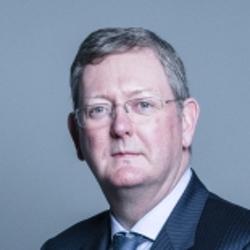
Lord Caine
Conservative - Life peer
Joined House of Lords: 2nd September 2016
Shadow Minister (Northern Ireland)
(since September 2024)1 APPG Officer Position (as of 1 Sep 2026)
Rugby Football League Lord Caine is not a member of any APPGs2 Former APPG Officer Positions
Rugby League, UnionDivision Voting information
Debates during the 2024 Parliament
Speeches made during Parliamentary debates are recorded in Hansard. For ease of browsing we have grouped debates into individual, departmental and legislative categories.
Sparring Partners
Captain of the King's Bodyguard of the Yeomen of the Guard (HM Household) (Deputy Chief Whip, House of Lords)
(25 debate interactions)
Liberal Democrat Lords Spokesperson (Northern Ireland)
(7 debate interactions)
Leader of the House of Lords and Lord Privy Seal
(4 debate interactions)
Department Debates
(10 debate contributions)
(7 debate contributions)
(3 debate contributions)
(3 debate contributions)
Legislation Debates
(1,062 words contributed)
(364 words contributed)
Lords initiatives
These initiatives were driven by Lord Caine, and are more likely to reflect personal policy preferences.
1 Bill introduced by Lord Caine
A Bill to make provision about the national and cultural identity and language in Northern Ireland
This Bill received Royal Assent on 6th December 2022 and was enacted into law.
Lord Caine has not co-sponsored any Bills in the current parliamentary sitting
Latest 50 Written Questions
(View all written questions)2 Other Department Questions
The Cabinet Siting and Pole Siting Code of Practice 2016 provides guidance on ways operators can ensure installations are placed appropriately, and that local authorities and communities are engaged. Operators deploying telegraph poles under permitted development rights must notify the local planning authority at least 28 days in advance. The Code of Practice also sets out that operators should place a site notice informing nearby residents of a proposed pole.
This is supplemented by revised industry guidance. The Telecommunications Poles Working Group published its Best Practice Recommendations in March 2025, which sets out expectations for operators on siting infrastructure and community engagement.
I will place a copy of the Cabinet Siting and Pole siting Code of Practice 2016 as well as the Best Practice Recommendations 2025 in the libraries of both Houses.
Parliamentary Under-Secretary of State (Department for Digital, Culture, Media and Sport)
The Cabinet Siting and Pole Siting Code of Practice 2016 provides guidance on ways operators can ensure installations are placed appropriately, and that local authorities and communities are engaged. Operators deploying telegraph poles under permitted development rights must notify the local planning authority at least 28 days in advance. The Code of Practice also sets out that operators should place a site notice informing nearby residents of a proposed pole.
This is supplemented by revised industry guidance. The Telecommunications Poles Working Group published its Best Practice Recommendations in March 2025, which sets out expectations for operators on siting infrastructure and community engagement.
I will place a copy of the Cabinet Siting and Pole siting Code of Practice 2016 as well as the Best Practice Recommendations 2025 in the libraries of both Houses.
Parliamentary Under-Secretary of State (Department for Digital, Culture, Media and Sport)
I am the Government’s chief legal adviser but, by long-standing convention, the fact that I, or a fellow Law Officer, may have advised or not advised, and the content of our advice, is not disclosed outside government, as is reflected in the Ministerial Code.
This is a long-standing policy observed by successive governments. It is also an important legal principle, as confirmed by the Bar Council, that “barristers do not choose their clients, nor do they associate themselves with their clients’ opinions or behaviour by virtue of representing them”.
Law Officers, by their experience and professional nature will sometimes have an extensive legal background and may have previously been involved in a wide number of past cases. That is why there is a robust system for considering and managing any conflicts that may arise, in line with the professional obligations of lawyers.
There is the established process on ministerial declarations, with previous employment and interests having been published for the public record. In general, there has always been an established rigorous system in place within the Attorney General’s Office to ensure that a Law Officer would not be consulted on any matter that could give rise to a potential conflict of interest. This system sits alongside the declaration of interest system overseen by the Prime Minister’s Independent Adviser on Ministerial Standards.
If a Law Officer publicly confirmed specific matters where they were recused, this would likely disclose that the other Law Officer was therefore giving advice or infer that legal advice had been requested by the Government on a specific matter, which would risk a breach of the Law Officers’ Convention. In addition, a lawyer cannot breach a client’s confidentiality in relation to advisory work that had previously not been made public so this would limit the ability of a Law Officer to publish in full their previous caseload and conflicts schedule. In that regard, I have been through the same process as previous Law Officers, none of which have gone as far to proactively disclose their specific conflicts of interest for the reasons set out above.
As I set out to the Justice Select Committee (15 January 2025), I confirmed that as a private barrister prior to my appointment as Attorney General, I represented Gerry Adams on an issue unconnected to the Legacy Act.
The Prime Minister wants power, opportunity and investment spread more fairly across the country, so that every town, city and community can share in economic success. No10 North is about taking power and decision-making out of Westminster and putting it closer to people's lives.
Parliamentary Secretary (Cabinet Office)
The former Deputy Prime Minister’s Official Residence in Admiralty House was registered as her secondary residence with Westminster City Council.
Captain of the King's Bodyguard of the Yeomen of the Guard (HM Household) (Deputy Chief Whip, House of Lords)
Sue Gray has decided not to accept the role of Envoy to the Nations and Regions. It would not be appropriate to share details of HR matters.
Parliamentary Secretary (Cabinet Office)
There is no further update following the answer given in HL1373.
Parliamentary Secretary (Cabinet Office)
The Prime Minister began immediate work to reset relationships with leaders in Scotland, Wales and Northern Ireland and regional mayors in England. The Prime Minister travelled to meet with the First Ministers in Scotland and Wales, and the First Minister and deputy First Minister in Northern Ireland within the first week of being in office. He also hosted the regional mayors for a meeting in Downing Street. He has since had further correspondence and conversations with leaders across the nations and regions, including at the first Council of the Nations and Regions. He speaks regularly to the Secretaries of State for Scotland, Wales and Northern Ireland, including at Cabinet meetings.
Parliamentary Secretary (Cabinet Office)
There is no further update following the answer given in HL1373.
Parliamentary Secretary (Cabinet Office)
The terms of reference for the Prime Minister’s Envoy for the Nations and Regions will be published online in the normal way, setting out the purpose, scope and remit of the role, including how the Envoy will work with Cabinet Ministers and devolved counterparts to support the Government’s efforts to reset relations across the UK.
Leader of the House of Lords and Lord Privy Seal
Special advisers are required to abide by the Code of Conduct for Special Advisers at all times and are required to make declarations in line with published transparency guidance. Under the guidance, which was also in place for the previous Administration, details of meetings between special advisers and the devolved governments or political parties are not disclosed.
Parliamentary Secretary (Cabinet Office)
1 Department for Business, Innovation, Science and Trade Questions
(View all Lord Caine's BIST questions)Qualification for inclusion under each of these employment rights will depend on whether individuals meet the eligibility criteria for each right. If a special adviser meets the eligibility criteria, then a right will apply to them.
1 Department for Environment, Food and Rural Affairs Questions
(View all Lord Caine's Defra questions)The Government has carefully reviewed the evidence from the consultation carried out earlier this year and has conducted comprehensive engagement with businesses. This has informed our planned approach which will safeguard the supply of goods into Northern Ireland.
We will work intensively with industry to monitor those supplies and to be assured that they will be maintained as the implementation of the Windsor Framework continues. At the same time, we will take the powers necessary to apply ‘not for EU’ labelling in the future, if that is required to secure those supplies across the UK internal market.
Parliamentary Under-Secretary (Department for Environment, Food and Rural Affairs)
The Leeds Station Sustainable Travel Gateway is a scheme within the West Yorkshire Combined Authority’s (WYCA’s) City Region Sustainable Transport Settlement (CRSTS). I am pleased that WYCA is using its £830 million CRSTS allocation to invest in local transport priorities, and we will continue supporting improvements to local transport, providing WYCA with an additional £2.1 billion Transport for City Regions (TCR) settlement for 2027–32.
I agree that timely delivery is important so that passengers at Leeds Station benefit from the improvements as soon as possible. CRSTS and TCR are designed to give Mayoral Combined Authorities the flexibility to plan and deliver long‑term transport programmes. It is therefore for WYCA, working with Leeds City Council, to set timelines, manage funding, and deliver the Leeds Station Gateway scheme.
Minister of State (Department for Transport)
On 12 May, the Secretary of State announced in the House of Commons the start of the first phase of the review of the PIP assessment, which will be led by the Minister for Social Security and Disability. We will work with and listen closely to stakeholders to gather views on how best to approach the review before publishing the Terms of Reference.
The review will be guided by the principle that PIP is there to support disabled people with extra costs and to enable independent living, taking account of how the nature of disability and health conditions have changed since PIP was first introduced. The work to prepare the Terms of Reference will not include a specific focus group or panel comprising individuals with fluctuating and neurological conditions, but suggestions from such individuals about what the Terms of Reference should cover would be welcome.
Minister of State (Department for Work and Pensions)
DWP has set standards for the quality of assessments for all health professionals (HPs) conducting Personal Independence Payment (PIP) assessments on behalf of the department. The department closely monitors all aspects of the process including how HPs apply the criteria set out in legislation.
PIP assessments are conducted by fully qualified, clinical professionals (Doctors, Nurses, Paramedics, Occupational Therapists, Physiotherapists and Pharmacists) who have undergone a comprehensive training programme designed and approved by DWP. The quality of their advice is continually assured internally by the assessment suppliers and externally by the department's independent audit function.
Audit refers to a comprehensive check of the elements of the assessment, including the evidence collection, further evidence provided and the completion of the assessment report by the HP. The check is completed against a set of guidelines which ensures the criteria is applied appropriately and that a consistent approach is taken in all cases, including those involving fluctuating or invisible conditions. This ensures that assessment reports are fit for purpose, clinically justified and sound, and provide sufficient information for the department to make an informed decision on entitlement to benefit.
The department does not hold data on cases overturned at mandatory reconsideration or tribunal stages due to a failure by assessors to correctly consider reliability criteria in cases involving fluctuating or invisible conditions.
The recent Pathways to Work Green Paper has proposed that assessments should, in future, be recorded by default. It is hoped that this will give new opportunities to establish what has gone wrong when assessments are subsequently found to be incorrect, including when the fault has been a failure to assess correctly the impact of a fluctuating condition.
Minister of State (Department for Work and Pensions)
Personal Independence Payment (PIP) provides support based on the needs arising from a health condition or disability, and a functional assessment is an important part of PIP.
The Department recognises the importance of ensuring health professionals (HPs) have sufficient experience, skills, and training to undertake assessments. DWP has set out very clear rules on HP competency, both in guidance and in regulations.
All HPs receive comprehensive training in disability analysis, including how to assess the impacts of medical conditions on people’s day-to-day activities, as well as awareness training in a range of conditions, symptoms and disabilities. The principles of assessing claimants on their ability to carry out an activity safely, to an acceptable standard, repeatedly and within a reasonable time period are a core part of the HP training and guidance materials. Our assessment suppliers are required to demonstrate that their HPs meet all our requirements before they are approved to carry out assessments on behalf of DWP, and all HP core training and guidance material undergoes both clinical and policy quality assurance.
The Personal Independence Payment Assessment Guide (PIPAG) provides guidance for assessment suppliers and HPs carrying out PIP assessments on applying the criteria set out in legislation. This includes sections on “Time periods, fluctuations and descriptor choices” and “Reliability”, which cover assessing the impacts of health conditions and impairments which can fluctuate over time in line with the reliability criteria.
Minister of State (Department for Work and Pensions)
We currently have no plans to review this specific criterion. However, in the Pathways to Work Green Paper ,we announced plans to launch a review of the PIP assessment, which the Minister for Social Security and Disability shall lead.
To make sure we get this right, we will bring together a range of experts, stakeholders and people with lived experience to consider how best to do this and to start the process as part of preparing for a review. We will provide further details about the scope of the review as plans progress.
Minister of State (Department for Work and Pensions)
Personal Independence Payment provides support based on the needs arising from a health condition or disability. Individuals can be impacted by their health conditions in different ways, so the assessment considers the effect on a person’s day to day life, rather than focusing solely on the health condition or impairment itself. As such, our focus is on ensuring that PIP assessors are experts in disability analysis rather than diagnosing a condition or its severity or recommending treatment options.
The PIP assessment criteria are set out in legislation. The assessment looks at how a long-term health condition or disability impacts on daily life across 12 activities, taking into account fluctuations over a 12 month period. The activities are grouped into two components, for daily living and mobility and within each activity a descriptor must be chosen to score an individual depending on how well they are able to perform the activity. Every claim to PIP is assessed against all 12 activities.
Minister of State (Department for Work and Pensions)
The Government has announced a cut in VAT on electricity bills to give millions of households breathing space on the cost of living. These changes to VAT apply and are funded for this winter (from 1 October 2026 to 31 March 2027).
The Windsor Framework provides the legal basis and mechanism for changes to VAT on goods in Northern Ireland, and the Government has begun discussions about with the European Union on applying this mechanism for these changes.
To ensure that households in Northern Ireland receive the same support as quickly as the rest of the UK, the Northern Ireland Executive will receive comparable funding to enable it to support households in Northern Ireland with the cost of living this winter.
Parliamentary Secretary (HM Treasury)
A Tax Information and Impact Note (TIIN) was published alongside the introduction of the Bill containing the changes to employer NICs. The TIIN sets out the impact of the policy on the exchequer, the economic impacts of the policy, and the impacts on individuals, businesses, and civil society organisations, as well as an overview of the equality impacts.
To ensure parity with English state boarding schools, the UK Government has provided financial support to voluntary grammar schools in Northern Ireland providing an equivalent service to state run boarding in England, but for whom it was not possible to legislate for a carve-out from the VAT charge. This will ensure pupils boarding at these schools are on the same footing as those attending English boarding schools.
The Government published information about the reforms to agricultural property relief and business property relief on gov.uk.
Almost three-quarters of estates claiming agricultural property relief (or those claiming agricultural property relief and business property relief together) each year are expected to be unaffected by these reforms. It is expected that up to around 2,000 estates will be affected by the changes to APR and BPR. Up to around 520 of these are expected to relate to claims for APR (including those that also claim for BPR), and this number falls to around 430 when claims that include AIM shares are excluded.
The Government takes into account all representations made ahead of the Budget, and meets with stakeholders on a regular basis.
The Government published information about the reforms to agricultural property relief and business property relief on gov.uk.
Almost three-quarters of estates claiming agricultural property relief (or those claiming agricultural property relief and business property relief together) each year are expected to be unaffected by these reforms. It is expected that up to around 2,000 estates will be affected by the changes to APR and BPR. Up to around 520 of these are expected to relate to claims for APR (including those that also claim for BPR), and this number falls to around 430 when claims that include AIM shares are excluded.
The Government takes into account all representations made ahead of the Budget, and meets with stakeholders on a regular basis.
The UK and Ireland have a close and collaborative relationship on migration and border security, and we are jointly committed to protecting the Common Travel Area and safeguarding it from abuse.
The CTA supports the long-standing principle of free movement for British and Irish citizens between the UK, Ireland, and Crown Dependencies and the Government is committed to maintaining these arrangements. Non-British or Irish individuals arriving in the UK, including those crossing the land border into Northern Ireland, are required to enter in line with the UK’s immigration framework.
There are – and will continue to be – no routine immigration controls on the Ireland-Northern Ireland land border, nor on journeys within the Common Travel Area (CTA).
The Police Service of Northern Ireland are devolved to the Northern Ireland Assembly.
Minister of State (Home Office)
1 Ministry of Housing, Communities and Local Government Questions
(View all Lord Caine's MHCLG questions)Housing and homelessness policy and legislation are devolved matters. The Northern Ireland Executive is responsible for homelessness policy, legislation and services in Northern Ireland, including the development of its own homelessness strategies. MHCLG's homelessness strategy applies to England only.
We continue to engage with counterparts in the devolved administrations to share learning and discuss issues of common interest, including homelessness.
Parliamentary Under-Secretary (Housing, Communities and Local Government)
Northern Ireland has a rich and vibrant hospitality sector, with a wide range of pubs and brewing companies. Recent examples such as the Fleadh Cheoil na hÉireann in Belfast have demonstrated the vital role this sector plays in the economy and life of Northern Ireland.
This Government has shown its commitment to supporting the brewing and pub sector with Pubs, clubs and live music venues receiving a 20% cut to their business rates bills. This is of course devolved to Northern Ireland, but the Government wants to work with the Executive to support our pubs and brewers amidst the rising cost of living.
Captain of the King's Bodyguard of the Yeomen of the Guard (HM Household) (Deputy Chief Whip, House of Lords)
This Government continues to support Northern Ireland within the Union. We remain focused on delivering real, tangible benefits of the Union for everyone in Northern Ireland. This includes delivering economic growth in every postcode, providing practical support for families in Northern Ireland and across the UK, and working in partnership with the Northern Ireland Executive for the benefit of the people of Northern Ireland.
Captain of the King's Bodyguard of the Yeomen of the Guard (HM Household) (Deputy Chief Whip, House of Lords)
In accordance with the Good Friday Agreement and the Principle of Consent, Northern Ireland will remain part of the UK for as long as its people wish for it to be.
There is no clear basis to suggest that a majority of people in Northern Ireland presently wish to separate from the United Kingdom.
As set out in the Northern Ireland Act 1998, the duty to call such a poll rests with the Secretary of State for Northern Ireland alone.
Captain of the King's Bodyguard of the Yeomen of the Guard (HM Household) (Deputy Chief Whip, House of Lords)
Fleur Ravensbergen is undertaking this scoping exercise independently of the Government. To protect the independence of this role we have not been assessing her work as it progresses. We expect to receive her report in the Autumn and will take time to carefully and thoroughly consider it.
Captain of the King's Bodyguard of the Yeomen of the Guard (HM Household) (Deputy Chief Whip, House of Lords)
The Government remains committed to an independent and objective examination of UK Government policy in Northern Ireland during the Troubles, and progress continues to be made. Supported by the project’s independent expert advisory panel, the recruitment of a team of historians is now in its final stages, and we expect to make further announcements on this in the near future. The total budget for the project is £3.6 million over its life cycle. The estimated timetable for completion is five years.
Captain of the King's Bodyguard of the Yeomen of the Guard (HM Household) (Deputy Chief Whip, House of Lords)
I refer the Noble Lord to the answer provided on 14 July (HL1786), which outlines how the referenced commitment is embedded throughout the continued work of the Government.
The implementation of several Government strategies have been accompanied by the publication of Northern Ireland-specific papers that evidence the mutual benefits of the Union and include long-term plans to support specific sectors. For instance, the launch of the Industrial Strategy in June 2025 was complemented by the publication of a Northern Ireland-specific paper. This paper analysed the Northern Ireland industrial sector, identified the key areas that add significant value to the UK as a whole, and outlined the long-term plan to support and grow the sector.
Through this approach, the Government is moving beyond high-level commitments to deliver tangible results that demonstrate the mutual benefits of Northern Ireland’s place in the Union.
Captain of the King's Bodyguard of the Yeomen of the Guard (HM Household) (Deputy Chief Whip, House of Lords)
The Government is committed to retaining Part 4 of the Legacy Act, which includes the oral history and other measures stemming from the Stormont House Agreement.
The full implementation of Part 4 was difficult in the challenging context created by the Legacy Act’s other provisions, which were widely opposed by all Northern Ireland political parties, victims’ groups and key stakeholders. That is why this Government’s focus has necessarily been on addressing the problems with the Legacy Act by ensuring a reformed and strengthened Legacy Commission can deliver for victims. This in turn will create the space for Part 4 measures to make a meaningful impact.
While preliminary work on these measures continues, progress has been made on two related initiatives: an Official History relating to the Troubles, and a project to digitise and make freely available online Troubles-related records held by The National Archives. A first batch of approximately 1,000 records was published in April 2026 and we expect further announcements on these projects in the near future.
Captain of the King's Bodyguard of the Yeomen of the Guard (HM Household) (Deputy Chief Whip, House of Lords)
The Government is committed to building a closer and ambitious relationship with the EU, to the advantage of the whole of the UK. This includes through new agreements on agri-food, electricity and emissions trading, which will benefit Northern Ireland through the Windsor Framework by smoothing flows of trade, lowering prices and increasing choice for consumers.
The Government remains clear that Northern Ireland’s trading arrangements should serve to prevent a hard border on the island of Ireland, account for Northern Ireland’s unique circumstances, and in doing so protect its access to both the UK and EU markets. Only that way can we deliver the certainty for businesses that has made Northern Ireland one of the fastest growing parts of the UK.
Captain of the King's Bodyguard of the Yeomen of the Guard (HM Household) (Deputy Chief Whip, House of Lords)
The Secretary of State for Northern Ireland remains committed to working with the Northern Ireland Executive to discuss all issues of interest, including ensuring the stability of devolved government, with the aim of improving public services and the sustainability of public finances.
Several of the Northern Ireland parties have set out proposals for reform and the Secretary of State looks forward to discussing them further.
Captain of the King's Bodyguard of the Yeomen of the Guard (HM Household) (Deputy Chief Whip, House of Lords)
The Government is continuing to implement the Safeguarding the Union command paper and to support Northern Ireland's place in the Union. This commitment is embedded throughout the work of the Government and is focused on delivering for the people of Northern Ireland. We are going beyond setting out the value of Northern Ireland’s place in the Union on paper, by delivering real, tangible benefits of the Union for people in Northern Ireland.
For instance, via the recently launched Northern Ireland Defence Growth Deal. Through sectoral analysis, this initiative provides concrete benefits to the Northern Ireland defence industry, which will boost supply chains and support hundreds of highly skilled, well-paid jobs. In addition, the Government has provided Intertrade UK with £2.25 million over the next three years to help strengthen the UK internal market. This will include independent research into improving infrastructure and connectivity across the United Kingdom, one of the body's priorities in its published work programme.
Captain of the King's Bodyguard of the Yeomen of the Guard (HM Household) (Deputy Chief Whip, House of Lords)
The Government is continuing to make progress on the implementation of the commitments made in the Safeguarding the Union command paper, and to protect Northern Ireland’s place in the UK Internal Market.
The Government regularly publishes papers and strategies that demonstrate Northern Ireland's value to, and place in, the Union. For instance, the Modern Industrial Strategy – published in June 2025 – and the Northern Ireland Defence Growth Deal – published in April 2026. The Government remains focused on delivery, and will continue to provide further updates on specific commitments as and when they are implemented.
Captain of the King's Bodyguard of the Yeomen of the Guard (HM Household) (Deputy Chief Whip, House of Lords)
The Government cooperates closely with the Irish Government on the security of the Common Travel Area, with a focus on preventing abuse of free movement by those not entitled to the Common Travel Area’s benefits. Cross-border security is a standing agenda item at the British-Irish Intergovernmental Conference, with the next Conference expected later this year.
Captain of the King's Bodyguard of the Yeomen of the Guard (HM Household) (Deputy Chief Whip, House of Lords)
The Government is committed to continuing to take forward the Safeguarding the Union command paper, and to protecting Northern Ireland’s place in the UK Internal Market.
We continue to make progress on delivering the commitments made in the command paper. For instance in 2025, three centuries of the News Letter were digitised and there remains no Border Control Post at Cairnryan. In January, the East-West Council met for the third time, where the Government announced there would be a pilot for the UK school twinning programme. This will focus on reading and is being developed between the UK Government’s Department for Education and the Northern Ireland Executive’s Department of Education.
Other recent steps include the allocation of £2.25 million for Intertrade UK over the next three years and the opening of round two of the Connect Fund to support community and voluntary groups. In line with commitments made in Safeguarding the Union, in December the Government published our response to Lord Murphy’s Independent Review of the Windsor Framework, and is now taking action on its recommendations.
Captain of the King's Bodyguard of the Yeomen of the Guard (HM Household) (Deputy Chief Whip, House of Lords)
I have answered this question on the assumption that the Noble Lord is referring to Troubles-related prosecutions.
While ongoing prosecutions are a matter for the independent Public Prosecution Service for Northern Ireland, it is the Government’s understanding that there are now nine ongoing Troubles-related prosecutions.
Of those nine prosecutions, six fall in the republican category. The Government does not hold information regarding the specific paramilitary organisations involved in each case.
Captain of the King's Bodyguard of the Yeomen of the Guard (HM Household) (Deputy Chief Whip, House of Lords)
I have answered this question on the assumption that the Noble Lord is referring to Troubles-related prosecutions.
This is a matter for the devolved and independent Public Prosecution Service for Northern Ireland. The Government, therefore, does not hold the specific information that has been requested.
We understand that, between 1 January 2012 and December 2024, 68 decisions on whether to prosecute were taken in relation to Troubles-related cases. Of these 68, there were 25 decisions to prosecute; 13 of these decisions relate to cases that fall within the republican category, 6 within the loyalist category, and 6 within the military category.
Where decisions have been taken to prosecute, there have been 6 convictions; 3 in the republican category, two in the loyalist category, and 1 in the military category, with that individual being given a suspended sentence.
We understand that figures relating to 1998-2012 are not available.
Captain of the King's Bodyguard of the Yeomen of the Guard (HM Household) (Deputy Chief Whip, House of Lords)
I have answered this question on the assumption that the Noble Lord is referring to Troubles-related prosecutions.
While ongoing prosecutions are a matter for the independent Public Prosecution Service for Northern Ireland, it is the Government’s understanding that there are now nine ongoing Troubles-related prosecutions.
Of those nine prosecutions, six fall in the republican category, one in the loyalist category, one in the former police category and one in the military category.
Captain of the King's Bodyguard of the Yeomen of the Guard (HM Household) (Deputy Chief Whip, House of Lords)
The Northern Ireland Human Rights Commission is independent of Government and has a statutory duty to ensure government and other public bodies protect the human rights of everyone in Northern Ireland. The Secretary of State for Northern Ireland has met the Chief Commissioner to discuss a range of issues, including the Government’s approach to legacy reform.
The Independent Commission for Reconciliation and Information Recovery is operationally independent from Government, and its recruitment processes are a matter for it to determine within the statutory framework.
Captain of the King's Bodyguard of the Yeomen of the Guard (HM Household) (Deputy Chief Whip, House of Lords)
The Northern Ireland Human Rights Commission is operationally independent from Government. The Secretary of State for Northern Ireland has met the Chief Commissioner to discuss a range of issues, including the Government’s approach to legacy reform.
Captain of the King's Bodyguard of the Yeomen of the Guard (HM Household) (Deputy Chief Whip, House of Lords)
Since 5 July 2024, the total cost of expenditure on air travel between Great Britain and Northern Ireland for the Secretary of State for Northern Ireland is £17,972.56, for the Parliamentary Under Secretary of State it is £12,483.01. My total air travel expenditure is £817.27.
Captain of the King's Bodyguard of the Yeomen of the Guard (HM Household) (Deputy Chief Whip, House of Lords)
Since 5 July 2024, the Department has incurred expenditure of £9,728.99 for overseas travel undertaken by the Secretary of State for Northern Ireland. A total expenditure of £4,968.33 has been incurred for overseas travel undertaken by the Parliamentary Under-Secretary of State. No such expenditure has been incurred for myself.
Data on ministers’ overseas travel and on senior civil servants’ business expenses is published on a quarterly basis.
Captain of the King's Bodyguard of the Yeomen of the Guard (HM Household) (Deputy Chief Whip, House of Lords)
Since 5 July 2024, the Secretary of State for Northern Ireland and Parliamentary Under Secretary of State have travelled regularly across Northern Ireland to undertake official business.
The Secretary of State has travelled to Northern Ireland 42 times since 5 July 2024. The Parliamentary Under Secretary of State has travelled to Northern Ireland 34 times, and I have travelled to Northern Ireland three times.
Captain of the King's Bodyguard of the Yeomen of the Guard (HM Household) (Deputy Chief Whip, House of Lords)