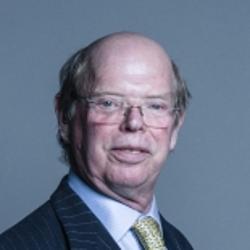
Earl of Caithness
Conservative - Excepted Hereditary
Joined House of Lords: 2nd December 1969
Left House: 29th April 2026 (Excluded)
5 APPG Memberships
Environment, Science and Technology in Agriculture, Sustainable Flood and Drought Management, Wood Panel Industry, Woods and Trees8 Former APPG Officer Positions
Agroecology for Sustainable Food and Farming, Environment, Forestry and Tree Planting, Game and Wildlife Conservation, National Food Strategy, Sustainable Flood and Drought Management, Timber Industries, Trade JusticeDivision Voting information
Earl of Caithness voted Aye - against a party majority and in line with the House
One of 9 Conservative Aye votes vs 215 Conservative No votes
Tally: Ayes - 304 Noes - 260
Earl of Caithness voted Aye - against a party majority and against the House
One of 1 Conservative Aye votes vs 215 Conservative No votes
Tally: Ayes - 265 Noes - 269
Earl of Caithness voted Aye - against a party majority and in line with the House
One of 1 Conservative Aye votes vs 215 Conservative No votes
Tally: Ayes - 308 Noes - 261
Earl of Caithness voted Aye - against a party majority and against the House
One of 9 Conservative Aye votes vs 198 Conservative No votes
Tally: Ayes - 57 Noes - 234
Earl of Caithness voted Aye - against a party majority and in line with the House
One of 39 Conservative Aye votes vs 158 Conservative No votes
Tally: Ayes - 395 Noes - 169
Earl of Caithness voted Aye - against a party majority and against the House
One of 4 Conservative Aye votes vs 218 Conservative No votes
Tally: Ayes - 158 Noes - 260
Earl of Caithness voted Aye - against a party majority and in line with the House
One of 11 Conservative Aye votes vs 183 Conservative No votes
Tally: Ayes - 278 Noes - 200
Earl of Caithness voted Aye - against a party majority and in line with the House
One of 2 Conservative Aye votes vs 175 Conservative No votes
Tally: Ayes - 249 Noes - 200
Earl of Caithness voted Aye - against a party majority and in line with the House
One of 9 Conservative Aye votes vs 145 Conservative No votes
Tally: Ayes - 266 Noes - 159
Earl of Caithness voted Aye - against a party majority and in line with the House
One of 4 Conservative Aye votes vs 201 Conservative No votes
Tally: Ayes - 280 Noes - 218
Earl of Caithness voted Aye - against a party majority and in line with the House
One of 3 Conservative Aye votes vs 182 Conservative No votes
Tally: Ayes - 258 Noes - 208
Earl of Caithness voted Aye - against a party majority and against the House
One of 15 Conservative Aye votes vs 103 Conservative No votes
Tally: Ayes - 29 Noes - 145
Earl of Caithness voted No - against a party majority and in line with the House
One of 37 Conservative No votes vs 41 Conservative Aye votes
Tally: Ayes - 107 Noes - 180
Earl of Caithness voted Aye - against a party majority and against the House
One of 24 Conservative Aye votes vs 65 Conservative No votes
Tally: Ayes - 72 Noes - 151
Earl of Caithness voted No - against a party majority and against the House
One of 10 Conservative No votes vs 30 Conservative Aye votes
Tally: Ayes - 175 Noes - 16
Earl of Caithness voted No - against a party majority and against the House
One of 13 Conservative No votes vs 24 Conservative Aye votes
Tally: Ayes - 142 Noes - 18
Earl of Caithness voted No - against a party majority and in line with the House
One of 7 Conservative No votes vs 27 Conservative Aye votes
Tally: Ayes - 47 Noes - 194
Earl of Caithness voted Aye - against a party majority and against the House
One of 11 Conservative Aye votes vs 133 Conservative No votes
Tally: Ayes - 122 Noes - 326
Earl of Caithness voted Aye - against a party majority and against the House
One of 4 Conservative Aye votes vs 178 Conservative No votes
Tally: Ayes - 114 Noes - 207
Earl of Caithness voted Aye - against a party majority and in line with the House
One of 8 Conservative Aye votes vs 161 Conservative No votes
Tally: Ayes - 223 Noes - 172
Earl of Caithness voted Aye - against a party majority and in line with the House
One of 7 Conservative Aye votes vs 158 Conservative No votes
Tally: Ayes - 207 Noes - 172
Earl of Caithness voted Aye - against a party majority and in line with the House
One of 18 Conservative Aye votes vs 59 Conservative No votes
Tally: Ayes - 213 Noes - 60
Earl of Caithness voted Aye - against a party majority and against the House
One of 14 Conservative Aye votes vs 70 Conservative No votes
Tally: Ayes - 25 Noes - 74
Earl of Caithness voted No - against a party majority and against the House
One of 9 Conservative No votes vs 128 Conservative Aye votes
Tally: Ayes - 211 Noes - 82
Earl of Caithness voted Aye - against a party majority and against the House
One of 23 Conservative Aye votes vs 82 Conservative No votes
Tally: Ayes - 84 Noes - 263
All Debates
Speeches made during Parliamentary debates are recorded in Hansard. For ease of browsing we have grouped debates into individual, departmental and legislative categories.
Sparring Partners
(26 debate interactions)
(20 debate interactions)
Department Debates
(183 debate contributions)
(99 debate contributions)
(61 debate contributions)
(56 debate contributions)
Legislation Debates
(16,991 words contributed)
(15,255 words contributed)
(9,038 words contributed)
(7,489 words contributed)
Lords initiatives
These initiatives were driven by Earl of Caithness, and are more likely to reflect personal policy preferences.
Earl of Caithness has not introduced any legislation before Parliament
Earl of Caithness has not co-sponsored any Bills in the current parliamentary sitting
Latest 43 Written Questions
(View all written questions)1 Other Department Questions
The Government has discussed this matter with Carlos Moedas, the European Commissioner responsible for Research, Science and Innovation and with Commission officials. The European Commission is still considering a number of options on the future provision of scientific advice to the European Commission and has indicated it will make an announcement before the summer.
Shadow Minister (Treasury)
The Guide to Handling Correspondence, sets out the guidance for Government departments and executive agencies to follow in responding to correspondence from members of Parliament. While it is not mandatory for correspondence from members of Parliament to be answered by Chief Executive Officers of non-departmental public bodies, correspondence responses should be high quality and answered within set timeframes.
Captain of the King's Bodyguard of the Yeomen of the Guard (HM Household) (Deputy Chief Whip, House of Lords)
35 Department for Environment, Food and Rural Affairs Questions
(View all Earl of Caithness's Defra questions)The Government is committed to encouraging the increased development, access and use of low risk biopesticides as a key component of Integrated Pest Management and the UK Pesticides National Action Plan.
The Government has agreed with the EU to establish a common food safety area by way of a Sanitary and Phytosanitary Agreement. Pesticides, including biopesticides, are in scope. The EU is also committed to encouraging development and use of biopesticides, as highlighted in their proposed Food and Feed safety simplification omnibus package. The agreement provides an opportunity to work closely with the EU to support faster access to biopesticides.
Parliamentary Under-Secretary (Department for Environment, Food and Rural Affairs)
Improving access to low risk biopesticides for farmers, growers and other land managers is a priority for this Government – as set out in the UK Pesticides National Action Plan, published this year.
The Health and Safety Executive (HSE), which regulates the approval, authorisation and use of biopesticides in the UK runs a biopesticide scheme to support companies seeking to market biopesticides in the UK. Support provided through the scheme includes dedicated HSE biopesticide champions, free pre-submission advice, and capped fees for biopesticide active substance approval.
In May this year the government set out its intention to establish a common Sanitary and Phytosanitary (SPS) area with the EU, by way of an SPS Agreement. Pesticides regulations are in scope of the SPS agreement. As set out in the EU Vision for Agriculture and its recent SPS Omnibus Package Call for Evidence, the EU shares our aim to improve access to biopesticides. We welcome the EU’s review of regulatory barriers to innovation and, look forward to working collaboratively to deliver our shared aims.
Parliamentary Under-Secretary (Department for Environment, Food and Rural Affairs)
Defra is funding the Biopesticides Innovation Research Network (BIRCH) led by the UK Centre for Ecology and Hydrology (UKCEH).
This network will act as a focal point between researchers, industry, regulators and policy and will work to develop advice to support the registration and risk assessment of biopesticides. The network will engage with EU organisations and at the international level to share knowledge and encourage alignment between relevant groups and projects.
Parliamentary Under-Secretary (Department for Environment, Food and Rural Affairs)
As our main arm’s length body for nature in England and in line with its statutory purpose, Natural England is keen to keep Parliament and Parliamentarians up to speed with its operations. Natural England makes its wealth of science, evidence and experience of delivery available to Parliament in a number of ways including regular contributions to Parliamentary Select Committee inquiries and Parliamentary groups such as APPGs as well as individual meetings with MPs, Peers and Parliamentary staff where that is appropriate and adds value.
Parliamentary Under-Secretary (Department for Environment, Food and Rural Affairs)
The roadmap to address levels of fipronil or imidacloprid in UK waterways will be published imminently, subject to ministerial clearance and upon receipt of a grid slot.
Parliamentary Under-Secretary (Department for Environment, Food and Rural Affairs)
The Government recognises the challenge that bracken presents to land managers, particularly in upland regions. Mechanical control and chemical control using glyphosate can be useful tools in controlling bracken, though the government recognises their limitations. It is for individual land managers to decide how to control bracken within safe and legal means.
The Government encourages industry and other external partners to develop new tools that will help to address the challenge of managing bracken. Any herbicides not currently allowed for bracken control would require authorisation for that purpose by the Health and Safety Executive.
Parliamentary Under-Secretary (Department for Environment, Food and Rural Affairs)
Parasiticides, such as those containing fipronil and imidacloprid, play an essential role in protecting both animal and human health against fleas and ticks and their associated vector-borne diseases, which can lead to parasitic disease in pets and present zoonotic risks to humans, as well as causing distress and discomfort. The concerns regarding the potential contribution of flea and tick treatments to the levels of imidacloprid currently being detected in UK surface waters are recognised. The Veterinary Medicine Directorate (VMD) is currently gathering evidence on this issue and has initiated the formation of a cross-governmental Pharmaceuticals in the Environment (PiE) Group.
The PiE Group has set out a roadmap of activities to address levels of fipronil and imidacloprid in UK waterways. The immediate priority is to collaborate with key stakeholders to enhance and promote consistent messaging to users on the appropriate use of topical parasiticides for cats and dogs, aiming to reduce potential environmental impacts. Beyond this, actions will focus on developing our evidence base through research and monitoring. The group will use this evidence to improve understanding of the issue and inform future policy activities in the longer term.
At this stage, there are no plans to restrict flea and tick treatments to prescription only. Any future regulatory decisions will be based on robust scientific evidence to ensure both environmental protection and continued access to essential veterinary medicines.
Parliamentary Under-Secretary (Department for Environment, Food and Rural Affairs)
This is a devolved matter, and the information provided therefore relates to England only.
The Secretary of State has recently announced that the secondary legislation necessary to implement the Precision Breeding Act for plants in England will be laid by the end of March.
Defra is also considering the animal welfare framework outlined in the Precision Breeding Act.
Parliamentary Under-Secretary (Department for Environment, Food and Rural Affairs)
Defra is responsible for woodlands in England, and we are considering how to go further to reduce the impacts of grey squirrels and deer on our woodlands. We recognise the pressure on new and existing woodlands from the increasing damage caused by over-foraging of young trees and woodland flora by wild deer and from squirrels stripping bark from trees. In England this damage is primarily from grey squirrels due to their prevalence. As part of routine policy development, the department regularly engages with a variety of stakeholders, including the UK Squirrel Accord and the Deer Initiative Partnership.
Parliamentary Under-Secretary (Department for Environment, Food and Rural Affairs)
This is a devolved matter, and the information provided therefore relates to England only.
The European Commission has proposed to adopt a new, less restrictive, regulation for the marketing of plants obtained by certain new genomic techniques (NGTs) and their use for food and feed. An approach similar to that used in the Precision Breeding Act.
The proposal is still under consideration in the European Council and its contents are subject to change.
We will continue to monitor progress in the EU to understand implications for trade, including in the context of the Government's commitment to seek to negotiate a veterinary / Sanitary and Phytosanitary agreement with the EU.
Parliamentary Under-Secretary (Department for Environment, Food and Rural Affairs)
We are considering how to go further to reduce the impacts of deer on our woodlands and will have an update in due course.
Parliamentary Under-Secretary (Department for Environment, Food and Rural Affairs)
We are considering how to go further to reduce the impacts of grey squirrels on our woodlands and will have an update in due course.
Parliamentary Under-Secretary (Department for Environment, Food and Rural Affairs)
Healthy functioning soil is at the heart of restoring natural systems and underpins our plans for environmental improvement. The Government is currently undertaking a comprehensive review of all commitments made by the last government to ensure they align with our new priorities and a decision regarding any future soil strategy or action plan will be made in due course.
Central to this is our rapid review of the Environmental Improvement Plan. We will develop a new, statutory plan to protect and restore our natural environment with delivery information to help meet each of our ambitious Environment Act targets. It will focus on cleaning up our waterways, reducing waste across the economy, planting millions more trees, improving air quality and halting the decline in species by 2030.
Parliamentary Under-Secretary (Department for Environment, Food and Rural Affairs)
Peat policy is a devolved matter and the information provided therefore relates to England only.
Defra does not have any data on the percentage of Grade 1 and 2 lowland peat let on annual farm business tenancies.
In the Environmental Improvement Plan, we said that we are committed to halting the degradation of our lowland peat soils which causes such significant harm to the environment.
We have also agreed to take forward action on all recommendations of the Lowland Agricultural Peat Task Force Chair's report, recognising the vital role that lowland peat soils play in producing food for our nation and supporting our rural economies.
We are currently funding approximately £12.5million on projects on paludiculture, local collaboration, and water management, as first steps towards a more sustainable future for lowland agricultural peat.
We are also developing a new England Peat Map that will help us identify areas for future intervention.
Lord Chamberlain (HM Household)
The backlog of applications for variety listing following EU exit has now largely been resolved.
The Animal and Plant Health Agency and Defra are working closely with stakeholders to monitor the processes involved in variety listing and are currently instigating improvements and resilience in the system.
The UK authorities are working together to develop the first UK Plant Variety and Seeds strategy. Following a Call for Ideas and further industry engagement, additional improvements in the plant variety listing process are anticipated.
We held a public consultation on key proposals for the English deer management strategy in 2022. Consultation responses have been collated, analysed and fed into the development of the deer management strategy. We are also working to refresh the Grey Squirrel Action Plan.
It is our intention to publish them as soon as we are in a position to do so.
Lord Chamberlain (HM Household)
We encourage anyone feeding wild birds to do so responsibly and not feed them in the vicinity or on the same premises as poultry or other captive birds and to be aware of the risk of carrying contamination back to their poultry or other captive birds, for example on their footwear.
The feeding of wild garden birds is not prohibited by the Avian Influenza Prevention Zone (AIPZ) measures or other avian influenza disease control legislation. Where an AIPZ has been declared wild gamebirds should not be fed within 500m of a premises where more than 500 poultry or other captive birds are kept (where this area is under the control of the keeper).
The UK Health Security Agency (UKHSA) has said that avian influenza is primarily a disease of birds and the risk to the general public’s health is very low. However, members of the public should not touch, pick up or transport dead or sick birds and should keep away from bird droppings if possible, and wash their hands thoroughly if they accidentally come into contact with any bird faeces, feathers or other potentially contaminated material. The NHS website [https://www.nhs.uk/conditions/bird-flu/prevention] has further information.
Wild birds are susceptible to a range of different pathogens. The British Trust for Ornithology (BTO) provides advice about keeping bird feeders and water baths clean to prevent transmission between wild birds, this guidance will also help minimise the risk of transmission of avian influenza.
Lord Chamberlain (HM Household)
The Government recognises the importance of stakeholder engagement for the development of a strategic and coherent plan for soil health measures. Further details regarding planned engagement with stakeholders on the importance of soil and the actions needed to ensure it remains a healthy and sustainable resource, will be published soon.
Lord Chamberlain (HM Household)
We are currently developing the stakeholder engagement plan for the Soil Health Action Plan for England and will confirm timelines in due course.
A Soil Health Action Plan for England (SHAPE) is currently being developed. Stakeholder engagement on the outline of SHAPE is planned for this spring ahead of publication, which is anticipated for 2023. As part of the Soil Structure Measuring and Monitoring Scheme, methodology and guidance for arable and grassland soils is being developed and will be tested with practitioners this spring.
Non-quota species (NQS) fisheries in English waters are of significant interest to both UK and EU vessels, given the high value of NQS, and their importance to local communities. Despite this, NQS are in many cases data limited, and improving the robust scientific evidence base underpinning management of NQS is a priority area. Doing so will allow for improved assessments of stock status to take place.
The Fisheries Act also commits the Government to publish Fisheries Management Plans to help deliver our ambition for sustainable fisheries. These plans will set out how we can manage fishing activity to achieve our ambition for stocks to recover and be maintained within sustainable limits, while reducing the impact of fishing on the wider environment. The Joint Fisheries Statement will set out a list of proposed Fisheries Management Plans that will be published over the next five years.
The UK-EU Trade and Cooperation Agreement outlines provisions for the management of shared non-quota species. Working with the EU, through the Specialised Committee on Fisheries, we will develop multi-year strategies for the sustainable management of shared NQS which will be key to improved data collection.
Lord Chamberlain (HM Household)
The Government recognises the importance of labour to bringing home the harvest.
Defra continues to work closely with industry and other Government departments to understand labour supply and demand, and to ensure there is a long-term strategy for the food and farming workforce beyond 2021.
The expanded Seasonal Workers Pilot has provided a solution to the unskilled labour needs of the edible horticulture sector through 2021, supporting farmers growing UK fruit and vegetables. This sector of agriculture has the highest dependency on seasonal labour.
The Government has announced that the seasonal worker visa route will be extended to 2024 to allow overseas workers to come to the UK for up to six months to harvest both edible and ornamental crops. 30,000 visas will be available. This will be kept under review with the potential to increase by 10,000 visas if necessary.
In addition, food and farming businesses can continue to rely on EU nationals living in the UK with settled or pre-settled status. Over 5.5 million EU citizens and their families have been granted status under the EU Settlement Scheme.
The Government encourages all sectors to make employment more attractive to UK domestic workers through offering training, careers options, wage increases and to invest in automation technology. To support these efforts, Defra is working with industry and the Department for Work and Pensions to raise awareness of career opportunities in the food and farming sectors among UK workers.
Defra is also leading a Government review of automation in horticulture to improve our understanding of what is required to accelerate the development and uptake of automation technologies in both the edible and ornamental sectors, in England, with the view to reducing the sector’s long-term dependency on seasonal migrant labour. The review’s final report will be published shortly and will inform a range of policy decisions regarding automation and seasonal labour from 2022 onwards.
Lord Chamberlain (HM Household)
My remark referred to comments made by my noble Friend during the passage of the Environment Bill, where he implied a focus on the environment could conflict with the need to produce food. The remark did not refer to the speech delivered by my noble Friend during the Beyond Brexit Debate (15 November 2021). The Government is committed to rewarding farmers and land managers for their role as environmental stewards and investing in productivity, through our future environmental land management schemes and current schemes like the recently launched Farming Investment Fund. A healthy environment is crucial to providing the ecosystem services which underpin a thriving agricultural sector, through fertile soils, clean water and pollination.
The Joint Nature Conservation Committee has awarded Cranfield University the tender to provide technical assistance in its project to develop a soil health indicator for England.
Work is currently underway to establish this indicator based on a conceptual framework that links understanding of our soil systems with an approach that can interpret soil data and provide a foundation to indicate soil health in a number of scenarios. We plan to consult on the draft indicator in due course.
The information requested on money spent and staff resources to support development and implementation of the listed agreements and bodies is not held centrally. Compiling it would be a complex exercise incurring disproportionate costs. We have therefore provided the information that is readily available below.
As a Party or Member of these Conventions, Agreements and Bodies, the UK is required to make financial contributions to support their development and implementation. Details of the mandatory and voluntary financial contributions made will be publicly available in their financial records. The UK’s mandatory contributions to the conventions and bodies listed amount to more than £18 million since 2015[1].
The UK also implements these agreements through financing a large number of cross-cutting programmes and activities. One example is the world-renowned Darwin Initiative which delivers on multiple international commitments and on the UK’s wider ambitions for the protection of global biodiversity. The Darwin Initiative has committed £57 million since 2015.
Staff resources are in place to work directly on UK input to the listed agreements and organisations and also on programmes to implement them. Given the cyclical timetable of the global meetings of the Conventions and Agreements and the changing nature of the topics which they cover, staff resources are adjusted over time to ensure the UK is able to participate effectively in them. For this reason, it is difficult to accurately quantify the staff resources that have been involved since 2015.
The UK Government is fully committed to putting nature at the heart of our plans for tackling the interlinked global crises of biodiversity loss and climate change. Our departure from the EU presents an important opportunity for the UK to play a stronger global role and in some areas this will require additional resource. Efforts are underway to make sure that resources are available in order that we seize these opportunities, starting with securing an ambitious set of post-2020 global biodiversity targets at CBD COP15 and successful hosting of COP-26.
[1] Based on current exchange rates. Some subscriptions are paid in non-sterling currencies.
The information requested on money spent and staff resources to support development and implementation of the listed agreements and bodies is not held centrally. Compiling it would be a complex exercise incurring disproportionate costs. We have therefore provided the information that is readily available below.
As a Party or Member of these Conventions, Agreements and Bodies, the UK is required to make financial contributions to support their development and implementation. Details of the mandatory and voluntary financial contributions made will be publicly available in their financial records. The UK’s mandatory contributions to the conventions and bodies listed amount to more than £18 million since 2015[1].
The UK also implements these agreements through financing a large number of cross-cutting programmes and activities. One example is the world-renowned Darwin Initiative which delivers on multiple international commitments and on the UK’s wider ambitions for the protection of global biodiversity. The Darwin Initiative has committed £57 million since 2015.
Staff resources are in place to work directly on UK input to the listed agreements and organisations and also on programmes to implement them. Given the cyclical timetable of the global meetings of the Conventions and Agreements and the changing nature of the topics which they cover, staff resources are adjusted over time to ensure the UK is able to participate effectively in them. For this reason, it is difficult to accurately quantify the staff resources that have been involved since 2015.
The UK Government is fully committed to putting nature at the heart of our plans for tackling the interlinked global crises of biodiversity loss and climate change. Our departure from the EU presents an important opportunity for the UK to play a stronger global role and in some areas this will require additional resource. Efforts are underway to make sure that resources are available in order that we seize these opportunities, starting with securing an ambitious set of post-2020 global biodiversity targets at CBD COP15 and successful hosting of COP-26.
[1] Based on current exchange rates. Some subscriptions are paid in non-sterling currencies.
The information requested on money spent and staff resources to support development and implementation of the listed agreements and bodies is not held centrally. Compiling it would be a complex exercise incurring disproportionate costs. We have therefore provided the information that is readily available below.
As a Party or Member of these Conventions, Agreements and Bodies, the UK is required to make financial contributions to support their development and implementation. Details of the mandatory and voluntary financial contributions made will be publicly available in their financial records. The UK’s mandatory contributions to the conventions and bodies listed amount to more than £18 million since 2015[1].
The UK also implements these agreements through financing a large number of cross-cutting programmes and activities. One example is the world-renowned Darwin Initiative which delivers on multiple international commitments and on the UK’s wider ambitions for the protection of global biodiversity. The Darwin Initiative has committed £57 million since 2015.
Staff resources are in place to work directly on UK input to the listed agreements and organisations and also on programmes to implement them. Given the cyclical timetable of the global meetings of the Conventions and Agreements and the changing nature of the topics which they cover, staff resources are adjusted over time to ensure the UK is able to participate effectively in them. For this reason, it is difficult to accurately quantify the staff resources that have been involved since 2015.
The UK Government is fully committed to putting nature at the heart of our plans for tackling the interlinked global crises of biodiversity loss and climate change. Our departure from the EU presents an important opportunity for the UK to play a stronger global role and in some areas this will require additional resource. Efforts are underway to make sure that resources are available in order that we seize these opportunities, starting with securing an ambitious set of post-2020 global biodiversity targets at CBD COP15 and successful hosting of COP-26.
[1] Based on current exchange rates. Some subscriptions are paid in non-sterling currencies.
The latest Woodland Natural Capital Accounts were published by the Office for National Statistics in February 2020. These classify 85% of woodlands in Great Britain as in a favourable condition for tree health. They also provide information on the number of sites and felling areas under Statutory Plant Health Notices.
The UK Plant Health Risk Register contains the details of over 1,000 plant pests and pathogens which have been assessed for their potential to be damaging to the UK. 350 of these are forest pests, 17 of which are considered high priority and are tracked in an annual corporate performance indicator published by the Forestry Commission.
Deer, grey squirrels and rabbits can also prevent trees and woodlands establishing and realising their full potential.
This information is used by the Forestry Commission to assess applications for new woodlands (for timber production and other purposes). Landowners who do not include a mixture of tree species, suited to site conditions, adequately protected and resilient to known pests and disease threats, will not receive grant aid for woodland creation. In England, grants are available to help owners restock woodlands after felling due to a tree health issue, including where disease has killed ash, a broadleaf species planted for timber production in the past. The Government also works in partnership with others to reduce the negative impacts of squirrels and deer on trees.
This spring we will consult on an English Tree Strategy, including measures to support our domestic timber industry.
We are working to understand the scope for increasing UK-sourced timber in buildings, and our commitment to increase tree planting will increase the supply of domestically grown timber, reducing current reliance on imports.
Increasing the use of domestically grown timber in construction is a goal of the Clean Growth Strategy and 25 Year Plan for the Environment. This can lock up carbon in the long term and create a market for domestic timber.
The 25 Year Environment Plan and Abstraction Plan set out the Government’s commitment and actions to protect our water environment and the Environment Bill aims to strengthen this.
Abstraction licence changes made by the Environment Agency since 2008 are returning 16 billion litres of water back to chalk streams per year and removed the risk of further 14.9 billion litres being abstracted a year. Further abstraction reductions are planned in the next few years. Additionally, through the Environment Bill the government is taking action to address abstraction that is causing, or is at risk of causing, environmental damage and to remove unused headroom on an abstraction licence where there is no justifiable reason for having it.
A programme of habitat restoration is underway in England, including 11 chalk river Sites of Special Scientific Interest. Since 2011 over 70 kilometres of the chalk stream priority habitat has been improved through 60 projects costing £4.3 million including £1.6m partner contributions.
Since 2006, Catchment Sensitive Farming has provided grants and advice to help reduce pollution from farms within 68 priority catchments, including chalk streams.
The Environment Agency is advising HS2 Ltd and their contractors on mitigating the potential impacts of their works on water level and quality of chalk streams. This includes water usage for tunnelling in the Chilterns. The Environment Agency will review any application for increased abstraction in the Colne catchment in line with the current Colne Catchment Abstraction Management Strategy to ensure that there is no detrimental impact on the environment.
We know that the horticulture sector requires a high proportion of seasonal workers. The Government introduced a new pilot for 2019 and 2020 enabling up to 2,500 non-European Economic Area migrant workers to come to the UK to undertake seasonal employment in the edible horticultural sector. As of June 2019, pilot operators had recruited all 2,500 workers who continued to arrive in the following months for the harvesting of winter vegetables. This pilot is not designed to meet the full labour needs of the horticultural sector. Rather we are seeking to evaluate the immigration pilot’s ability to assist in alleviating labour shortages during peak production periods.
Defra and the Home Office continue to monitor the impact of the seasonal workers pilot and the workforce pressures faced by farmers as we look at how best to support the longer-term needs of industry outside the EU.
EU citizens can continue to come to the UK for work in 2019 and 2020 regardless of whether the UK reaches a deal with the EU. This includes for seasonal work on farms. EU citizens arriving after we leave the EU, in a no deal scenario, will need to apply for European Temporary Leave to Remain, granting a further 36 months in the UK if they want to stay after 31 December 2020, which is the deadline for applying to the scheme.
The UK response to Commissioner Hogan’s request to Member States for ideas and suggestions on simplifying the Common Agricultural Policy (CAP) was submitted on 3 March. The response has been prepared in conjunction with the Devolved Administrations and following wide consultation across the UK farming industry. It sets out a number of ideas that meet the criteria set out in the Commissioner’s request, which are immediate, practical and non-legislative changes. We have also submitted a table of issues as a basis to inform future legislative change, as that will be required to genuinely simplify the CAP.
I have placed a copy, both of the response and table of the UK’s CAP simplification priorities and issues, in the House library.
This report was commissioned by the Agricultural Industries Confederation, the Crop Protection Association and the National Farmers Union. It concludes that 40 pesticide active substances are likely to be lost or restricted under European Union (EU) legislation between now and 2020. A further 47 active substances could be threatened. Consequent crop yield losses are likely to lead to substantial loss of profits and jobs across the farming and food sectors.
The report concludes that policies in this area should be science-led and based on a realistic and proportionate assessment of risk.
The Government has not carried out a detailed assessment of the analysis set out in the Andersons Centre report. However, we would support the central conclusions that current EU pesticide rules will reduce the range of available products. We also agree that decisions on pesticide approval should be proportionate and be taken on the basis of a scientific assessment of risk. Parts of the EU regime for the approval of pesticides do not currently work in this way.
The EU Regulation on the approval of pesticides includes a review clause. UK Ministers are pressing the Commission to make sure that the review is carried out thoroughly and takes full account of costs and benefits of regulation.
Transport in London is devolved and the maintenance of London’s roads is a matter for Transport for London (TfL) and the London Boroughs. The Department has not received a formal request for funds from either the London Borough of Hammersmith and Fulham or TfL for the repair of Hammersmith Bridge. Should such a request be made, we would consider it with respect to other funding requests, and in view of the devolution settlement for London.
The UK Health Security Agency (UKHSA) has an active programme to promote awareness of tick-borne diseases among local authorities, health professionals and the public by 2025 in line with the Third National Adaptation Programme. This includes Lyme disease and tick-borne encephalitis. UKHSA has worked to develop a toolkit for local authorities and key stakeholders to raise awareness of the potential risks created by ticks and tick-borne disease, a copy of which is attached. UKHSA also publishes Lyme disease data on Fingertips, which is an open access public health data platform which allows the public, health professionals, and local authorities to view trends, compare indicators and understand the incidence of Lyme disease in their area.
Clinicians are also engaged via teaching sessions for General Practitioners, seminars for infection specialists, and briefing notes to notify clinicians of the possibility of tick-borne diseases, with detail of compatible signs and symptoms. Disease messaging is shared through media, social, and stakeholder channels at a national and regional level, such as the #BeTickAware campaign which aims to raise awareness in the population, including those at risk of exposure through work or leisure.
3 Ministry of Housing, Communities and Local Government Questions
(View all Earl of Caithness's MHCLG questions)The Government is taking a joined-up approach to enhancing resilience to wildfires. Improvements are being driven in wildfire data collection through the introduction of the new Fire and Rescue Data Platform – a new incident reporting tool used by Fire and Rescue Services. This will introduce a formal definition for ‘wildfire’ for the purpose of fire incident reporting, which will enable Government to collect official data on the number of incidents and publish official statistics. These improvements will allow us to track data trends, the concentration of wildfire events and provide a solid evidence base for future wildfire policy and operational planning.
Prior to the transfer of fire functions to the Ministry of Housing, Communities and Local Government (MHCLG), the Home Office convened a number of stakeholder workshops with the Department for Environment, Food, and Rural Affairs (Defra), its agencies, and other stakeholders to identify policy options for addressing wildfire risk. This included a workshop, led by Defra, on land management issues. The outcomes of this work are currently being considered.
Officials continue to engage actively with landowners, land managers and wildfire specialists through established forums including the England and Wales Wildfire Forum (EWWF).
Parliamentary Under-Secretary (Housing, Communities and Local Government)
The Government is taking a joined-up approach to enhancing resilience to wildfires. Improvements are being driven in wildfire data collection through the introduction of the new Fire and Rescue Data Platform – a new incident reporting tool used by Fire and Rescue Services. This will introduce a formal definition for ‘wildfire’ for the purpose of fire incident reporting, which will enable Government to collect official data on the number of incidents and publish official statistics. These improvements will allow us to track data trends, the concentration of wildfire events and provide a solid evidence base for future wildfire policy and operational planning.
Prior to the transfer of fire functions to the Ministry of Housing, Communities and Local Government (MHCLG), the Home Office convened a number of stakeholder workshops with the Department for Environment, Food, and Rural Affairs (Defra), its agencies, and other stakeholders to identify policy options for addressing wildfire risk. This included a workshop, led by Defra, on land management issues. The outcomes of this work are currently being considered.
Officials continue to engage actively with landowners, land managers and wildfire specialists through established forums including the England and Wales Wildfire Forum (EWWF).
Parliamentary Under-Secretary (Housing, Communities and Local Government)
Planning permission may be required to demolish a building, but if not required, the applicant may still be required to seek prior approval from the local planning authority before demolition. Where the demolition of one or more buildings is required as part of a redevelopment, details of the demolition can be included in the planning application. This will give the local planning authority the opportunity to consider demolition alongside other aspects of the development including energy efficiency. Where appropriate, the local planning authority may impose conditions on demolition if planning permission is granted.
Opposition Whip (Lords)
The car travel allowance for jurors is 31.4 pence per mile, with additional allowances available if the car contains other jurors as passengers. It was set at 31.4 pence per mile by the Ministry of Justice when the price of fuel was 121 pence per litre.
There is an additional rate for jurors of 4.2 pence per mile if one other juror is a passenger, with further juror passengers having a rate of 3.2 pence. With 4 juror passengers (additional to the driver), 45.2 pence per mile could be claimed.
The government values jury service as an important civic duty, that should be representative of society. In addition to the car travel allowance, there are other expenses that can be claimed. Information on what can be claimed is available on the gov.uk website and this information is also provided to jurors when they are summoned.