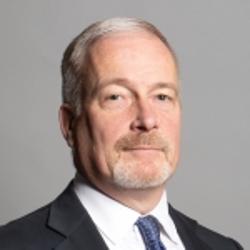
Richard Fuller
Conservative - North Bedfordshire
5,414 (10.5%) majority - 2024 General ElectionFirst elected: 12th December 2019
Shadow Chief Secretary to the Treasury
(since November 2024)1 APPG Membership
Beer8 Former APPG Officer Positions
American Football, American Football., Corporate Governance, East-West Rail, Family Business, Immigration Detention, Nigeria, Trailer and Towing SafetyDivision Voting information
Debates during the 2024 Parliament
Speeches made during Parliamentary debates are recorded in Hansard. For ease of browsing we have grouped debates into individual, departmental and legislative categories.
Sparring Partners
(15 debate interactions)
(13 debate interactions)
(11 debate interactions)
Department Debates
(61 debate contributions)
(11 debate contributions)
(9 debate contributions)
(5 debate contributions)
Legislation Debates
(3,997 words contributed)
(2,199 words contributed)
(1,756 words contributed)
(787 words contributed)
North Bedfordshire Petitions
e-Petitions are administered by Parliament and allow members of the public to express support for a particular issue.
If an e-petition reaches 10,000 signatures the Government will issue a written response.
If an e-petition reaches 100,000 signatures the petition becomes eligible for a Parliamentary debate (usually Monday 4.30pm in Westminster Hall).
of 10,732 signatures (2.22%)
of 15,474 signatures (0.78%)
of 105,579 signatures (0.59%)
of 39,158 signatures (0.34%)
of 113,196 signatures (0.24%)
of 105,579 signatures (0.59%)
of 210,741 signatures (0.17%)
of 134,746 signatures (0.22%)
of 113,196 signatures (0.24%)
of 10,732 signatures (2.22%)
Latest EDMs signed by Richard Fuller
Mauritius Treaty
Tabled by: Kemi Badenoch (Conservative - North West Essex)That the Agreement, done at London and Port Louis on 22 May 2025, between the Government of the United Kingdom of Great Britain and Northern Ireland and the Government of the Republic of Mauritius concerning the Chagos Archipelago including Diego Garcia, should not be ratified.
(Most recent: 1 Jul 2025)
Signatures by party:
Conservative: 91
Reform UK: 7
Democratic Unionist Party: 3
Independent: 2
Traditional Unionist Voice: 1
Restore Britain: 1
Ulster Unionist Party: 1
Labour: 1
Commons initiatives
These initiatives were driven by Richard Fuller, and are more likely to reflect personal policy preferences.
MPs who are act as Ministers or Shadow Ministers are generally restricted from performing Commons initiatives other than Urgent Questions.
Richard Fuller has not been granted any Urgent Questions
2 Adjournment Debates led by Richard Fuller
4 Bills introduced by Richard Fuller
A Bill to reduce for a temporary period the amount of stamp duty land tax chargeable on the acquisition of residential property.
This Bill received Royal Assent on 8th February 2023 and was enacted into law.
A Bill to establish a closed season during which the killing or taking of hares is prohibited; to repeal the seasonal prohibition of the sale of hares in the Hares Preservation Act 1892; and for connected purposes.
Friday 18th March 2022
A Bill to make provision about hare coursing offences; to increase penalties for such offences; and for connected purposes.
Wednesday 16th June 2021
The Bill failed to complete its passage through Parliament before the end of the session. This means the Bill will make no further progress. A Bill to require the installation of closed circuit television in licensed Hackney carriages and private hire vehicles; to establish a minimum standard for such installations; and for connected purposes.
Tuesday 29th October 2013
Richard Fuller has not co-sponsored any Bills in the current parliamentary sitting
Latest 50 Written Questions
(View all written questions)2 Other Department Questions
The information requested is not held centrally and could be provided only at disproportionate cost.
Minister of State (Department for Digital, Culture, Media and Sport)
The Public Sector Equality Duty (PSED) is a statutory obligation that applies across the public sector. As a procedural duty to have "due regard" to equality considerations, compliance is an on-going responsibility rather than a one-off task. It is integrated into the day-to-day development and delivery of all policies and services; as such, it is a core responsibility of all civil servants across government, rather than being restricted to dedicated personnel. Because it is a continuous, procedural duty applicable to all civil servants, it is impossible to disaggregate the specific fraction of time or cost dedicated solely to Public Sector Equality Duty (PSED) compliance versus general policy and operational work. Attempting to calculate an FTE or cost figure would incur disproportionate cost and still be highly inaccurate. Sponsored Arm’s Length Bodies (ALBs) are independent public authorities directly responsible for their own compliance. Information regarding ALBs’ internal resource allocation is not held by DCMS.
Minister of State (Department for Digital, Culture, Media and Sport)
Answer In relation to part (a) of the question, the number of staff employed in each earnings band is set out below.
|
Attorney General
The Cabinet Office does not hold this information centrally. Details on staffing and pensions can be found in the relevant annual report and accounts.
On 6 April 2025, the previous Chancellor of the Duchy of Lancaster announced a ban on unnecessary branded merchandise. The details of the seven approvals granted for branded items since 24 April 2025 are as follows (costs exclude VAT):
Government People Group, Pull Up Banners for Future Leaders Scheme. £596.14.
Government Commercial Function, Panel Table Cover and lectern for GCF Conference. £752.00.
Civil Service Strategy Unit. Pull Up Banners for One Big Thing 2025. £432.64.
Civil Service Strategy Unit, Profession stickers divided into 11 professions to be given to visitors to the CSSU market stall in 6 Civil Service Live events as a collaboration and networking tool. £773.68.
Cabinet Office, Commemorative coins for attendees of a multinational event. £466.44.
Government People Group, Branded t-shirts for Pride events across the UK. £540.74.
Government Commercial Function, Glass Recognition trophies required for Rising Star Awards at the GCF Regional Conferences, arranged throughout October 2025 across three regions (North, Northern Ireland, South and Wales). £62.48.
The OCS invoice for the 9 Downing Street works in the published data for the month of November 2025 is item 387, 10000204, OCS Group UK Limited, Transaction HZ820722.
Minister of State (Home Office)
Departments have agreed a 2% productivity, efficiency and savings target in the first phase of the Spending Review and have been set a stretching 5% target in the second phase. This target is to be delivered via efficiencies and savings from innovative technology-driven approaches, such as Artificial Intelligence; more effectively joining up services; and a more strategic approach to government processes, including procurement.
The Chief Secretary to the Treasury has also asked each department to carry out a line-by-line review of existing day-to-day budgets to identify where spending is no longer aligned with this government’s priorities or is poor value for money.
The Office for Value for Money, led by an independent Chair, will work with departments to assess where and how to root out waste and inefficiency, including agreeing plans to deliver technical efficiencies through the Spending Review period. It will also develop recommendations for system reform, informed by lessons learned from the past, international best practice, and the views of external organisations. This will underpin a ruthless focus within government on realising benefits from every pound of public spending.
Minister of State (Education)
The Cabinet Office is driving reform to deliver cross-departmental efficiencies, including through better use of data and technology.
I have ministerial responsibility for public sector reform, which includes driving cross-departmental work to improve efficiency in government.
Minister of State (Education)
5 Department for Business, Innovation, Science and Trade Questions
(View all Richard Fuller's BIST questions)- The information requested is not held centrally, the number of employees in each grade for ALB is published in the DBT: workforce management information. The latest information is May 2026. This publication provides headcount by grade and not by salary band as requested. Headcount and payroll data structure is recorded following the Cabinet Office guidance for all the Civil Service.
- The Principal Civil Service Pension Scheme (PCSPS) and the Civil Servants and Others Pension Scheme (CSOPS) – known as “alpha” – are unfunded multi-employer defined benefit schemes but the Department is unable to identify its share of the underlying assets and liabilities. The Government Actuary’s Department’s report is contained within Civil Superannuation annual account 2024 to 2025 - GOV.UK”
Minister of State (Department of Health and Social Care)
- The Public Sector Equality Duty (PSED) is a statutory obligation that applies across the public sector. As a procedural duty to have "due regard" to equality considerations, compliance is an on-going responsibility rather than a one-off task. It is integrated into the day-to-day development and delivery of all policies and services; as such, it is a core responsibility of all civil servants across government, rather than being restricted to dedicated personnel.
- Because it is a continuous, procedural duty applicable to all civil servants, it is impossible to disaggregate the specific fraction of time or cost dedicated solely to Public Sector Equality Duty (PSED) compliance versus general policy and operational work. Attempting to calculate an FTE or cost figure would incur disproportionate cost and still be highly inaccurate.
Minister of State (Department of Health and Social Care)
The information requested is as follows:
FY | Staff Costs | Non-Staff Costs | Total Cost | Full-Time Equivalent |
2023-24 | £418,715.01 | £3,335.36 | £422,050.37 | 5.4 |
2024-25 | £342,306.01 | £677.18 | £342,983.19 | 3.9 |
The CMA is not able to provide figures for 2025/26 before its accounts for the financial year are finalised and published in July.
Minister of State (Department for Business, Innovation, Science and Trade)
The 2025 National Minimum Wage and National Living Wage campaign ran from 1 April to 31 May 2025 with a total budget of £650,000. The objective was to ensure workers understood their new pay entitlement to prevent underpayment. The agencies Pablo Unlimited, Wavemaker and OMD were used to support the delivery of this campaign. This campaign was approved under Cabinet Office’s advertising, marketing and communications spending controls. Communication channels used were:
- Online digital display advertising
- Digital online video (YouTube)
- Social media (Snapchat, Meta - Facebook/Instagram, Reddit)
- Radio
- Out of home advertising: Train card panels in national rail/bus interiors, beermats in 1000 pubs and digital screens in gyms
- Paid search (Google)
- Use of six digital influencers (Instagram/TikTok)
The Department for Business and Trade has not run any paid campaign on the national minimum wage and national living wage in 2026.
Minister of State (Department for Business, Innovation, Science and Trade)
We expect to launch the Supply Chain Centre formally later this year. At present, the team has a headcount of 33, with an associated budget of £2,778,886. Budgets for future years will be set at a later date.
Secretary of State for Northern Ireland
Fewer than five full-time equivalent staff in the Department for Energy Security and Net Zero are dedicated to the fulfilment of the Public Sector Equality Duty (PSED).
The exact number, associated annual employment costs and total annual costs are not disclosed to protect the identity of individual members of staff, in line with data protection principles.
Resourcing for PSED activity in Arm's Length Bodies is a matter for each body and is not held centrally by the Department; the hon. Member may wish to contact individual bodies directly.
The Department's PSED outputs include the annual publication of equality objectives and progress against them, building departmental capability through training, and producing guidance and resources. The Department's compliance with the PSED is published annually; the latest publication is DESNZ equality objectives and information: 2025 to 2026.
Minister of State (Department for Energy Security and Net Zero)
The information in question (a) is held by each ALB and not by the Department of Energy Security and Net Zero .
Similar to above, the information for question b is held by the ALB’s and would not be held by the Department of Energy Security and Net Zero .
Minister of State (Department for Energy Security and Net Zero)
The Government recognises the importance of minimising unnecessary complexity for operators.
The UK ETS maritime rules have been designed with regard to international practice and interactions with other schemes. We have designed our digital systems in conjunction with industry to support operators to comply with the scheme, introducing as much automation as possible and reduce the administrative burden on operators.
We will continue to engage with industry and international partners to understand implications for operators once the expansion launches on 1 July 2026.
Minister of State (Department of Health and Social Care)
Ofgem recently made it easier for smaller generation projects (under 5MW in England and Wales) to connect, by removing the requirement for a transmission network impact assessment [1]. For larger projects, the implementation of connections reform will prioritise connections that are ready and aligned with our clean power 2030 ambitions. Furthermore, the next Ofgem price control for electricity distribution (ED3, 2028-2033) will promote strategic network investment ahead of need, including through the introduction of Regional Energy Strategic Plans (RESPs). This will enable the timely connection of rooftop solar and other low carbon electricity generation across Great Britain.
Minister of State (Department for Energy Security and Net Zero)
Distribution Network Operators are upgrading local electricity distribution networks across Great Britain to enable the connection of low carbon generation, including rooftop solar. For the current electricity distribution price control (RIIO-ED2, 2023-2028), Ofgem have allowed £22.2bn of upfront investment, including £3.1bn for network upgrades for low-carbon technologies. For the next electricity distribution price control (RIIO-ED3, 2028-2033), Regional Energy Strategic Plans (RESPs) will support strategic network investment ahead of need, on a locational basis. The government will continue to support Ofgem in ensuring that consumer costs are protected while enabling the network transformation required for net zero.
Minister of State (Department for Energy Security and Net Zero)
1 Department for Digital, Culture, Media & Sport Questions
(View all Richard Fuller's DCMS questions)The Charity Commission responded to the Conservative Party’s Legal Officer on 15th August 2024, providing a full update on the case in question.
Parliamentary Under-Secretary of State (Department for Digital, Culture, Media and Sport)
Every government department has a responsibility under the Public Sector Equality Duty (PSED), and must have due regard to specified equality considerations when carrying out its functions. This activity is embedded within mainstream roles in both the department and arm’s length bodies rather than undertaken by dedicated staff. The department does however have dedicated 0.8 Full Time Equivalent to support capability across the department, and provides assurance on compliance. Information on how we meet our PSED obligations is available on our Equality and Diversity page at: https://www.gov.uk/government/organisations/department-for-education/about/equality-and-diversity.
Parliamentary Under-Secretary (Department for Education)
A breakdown of staff within the requested bands for each body is provided in the following table.
Arm’s Length Body | Under £25,000 | £25,001 to £35,000 | £35,001 to £50,270 | £50,271 to £100,000 | £100,001 to £125,140 | Over £125,140 |
Standards and Testing Agency | Nil | 15 | 79 | 41 | 1 | Nil |
Teaching Regulation Agency | Nil | 31 | 38 | 9 | Nil | Nil |
Office for Students | 1 | 53 | 210 | 289 | 8 | 6 |
Student Loans Company | 610 | 1632 | 510 | 597 | 21 | 7 |
Social Work England | Nil | 85 | 136 | 97 | 3 | 1 |
Office of the Children’s Commissioner | Nil | Nil | 15 | 8 | 2 | 1 |
Oak National Academy | Nil | 1 | 18 | 83 | 7 | 1 |
Some of the department’s bodies are out of scope for this question. School Teachers’ Review Body does not have salaried staff. As non-ministerial departments, Ofsted and Ofqual have responsibility for their own staffing, pay and budgetary arrangements.
I have asked His Majesty’s Chief Inspector, Sir Martyn Oliver, and Ofqual’s Chief Regulator, Sir Ian Bauckham CBE, respectively to write directly to the honourable member. A copy of each reply will be placed in the Libraries of both Houses.
Public sector pensions are unfunded multi-employer defined benefit schemes, and where an arm’s length body is a member of these schemes, it is not possible to separately identify their share of underlying assets and liabilities.
Parliamentary Under-Secretary (Department for Education)
The department publishes the ‘Schools’ costs: technical note’ (SCTN), which includes data on school workforce costs and non-staff expenditure, including energy. This year’s SCTN publication and historical publications are available at: https://www.gov.uk/government/publications/schools-costs-technical-note.
Minister of State (Education)
New school buildings are delivered by the department, local authorities, and other bodies.
The average cost of building a special educational needs school can be found on pages 25-29 in the national cost benchmarking study published at: https://documents.hants.gov.uk/property-services/NationalSchoolDeliveryBenchmarkingreport.pdf.
This report contains cost information on local authority delivered schools and department-delivered schools, the data has been collected since 2012.
Standards for new school buildings change over time, for example to increase sustainability requirements, so care should be taken in comparing costs directly year to year.
Parliamentary Under-Secretary (Department for Environment, Food and Rural Affairs)
New school buildings are delivered by the department, local authorities, and other bodies.
The average cost of building a special educational needs school can be found on pages 25-29 in the national cost benchmarking study published at: https://documents.hants.gov.uk/property-services/NationalSchoolDeliveryBenchmarkingreport.pdf.
This report contains cost information on local authority delivered schools and department-delivered schools, the data has been collected since 2012.
Standards for new school buildings change over time, for example to increase sustainability requirements, so care should be taken in comparing costs directly year to year.
Parliamentary Under-Secretary (Department for Environment, Food and Rural Affairs)
6 Department for Environment, Food and Rural Affairs Questions
(View all Richard Fuller's Defra questions)(a) The attached table shows the headcount of employees in Core Defra and Arm's Length Bodies, broken down by salary band, as at June 2026.
(b) This information is not held centrally.
Parliamentary Under-Secretary (Department for Environment, Food and Rural Affairs)
The Public Sector Equality Duty (PSED) is a statutory obligation that applies across the public sector. As a procedural duty to have "due regard" to equality considerations, compliance is an ongoing responsibility rather than a one-off task. It is integrated into the day-to-day development and delivery of all policies and services; as such, it is a core responsibility of all civil servants across government, rather than being restricted to dedicated personnel.
Because it is a continuous, procedural duty applicable to all civil servants, it is impossible to disaggregate the specific fraction of time or cost dedicated solely to Public Sector Equality Duty (PSED) compliance versus general policy and operational work. Attempting to calculate an FTE or cost figure would incur disproportionate cost and still be highly inaccurate.
There are small teams that provide advisory support, but their headcount is withheld under standard data protection protocols (teams of five or fewer).
Sponsored Arm’s Length Bodies (ALBs) are typically independent public authorities directly responsible for their own compliance. Information regarding ALBs’ internal resource allocation is not held by Defra.
Parliamentary Under-Secretary (Department for Environment, Food and Rural Affairs)
There is no specific Programme spend.
Minister of State (Department for Environment, Food and Rural Affairs)
Defra’s Water Delivery Taskforce is working to bring together Government, regulators and water companies to ensure sufficient water and wastewater capacity is delivered to accommodate the government’s growth ambitions, including for new homes.
Water companies have a statutory duty to provide a secure supply of water for customers and set out how they plan to continue to do so through statutory Water Resources Management Plans (WRMPs). Water companies consult on revised WRMPs every five years, which inform Ofwat’s price review decisions.
The water companies must also maintain their WRMPs and are required to review the plans annually to take account of changes. This includes changes to demand forecasts as a result of housing growth that cannot be accommodated in existing WRMPs. This year, we strengthened and clarified this change process with water companies, issuing guidance to companies on how we will engage and assess any change needed to accommodate growth.
The WRMP process works closely alongside Ofwat’s price review cost change process, which allows companies to access additional funding for investment to support the growth, including investment such as sewage treatment works: PR24-Cost-change-process-–-Demand-growth-investment-additional-guidance.pdf.
Minister of State (Department for Environment, Food and Rural Affairs)
Defra’s Water Delivery Taskforce is working to bring together Government, regulators and water companies to ensure sufficient water and wastewater capacity is delivered to accommodate the government’s growth ambitions, including for new homes.
Water companies have a statutory duty to provide a secure supply of water for customers and set out how they plan to continue to do so through statutory Water Resources Management Plans (WRMPs). Water companies consult on revised WRMPs every five years, which inform Ofwat’s price review decisions.
The water companies must also maintain their WRMPs and are required to review the plans annually to take account of changes. This includes changes to demand forecasts as a result of housing growth that cannot be accommodated in existing WRMPs. This year, we strengthened and clarified this change process with water companies, issuing guidance to companies on how we will engage and assess any change needed to accommodate growth.
The WRMP process works closely alongside Ofwat’s price review cost change process, which allows companies to access additional funding for investment to support the growth, including investment such as sewage treatment works: PR24-Cost-change-process-–-Demand-growth-investment-additional-guidance.pdf.
Minister of State (Department for Environment, Food and Rural Affairs)
Please see below table for each ALB:
a) How many people are employed in the following bands of total earnings or nearest equivalent
ALB | (i) under £25,000 | (ii) £25,001 to £35,000, | (iii) £35,001 to £50,270 | (iv) £50,271 to £100,00 | (v) £100,001 to £125,140 | (vi) over £125,140 |
British Transport Police Authority | 0 | 0 | 0 | 9 | <5 | <5 |
Civil Aviation Authority | 39 | 276 | 357 | 943 | 97 | 72 |
Crossrail International | 0 | 0 | <5 | <5 | <5 | 6 |
DfT Operator Ltd (DFTO) | <5 | 17 | 71 | 156 | 8 | 12 |
East West Rail | <5 | 8 | 38 | 124 | 39 | 21 |
HS2 | 16 | 106 | 301 | 1,039 | 209 | 107 |
National Highways | 107 | 2,344 | 2,288 | 2,233 | 42 | 63 |
Network Rail | 448 | 6,965 | 16,953 | 16,977 | 498 | 343 |
Northern Lighthouse Board | 28 | 22 | 92 | 70 | <5 | <5 |
Office of Rail and Road | 12 | 36 | 107 | 217 | 5 | 8 |
Transport Focus | 0 | 5 | 23 | 24 | 0 | <5 |
Trinity House | 24 | 37 | 86 | 158 | 10 | <5 |
(b) what estimate they have made of the total unfunded public sector pension liability
ALB | Response |
British Transport Police Authority | Not applicable to BTPA. BTPA pension scheme(s) are fully funded |
Civil Aviation Authority | Civil Aviation Authority employees are enrolled in our pensions schemes not covered by the public sector pension fund. We have 10 colleagues who were brought into the CAA on TUPE arrangements and who remain active members of the Civil Service Pension Scheme. Employee and Employers contributions are paid monthly based on prevailing rates set by the scheme. |
Crossrail International | There is no public sector pension liability. |
DfT Operator Limited (DFTO) | This question is not relevant to DfTO as they are in a money management scheme. |
East West Rail | We are not part of the Civil Service Pension Scheme. |
HS2 | HS2 Ltd does not have any unfunded public sector pension liability. HS2 Ltd employees do not participate in any public sector pension. Rather they are offered the opportunity to become members of a defined contribution pension plan, administered by Legal and General. |
National Highways | National Highways is unable to estimate liabilities relating to Civil Service Pension Scheme membership. The Civil Service Pension Scheme is an unfunded public service pension scheme, with benefits ultimately funded from future government revenues rather than from a dedicated fund of assets. Actuarial valuations of accrued liabilities are undertaken centrally by the Government Actuary's Department (GAD), which also determines the employer contribution rates payable under the scheme. Consequently, National Highways does not calculate, hold, or recognise any pension liability relating to Civil Service Pension Scheme membership on its balance sheet. National Highways' responsibility is limited to paying employer contributions at the rates prescribed by the scheme, which are publicly available. As the actuarial assessment of liabilities is performed centrally and does not sit with participating employers, National Highways is not able to provide a liability estimate. |
Network Rail | The pension schemes Network Rail currently operates (Network Rail Section of the RPS, NR CARE and NRDC) are not 'unfunded public sector' pension schemes – they are classified as funded private sector occupational pension schemes (benefits are backed by invested assets rather than being paid directly from current taxation). |
Northern Lighthouse Board | Northern Lighthouse Board (NLB) participates in the Principal Civil Service Pension Scheme (PCSPS). The PCSPS is an unfunded multi-employer defined benefit pension scheme and NLB is unable to identify its share of the underlying scheme assets and liabilities. Accordingly, no organisation-specific estimate of the unfunded pension liability is available. |
Office of Rail and Road | As per our recently published Annual Report and Accounts, there is insufficient information available to be able to identify ORR’s share of the Principal Civil Service Pension Scheme liabilities and costs (page 113). Our understanding is that this is common across Government Departments and Arm’s Length Bodies. |
Transport Focus | Transport Focus participates in the Principal Civil Service Pension Scheme (PCSPS). The PCSPS is an unfunded multi-employer defined benefit pension scheme and Transport Focus is unable to identify its share of the underlying scheme assets and liabilities. Accordingly, no organisation-specific estimate of the unfunded pension liability is available. |
Trinity House | Trinity House participates in the Principal Civil Service Pension Scheme (PCSPS). The PCSPS is an unfunded multi-employer defined benefit pension scheme and Trinity House is unable to identify its share of the underlying scheme assets and liabilities. Accordingly, no organisation-specific estimate of the unfunded pension liability is available. |
Parliamentary Under-Secretary (Department for Transport)
Compliance with the Public Sector Equality Duty (PSED) is embedded into departmental policy-making and decision-making processes and is the responsibility of all those developing and taking decisions. DfT and its Arm’s Length Bodies do not have staff who work solely on PSED, although there is a small central team within the Department for Transport that supports equality policy and compliance alongside a portfolio of other work.
Given that responsibility for the duty sits across the department, the outputs vary between teams. It is not possible to identify a discrete FTE figure or calculate the overall cost of PSED compliance. The department does not publish an overall assessment of our PSED compliance.
Parliamentary Under-Secretary (Department for Transport)
The Department for Transport is contributing to the reprioritisation of funding to support the Defence Investment Plan.
No final decisions have been taken and therefore, no projects have been formally cancelled, delayed, descoped or reprofiled at this stage and there are no revised regional allocations.
Parliamentary Under-Secretary (Department for Transport)
The Automated Vehicles Act 2024 established the legal framework for regulating automated vehicles in the UK. In May 2026, the Department for Transport established a new Automated Passenger Services (APS) permitting scheme, creating a clear legal route for commercial pilot deployments.
These pilots are an important opportunity to improve regulatory and public understanding ahead of full implementation of the Automated Vehicles Act in the second-half of 2027.
Automated Vehicles technology continues to develop with major global players expressing interest in bringing automated passenger services to GB. Further to this, the UK’s Code of Practice for UK trialling continues to support research and development of technologies, including for wider use cases.
Parliamentary Under-Secretary (Department for Transport)
The Department for Transport has not made a formal assessment of the accuracy of cycling usage data used by local authorities. This is the responsibility of the local authority. Active Travel England provides guidance and tools to assist local authorities in performing effective appraisal. This includes identifying and assessing the suitability of data for business case development. The guidance supports good assurance and validation of data.
Parliamentary Under-Secretary (Department for Work and Pensions)
The project has been assessed against the HM Treasury Green Book. The project has not been reviewed by the National Infrastructure and Service Transformation Authority.
Parliamentary Under-Secretary (Department for Transport)
Work to date has been conducted within departmental staff time.
Parliamentary Under-Secretary (Department for Transport)
The Department engages regularly with the West Yorkshire Combined Authority (WYCA) on the progress of rail schemes being delivered in the region, including those funded through the Government’s Rail Network Enhancement Pipeline (RNEP), the City Region Sustainable Transport Settlement (CRSTS) and the Transport for City Regions (TCR) settlement. This helps to ensure issues related to integration of rail infrastructure schemes with the wider network are considered and managed effectively, ensuring they progress smoothly.
Forums include, but are not limited to, the locally chaired Leeds Senior Steering Group, the Leeds Station Board and the Leeds Station and Rail Partnership Forum. From this year (2026/27), WYCA will report on its use of CRSTS funding through the Integrated Settlement Outcomes Framework.
Parliamentary Under-Secretary (Department for Transport)
The Department does not centrally hold information on the original approved budgets and final outturn costs of all rail station construction projects completed since 2020. This information is held across a range of programmes and delivery bodies. Establishing how many projects exceeded their original approved budgets could be obtained only at disproportionate cost.
Parliamentary Under-Secretary (Department for Transport)
The Government recognises the significant economic and environmental potential of rail freight. GBR will therefore have a statutory duty to have regard to any rail freight target set by the Secretary of State or by Scottish Ministers. The Government has committed to the target of at least a 75% growth in rail freight by 2050 and, as a milestone towards that target, more detailed targets for 2040 will be announced shortly.
Parliamentary Under-Secretary (Department for Transport)
We recognise the need to protect consumers and factored this into the design of the Sustainable Aviation Fuel Mandate through the inclusion of a buyout option for obligated suppliers, which protects end users (passengers) from excessive costs.
The Sustainable Aviation Fuel Cost Benefit Analysis publication provides an assessment of the ticket price impacts of the SAF Mandate (Section 4) and a thorough validation of the price assumptions against literature and market data (Section 3) The full cost benefit analysis is available at: https://assets.publishing.service.gov.uk/media/66601969dc15efdddf1a872d/uk-saf-mandate-final-stage-cost-benefit-analysis.pdf.
Parliamentary Under-Secretary (Department for Transport)
We recognise the need to protect consumers and factored this into the design of the Sustainable Aviation Fuel Mandate through the inclusion of a buyout option for obligated suppliers, which protects end users (passengers) from excessive costs.
The Sustainable Aviation Fuel Cost Benefit Analysis publication provides an assessment of the ticket price impacts of the SAF Mandate (Section 4) and a thorough validation of the price assumptions against literature and market data (Section 3) The full cost benefit analysis is available at: https://assets.publishing.service.gov.uk/media/66601969dc15efdddf1a872d/uk-saf-mandate-final-stage-cost-benefit-analysis.pdf.
Parliamentary Under-Secretary (Department for Transport)
There has been a 40 per cent reduction in traincrew-related cancellations across Thameslink and Great Northern in FY 2025/26 compared with FY2024/25. This is partly as a result of a sustained driver recruitment campaign, which is supporting improved reliability.
GTR inform us that for the period between 25 May 2025 and 30 May 2026, traincrew-related issues accounted for 20 per cent of cancellations on Great Northern services and 33 per cent on Thameslink services, showing more work is needed to maintain momentum in this area.
Addressing cancellations caused by traincrew on Greater Thameslink Railway services is a priority for the Department for Transport Operator going forward.
Parliamentary Under-Secretary (Department for Transport)
Network Rail does not hold or collate information centrally on estimated costs of measures within Air Quality Improvement Plans. Funding and delivery are managed at a local level.
Parliamentary Under-Secretary (Department for Transport)
A robust assessment of private investment options has been undertaken for Lower Thames Crossing (LTC). This has included on the distribution of costs and risks between the different parties, as well as on longer term system risks and economic/ social benefits. The Regulated Asset Base (RAB) model has been chosen as it enables the private sector to deliver the scheme efficiently, reduces financial burden on taxpayers through enabling users to contribute to the costs, harnesses the benefits of private investment, and promotes the interests of users.
Parliamentary Under-Secretary (Department for Transport)
Network Rail is working towards the strategic ambitions in the Greener Railway Strategy, published in 2025, which covers the period to 2030. This replaces the Environmental Sustainability Strategy.
Some of the plans set out in the Strategy have no direct funding associated with them as they cover planned improvements to ways of working, processes and standards; or relate to existing processes and systems and maintaining existing performance.
Where there are costs to implement the Strategy, these are assumed as part of spending plans published in Network Rail’s Delivery Plan (available online) but may not be disaggregated from broader plans.
There is no national allocation of funds to remediate historic pollution sites across the rail lineside. Where infrastructure works take place and remediation of land is required, the associated costs are incorporated within the scope of those works and funded accordingly.
An overall indication of cost allocation for remediating historic pollution is unavailable as this is determined on a case-by-case basis to ensure that funds are being appropriately allocated and spent.
Parliamentary Under-Secretary (Department for Transport)
From 2021 to 2024, the Department for Transport spent £1,500+vat on development of Carbon Literacy training and £5800 on accreditation. This was to deliver its Outcome Delivery Plan milestone of having at least 15% of its central workforce designated as carbon literate. There was no cost to deliver training as this was undertaken by volunteers. HS2 Ltd spent £149,071 for the years from 2020 to 2024 for development and delivery, after which delivery moved in house. HS2 Ltd has spent £10,000 on accreditation. The Department does not hold information on the ‘Carbon Literacy for Rail’ programme.
Parliamentary Under-Secretary (Department for Transport)
The Department is supporting Greater Thameslink Railway to deliver its continuing driver recruitment programme across Thameslink and Great Northern.
This year, driver numbers are planned to increase by around 7 per cent (approximately 75 full-time equivalent drivers), with recruitment taking place on a rolling basis throughout the year. There are currently over 120 trainee drivers in training, and new trainees are recruited as existing trainees qualify. Training and deployment are phased, with drivers completing training and entering service throughout the year as they qualify, supporting additional Great Northern services later this year and improving reliability.
Parliamentary Under-Secretary (Department for Transport)