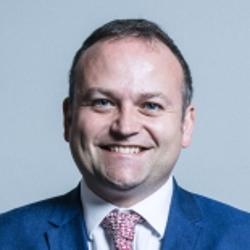
Neil Coyle
Labour - Bermondsey and Old Southwark
7,787 (20.7%) majority - 2024 General ElectionFirst elected: 7th May 2015
6 APPG Officer Positions (as of 1 Sep 2026)
Action Against Illegal Gambling, Anti-Social Behaviour, Food Banks, Housing and Care for Older People, Shakespeare, Terrorism and Security9 APPG Memberships
Beer, Anti-Corruption and Responsible Tax, Autism, Freight and Logistics, Gypsies, Travellers and Roma, Homelessness, International Students, United Nations Global Goals, Writers17 Former APPG Officer Positions
Assistive Technology, Council Housing, Counter-Extremism, Disability, Foodbanks, Gypsies, Travellers and Roma, Homelessness, Ireland and the Irish in Britain, Learning Disability, Mental Health, Migration, Nuclear Energy, Relocation, River Thames, Taxis, University of Hull, Wine and SpiritsDivision Voting information
Debates during the 2024 Parliament
Speeches made during Parliamentary debates are recorded in Hansard. For ease of browsing we have grouped debates into individual, departmental and legislative categories.
Sparring Partners
Minister of State (Department for Work and Pensions)
(8 debate interactions)
(8 debate interactions)
Department Debates
(34 debate contributions)
(30 debate contributions)
(20 debate contributions)
(16 debate contributions)
Legislation Debates
(4,454 words contributed)
(3,168 words contributed)
(2,902 words contributed)
(1,463 words contributed)
Bermondsey and Old Southwark Petitions
e-Petitions are administered by Parliament and allow members of the public to express support for a particular issue.
If an e-petition reaches 10,000 signatures the Government will issue a written response.
If an e-petition reaches 100,000 signatures the petition becomes eligible for a Parliamentary debate (usually Monday 4.30pm in Westminster Hall).
of 10,603 signatures (1.05%)
of 38,214 signatures (0.35%)
of 67,468 signatures (0.22%)
of 128,931 signatures (0.15%)
of 115,546 signatures (0.11%)
of 128,931 signatures (0.15%)
of 67,468 signatures (0.22%)
of 38,214 signatures (0.35%)
of 115,546 signatures (0.11%)
of 10,603 signatures (1.05%)
Petition Closed
Call a public inquiry into Russian influence on UK politics & democracy
Gov Responded - 15 Jan 2026 Debated on - 9 Feb 2026 View Neil Coyle's petition debate contributionsclosed 5 months ago
We are concerned about reported efforts from Russia to influence democracy in the US, UK, Europe and elsewhere. We believe we must establish the depth and breadth of possible Russian influence campaigns in the UK.
Petition Closed
Apply for the UK to join the European Union as a full member as soon as possible
Gov Responded - 19 Nov 2024 Debated on - 24 Mar 2025 View Neil Coyle's petition debate contributionsclosed 1 year, 5 months ago
I believe joining the EU would boost the economy, increase global influence, improve collaboration and provide stability & freedom. I believe that Brexit hasn't brought any tangible benefit and there is no future prospect of any, that the UK has changed its mind and that this should be recognised.
Latest EDMs signed by Neil Coyle
Imprisonment of Jimmy Lai
Tabled by: Jim Shannon (Democratic Unionist Party - Strangford)That this House notes with deep concern the forthcoming trial of Mr Jimmy Lai, a British citizen, founder and proprietor of the Apple Daily newspaper, under the National Security Law in Hong Kong; expresses alarm at the prospect that he will not receive a fair trial, and has been denied …
(Most recent: 18 Jan 2024)
Signatures by party:
Scottish National Party: 6
Democratic Unionist Party: 4
Conservative: 4
Liberal Democrat: 4
Labour: 3
Plaid Cymru: 3
Green Party: 1
Social Democratic & Labour Party: 1
Show Racism the Red Card
Tabled by: Kim Johnson (Labour - Liverpool Riverside)That this House congratulates Show Racism the Red Card for engaging one million people through their anti-racist educational programmes; notes the contribution of footballers and other sportsmen and women in promoting equality and inclusion among adults and children in schools, workplaces and at sporting clubs; believes that Show Racism the …
(Most recent: 22 May 2023)
Signatures by party:
Labour: 30
Scottish National Party: 4
Plaid Cymru: 3
Liberal Democrat: 3
Conservative: 2
Independent: 2
Green Party: 1
Your Party: 1
Commons initiatives
These initiatives were driven by Neil Coyle, and are more likely to reflect personal policy preferences.
MPs who are act as Ministers or Shadow Ministers are generally restricted from performing Commons initiatives other than Urgent Questions.
Neil Coyle has not been granted any Urgent Questions
Neil Coyle has not been granted any Adjournment Debates
Neil Coyle has not introduced any legislation before Parliament
5 Bills co-sponsored by Neil Coyle
Police (declaration) Bill 2023-24
Sponsor - Tonia Antoniazzi (Lab)
High Performance Vehicle Renting (Regulation) Bill 2019-21
Sponsor - Holly Lynch (Lab)
Universal Credit Sanctions (Zero Hours Contracts) Bill 2017-19
Sponsor - Chris Stephens (SNP)
Clean Air (No. 3) Bill 2017-19
Sponsor - Geraint Davies (Ind)
Fracking (Measurement and Regulation of Impacts) (Air, Water and Greenhouse Gas Emissions) Bill 2017-19
Sponsor - Geraint Davies (Ind)
Latest 50 Written Questions
(View all written questions)There are no plans to introduce such a requirement. As always, security requirements are kept under continuous review.
The information requested falls under the remit of the UK Statistics Authority.
A response to the Hon gentleman’s Parliamentary Question of 8th of December is attached.
Honesty is one of the Seven Principles of Public Life, which form the ethical basis of officeholders' standards in public life. All officeholders, including MPs and other elected representatives, have a responsibility to provide accurate information to the public.
For MPs, the Seven Principles are enshrined in the Commons Code of Conduct. The House has mechanisms available to ensure MPs uphold these standards, and individual MPs are directly accountable to their constituents.
Regarding locally elected representatives, the Government launched a consultation seeking views on proposed measures to strengthen the standards framework for local authorities in England in December 2024. The Government's response will be issued in due course.
In addition, the Public Office (Accountability) Bill, introduced on 16th September, contains an offence of misleading the public. This applies where a public authority or public official acts with the intention of misleading the public (or is reckless as to that possibility) and they know, or ought to know, that their act is seriously improper. The definition of ‘public official’ for this purpose includes ministers.
The Cabinet Office has no plans to create such an offence. All public office-holders are expected to adhere to the Seven Principles of Public Life which includes the principle of honesty.
In addition, ministers are expected to uphold the high standards of conduct set out in the Ministerial Code. MPs and members of the House of Lords must adhere to the relevant parliamentary code of conduct and in the course of their parliamentary duties have a responsibility to provide accurate information to the public and to Parliament, correcting any errors at the earliest opportunity.
I refer the honourable member to the answer given to PQ 1251 on 31 July 2024.
Minister of State (Education)
22 Department for Business, Innovation, Science and Trade Questions
(View all Neil Coyle's BIST questions)Under existing UK legislation, businesses must only place safe batteries, chargers and conversion kits on the market, including where sold online. Despite this we recognise that too many unsafe products remain available to consumers online.
My department has recently consulted on reforms to the product safety legislative framework, including risks associated with lithium-ion batteries and e-bikes; proposals for clear duties on online marketplaces to take proactive steps to identify, prevent and remove unsafe products from their marketplaces; and considerations for additional requirements in relation to high-risk products. We are considering feedback and will set out our response in due course.
Minister of State (Department for Business, Innovation, Science and Trade)
The Bounce Back Loan Scheme (BBLS), is a fully delegated scheme. Under the Scheme’s rules and guidance, lenders are expected to pursue recovery activity in a proportionate way, treating borrowers fairly while providing value to the taxpayer.
To make sure that BBLS borrowers are treated fairly, “Pay As You Grow” was introduced, giving borrowers the flexibility to extend loan terms to ten years, make interest-only repayments for six-months, or request a six-month repayment holiday once during the term of the loan.
Parliamentary Under-Secretary of State (Department for Business, Innovation, Science and Trade) (Jointly with the Department for Energy Security and Net Zero)
The Equality and Human Rights Commission (EHRC) is the independent equality regulator and ensures compliance with the Equality Act 2010. Their draft Code of Practice on Services, Public Functions and Associations (“the Code”) covers all nine protected characteristics and the steps the EHRC considers service providers should take into account when ascertaining how to comply with the law.
The approach as set out in the Code of Practice on Services reflects the Supreme Court Ruling in April 2025. The EHRC are considering how best to provide further guidance on employment and will provide updates in due course.
Minister of State (Department for Business, Innovation, Science and Trade)
The Economic Crime Acts 2022 and 2023 established and enhanced the Register of Overseas Entities. Financial penalties are used where entities fail to comply. Alongside restrictions on property transactions, this helps protect the integrity of the UK property market by enhancing transparency about who owns and controls overseas entities.
As with other fines, revenues are paid into the Consolidated Fund. Government does not generally support the hypothecation of fine revenue, as this can reduce flexibility in public finances and risk weakening the deterrent purpose of penalties. Core funding for local authorities is set through the Local Government Finance Settlement.
Parliamentary Under-Secretary of State (Department for Business, Innovation, Science and Trade) (Jointly with the Department for Energy Security and Net Zero)
The Economic Crime Acts 2022 and 2023 established and strengthened the UK’s Register of Overseas Entities, which requires overseas entities owning UK land to disclose their beneficial owners. Since launching in 2022, over 33,000 entities have registered. The Companies House Strategic Intelligence Assessment (2024) found it is almost certain that the register has reduced the ability to hide beneficial ownership of UK property and improve transparency for law enforcement. Non‑compliant entities are also prevented from selling, leasing or raising finance over UK land. The Government is currently reviewing the legislation’s impact and will publish findings once complete.
Parliamentary Under-Secretary of State (Department for Business, Innovation, Science and Trade) (Jointly with the Department for Energy Security and Net Zero)
The UK has introduced extensive trade sanctions to prevent Russia acquiring dual‑use items used in its military operations. Since March 2022, we have banned the export of all dual‑use goods and other high‑risk technologies, including products identified on the battlefield and items critical to Russia’s military‑industrial complex.
Our comprehensive export sanctions have led Russia to pursue convoluted and costly routes to circumvent our measures. Alongside extensive guidance and outreach to UK exporters, we plan to bring forward secondary legislation to introduce new sanctions end-use controls. These new powers will help to tackle circumvention of UK goods sanctions via third countries. We work closely with international partners to close those circumvention routes and further restrict Russia’s access to sensitive technologies.
Secretary of State for Northern Ireland
The government consulted on the implementation of the new subscriptions contract regime and are analysing the responses, including submissions from the charity and not-for profit sector. Officials have met with relevant representatives and individual organisations to hear their views and we continue to engage with the sector.
The government is committed to ensuring that charities can comply with consumer law and claim Gift Aid on eligible payments. HMRC are working through the technical details and will continue to engage with the sector.
Minister of State (Department for Business, Innovation, Science and Trade)
All export licence applications to Ukraine are treated with the highest priority by the Export Control Joint Unit (ECJU). As with all export licence applications, assessments are made on a case-by-case basis according to the Strategic Export Licensing Criteria. Assessments for Ukraine, given the situation within the country and the nature of the goods often being exported, mean these cases are some of the most complex for ECJU to process.
Secretary of State for Scotland
The Government continues to support the glass sector, including with their energy costs.
We recently launched the consultation to increase the Network Charging Compensation component of the British Industry Supercharger from 60% to 90% from 2026, as trailed in the Industrial Strategy. This will save eligible glass manufacturers a further £7-10 per megawatt-hour on their electricity bills, bringing the total reduction to around £78 per megawatt-hour. We will also consult on eligibility for the separate British Industrial Competitiveness Scheme in due course.
Minister of State (Home Office)
The Government is clear that bogus self-employment is unacceptable. Employers should never seek to deny people their employment rights and avoid their own legal obligations by claiming someone is self-employed when in reality they are not. We recognise the complexity of the UK's current employment status framework and are committed to consulting on a simpler framework.
Our priority is ensuring those workers who are most vulnerable know their rights and have the benefit of protection at work, including those working in the digital economy.
Parliamentary Under-Secretary (Department for Transport)
The Fair Work Agency will bring existing labour market enforcement functions together into one place, so employment rights for all workers are enforced more effectively and efficiently.
In addition, the White Paper ‘Restoring Control over the Immigration System’ set out measures for targeting exploitation of migrant workers including reforms to the sponsorship system, putting more responsibility and accountability on effective and responsible sponsors. This will include exploring making it easier for workers to move between licensed sponsors, reducing the risk of exploitation.
Parliamentary Under-Secretary (Department for Transport)
The Certification Officer (CO) is independent of Government and day-to-day operations are the remit of the Officer. The CO is required by statute to report their activities to the Department for Business and Trade, and ACAS, on an annual basis. This report is made available to Parliament and is deposited by the relevant minister in the House libraries.
The next report is due Summer 2025.
Parliamentary Under-Secretary (Department for Transport)
While I regularly engage with the Post Office CEO about the direction of the company, Post Office has the freedom to operate the branch network within the parameters set by Government. Therefore, the level of support to people working in franchised branches is an operational matter for Post Office.
Government subsidy funding goes to Post Office, not franchise operators of branches directly. Government has confirmed up to £83 million of network subsidy this financial year to support Post Office with the costs of delivering Government policy requirements, and provided £10.9 million of funding in FY 24/25 to help initiate the Transformation Plan, which aims to put postmasters’ interests at the heart of Post Office. Further multi-year funding for the Transformation Plan and network subsidy is being considered as part of the upcoming Spending Review.
While I regularly engage with the Post Office CEO about the direction of the company, Post Office has the freedom to operate the branch network within the parameters set by Government. Therefore, the level of support to people working in franchised branches is an operational matter for Post Office.
Government subsidy funding goes to Post Office, not franchise operators of branches directly. Government has confirmed up to £83 million of network subsidy this financial year to support Post Office with the costs of delivering Government policy requirements, and provided £10.9 million of funding in FY 24/25 to help initiate the Transformation Plan, which aims to put postmasters’ interests at the heart of Post Office. Further multi-year funding for the Transformation Plan and network subsidy is being considered as part of the upcoming Spending Review.
The Government provides a network subsidy so that Post Office can cover the costs of delivering Government policy requirements, which include geographical access criteria. In order to fulfil the access criteria, Post Office has to keep uncommercial branches open. The network subsidy is to help the company to afford to do this. The network subsidy does not fund costs relating to the implementation of Post Office's transformation plan, which includes transitioning to a fully franchised network. Government provided POL with £10.9m of funding in FY 24/25 to help initiate the transformation plan. Further multi-year funding for the transformation plan is currently being considered.
Government has confirmed up to £83 million network subsidy for Financial Year 25/26. Funding beyond this will be confirmed as part of the upcoming Spending Review.
The Government provides a network subsidy so that Post Office can cover the costs of delivering Government policy requirements, which include geographical access criteria. In order to fulfil the access criteria, Post Office has to keep uncommercial branches open. The network subsidy is to help the company to afford to do this. The network subsidy does not fund costs relating to the implementation of Post Office's transformation plan, which includes transitioning to a fully franchised network. Government provided POL with £10.9m of funding in FY 24/25 to help initiate the transformation plan. Further multi-year funding for the transformation plan is currently being considered.
Government has confirmed up to £83 million network subsidy for Financial Year 25/26. Funding beyond this will be confirmed as part of the upcoming Spending Review.
The Government provides a network subsidy so that Post Office can cover the costs of delivering Government policy requirements, which include geographical access criteria. In order to fulfil the access criteria, Post Office has to keep uncommercial branches open. The network subsidy is to help the company to afford to do this. The network subsidy does not fund costs relating to the implementation of Post Office's transformation plan, which includes transitioning to a fully franchised network. Government provided POL with £10.9m of funding in FY 24/25 to help initiate the transformation plan. Further multi-year funding for the transformation plan is currently being considered.
Government has confirmed up to £83 million network subsidy for Financial Year 25/26. Funding beyond this will be confirmed as part of the upcoming Spending Review.
The Digital Markets, Competition and Consumers Act will allow all public enforcers of consumer law, including Trading Standards, to apply for online interface orders to take down digital content that breaks the law. These powers are planned to commence in April.
Government recently introduced the Product Regulation and Metrology Bill, which will allow Government to update the product regulatory framework to better protect consumers from unsafe products, including those sold online. The Bill will allow Government to introduce regulations that provide powers for Relevant Authorities to take action against non-compliance with product safety requirements, including those introduced on online platforms.
Parliamentary Under-Secretary (Department for Transport)
While Community Interest Companies (CICs) must satisfy the Regulator that their primary purpose is to benefit a community, they can still generate profit, albeit with restrictions on profit distribution and as long as profits are primarily used to benefit the community.
CICs occupy a middle-ground between private enterprises and charities, providing unique advantages and opportunities. Compared to non-profit organisations, CICs have greater flexibility, no trustees, and can pay directors. CICs benefit from the risk-taking features of a company and access the debt market for loans. The Secretary of State does not intend to change the associated advantages of CICs.
Parliamentary Under-Secretary (Department for Transport)
The Government is alert to the risks associated with substitution in the platform economy, particularly the role it can play in facilitating illegal working by irregular migrants.
I met recently with the Minister for Border Security and Asylum and the Director of Labour Market Enforcement to discuss this.
We are looking closely at the extent to which Deliveroo, Uber Eats and Just Eat have implemented the commitments they made earlier this year to implement systems to conduct right to work checks on substitute riders, and I have recently written to them seeking further detail on how this is operating in practice.
Parliamentary Under-Secretary (Department for Transport)
The Department for Business and Trade (DBT) supports film and TV businesses to meet international buyers and partners at key events both in the UK and overseas. In addition, businesses can access DBT’s export services via Great.gov.uk, including the UK Export Academy, International Trade Advisers in England, Help to Grow and the Export Support Service.
The creative industries are one of the Industrial Strategy’s growth-driving sectors. The Industrial Strategy will be published alongside a Creative Industries Sector Plan in Spring 2025 which will set out a 10-year plan to drive growth in the creative sector. We are reviewing our Export Services as part of our work in the Industrial Strategy, our Trade White Paper and on better support for small businesses.
The government is committed to reducing emissions from high carbon products and will continue to bring forward proposals to do so. For example, the Department for Energy Security and Net Zero (DESNZ) is assessing the potential for voluntary ecolabels. Ecolabels provide information on the carbon intensity and environmental impact of products and services, to help inform consumers’ purchasing decisions. The Committees of Advertising Practice and Advertising Standards Authority regulate the content and targeting of advertising in the UK, and the advertising codes include rules on environmental claims.
The ASA system operates independently of the government. The government does not currently have any plans to restrict fossil fuel advertising. The Government has not issued any guidance to the ASA regarding fossil fuel advertising.
Minister of State (Department for Energy Security and Net Zero)
The government is committed to reducing emissions from high carbon products and will continue to bring forward proposals to do so. For example, the Department for Energy Security and Net Zero (DESNZ) is assessing the potential for voluntary ecolabels. Ecolabels provide information on the carbon intensity and environmental impact of products and services, to help inform consumers’ purchasing decisions. The Committees of Advertising Practice and Advertising Standards Authority regulate the content and targeting of advertising in the UK, and the advertising codes include rules on environmental claims.
The ASA system operates independently of the government. The government does not currently have any plans to restrict fossil fuel advertising. The Government has not issued any guidance to the ASA regarding fossil fuel advertising.
Minister of State (Department for Energy Security and Net Zero)
Heat network operators buy the energy they need to provide heat to domestic consumers through commercial contracts.
The Department and Ofgem are actively monitoring the contract prices paid by heat network operators since the Middle Eastern crisis began and considering all options available to mitigate higher prices.
While price rises for heat network consumers have been limited to date, they will be more likely if wholesale energy prices remain higher into the winter.
Parliamentary Under-Secretary of State (Department for Energy Security and Net Zero)
Heat network operators buy the energy they need to provide heat to domestic consumers through commercial contracts.
The Department and Ofgem are actively monitoring the contract prices paid by heat network operators since the Middle Eastern crisis started and considering all options available to mitigate higher prices.
Parliamentary Under-Secretary of State (Department for Energy Security and Net Zero)
Heat networks buy the energy they need through commercial contracts and the price they charge domestic consumers reflects these individual contract prices and the energy efficiency of each heat network. Applying a price cap therefore risks being ineffective for consumers, if set to high, or supplier insolvency, if set too low.
The Department has provided the heat network regulator, Ofgem, with broad powers relating to heat network price regulation. These include powers to investigate and intervene where heat network prices charged to consumers are disproportionate or unfair.
Parliamentary Under-Secretary of State (Department for Energy Security and Net Zero)
The Department and Ofgem are actively monitoring the contract prices paid by heat network operators since the Middle Eastern crisis started and considering all options available to mitigate higher prices.
Parliamentary Under-Secretary of State (Department for Energy Security and Net Zero)
The Department has provided the heat network regulator, Ofgem, with broad powers relating to heat network price regulation. These include powers to investigate and intervene where heat network prices charged to consumers are disproportionate or unfair.
Ofgem has published authorisation conditions and issued guidance on the application of their fair pricing rules.
Heat network suppliers and operators have until January 2027 to register with Ofgem and supply data, including information about pricing. Ofgem will use this to further inform their approach to pricing rules and guidance.
Parliamentary Under-Secretary of State (Department for Energy Security and Net Zero)
Government legislated to introduce statutory redress, advice and advocacy from April 2025 and Ofgem regulation of heat networks from January 2026.
Government has provided Ofgem with broad powers to protect consumers, including on price.
Heat network suppliers and operators have until January 2027 to register with Ofgem and supply data, including information about pricing. Ofgem will use this to further inform their approach to pricing rules and guidance.
The Government has also just concluded a consultation to establish a Heat Network Technical Assurance Scheme to mandate minimum technical standards. These standards aim to improve service quality and reduce unplanned outages and operating costs by improving the efficiency of heat networks.
Parliamentary Under-Secretary of State (Department for Energy Security and Net Zero)
The introduction of Ofgem’s regulatory powers in January 2026 aimed to introduce similar protections for heat network customers to domestic gas and electricity customers. However, there are some important differences between these sectors, for example: there are many more heat network operators and suppliers than in gas and electricity markets and they, typically, supply fewer consumers. This dictates a different approach to rules that have the potential for cost pass through to consumers, including Guaranteed Standards of Performance, which Ofgem has said it aims to consult on in due course.
Parliamentary Under-Secretary of State (Department for Energy Security and Net Zero)
Heat network suppliers and operators have until January 2027 to register with Ofgem and supply data, including information about pricing. Ofgem will use this to further inform their approach to pricing rules and guidance.
The Department is working with Ofgem to assess data and evidence as heat network regulations develop and we will publish a Call for Evidence on heat network pricing in due course.
Parliamentary Under-Secretary of State (Department for Energy Security and Net Zero)
The Department has provided the heat network regulator, Ofgem, with broad powers relating to heat network price regulation. These include powers to investigate and intervene where heat network prices charged to consumers are disproportionate or unfair.
Ofgem has published authorisation conditions and issued guidance on the application of their fair pricing rules.
Heat network suppliers and operators have until January 2027 to register with Ofgem and supply data, including information about pricing. Ofgem will use this to further inform their approach to pricing rules and guidance.
Parliamentary Under-Secretary of State (Department for Energy Security and Net Zero)
In 2025-2026 alone, we will be upgrading up to 300,000 homes, using around £1 billion of Warm Homes Plan money, and further support through the Energy Company Obligation (ECO) and the Great British Insulation Scheme (GBIS). This is more than double the number of home upgrades delivered in 2023/24.
Parliamentary Under-Secretary of State (Department for Energy Security and Net Zero)
We are working across government on a comprehensive Warm Homes Plan to cut energy bills for good. We will publish more details soon.
Parliamentary Under-Secretary of State (Department for Energy Security and Net Zero)
The Warm Homes Plan will help people find ways to save money on energy bills and transform our ageing building stock into comfortable, low-carbon homes that are fit for the future. We are investing £13.2 billion in the Warm Homes Plan over the Spending Review period (up to 2029/30).
The government does not recommend specific measures for a household. Under the Warm Homes: Local Grant it is possible to install any RdSAP eligible measures that are non-fossil fuel and covered under the required standards. This includes energy performance and low carbon heating measures such as windows.
Further details on the Warm Homes Plan will be set out by October.
Secretary of State for Energy Security and Net Zero
Schemes like the Boiler Upgrade Scheme offer a one-off, upfront grant payment to help property owners transition to low carbon heating. The scheme’s independent evaluation follows up with a sample of participants and the interim report published in January, found that 79% of property owners were satisfied with their low carbon heating system overall.
Building regulations on the energy efficiency of buildings restrict the replacement of a heating system with a less efficient or higher emission system. There are currently no data available on heat pump systems which have been removed, including those which have reached the end of their lifecycle.
Secretary of State for Energy Security and Net Zero
The Government is introducing regulation in January 2026 which aims to provide district heating consumers with comparable protections to existing gas and electricity regulations.
The heat network regulator, Ofgem, will have powers to investigate and intervene where heat network prices charged to consumers appear to be disproportionate or unfair.
Ofgem’s regulatory oversight will be supplemented by statutory redress through the Energy Ombudsman who, from April 2025, will have the same powers to hear complaints and make legally binding decisions as they do in gas and electricity markets. Consumers will also be able to seek advice and advocacy assistance through Citizens Advice.
Secretary of State for Energy Security and Net Zero
The government is not considering hash matching to address the spread of mis- and disinformation. We recognise concerns and continue to explore options, but there is no single solution. Tackling such content requires a mix of regulation, law enforcement, education and technical solutions, balanced with freedom of expression – a fundamental right.
Minister of State (Cabinet Office) (Jointly with the Department for Business, Innovation, Science and Technology)
The Government takes the safety of children extremely seriously. We recognise the potential risks that AI systems pose, and that is why strong protections apply to them. Under the Online Safety Act, in-scope AI services must assess the risk of harm to users from illegal content on their services and implement measures to manage and mitigate this risk. Where services are likely to be accessed by children, they will be required to take action to protect them from harmful content.
The Government has been clear that it will continue to take further action where required. We have introduced new offences in the Crime and Policing Bill to criminalise AI tools designed to generate child sexual abuse material. Additionally, the Secretary of State has confirmed in Parliament that the Government is exploring how emerging services, such as AI chatbots, interact with the Online Safety Act and what further measures may be required.
Minister of State (Cabinet Office) (Jointly with the Department for Business, Innovation, Science and Technology)
Protecting children from harm online is a top priority for this government.
This year, the government will be supporting a NSPCC summit at Wilton Park on the impact of AI on childhood. This will bring together experts, technology companies, civil society and young people to explore how AI can benefit children without exposing them to harm
Media literacy is also a key part of our approach, helping children and adults develop critical thinking skills to navigate the growing presence of AI-generated content. DSIT has developed with DfE an online safety parent hub providing guidance on media literacy and online safety.
Minister of State (Cabinet Office) (Jointly with the Department for Business, Innovation, Science and Technology)
The Online Safety Act requires in-scope services, including social media platforms, to protect children from illegal content, harmful content and age-inappropriate content.
The government has announced a consultation and national conversation to gather evidence to understand how best we can build on the Act’s provisions to ensure children have positive, enriched digital lives. The consultation will seek views on a range of measures, including what the right minimum age for children to access social media is.
We will act on the findings of the consultation.
Minister of State (Cabinet Office) (Jointly with the Department for Business, Innovation, Science and Technology)
The Online Safety Act gives online platforms new duties to put in place systems and processes to remove illegal content on their services. This includes illegal false communications and content which incites hatred. Platforms will also need to put in place systems and processes to protect children from accessing harmful and age-inappropriate content.
Ofcom is the regulator for this new regime, and it will have extensive enforcement powers to take action where companies do not comply with their new duties. The swift and effective implementation of the Act is a government priority, and we continue to keep online safety measures under review.